Source Telescopic Aluminium Window Scrubber for Cars, Floors, Walls
Compare 30 listings for the Telescopic Aluminium Window Scrubber designed for cleaning cars, windows, and floors. Buyers can evaluate customization options, material compositions like aluminum and EVA, and delivery terms from suppliers in China.
Key considerations
Products List


Window Cleaner Double-Sided Use Aluminum Rod Telescopic Window Squeegee
$0.59 - $0.79
MOQ: 2000 Pieces


Extension Poles Aluminum Window Cleaning Telescopic Poles Extension Tube
$1.10 - $10.00
MOQ: 200 Pieces


Window Cleaner with Extendable Telescopic Window Cleaning Tool Washing Equipment
$538.00 - $632.00
MOQ: 10 Pieces




Comprehensive Sourcing Guide
Telescopic Aluminium Window Scrubber Sourcing Guide
Sourcing telescopic aluminium window scrubbers requires a nuanced understanding of both the mechanical integrity of the extendable pole and the functional design of the cleaning head. These tools are essential for professional facility management and residential high-rise maintenance, allowing operators to reach significant heights without the immediate safety risks associated with ladders. The core value proposition lies in the combination of lightweight durability provided by aluminium alloys and the ergonomic efficiency of adjustable lengths. Buyers must recognize that while the product category is broad, the specific configuration—whether manual or automatic, single-sided or double-sided—dictates the operational workflow and total cost of ownership.
The procurement process is further complicated by the variability in material composition and customization options available across different manufacturing regions. Suppliers often offer modular designs where the handle, pole, and scrubbing head can be mixed and matched to suit specific client needs. This modularity allows for tailored solutions but introduces complexity in quality assurance. A buyer must ensure that the connection points between the aluminium pole and the plastic or chenille head are robust enough to withstand the torque and weight of extended use. Without rigorous verification of these interface points, the risk of component failure during operation increases significantly, leading to downtime and potential safety hazards.
Product Scope and Observed Listing Signals
The current market landscape for telescopic window scrubbers reveals a diverse range of product configurations, primarily driven by the intended application environment. Listings indicate a strong presence of products designed for both indoor and outdoor use, with specific models tailored for floor and window cleaning applications. The observed product range includes items explicitly described as "Double Use Window Cleaners" and "Chenille Flat Mops," suggesting a trend toward multi-functional tools that can switch between scrubbing and wiping modes. This versatility is particularly valuable for cleaning companies that need to minimize the number of specialized tools carried on-site, thereby reducing logistical overhead and inventory costs.
Material composition is a critical differentiator in the observed listings, with aluminium and aluminium alloy being the predominant choices for handle and pole construction. These materials are favored for their high strength-to-weight ratio, which is essential for reducing operator fatigue during prolonged use. Additionally, some products incorporate plastic, PVC, and EVA materials for the scrubbing heads or grip sections, offering enhanced durability and comfort. The presence of "Eco-Friendly" features in certain listings highlights a growing market demand for sustainable cleaning solutions, although buyers should verify what specific environmental claims are substantiated by the supplier. The color options range from standard black and grey to multicolor and customized finishes, allowing for brand alignment or visual identification in large teams.
Technical Specifications to Verify
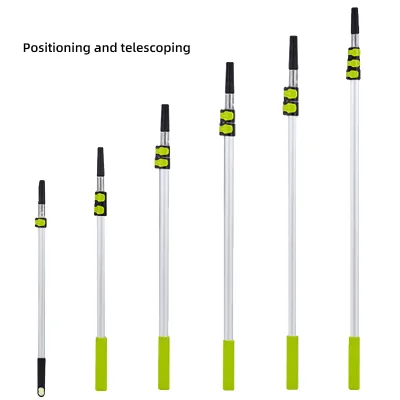
When evaluating technical specifications, the extendable range of the pole is a primary consideration. Observed standards indicate lengths ranging from 1.2 meters to 9 meters, with specific models offering discrete steps such as 2.4 meters, 3 meters, and 4.5 meters. Buyers must verify the locking mechanism’s reliability at each extension level, as a failure in the telescopic joint can lead to catastrophic collapse. The product models observed, such as H1800-H1810 and H1800-H1822, suggest a standardized naming convention that may correlate with specific length configurations or load capacities. It is crucial to confirm whether the pole maintains rigidity under lateral stress, especially when the full length is extended, as this directly impacts the precision of the cleaning action.
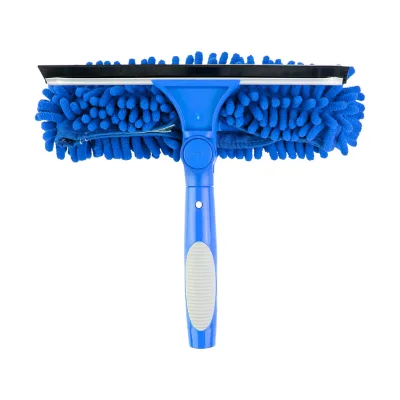
The design of the cleaning head and its attachment method to the pole is another vital technical aspect. Some listings specify a "Hand" style or "Manual" operation, implying that the scrubbing action is driven by the user’s movement rather than a motorized mechanism. The handle material, often cited as aluminium alloy or plastic, must provide a secure grip, potentially enhanced by ergonomic designs or non-slip coatings. For products described as "Window Washing Brush" or "Chenille Flat Mop," the attachment interface must be compatible with the pole’s end connector. Buyers should request detailed diagrams or physical samples to verify that the scrubbing head remains stable and does not rotate or detach during vigorous cleaning motions, particularly when dealing with textured glass or high windows.
Compliance and Safety Documentation
Safety compliance is paramount when sourcing equipment designed for elevated work. While specific certification statuses are not universally declared in the observed listings, buyers must insist on documentation that verifies the structural integrity of the aluminium pole and the stability of the telescopic joints. This may include stress test reports or compliance with relevant industrial safety standards for manual handling equipment. The risk of injury from falling tools or collapsing poles necessitates that suppliers provide clear operational guidelines and safety warnings. Buyers should also verify that the materials used in the construction, particularly any plastic or rubber components, do not contain hazardous substances that could pose health risks during long-term exposure or in case of breakage.
Documentation regarding the product’s origin and manufacturing standards is equally important for risk management. The observed listings indicate origins in Zhejiang, Shanghai, and Guangdong, China, regions known for their manufacturing capabilities but varying in regulatory oversight. Buyers should request certificates of origin and any relevant quality management system certifications held by the supplier. Additionally, if the product is marketed as "Eco-Friendly," buyers should seek evidence to support this claim, such as material safety data sheets or environmental impact assessments. Ensuring that the supplier adheres to international trade compliance standards will facilitate smoother customs clearance and reduce the risk of shipment delays or legal complications.
Cost Drivers and Commercial Terms
The cost of telescopic aluminium window scrubbers is influenced by several key factors, including the length of the pole, the quality of the aluminium alloy, and the complexity of the cleaning head design. Longer poles with more extension stages typically command higher prices due to the increased material usage and more intricate locking mechanisms. Customization options, such as branded colors or specialized head attachments, can also add to the unit cost. The observed price range of $0.59 to $632 USD reflects this variability, with lower-end products likely being shorter, simpler models and higher-end items featuring advanced ergonomic features or premium materials. Buyers should analyze the total cost of ownership, considering durability and maintenance requirements, rather than focusing solely on the initial purchase price.
Commercial terms, including minimum order quantities (MOQ) and lead times, vary significantly among suppliers. Observed MOQs range from 1 piece to 2000 pieces, indicating that some suppliers cater to small-scale buyers or sample requests, while others are optimized for large-volume production. Lead times are reported to be between 30 and 50 days, which is typical for custom manufacturing but requires careful planning to avoid stockouts. Buyers should negotiate clear terms regarding sample availability, noting that while free samples may be offered, freight costs are often borne by the buyer. Establishing a transparent pricing structure that accounts for volume discounts and shipping costs will help in budgeting accurately and avoiding unexpected expenses.
Supplier Qualification and Quality Control
Supplier qualification is a critical step in ensuring the reliability of the sourced products. Buyers should conduct thorough due diligence on potential suppliers, verifying their business licenses, manufacturing capabilities, and past performance. Given the observed origins in major Chinese manufacturing hubs, it is advisable to request factory audits or third-party inspection reports to assess the quality control processes in place. Suppliers who offer customization services should demonstrate a robust engineering team capable of adapting designs to meet specific client requirements without compromising structural integrity. Building a relationship with suppliers who prioritize transparency and communication can mitigate risks associated with production delays or quality inconsistencies.
Quality control measures should be integrated into the procurement process from the outset. Buyers should define clear acceptance criteria for the telescopic poles, including tests for extension stability, load-bearing capacity, and surface finish. For the cleaning heads, criteria should include material durability, attachment security, and cleaning effectiveness. Implementing a pre-shipment inspection protocol can help identify defects before the goods leave the factory, reducing the likelihood of receiving substandard products. Additionally, establishing a feedback loop with the end-users of the equipment can provide valuable insights into any performance issues, allowing for continuous improvement and supplier accountability.
Long-Term Procurement Checks
Long-term procurement success depends on the ability to monitor supplier performance and adapt to changing market conditions. Buyers should regularly review supplier metrics, including on-time delivery rates, product defect rates, and responsiveness to issues. Maintaining a diversified supplier base can reduce dependency on a single source and provide flexibility in case of supply chain disruptions. As technology and materials evolve, buyers should stay informed about new innovations in telescopic pole design and cleaning head technology that could offer improved efficiency or safety. Engaging in periodic contract reviews and renegotiations can ensure that pricing and terms remain competitive and aligned with current market realities.
Sustainability and regulatory changes may also impact long-term procurement strategies. Buyers should monitor developments in environmental regulations that could affect the materials used in the products, such as restrictions on certain plastics or chemicals. Proactively addressing these issues by sourcing eco-friendly alternatives or working with suppliers who have strong environmental practices can enhance brand reputation and ensure compliance. Additionally, investing in training for end-users on the proper use and maintenance of the equipment can extend the product lifespan and reduce replacement costs. By adopting a strategic and proactive approach to procurement, buyers can secure a reliable supply of high-quality telescopic aluminium window scrubbers that meet their operational needs.
FAQs
What materials are used for the Telescopic Aluminium Window Scrubber?
The product utilizes aluminum alloy for the handle, combined with PP, PVC, and EVA materials for other components. This construction ensures durability while maintaining a lightweight profile suitable for extended cleaning tasks on various surfaces.
Can I request a customized color for the Telescopic Aluminium Window Scrubber?
Yes, customized colors are available for this product line. Buyers can specify their preferred color options to match branding or aesthetic requirements, subject to the supplier's customization capabilities and minimum order quantity constraints.
What is the standard size range for the Telescopic Aluminium Window Scrubber?
The standard size range spans from 1.2 meters up to 9 meters in length. Specific models offer fixed lengths such as 1.2M, 2.4M, 3M, 3.6M, 4M, 4.5M, 6M, 8M, and 9M to suit different cleaning heights.
How long does it take to receive a sample of the Telescopic Aluminium Window Scrubber?
Sample preparation typically requires 5 to 7 days. While free samples are available, the freight charges must be covered by the buyer, and the final delivery time depends on the shipping method selected.
Which locations manufacture the Telescopic Aluminium Window Scrubber?
Manufacturing originates from multiple regions in China, including Zhejiang, Shanghai, and Guangdong. These locations provide diverse sourcing options with varying lead times and logistical advantages for international buyers seeking specific product models.
What is the minimum order quantity for the Telescopic Aluminium Window Scrubber?
The minimum order quantity varies by product model, ranging from 1 piece for samples up to 3000 pieces for bulk orders. Buyers should verify the specific MOQ for their desired model before placing a purchase request.
How is the Telescopic Aluminium Window Scrubber packaged for shipment?
Products are packed in cartons, with specific configurations like 40 pieces per carton or 20 pieces per carton depending on the model. This packaging ensures safe transport and efficient handling during international shipping processes.