Find Teppanyaki Table for Hotels, Restaurants, and Weddings
Source 30 Teppanyaki Table units from verified suppliers in Shanghai, China. Buyers can compare stainless steel models with customizable dimensions, heating methods, and seating capacities for high-end restaurants, hotels, and wedding events.
Key considerations
Products List
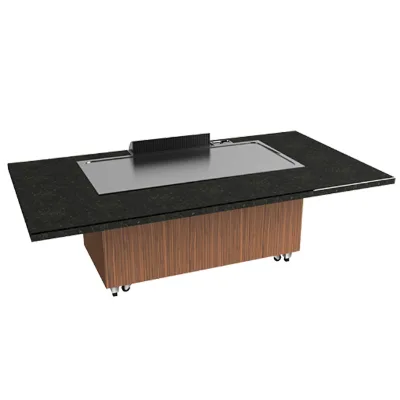
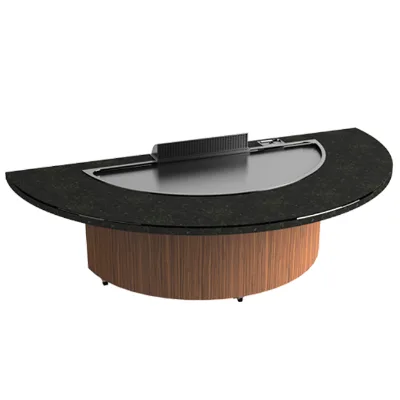
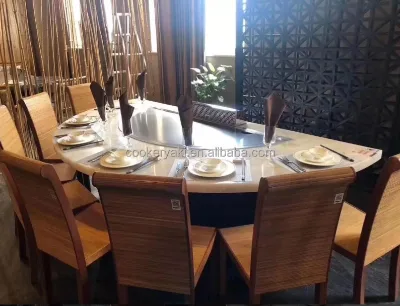
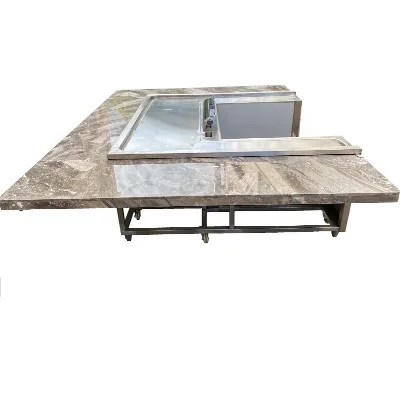
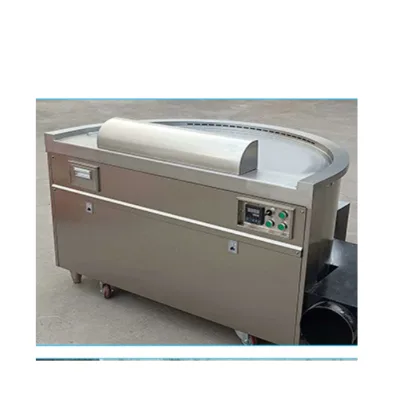
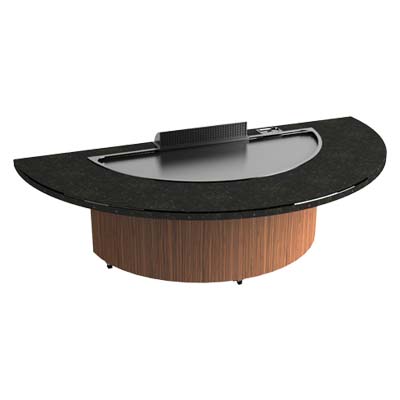

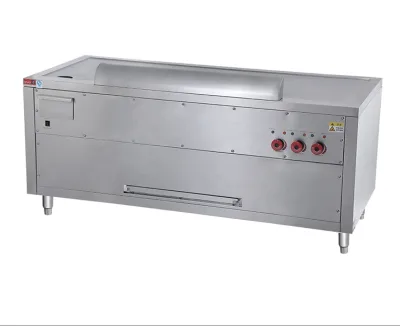


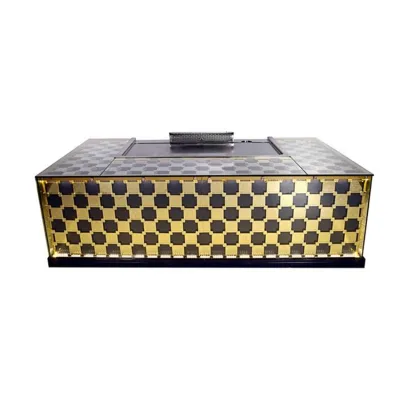
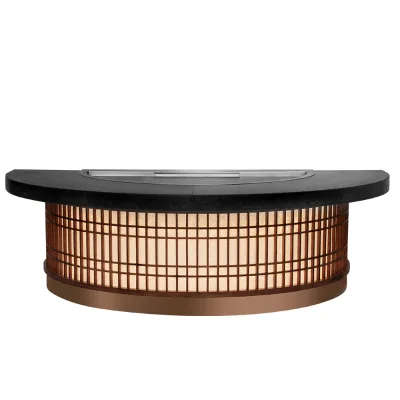
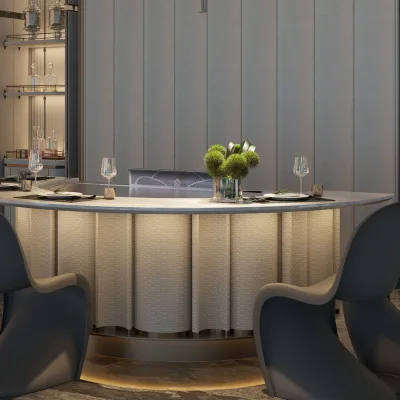
Semi-Circular Teppanyaki Grill Table | Space-Saving Design for Interactive Dining
$4084.01 - $10126.05
MOQ: 1 Minimum
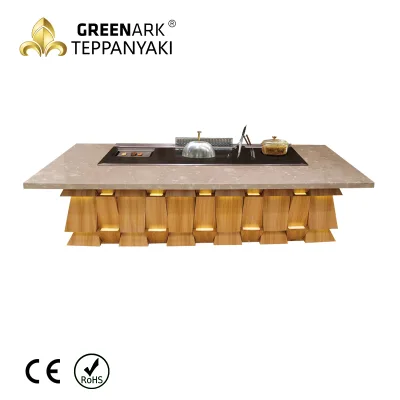
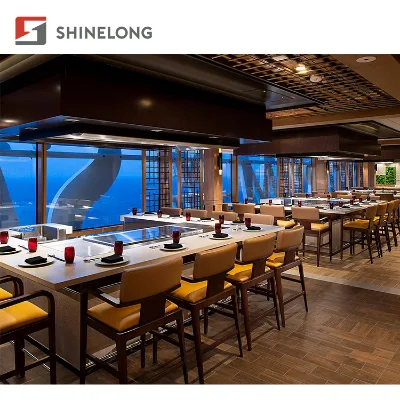
Multifunctional Commercial Hotel Restaurant Equipment Rectangle Teppanyaki Grill Table
$3980.00 - $6280.00
MOQ: 1 Minimum
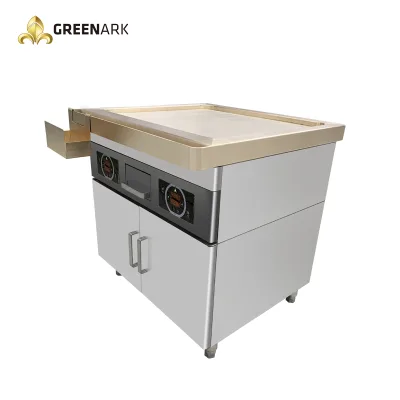
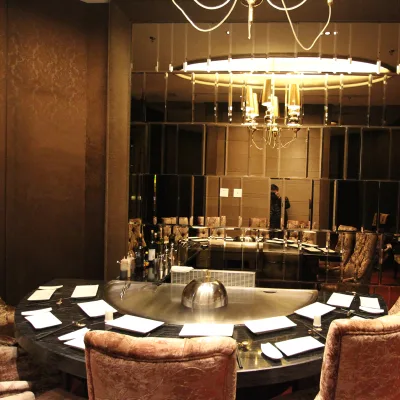
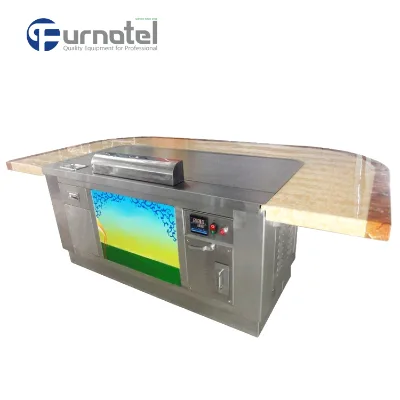
Stable Performance Smokeless Electric Teppanyaki Table Top Grill Griddle
$3371.25 - $3677.45
MOQ: 1 Minimum

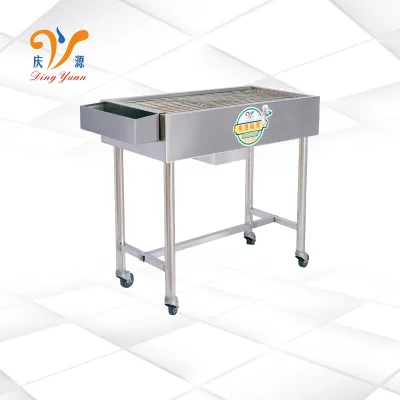




Stainless Steel Electric Teppanyaki with Griddle
$505.00 - $550.00
MOQ: 1 Pieces
Guangzhou Junjian Kitchen Appliances & Refrigeration Equipment Co., Ltd.


Comprehensive Sourcing Guide
Strategic Sourcing Guide for Commercial Teppanyaki Tables
The global demand for high-end dining experiences has driven a significant increase in the procurement of commercial-grade teppanyaki tables. These specialized units serve as the centerpiece for interactive dining in starred hotels, high-end restaurants, and banquet facilities. Sourcing these large-scale kitchen appliances requires a disciplined approach that balances technical specifications, regulatory compliance, and logistical feasibility. This guide provides a comprehensive framework for buyers to evaluate potential suppliers and secure units that meet rigorous operational standards without relying on unverified market claims.
Technical Specifications and Dimensional Analysis
When evaluating teppanyaki tables, the primary technical differentiator lies in the physical dimensions and seating capacity, which directly impact kitchen workflow and dining room layout. The market offers a variety of configurations, ranging from compact units to expansive installations. Buyers must verify the specific dimensions against their floor plans, as these units are often custom-built to fit unique spaces.
Observed specifications indicate a wide range of sizes, with common configurations including models labeled with dimensions such as 1200/1600/2400850800mm and larger variants reaching 2300/2600952800mm. The seating capacity is a critical metric, with standard offerings including "rectangle - 6 seats" and "rectangle - 10 seats" configurations. The shape is predominantly rectangular, though "Customized" options are frequently available to accommodate irregular dining areas.
The material composition is another vital technical factor. The standard construction material observed in high-quality units is Stainless Steel, ensuring durability and resistance to the high-heat environment of a teppanyaki station. The surface temperature capability is a key performance indicator, with observed operational limits reaching approximately 250℃ (482℉). This thermal capacity must be sufficient for searing meats and vegetables while maintaining safety for the dining area.
| Feature Category | Observed Specifications | Verification Requirement |
|---|---|---|
| Dimensions | 1200-2600mm (L) x 850-952mm (W) x 800mm (H) | Verify exact fit for dining room and kitchen access |
| Seating Capacity | 6 seats, 10 seats | Confirm based on table length and customer comfort |
| Material | Stainless Steel | Inspect grade and thickness for corrosion resistance |
| Temperature | ~250℃ / 482℉ | Ensure heating element matches local gas/electric standards |
| Shape | Rectangle, Customized | Confirm moldability for specific venue layouts |
Compliance and Certification Verification
In the commercial food service industry, regulatory compliance is non-negotiable. Buyers must rigorously verify that the equipment meets the safety and quality standards of the destination market. The supplied data highlights specific certifications that serve as indicators of manufacturing quality, including CE and ISO Certificates. Additional documentation may include SGS, CAS, and IOS certifications, which suggest adherence to international safety and quality management protocols.
It is imperative for buyers to request current, valid copies of these certificates rather than relying on general claims. The CE marking, for instance, indicates conformity with health, safety, and environmental protection standards for products sold within the European Economic Area. Similarly, ISO certification implies that the manufacturer operates under a recognized quality management system. However, the presence of a certification label on a product listing does not guarantee that every unit in a batch meets the standard; verification of the specific batch or model number is essential.
Furthermore, buyers should confirm the "Place of Origin," which is frequently listed as Shanghai, China (Mainland). While this location is a major manufacturing hub, the origin does not dictate quality on its own. Instead, it informs the buyer about the regulatory environment the manufacturer operates within and the logistics required for import. The "Port of Dispatch" is typically Shanghai, which affects shipping costs and transit times.
Cost Drivers and Pricing Structures
The pricing of teppanyaki tables is highly variable, influenced by material costs, customization levels, and logistical complexity. The observed price range in the market spans from approximately $3 to over $10,000 USD. This vast disparity is not indicative of quality alone but reflects differences in seating capacity, heating technology, and finish materials.
Several factors drive the cost of these units. First, the heating method is a primary cost driver. Units may utilize LPG, natural gas (NG), or electricity. The energy consumption data suggests significant power requirements, with electric models often rated at 380v/8kw. Gas models have specific consumption rates, such as 1.2 m3/h for NG and 0.68KG/h for LPG. The complexity of the heating system and the integration of safety valves and regulators will influence the final price.
Second, the finish and decoration play a role in cost. While the standard color is Silver, some models offer "marble/customization" options. These aesthetic upgrades, along with the "Customized Logo" service, add to the manufacturing time and material costs. Additionally, the packaging method affects the price. The standard packaging is a "Wooden Frame" or "Wooden Crate," which is heavy and robust. For export to European countries, the wooden box must be fumigated, a process that adds to the cost but is often required for customs clearance.
The Minimum Order Quantity (MOQ) is another financial consideration. While some suppliers list an MOQ of 1 Set, others may have higher thresholds, with observed ranges extending up to 1000 units. For a single restaurant installation, a low MOQ is preferable, but buyers should be aware that unit prices may be higher for single-item orders compared to bulk purchases.
Typical Applications and Operational Context
Teppanyaki tables are designed for specific high-volume, high-interaction dining environments. The primary applications include starred hotels, high-end restaurants, and banquet facilities. These venues require equipment that not only performs reliably under continuous use but also enhances the dining experience through the visual spectacle of the cooking process.
The versatility of these units allows them to be used in various settings beyond traditional restaurants, including homes, bars, and hotels for private events or weddings. The "Use" category explicitly lists Home, Restaurant, Bar, Hotel, and Wedding, indicating a broad market applicability. However, the industrial-grade nature of the equipment, with weights ranging from 300kg to 800kg, makes them unsuitable for casual home kitchens without significant structural reinforcement.
The "Single gross weight" of the units is substantial, with observed values ranging from 300kg to 430kg, and some models reaching 800kg. This weight is a critical factor for venue selection. The floor must be able to support the static load, and the delivery path must accommodate the movement of such heavy objects. The "Single package size" also varies, with dimensions like 140X100X100 cm or 190X95X90 cm, which impacts the logistics of moving the unit from the dock to the kitchen.
Supplier Evaluation and Supply Chain Reliability
Selecting a reliable supplier is as important as the product specifications themselves. Buyers should evaluate suppliers based on their "Supply Ability," which is listed as 1000 sets per month in some contexts. This figure indicates the manufacturer's capacity to handle large orders without significant delays. However, buyers must verify if this capacity is consistent or if it fluctuates based on raw material availability.
The "Warranty" period is a key indicator of supplier confidence. A standard warranty of 1 year is observed, which covers defects in materials and workmanship. Buyers should clarify what specific components are covered, particularly the heating elements and control systems, which are prone to wear and tear. The "Logo" customization option suggests that the supplier is willing to engage in branding partnerships, which can be a sign of a mature manufacturing operation.
Logistics and packaging details are also critical for supplier evaluation. The "Packing Details" indicate that normal packaging is a wooden box, with fumigation required for European exports. If the container space is tight, suppliers may use PE film as an alternative. This flexibility is valuable for buyers dealing with complex shipping constraints. The "Port of dispatch" being Shanghai simplifies logistics for many international buyers, but it also means that freight costs will be influenced by the distance from the port to the final destination.
Quality Control and Long-Term Procurement Considerations
Ensuring long-term value requires a robust quality control (QC) strategy. Buyers should not rely solely on the "Product Type" or "Model Number" (e.g., RE-05, C-6, E-10) as a proxy for quality. Instead, they must establish clear acceptance criteria based on the observed specifications. For instance, the "Dimension" must match the ordered model exactly, and the "Material" must be verified as Stainless Steel upon delivery.
The "Single package size" and "Single gross weight" are critical for QC during shipping. Discrepancies in weight or dimensions can indicate missing components or damage during transit. Buyers should implement a pre-shipment inspection protocol that checks the "Heating Methods" functionality, ensuring that the LPG, Gas, or Electric systems operate safely and efficiently. The "Temperrature" (Temperature) should be tested to ensure it reaches the specified 250℃ without hot spots or uneven heating.
Long-term procurement considerations include the availability of spare parts and the ease of maintenance. The "Energy Consumption" data provides a baseline for operational costs, which buyers should factor into their total cost of ownership calculations. A unit with high energy consumption, such as the 8kw electric model, may have higher utility bills compared to gas alternatives, depending on local energy rates.
Finally, buyers should consider the "Decoration" options for long-term aesthetic maintenance. While marble or customization adds initial value, the durability of these finishes in a high-heat, high-moisture environment must be assessed. The "Color" is typically Silver, which is easy to maintain, but any custom finishes should be tested for resistance to scratches and heat damage. By focusing on these technical and operational details, buyers can secure teppanyaki tables that deliver consistent performance and value over the long term.
FAQs
What certifications do teppanyaki tables typically have?
Teppanyaki tables typically carry CE and ISO certificates to ensure safety and quality. Some models may also include SGS, CAS, and IOS certifications, but buyers must verify specific batch validity rather than relying on general claims.
Which heating methods are available for these tables?
These tables support LPG, natural gas, and electric heating methods. Electric models often require 380v/8kw power, while gas units have specific consumption rates like 1.2 m3/h for natural gas or 0.68KG/h for LPG.
Can the table dimensions be customized for my venue?
Yes, the shape and dimensions can be customized to fit specific dining areas. Standard sizes include 1600*850*800mm, but larger configurations up to 2600mm length are available for high-end restaurants and hotels.
How much does a Teppanyaki Table weigh?
The single gross weight ranges from 300kg to 800kg depending on the model. Common configurations weigh around 380kg to 430kg, requiring structural reinforcement and careful logistics planning for delivery.
What is the minimum order quantity for these units?
The minimum order quantity can be as low as 1 Set for single-item purchases. However, observed ranges extend up to 1000 units, with bulk orders potentially offering different pricing structures.
Where are these teppanyaki tables manufactured?
These units are primarily manufactured in Shanghai, China. The port of dispatch is also Shanghai, which influences shipping costs and transit times for international buyers importing from this major manufacturing hub.