Source Tesla Cybertruck Body Kit for Repair, Upgrade, and Decoration
Explore 30 listings for the Tesla Cybertruck Body Kit, comparing options in aluminum, forged carbon fiber, and plastic. Buyers can evaluate specifications, MOQs, and delivery times to find suitable parts for repair, upgrade, and decoration needs.
Key considerations
Products List
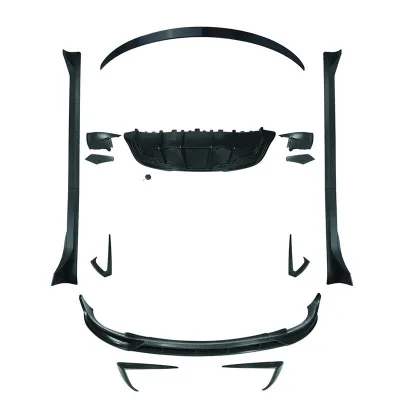
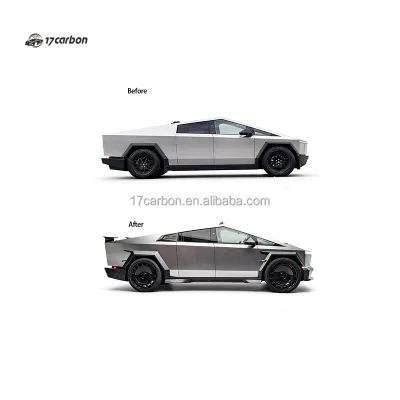
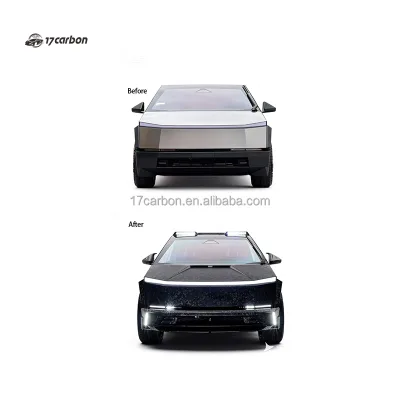
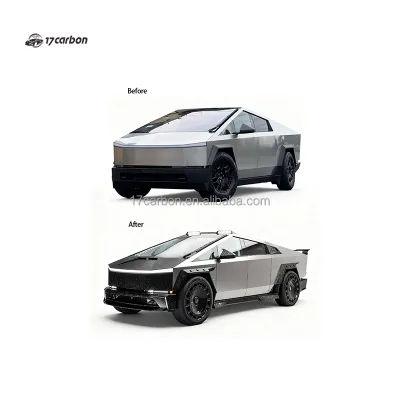
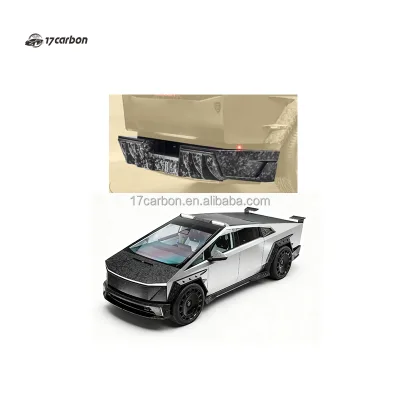


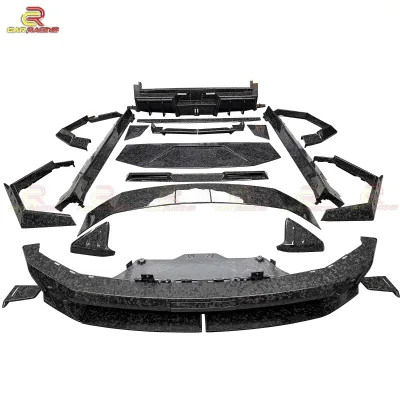
Carbon Fiber Bumper Lip Fender Flare for Tesla Model X Yg Design Body Kit
$1150.00 - $1250.00
MOQ: 2 Sets


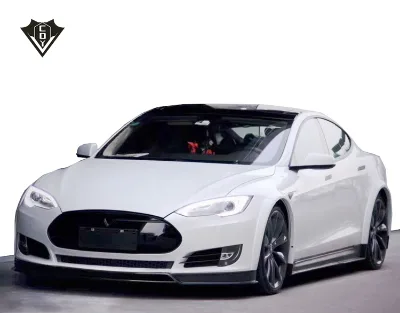


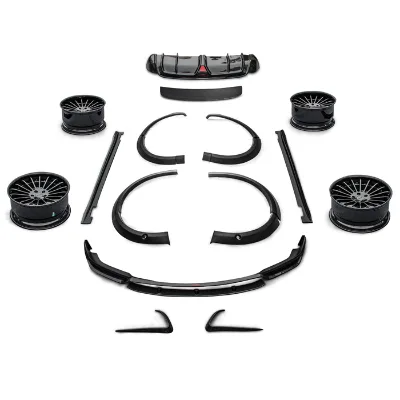

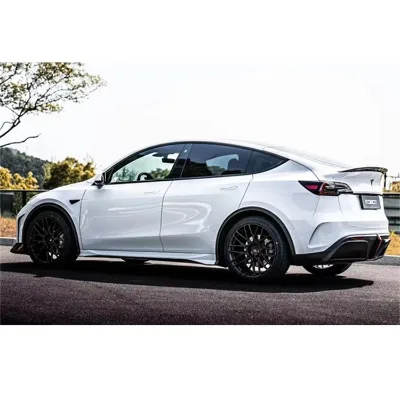
Comprehensive Sourcing Guide
Strategic Sourcing Guide for Tesla Cybertruck Body Kits
Understanding Product Variants and Technical Specifications
When sourcing body kits for the Tesla Cybertruck, buyers must first navigate a complex landscape of material compositions and design specifications. The market offers distinct variations ranging from full vehicle transformations to specific component replacements. Based on current product data, the primary material categories observed include aluminum, forged carbon fiber, standard carbon fiber, and plastic. Each material offers a different balance of weight, durability, and aesthetic finish.
Aluminum components are frequently listed with a specific focus on replacement and repair purposes, often carrying a single gross weight of approximately 5 kg per unit. These are typically designed for specific applications such as headstock positions or general automotive accessories. In contrast, high-end aesthetic upgrades often utilize forged carbon fiber, which is marketed for its unique visual texture, described as "3K Twill" or "Forged carbon" finish. These premium kits are available in glossy or matte finishes and are designed to provide both protection and decoration. The weight of these forged carbon fiber units can be significantly higher, with some listings indicating a single gross weight of 700 kg for a full set, suggesting a comprehensive package that includes extensive body panels.
The fitment specificity is another critical technical parameter. While some listings broadly state "For Tesla," others specify exact model years, such as the Tesla Cybertruck 2023-2025. This precision is vital for ensuring that the body kit aligns with the vehicle's unique angular geometry. The product types vary from "full set" kits to specific components like rear diffusers or front bumper pieces. Buyers should verify the "Model Number" and "Size" specifications, as these often dictate the compatibility of the kit. For instance, specific model numbers like Ts-CB-10 or HWA-1309 correspond to distinct configurations, such as a rear diffuser or a full body kit, respectively. The "Single package size" also varies drastically, ranging from compact 100x100x50 cm boxes for smaller parts to massive 210x210x180 cm packages for full sets, which directly impacts logistics planning.
Compliance, Certification, and Origin Verification
In the B2B procurement of automotive aftermarket parts, verifying the origin and adherence to standards is paramount. The supplied data indicates that the majority of these products originate from Guangdong, China, with specific mentions of Guangzhou as a production hub. This regional concentration suggests a mature supply chain for automotive accessories in southern China. However, the presence of "Standard" as a listed product standard requires careful interpretation. Buyers must not assume that "Standard" implies international certification without explicit documentation. Instead, procurement teams should request proof of compliance with relevant automotive safety and environmental regulations in their target market.
Certification status is not explicitly detailed in the general product attributes. Therefore, buyers must treat the "Standard" label as a claim of internal quality benchmarks rather than an external regulatory seal. It is essential to verify if the materials used, such as forged carbon fiber or aluminum, meet specific flammability, toxicity, and structural integrity standards required for vehicle modifications in the destination country. The "OEM Service" and "OEM Service Accepted" attributes indicate that suppliers are capable of manufacturing parts that mimic original equipment manufacturer specifications, but this does not automatically grant them OEM certification. Buyers should explicitly request test reports or certification documents from the supplier to confirm that the parts meet the safety requirements for road use.
Furthermore, the "Condition" of the products is consistently listed as "New," which is a baseline expectation. However, the "Quality" attribute is described as "High-Quality," a subjective term that requires objective verification. Procurement professionals should demand third-party inspection reports or sample testing results to validate these quality claims. The absence of specific certification names in the provided data means that the burden of verification falls entirely on the buyer to ensure that the imported body kits do not violate local vehicle modification laws.
Cost Drivers and Pricing Structure Analysis
The pricing for Tesla Cybertruck body kits exhibits a massive variance, with observed ranges spanning from $2.57 to $32,839.89. This wide spectrum is not indicative of a single product category but rather reflects the diversity of materials, completeness of the kit, and the scale of the order. The lowest price points likely correspond to small, single-component accessories made from plastic or basic aluminum, such as a single diffuser or trim piece. Conversely, the highest price points are associated with full sets constructed from forged carbon fiber, which involve complex manufacturing processes and significant material costs.
Several factors drive these costs. The material composition is the primary driver; forged carbon fiber is inherently more expensive to produce than standard plastic or aluminum due to the specialized molding and curing processes required. The "Size" of the kit, whether it is a "Fullkits" set or a "Rear Diffuser" only, directly correlates with the unit price. Additionally, the "Single gross weight" serves as a proxy for the volume of material used, influencing both the manufacturing cost and the shipping expenses. A kit weighing 700 kg will incur significantly higher logistics costs compared to a 5 kg component, which must be factored into the total landed cost.
The "MOQ" (Minimum Order Quantity) also plays a crucial role in the unit price structure. The observed MOQ range is 1 to 50 units. Suppliers offering an MOQ of 1 piece often cater to individual buyers or small testing orders, which may carry a higher per-unit cost due to the lack of economies of scale. In contrast, orders meeting the higher end of the MOQ range may benefit from bulk pricing, though the specific discount structures are not provided in the general data. Buyers should analyze the total cost of ownership, including the "Delivery time," which is listed as 60 days for some items. Longer lead times can impact inventory carrying costs and cash flow, effectively increasing the financial burden of the procurement.
Typical Applications and Functional Requirements
The functional applications of Tesla Cybertruck body kits extend beyond mere aesthetic enhancement. The "Purpose" is explicitly listed as "for replace/repair," indicating that these parts serve a dual role in maintenance and customization. For fleet operators or commercial entities, the "Protection + Decoration" function is critical. Body kits made from durable materials like aluminum or forged carbon fiber can protect the vehicle's underlying structure from minor impacts, road debris, and environmental wear. This is particularly relevant for the Cybertruck, which is often used in demanding environments where body damage is a risk.
The "Application" is broadly categorized as "Automotive Parts" or "Car," but the specific "Position" of the parts provides more granular insight. Components are designed for the "headstock," "Front Bumper," and "Rear Diffuser" positions. These areas are high-impact zones where durability is essential. The "Fitment" is described as "High Fitment," suggesting that the parts are engineered to align precisely with the Cybertruck's unique body lines without requiring extensive modification. This precision is vital for maintaining the vehicle's aerodynamic profile and ensuring that the added weight of the body kit does not negatively affect handling or battery efficiency.
For buyers looking to customize their fleet, the "Customization: Available" attribute offers flexibility. Suppliers can produce parts in various colors, such as "Black" or "Forged carbon," to match specific branding or aesthetic requirements. The "Finish" options, including "Glossy" and "Matte," allow for further differentiation. However, buyers must ensure that the customization does not compromise the structural integrity or safety of the vehicle. The "Type" of product, whether "Automobile Accessories" or "Decorate," should align with the intended use case. For example, a "full set" is ideal for a complete vehicle overhaul, while a "Rear Diffuser" might be sufficient for a targeted upgrade.
Supplier Evaluation and Capability Assessment
Evaluating suppliers for Tesla Cybertruck body kits requires a rigorous assessment of their capabilities beyond the basic product listing. The "Brand Name" HVA appears in the data, but buyers should not rely on brand recognition alone. Instead, focus on the supplier's ability to provide "OEM Service" and "OEM Service Accepted" capabilities. This indicates that the supplier has the technical capacity to produce parts that meet specific engineering standards. However, the "Brand Name" should be verified against the actual manufacturing facility to ensure consistency.
The "Place of Origin" being Guangdong, China, is a significant factor. This region is known for its robust manufacturing ecosystem, but it also means that buyers must conduct thorough due diligence regarding the specific factory's reputation and capacity. The "Single package size" and "Single gross weight" provide clues about the supplier's logistical capabilities. A supplier offering packages as large as 210x210x180 cm must have experience in handling oversized cargo and specialized shipping arrangements. Buyers should verify the supplier's ability to manage these logistics, especially given the "Delivery time" of 60 days, which suggests a complex supply chain.
Quality control is another critical evaluation metric. The "Quality" attribute is listed as "High-Quality," but this must be validated through on-site audits or third-party inspections. Buyers should inquire about the supplier's quality assurance processes, including material testing, dimensional accuracy checks, and finish consistency. The "Standard" listed as "Standard" is insufficient on its own; buyers should request detailed quality control protocols and sample inspection reports. Additionally, the "Customization: Available" feature requires a supplier with flexible production lines capable of handling small batch orders or specific design requests without compromising lead times.
Quality Control Protocols and Long-Term Procurement
Implementing a robust quality control protocol is essential for mitigating risks associated with sourcing body kits. Given the wide range of materials and the high cost of some items, buyers should establish clear acceptance criteria before production begins. This includes verifying the "Material" composition, ensuring that "Forged carbon fiber" is genuine and not a lower-grade composite. The "Finish" quality, whether "Glossy" or "Matte," must be consistent across all units, with no visible defects such as bubbles, scratches, or uneven textures.
Long-term procurement considerations involve building a sustainable relationship with suppliers who can maintain consistent quality over time. The "Delivery time" of 60 days highlights the need for careful inventory planning. Buyers should consider safety stock levels to account for potential delays, especially when ordering full sets with large package dimensions. The "MOQ" flexibility, ranging from 1 to 50 units, allows for phased ordering strategies, enabling buyers to test the market with smaller orders before committing to larger volumes.
Sustainability and environmental compliance are also becoming increasingly important. Buyers should inquire about the environmental impact of the manufacturing processes, particularly for carbon fiber production, which can be energy-intensive. The "Standard" of the product should align with any corporate sustainability goals. Furthermore, the "Purpose" of the parts as "replace/repair" suggests a lifecycle management strategy where end-of-life disposal or recycling of the body kits should be considered.
In conclusion, sourcing Tesla Cybertruck body kits requires a meticulous approach that balances technical specifications, cost drivers, and supplier capabilities. By focusing on material integrity, fitment precision, and robust quality control, buyers can secure high-performance components that meet their operational needs. The vast price range and diverse product types necessitate a tailored procurement strategy that aligns with specific project requirements and long-term business goals.
FAQs
What materials are used for Tesla Cybertruck body kits?
Body kits are available in aluminum, forged carbon fiber, standard carbon fiber, and plastic. Aluminum units often weigh around 5 kg, while full forged carbon sets can reach 700 kg. The choice depends on whether you need lightweight repair parts or heavy-duty aesthetic upgrades.
Which Tesla models do these body kits fit?
Products are designed for Tesla Model Y and the Tesla Cybertruck 2023-2025. Some listings specify exact model numbers like Ts-CB-10 for rear diffusers or HWA-1309 for full kits. Always verify the model number against your vehicle to ensure high fitment.
Can I get custom colors and finishes for these parts?
Yes, customization is available for colors like black or forged carbon with glossy or matte finishes. Suppliers offer OEM services to match specific branding needs. However, you must confirm the finish type and color availability before placing an order to ensure it meets your requirements.
What is the minimum order quantity for these kits?
The minimum order quantity ranges from 1 piece to 50 sets depending on the supplier and product type. Single items like diffusers may have an MOQ of 1, while bulk orders might require higher quantities. Check the specific listing to confirm the exact MOQ for your selected kit.
How long does delivery take for these body kits?
Delivery times can be up to 60 days for certain items. This lead time varies based on the complexity of the kit and the supplier's production schedule. Plan your procurement timeline accordingly to avoid delays, especially for large full sets with significant packaging dimensions.
Where are these Tesla body kits manufactured?
Most products originate from Guangdong, China, with specific production hubs in Guangzhou. This region hosts a mature supply chain for automotive accessories. Buyers should verify the exact place of origin on the product page to ensure it aligns with their logistics and compliance requirements.
What is the price range for Tesla Cybertruck body kits?
Prices range widely from 2.57 USD to 32,839.89 USD based on material and completeness. Lower costs apply to small plastic or aluminum parts, while full forged carbon sets command higher prices. The final cost also depends on the single gross weight and package size required for shipping.