Source Three Adhesive Strips Frameless Wiper for Cars Buses Trucks
Compare 30 listings for Three Adhesive Strips Frameless Wiper options suitable for cars, city buses, and trucks. Buyers can evaluate models like 204024-702 and 61617469820 with varying sizes from 11 to 28 inches and materials including carbon metal and natural rubber.
Key considerations
Products List


Comprehensive Sourcing Guide
Strategic Sourcing Guide for Frameless Wiper Blades with Adhesive Strip Integration
The global automotive aftermarket continues to demand high-performance replacement components that balance durability, cost-efficiency, and universal fitment. Among these, the Three Adhesive Strips Frameless Wiper represents a specialized segment where design precision directly impacts visibility and safety. For procurement professionals, sourcing this specific configuration requires a nuanced understanding of material science, manufacturing standards, and supply chain logistics. This guide provides an evidence-based framework for evaluating suppliers and products, ensuring that procurement decisions are grounded in verified technical attributes rather than marketing assertions.
Technical Architecture and Material Composition
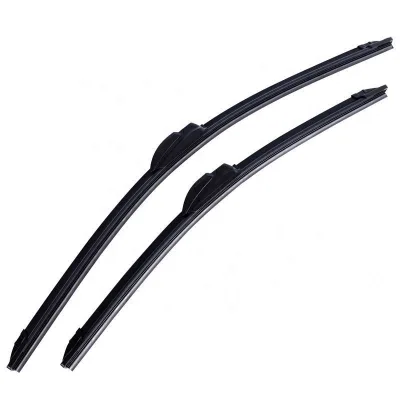
The fundamental distinction of a frameless wiper blade lies in its aerodynamic design, which eliminates the traditional metal frame in favor of a single, flexible beam. When this design incorporates three adhesive strips, it indicates a specific mounting interface designed to secure the blade to the vehicle's wiper arm without the need for complex adapters or clips. The presence of multiple adhesive points suggests a focus on distributing tension evenly across the blade's length, reducing the risk of peeling or detachment during high-speed operation.
Material selection is the primary driver of performance in this category. The supplied data indicates a divergence in material strategies among available products. Some configurations utilize a composite of Carbon Metal, which offers structural rigidity while maintaining flexibility. Others rely on Full Rubber or specific blends of Natural Rubber and Silicone. Silicone is increasingly preferred for its resistance to ozone cracking and extreme temperature fluctuations, whereas natural rubber provides excellent initial cleaning performance. The frame or structural housing often employs ABS plastic, chosen for its impact resistance and lightweight properties. Furthermore, the adhesion system itself may involve POM (Polyoxymethylene) for the adaptor material, ensuring a secure mechanical lock before the adhesive bond takes effect.
The physical dimensions of these blades vary significantly to accommodate different vehicle makes and models. Observed product standards range from 11 inches to 28 inches, with specific models covering intervals such as 12 inches to 14 inches or broader ranges like 12 inches to 28 inches. The sweep angle is another critical technical parameter; while some units are engineered for a standard 80-degree arc, high-performance variants may achieve a 135-degree sweep, ensuring maximum windshield coverage. Buyers must verify that the specific adhesive strip configuration aligns with the vehicle's wiper arm geometry, as the three-strip design implies a specific contact surface area that must match the arm's curvature.
Compliance, Certification, and Regulatory Standards
In the automotive supply chain, compliance is not merely a formality but a prerequisite for market access. The procurement of wiper blades requires rigorous verification of manufacturing standards. The industry standard ISO/TS 16949:2009 is a recognized benchmark for quality management systems in the automotive sector. Suppliers claiming adherence to this standard demonstrate a commitment to defect prevention, variation reduction, and continuous improvement in the production of safety-critical components.
Beyond general quality management, specific product certifications validate the safety and reliability of the wiper blades. While the supplied context confirms the existence of ISO/TS 16949:2009 certification, buyers must also verify compliance with regional safety regulations, such as ECE R109 in Europe or FMVSS 104 in the United States, which dictate minimum performance levels for visibility. The operating temperature range is a critical compliance metric; observed data suggests a functional range of -50°C to +80°C. This wide thermal tolerance is essential for global distribution, ensuring the adhesive strips and rubber compounds do not degrade in extreme cold or melt in high-heat environments.
Buyers should also scrutinize the material safety data sheets (MSDS) for the adhesive components. The three adhesive strips must be formulated to withstand UV exposure without yellowing or losing tackiness. Additionally, the use of materials like PVC for spoilers and Metal or Plastic for joints must be verified against environmental directives such as the Restriction of Hazardous Substances (RoHS) and the End-of-Life Vehicle (ELV) directive, which restrict the use of certain heavy metals and hazardous chemicals.
Cost Drivers and Pricing Dynamics
The pricing of frameless wiper blades with adhesive strip integration is influenced by a complex interplay of material costs, manufacturing complexity, and order volume. The observed price range in the market spans from $0.20 to $15.00 per unit, a variance that reflects differences in material quality, brand positioning, and order quantity. At the lower end of the spectrum, products likely utilize standard natural rubber and basic plastic components, whereas the higher price points correlate with silicone blends, advanced carbon-metal composites, and enhanced adhesive technologies.
Order Volume is a significant cost driver. The Minimum Order Quantity (MOQ) observed in the market ranges from 1 unit to 100,000 units. Suppliers offering an MOQ of 100 pieces may provide a lower per-unit cost compared to those requiring bulk orders, but the total capital outlay differs. For buyers seeking to test the market or fulfill small fleet needs, a lower MOQ is advantageous despite a potentially higher unit price. Conversely, large-scale procurement can leverage economies of scale to reduce costs, provided the supplier has the capacity to handle large volumes without compromising lead times.
Lead times also impact the total cost of ownership. The standard delivery time observed is between 30 and 35 days. This timeframe includes production, quality assurance, and logistics. Buyers must factor in this duration when planning inventory levels to avoid stockouts. Expedited shipping options, such as air freight versus sea freight, will further influence the final landed cost. While sea freight is cost-effective for large volumes, air freight may be necessary for urgent replenishment, adding a premium to the procurement budget.
Typical Applications and Vehicle Compatibility
The versatility of the Three Adhesive Strips Frameless Wiper makes it suitable for a broad spectrum of applications. The supplied data confirms compatibility with cars, city buses, coaches, trucks, and engineering vehicles. This wide applicability stems from the modular nature of the blade design, which can be adapted to various wiper arm sizes and mounting mechanisms. The "98% car types" claim suggests a high degree of universality, likely achieved through the use of standard adapter interfaces that accommodate the three adhesive strip configuration.
However, the specific application dictates the required performance characteristics. For passenger cars, the focus is often on quiet operation and smooth wiping, requiring a balance of flexibility and stiffness. In commercial vehicles like trucks and coaches, durability and resistance to harsh weather conditions are paramount. The 135-degree sweep angle observed in some models is particularly beneficial for larger windshields found in buses and trucks, ensuring comprehensive visibility.
The transportation method of the wiper blades also influences their suitability for different markets. Products are typically shipped via sea or air, with packaging designed to protect the adhesive strips and rubber compounds during transit. The use of carton packaging or paper boxes with blister packs ensures that the blades remain undamaged and the adhesive surfaces are clean until installation. Buyers must ensure that the packaging is robust enough to withstand the rigors of long-distance shipping, especially for products destined for regions with extreme climate variations.
Supplier Evaluation and Quality Assurance
Evaluating a supplier for frameless wiper blades requires a multi-faceted approach that goes beyond price comparisons. The geographical origin of the product is a key indicator of manufacturing capabilities. The supplied data identifies Zhejiang and Ningbo in China as primary production hubs. These regions are known for their established automotive parts supply chains, offering a concentration of specialized manufacturers. However, buyers should verify the specific factory capabilities and audit reports to ensure consistent quality.
Quality control processes are critical for maintaining product integrity. Suppliers should demonstrate a robust system for inspecting the adhesive strips, rubber compounds, and structural components. The "Without Bone" and "With Bone" variations in the product line indicate that suppliers may offer different structural designs, and buyers must specify their preference based on the intended application. The "Traditional Batch Type" designation suggests a specific manufacturing methodology that may impact consistency and traceability.
Buyers should request samples for independent testing to verify claims regarding material composition, sweep angle, and temperature resistance. The ability to provide test results for the adhesive strength and rubber durability is a strong indicator of a supplier's confidence in their product. Additionally, the warranty period, observed as one year in the supplied data, serves as a commitment to product reliability. A supplier willing to offer a warranty demonstrates their confidence in the longevity of the adhesive strips and the overall blade performance.
Long-Term Procurement and Supply Chain Resilience
Sourcing frameless wiper blades with adhesive strips is a long-term strategic decision that requires careful consideration of supply chain resilience. The lead time of 30-35 days necessitates a proactive approach to inventory management. Buyers should establish a safety stock level that accounts for potential disruptions in the supply chain, such as raw material shortages or logistical delays. The ability of the supplier to scale production up or down based on demand fluctuations is also crucial.
The customization options available, as noted in the product attributes, offer a pathway to differentiate the procurement strategy. Suppliers that accept OEM (Original Equipment Manufacturer) orders can tailor the wiper blades to specific vehicle models or fleet requirements, enhancing the value proposition. This flexibility allows buyers to create a unique product offering that aligns with their brand identity and customer needs.
Furthermore, the environmental impact of the product should be considered in the long term. The use of recyclable materials and sustainable manufacturing practices can enhance the brand's reputation and align with global sustainability goals. Buyers should inquire about the supplier's environmental policies and their commitment to reducing waste and energy consumption during production. By prioritizing suppliers who demonstrate a commitment to sustainability and quality, buyers can build a resilient and responsible supply chain that supports long-term business growth.
In conclusion, the procurement of Three Adhesive Strips Frameless Wiper blades requires a detailed understanding of technical specifications, compliance requirements, and market dynamics. By leveraging the available data and adhering to rigorous evaluation criteria, buyers can make informed decisions that ensure the delivery of high-quality, reliable products to their customers. The strategic selection of suppliers, combined with a focus on quality control and supply chain resilience, will ultimately drive success in this competitive market segment.
FAQs
What materials are used for the blade and frame?
The blade material is typically Full Rubber, Natural Rubber, or Silicone, while the frame uses ABS plastic. Some variants combine Carbon Metal for structural rigidity. The specific material depends on the model, such as the BY-118C which uses Plastic.
Which certification standards do the manufacturers follow?
Suppliers often hold ISO/TS 16949:2009 certification for quality management in the automotive sector. This standard ensures defect prevention and continuous improvement. Buyers should verify this specific certification when selecting a vendor for safety-critical components.
How long is the delivery time for these wiper blades?
The standard delivery time ranges from 30 to 35 days. This period covers production, quality assurance, and logistics preparation. Buyers must factor in this duration for inventory planning to avoid stockouts during peak demand.
Can I customize the product specifications for my fleet?
Yes, customization is available and OEM orders are acceptable. Suppliers can tailor the blade to specific vehicle models or fleet requirements. This flexibility allows buyers to align the product with their unique brand identity and operational needs.
What is the minimum order quantity for these wiper blades?
The minimum order quantity can range from 1 to 100,000 units depending on the supplier. Some vendors require a minimum of 100 pieces, while others may accept smaller trial orders. The specific MOQ affects the per-unit cost and total capital outlay.
Which temperature range can the wiper blades withstand?
The applicable temperature range is from -50°C to +80°C. This wide thermal tolerance ensures the adhesive strips and rubber compounds do not degrade in extreme conditions. It is essential for global distribution across varying climates.