Find Three Side Edge Milling Cutter for Steel, Hardware, and Car
Source 30 verified listings for the Three Side Edge Milling Cutter suitable for steel, hardware, and car manufacturing. Compare specifications including material, size, and tooth form from suppliers in Jiangsu, China.
Key considerations
Products List


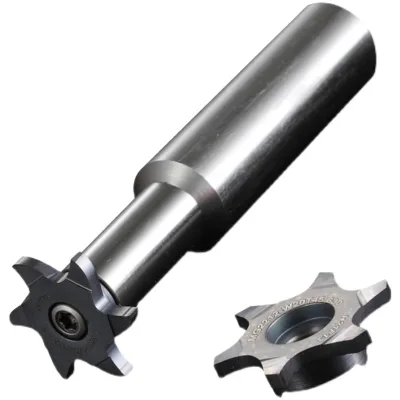


Carbide Cutter End Mill Cutting Tools CNC Lathe Milling Machine Tools Cutter
$183.90 - $188.80
MOQ: 10 Pieces


Milling Cutter Carbide End Mill Cutting Tools CNC Lathe Milling Machine Tools
$13.90 - $18.80
MOQ: 10 Pieces

Tools Lathe Cutting Cutter Carbide End Mill Milling CNC Millng Machine Tools
$13.90 - $18.80
MOQ: 10 Pieces

Four Side Milling Surface Automatic Cutting Machine High Precision CNC Machinery
$30000.00 - $100000.00
MOQ: 1 Pieces


Comprehensive Sourcing Guide
Strategic Sourcing Guide for Three-Side Edge Milling Cutters
The procurement of three-side edge milling cutters requires a nuanced understanding of the intersection between geometric precision, material science, and industrial application. These tools are critical for high-efficiency machining operations where multiple surfaces must be finished in a single pass or where complex edge profiling is required. The market offers a diverse array of configurations, ranging from integral high-speed steel units to indexable tungsten carbide systems. Buyers must navigate a landscape defined by specific technical attributes, such as tooth form, structure, and coating, to ensure the selected tool aligns with their specific machining center capabilities and production goals.
Technical Specifications and Geometric Variations
The fundamental definition of a three-side edge milling cutter often overlaps with broader categories such as face milling cutters, side milling cutters, and vertical milling cutters. In the current supply landscape, these tools are available in a wide spectrum of sizes, with observed specifications ranging from metric dimensions of 50mm to 200mm, down to imperial measurements as small as 1/32 inch up to 3/8 inch. Additionally, specific radius configurations are available, covering a range from R1 to R20, which is essential for applications requiring rounded edges or specific corner radii.
The tooth geometry is a primary differentiator. Suppliers offer cutters with straight tooth forms, which are often associated with general-purpose cutting, as well as spiral tooth forms that provide smoother cutting action and better chip evacuation. The tooth space configuration is equally critical; buyers may encounter both sparse tooth and dense tooth arrangements. A sparse tooth design is typically preferred for softer materials or heavy stock removal, whereas dense tooth configurations are often utilized for finishing operations on harder materials to ensure a superior surface finish.
The structural integrity of the cutter is another vital specification. The market includes integral structures, where the cutting edges are machined directly from a single block of material, and indexable turning tool structures, which utilize replaceable inserts. The integral design is common in high-speed steel (HSS) variants, offering a robust solution for continuous cutting tasks. Conversely, indexable tools often feature tungsten steel or tungsten carbide grades, such as Yg15c, allowing for cost-effective maintenance and consistent performance as inserts are replaced. The hardness of these materials is a key performance indicator, with observed hardness values reaching up to 87.5 HRA for specific tungsten steel grades, ensuring durability against abrasive workpieces.
Material Composition and Surface Treatments
The material selection for three-side edge milling cutters dictates the tool's lifespan, cutting speed, and suitability for specific workpiece materials. High-speed steel (HSS) remains a dominant material for integral cutters, particularly those designed for general steel machining. For more demanding applications, tungsten steel is frequently specified, with density values observed around 14.9g/cm3. This high density correlates with the material's ability to withstand high cutting forces and maintain edge sharpness.
Surface treatment and coating play a significant role in extending tool life. While some products are listed as uncoated, which may be suitable for specific non-ferrous applications or where coating adhesion is a concern, many modern cutters feature advanced coating processes. These coatings reduce friction, dissipate heat, and protect the cutting edge from wear. The choice between coated and uncoated options should be driven by the specific material being machined, such as steel, hardware components, or metal manufacturing alloys.
Compliance, Certification, and Standards Verification
In the B2B procurement of industrial cutting tools, verifying compliance with international standards is non-negotiable. Buyers must ensure that the supplier can provide documentation confirming adherence to recognized quality management systems. ISO certification is a standard benchmark observed in the industry, serving as a proxy for the supplier's commitment to consistent manufacturing processes and quality control.
Regarding dimensional and performance standards, the market exhibits a mix of metric and imperial specifications. Buyers should verify that the product standards align with their machinery's requirements. Observed standard references include specific hardness ratings like 64 HRC for certain steel components and specific size ranges such as 50-200mm or 1/8 to 1/2 inch. It is crucial to note that while some listings mention specific standard codes like "K-N," these may refer to internal classification systems rather than universal industry standards. Therefore, procurement teams must request detailed technical data sheets that explicitly define the tolerances and material properties rather than relying solely on generic standard codes.
Cost Drivers and Pricing Dynamics
The pricing of three-side edge milling cutters is influenced by a complex matrix of factors, including material grade, manufacturing complexity, and packaging requirements. The observed price range in the market is exceptionally broad, spanning from approximately $0.80 to $100,000. This variance reflects the difference between small, standard HSS cutters and large, custom-engineered tungsten carbide systems or specialized indexable holders.
Material costs are a primary driver. Tungsten steel and high-grade carbides are significantly more expensive than HSS, directly impacting the unit price. Furthermore, the complexity of the tooth form and the precision required for spiral or straight tooth configurations add to the manufacturing cost. Customization is a significant cost factor; while many suppliers offer standard universal tools, customized options involving specific dimensions, tooth counts, or unique coatings will incur higher prices and potentially longer lead times.
Packaging also influences the final cost. Options range from standard industrial packaging to specialized anti-rust paper boxes or plastic boxes. For high-value tools, protective packaging is essential to prevent damage during transit, and the cost of such specialized packaging is often factored into the product price. Buyers should also consider the Minimum Order Quantity (MOQ), which ranges from 1 to 100 units. Smaller MOQs offer flexibility for prototyping but may result in a higher unit cost, whereas bulk orders typically benefit from economies of scale.
Typical Applications and Operational Context
Three-side edge milling cutters are versatile tools designed for a wide array of industrial applications. The primary application areas include steel manufacturing, hardware production, and the fabrication of household appliances. These cutters are essential in environments requiring the machining of metal components for cars, as well as in general metal manufacturing facilities. The versatility extends to various machine types, including grinding machines, milling machines, and lathes.
The specific application dictates the tool selection. For instance, a three-side edge cutter with a spiral tooth form and dense tooth spacing might be ideal for finishing operations on automotive parts where surface finish is critical. In contrast, a straight tooth, sparse tooth design might be preferred for heavy stock removal in steel manufacturing. The ability to perform cut-off operations and shaping modes, such as compression, further expands the utility of these tools. Buyers must match the cutter's attributes, such as the cavity type (single-cavity) and hole type (round mould), to the specific geometry of the workpiece to ensure optimal performance.
Supplier Evaluation and Quality Control
Evaluating suppliers for three-side edge milling cutters requires a rigorous assessment of their technical capabilities and quality assurance processes. The origin of the product is a relevant factor, with a significant portion of the market supply originating from Jiangsu, China, specifically Zhenjiang. While geographic origin can indicate supply chain maturity, it should not be the sole criterion for selection.
Buyers should prioritize suppliers who offer comprehensive after-sales support, including lifetime technology support. This commitment to long-term service is indicative of a supplier's confidence in their product quality. Additionally, the availability of a warranty, such as a 2-year warranty, provides a safety net for buyers and signals the supplier's adherence to quality standards.
Quality control measures should be verified through the supplier's ability to provide test results and performance data. While specific test data may not always be publicly listed, buyers should request evidence of hardness testing, density verification, and dimensional accuracy checks. The presence of ISO certification is a strong indicator of a robust quality management system, but it should be complemented by on-site audits or detailed inspection reports for critical orders.
Long-Term Procurement Considerations
Sourcing three-side edge milling cutters is not merely a transactional activity but a strategic decision that impacts long-term production efficiency. Buyers should consider the total cost of ownership, which includes not only the purchase price but also the tool's lifespan, maintenance requirements, and the cost of downtime associated with tool failure.
The availability of customized solutions is a key consideration for long-term procurement. As production requirements evolve, the ability to source cutters with specific dimensions, tooth forms, or materials becomes increasingly valuable. Suppliers who offer customization, such as specific tooth spacing or integral structures tailored to unique machinery, can provide a competitive advantage by optimizing the machining process.
Furthermore, the supply chain stability is crucial. Buyers should assess the supplier's capacity to meet demand fluctuations, their lead times, and their ability to maintain consistent quality over time. The option for "on request" packing or specific industrial packaging can also be a strategic advantage, ensuring that tools arrive in optimal condition and are ready for immediate use. By focusing on suppliers who offer a blend of technical expertise, quality assurance, and flexible service, buyers can secure a reliable supply of three-side edge milling cutters that support their manufacturing objectives for years to come.
Comparative Analysis of Tool Configurations
To assist in the selection process, the following table summarizes the key variations observed in the market for three-side edge milling cutters. This comparison highlights the trade-offs between different configurations and helps buyers align their selection with specific operational needs.
| Feature | Configuration A | Configuration B | Configuration C |
|---|---|---|---|
| Material | High Speed Steel | Tungsten Steel (Yg15c) | Tungsten Steel |
| Structure | Integral | Indexable Turning Tool | Integral |
| Tooth Form | Straight Tooth | Spiral Tooth | Straight Tooth |
| Tooth Space | Sparse Tooth | Dense Tooth | Dense Tooth |
| Coating | Uncoated | Coated | Coated |
| Hardness | Standard HRC | 87.5 HRA | High Hardness |
| Application | General Steel | Precision Hardware | Metal Manufacturing |
| Size Range | 50mm to 200mm | R1 to R20 | 1/32 to 3/8 Inch |
| Packing | Industrial | Plastic Box | Anti Rust Paper Box |
This table illustrates that no single configuration is universally superior. The choice depends entirely on the specific requirements of the machining operation, the material being processed, and the desired balance between cost and performance. Buyers must carefully evaluate these attributes against their production constraints to make an informed procurement decision.
FAQs
What materials are used for three side edge milling cutters?
These cutters are primarily made from High Speed Steel or Tungsten Steel. High Speed Steel is common for integral structures, while Tungsten Steel offers higher hardness and density for demanding applications like steel manufacturing.
Which tooth forms are available for these milling cutters?
Buyers can find both straight tooth and spiral tooth forms. The tooth space is available in sparse or dense configurations, allowing selection based on whether the application requires heavy stock removal or a superior surface finish.
Can I order customized three side edge milling cutters?
Yes, customization is available for these tools. Suppliers offer options for specific dimensions, tooth forms, and coatings, with some products supporting custom requests for unique machining requirements and specific cavity types.
What is the size range for metric and imperial models?
Sizes range from 50mm to 200mm for metric models and 1/32 to 3/8 inch for imperial models. Radius configurations are also available from R1 to R20 to suit various edge profiling needs.
How are these cutters typically packaged for shipping?
Packaging options include industrial packing, anti-rust paper boxes, and plastic boxes. Some suppliers also offer custom packing on request to ensure the tools arrive in optimal condition for immediate use.
What certifications do the manufacturers hold?
Manufacturers often hold ISO certification to verify quality management systems. This certification serves as a benchmark for consistent manufacturing processes and ensures the tools meet recognized industry standards for durability and precision.
Where are these milling cutters typically manufactured?
Many products originate from Zhenjiang, Jiangsu, China. This region is a known hub for industrial cutting tools, providing a stable supply chain for both standard and customized Three Side Edge Milling Cutter units.