Source Touch Control Rechargeable Desk Lamp for Office, Study, and Reading
Explore 30 available options for a Touch Control Rechargeable Desk Lamp designed for various lighting needs. Buyers can compare specifications such as power source, material, and certification standards to find the ideal fixture for office, study, or reading environments.
Key considerations
Products List


Versatile LED Desk Lamp with Eye Protection and Rechargeable Flashlight
$3.55 - $4.00
MOQ: 1000 Pieces


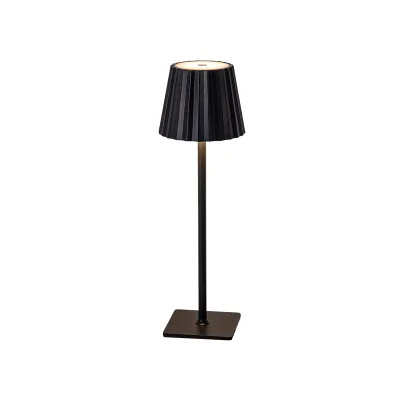
Rechargeable Portable Desk Lamp Indoor Decor Lamp for Living Room Dining Room
$141.00 - $169.00
MOQ: 1 Pieces




Comprehensive Sourcing Guide
Strategic Sourcing Guide for Touch Control Rechargeable Desk Lamps
The global market for touch control rechargeable desk lamps has evolved from a niche lighting category into a staple for modern workspaces, educational environments, and residential reading nooks. For B2B procurement professionals, sourcing these units requires a nuanced understanding of the intersection between electronic control systems, battery chemistry, and mechanical design. The core keyword "Touch Control Rechargeable Desk Lamp" implies a specific set of functional requirements: a user interface that responds to capacitive touch inputs, an integrated power storage system eliminating the need for constant AC tethering, and a form factor optimized for desk usage. This guide synthesizes available product data and industry standards to provide a structured approach for evaluating potential supply chain partners and product specifications.
Technical Architecture and Functional Specifications
When evaluating the technical architecture of a Touch Control Rechargeable Desk Lamp, the primary focus must be on the integration of the control mechanism with the power source. The product data indicates that "Touch Control" is a defining attribute for this category. This implies the use of capacitive sensing technology embedded within the lamp's housing, typically at the base or the lampshade junction. Buyers must verify that the touch sensor is responsive to light taps and does not require physical pressure, ensuring a seamless user experience.
The power architecture is equally critical. The observed specifications highlight a "Rechargeable Battery" as a standard feature, with specific references to "Built-in Lithium Battery" and a "Battery Capacity" of 1000mAh in certain models. This capacity suggests a design intended for moderate usage periods, likely sufficient for 2-4 hours of continuous operation depending on the LED wattage. The power source is listed as both "AC" (for charging) and "Built-in Lithium Battery" (for operation), indicating a dual-mode capability. Procurement teams should confirm the voltage requirements for charging, with data noting a "Voltage" of ≤36V, which is consistent with low-voltage DC charging standards for portable electronics.
Lighting performance is another technical pillar. The data points to an "LED" light source with power ratings ranging from ≤5W to 16-20W across different models. This variance suggests a market segment split between ultra-low-power reading lights and higher-output task lamps. The "Beaming Angle" is specified as 60° in certain configurations, a standard angle for focused task lighting that minimizes glare while providing adequate illumination for reading or writing. Furthermore, the "3-Color Dimmable" attribute observed in specific model descriptions indicates the presence of a Color Temperature Control (CCT) feature, allowing users to switch between warm, neutral, and cool white light. This functionality is typically managed through the touch interface, cycling through presets or adjusting brightness levels via touch duration.
Compliance, Certification, and Safety Standards
In the B2B procurement of electronic lighting products, compliance is not merely a regulatory hurdle but a prerequisite for market access and liability protection. The supplied product facts list several key certifications, including "GS," "VDE," "RoHS," and "CE." These acronyms represent distinct safety and environmental standards that buyers must verify on a per-shipment basis.
The "CE" mark indicates conformity with health, safety, and environmental protection standards for products sold within the European Economic Area. "RoHS" (Restriction of Hazardous Substances) ensures that the product does not contain specific hazardous materials like lead or mercury, which is critical for environmental compliance and recycling. "VDE" and "GS" are German standards often recognized globally for high electrical safety, particularly regarding insulation and fire resistance. The presence of "CE Certified" as a standalone attribute in the data reinforces the necessity of checking the validity of these marks on the physical product and its accompanying documentation.
Buyers should also scrutinize the "Standard" attributes listed in the product data, such as "35X14X13CM" or "7033.565.5cm." While these appear to be dimensions, in a compliance context, they may refer to packaging standards or specific model sizing that impacts shipping and storage logistics. Additionally, the "Made in China" and "Jiangsu, China" origin data points highlight the manufacturing hub. Procurement teams must ensure that the supplier can provide valid test reports from accredited laboratories that correspond to the claimed certifications, as the presence of a certification name in a listing does not guarantee the specific batch has been tested or certified.
Cost Drivers and Pricing Dynamics
The pricing landscape for touch control rechargeable desk lamps is influenced by a complex matrix of material costs, battery technology, and customization levels. The observed listed price range spans from $0.94 to $169, a significant variance that reflects the diversity of the product category. This wide range suggests that the lower end of the spectrum likely corresponds to basic models with simple touch controls and lower-capacity batteries, while the higher end encompasses premium designs with advanced dimming features, robust metal frames, and higher battery capacities.
Material composition is a primary cost driver. The data identifies "Metal" and "Iron" as frame materials, alongside "Plastic" for lampshades and housings. Metal construction, particularly iron or aluminum, generally commands a higher price point due to material costs and the additional manufacturing steps required for finishing and assembly. Conversely, plastic models offer a more cost-effective solution but may be perceived as less durable. The "Frame Color: Golden" attribute indicates that aesthetic customization also impacts pricing, as specialized finishes require additional processing.
The Minimum Order Quantity (MOQ) is another critical factor in cost calculation. The observed MOQ range is 1 to 3000 units, with a specific data point noting an MOQ of 100PCS. For buyers with smaller volume requirements, the unit cost will be higher due to the lack of economies of scale. However, the availability of low MOQs (down to 1 unit) suggests that some suppliers cater to sample orders or small-batch testing. Buyers must balance the desire for lower unit costs against the need for inventory flexibility. Customization, noted as "Available" and "Can Be Customized" for size and standard, will invariably increase the unit price and potentially the MOQ, as it disrupts standard production runs.
Typical Applications and Market Segmentation
The versatility of touch control rechargeable desk lamps allows them to serve a wide array of applications, from commercial hospitality to residential use. The data explicitly mentions "Restaurant" as an applicable place, indicating that these lamps are suitable for ambient lighting in dining areas where table space is limited and wall outlets may be scarce. The rechargeable nature of the product eliminates the need for complex wiring, making it ideal for temporary setups or venues with strict aesthetic constraints regarding visible cords.
Beyond restaurants, the "Modern" style attribute and the "Flexible" type designation suggest strong applicability in office environments, co-working spaces, and home offices. The ability to adjust color temperature and brightness via touch control makes these lamps highly functional for tasks requiring visual comfort, such as reading, drafting, or computer work. The "Bird Touch Desk Lamp" model description hints at decorative or novelty designs that might appeal to the gift market or children's rooms, where the rechargeable feature adds safety by removing the risk of tripping over cords.
The "Quantity of Lights" attribute, though phrased as "Style:Modern," implies that these units can be deployed in clusters or as part of a larger lighting scheme. In commercial settings, the uniformity of the touch interface and the consistent color temperature across multiple units are essential for maintaining a cohesive brand image. For educational institutions, the rechargeable aspect allows for flexible seating arrangements without the need for permanent electrical infrastructure changes.
Supplier Evaluation and Quality Assurance
Evaluating suppliers for this category requires a rigorous approach to verifying the claims made in product listings. The data indicates that "Customization" is available, which is a strong indicator of a supplier's manufacturing flexibility. However, buyers must distinguish between a supplier that can simply change the color of a lamp and one that can engineer custom battery capacities or control logic. The "Delivery Time" of 15-30 days is a standard lead time for this region, but buyers should confirm if this timeline includes customization or if it applies only to stock items.
Quality control should focus on the battery and the touch interface. Since the product relies on a "Built-in Lithium Battery," the supplier must demonstrate adherence to safety standards for battery transport and operation. Buyers should request test reports for battery cycle life, charging efficiency, and thermal management. The "Touch Control" mechanism must be tested for durability and sensitivity; a common failure point is the degradation of the capacitive sensor over time or its susceptibility to false triggers from ambient light or nearby electronics.
The "Packing" methods listed, such as "Carton," "Carton Packing," and "Foam Package," are critical for protecting the product during transit. Foam packaging is often used for higher-value items to prevent damage to the delicate touch sensors or the lampshade. Buyers should verify that the packaging meets the "0.02cbm" standard mentioned in the data, ensuring that the shipping volume is optimized to reduce logistics costs. Additionally, the "Size: Can Be Customized" attribute requires clear communication with the supplier to ensure that the final product dimensions align with the intended application, particularly for space-constrained environments.
Long-Term Procurement and Supply Chain Resilience
Sourcing touch control rechargeable desk lamps is not a one-time transaction but a strategic partnership that requires long-term planning. The "MOQ" of 100PCS and the potential for higher volumes up to 3000 units suggest that buyers should plan for recurring orders to maintain cost efficiency. However, the variability in "prod_model" numbers (e.g., 2511141418, 1249, 1241, 1231, 1229, 1243, 1251) indicates a dynamic product line. Buyers must establish a protocol for managing product obsolescence and ensuring that replacement parts, particularly batteries and touch control modules, remain available.
The "Origin" of the products, specifically "China" and "Jiangsu, China," places the supply chain in a region known for its electronics manufacturing prowess but also subject to geopolitical and logistical fluctuations. Buyers should diversify their supplier base or maintain safety stock to mitigate risks associated with shipping delays or trade policy changes. The "Lead Time" of 15-30 days is a baseline; buyers should negotiate buffer times for peak seasons or custom orders.
Finally, the "Style: Modern" and "Frame Color: Golden" attributes highlight the importance of aesthetic consistency. As market trends shift, the ability of the supplier to adapt the design without compromising the core functionality of the touch control and rechargeable features will be a key differentiator. Procurement teams should maintain open lines of communication with suppliers to stay informed about new technologies, such as faster charging speeds or more energy-efficient LEDs, that could enhance the value proposition of the product line. By focusing on these long-term considerations, buyers can build a resilient supply chain that delivers high-quality, compliant, and innovative lighting solutions.
FAQs
Can I customize the size and standard of the lamp?
Yes, customization for size and standard is available for this product line. Buyers should confirm specific requirements with the supplier as this may affect the minimum order quantity and lead time.
What certifications are required for these desk lamps?
Common certifications include CE, RoHS, VDE, and GS for safety and environmental compliance. Buyers must verify that specific batches have valid test reports matching these standards before finalizing orders.
How long is the delivery time for bulk orders?
The standard delivery time ranges from 15 to 30 days for production and shipping. This timeline may vary depending on whether the order includes custom specifications or requires expedited processing.
What is the minimum order quantity for these lamps?
The minimum order quantity can be as low as one unit for samples or up to 100 pieces for standard batches. Some suppliers may require higher volumes, so checking specific vendor terms is essential.
Which battery capacity is available for the rechargeable models?
Specific models feature a built-in lithium battery with a capacity of 1000mAh. This capacity supports moderate usage periods, though actual runtime depends on the LED wattage and brightness settings used.
What materials are used for the lamp frame and shade?
Frames are typically made of metal or iron, while lampshades often use plastic materials. These material choices influence the product's durability, weight, and overall aesthetic style for different applications.
Can the lamp be used in restaurant settings?
Yes, these lamps are suitable for restaurant environments due to their flexible design and lack of wiring needs. The rechargeable feature allows for placement in areas where wall outlets are scarce or aesthetic constraints exist.