Source Touch Control Violin Bow Straightener for schools, orchestras, and bands
Explore 30 listings for the Touch Control Violin Bow Straightener to compare features like wood, carbon fiber, and rubber materials. Buyers can evaluate specifications, MOQs, and pricing for various violin sizes including 4/4 and 1/2.
Key considerations
Products List
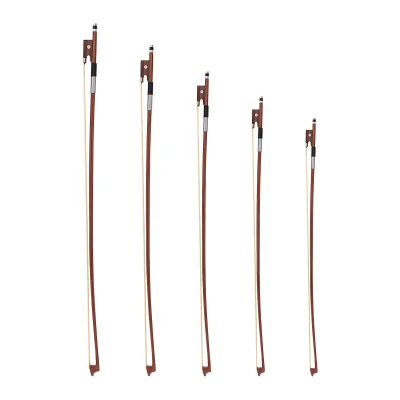
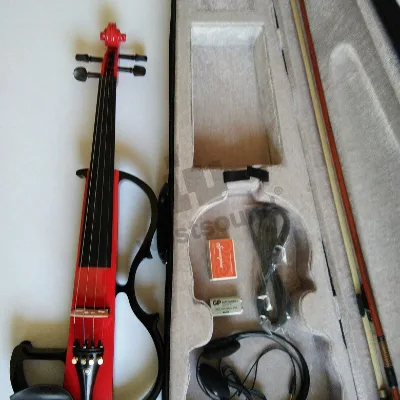
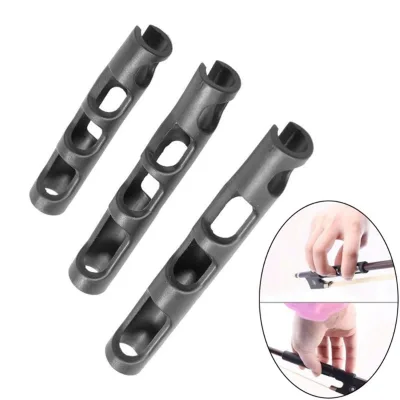
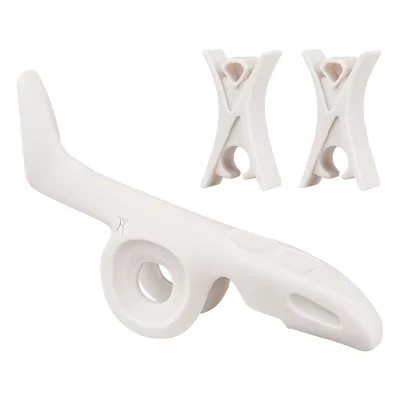
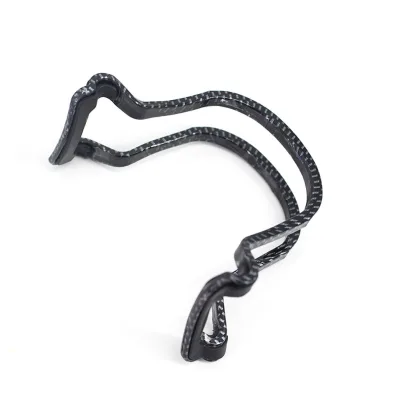
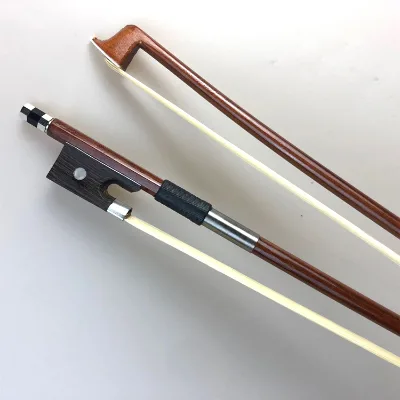
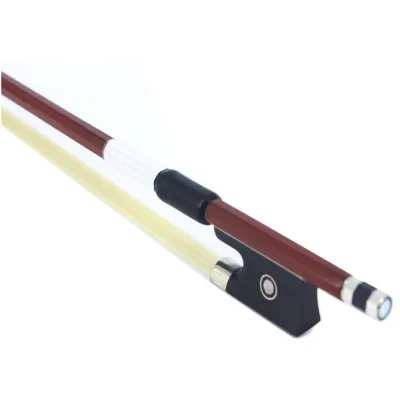
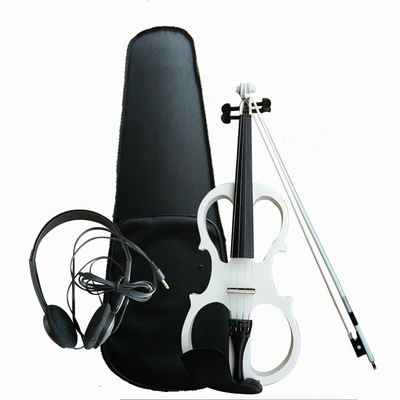


Comprehensive Sourcing Guide
Strategic Sourcing Guide for Touch Control Violin Bow Straighteners
Understanding the Product Category and Functional Scope
The search term "Touch Control Violin Bow Straightener" introduces a specific intersection of musical instrument maintenance and electronic functionality. In the context of professional and educational procurement, it is critical to distinguish between traditional mechanical straighteners and devices that incorporate electronic interfaces. The supplied product data reveals a diverse inventory of violin accessories, ranging from traditional wood and carbon fiber bows to specialized holders and electronic components. While the core keyword suggests a device with "touch control," the observed catalog data includes items labeled strictly as "Violin bow holder," "Violin bow," and accessories with attributes like "Control Type: Touch" or "Power Mode: Battery Powered."
Buyers must first clarify the exact functional requirement. Is the procurement need for a device that actively straightens a bow via electronic sensors and actuators, or is the search term being used to identify a storage solution with a touch-sensitive interface for locking or releasing a bow? The data indicates the existence of products with "Touch" control types and "Battery Powered" modes, suggesting that some items in this category may be electronic holders or smart accessories rather than mechanical straighteners. A procurement strategy must therefore begin with a precise definition of the "straightening" mechanism. If the device is intended to physically correct the camber of a bow, the material properties—such as the presence of "Rubber," "Wood," or "Carbon Fiber"—become the primary indicators of durability and performance. If the device is a smart holder, the focus shifts to the "Control Type" and "Battery Properties." The observed "Battery Properties: Without Battery" for some items and "Battery Powered" for others highlights a fragmented market where buyers must verify the power source before finalizing specifications.
Technical Specifications and Material Integrity
When evaluating the technical specifications of violin bow accessories, the material composition is the most significant determinant of longevity and performance. The observed data lists a wide array of materials, including "Wood," "Rubber," "Carbon Fiber," and "Brazilwood." For a device intended to interact with a violin bow, the material must be compatible with the bow's own construction. Traditional bows are often made of "Brazilwood," while high-end professional bows utilize "Carbon Fiber." A straightener or holder made of "Rubber" might offer cushioning and grip but could lack the structural rigidity required for precise alignment. Conversely, a "Wood" or "Carbon Fiber" component would offer superior stability.
The physical dimensions and weight are equally critical. The data provides specific package sizes, such as "80X13X13 cm" and "16X10X8 cm," alongside gross weights ranging from "1.500 kg" to "8.000 kg" per batch. These variations suggest that the market includes both compact, portable units and larger, bench-top solutions. For a "Touch Control" device, the internal electronics must be housed within a casing that protects them from the humidity and temperature fluctuations common in music studios. The "Finish type: Matte" and "Coating Description: Coated" attributes observed in the data indicate that surface treatments are available, which can affect the tactile feel of the "Touch" interface. Buyers should verify that the coating does not interfere with the sensitivity of the touch sensors. Furthermore, the "Single gross weight" of 8.000 kg for a single item suggests a heavy-duty construction, which may be necessary for a device that applies physical pressure to straighten a bow.
Compliance, Certification, and Safety Verification
In the realm of musical instrument accessories, compliance and certification are often overlooked until a product fails to meet safety standards. The supplied data does not explicitly list certifications such as CE, FCC, or ISO, nor does it mention specific safety standards for electronic components. This absence requires buyers to conduct rigorous due diligence. Any product labeled with "Touch Control" or "Battery Powered" inherently involves electrical safety. Buyers must verify that the device complies with the electrical safety standards of the destination market. For instance, if the device is powered by batteries, it must meet specific requirements regarding battery containment and leakage prevention.
The "Place of Origin: Guangdong, China" is a common manufacturing hub for such goods, but origin alone does not guarantee compliance. Buyers should request test reports specifically for the electronic components, including electromagnetic compatibility (EMC) and electrical safety. The "Model Number" variations, such as "1015," "WGQ-501," "AZ-VA3," and "M-TP101," indicate that different manufacturers or production lines may have different compliance histories. It is essential to confirm that the specific model number being sourced has undergone the necessary testing for the target region. Additionally, the "Material" attributes, such as "Ebony" for fingerboards or "Rubber" for grips, must be checked for compliance with environmental regulations regarding hazardous substances (e.g., RoHS, REACH). Without explicit certification data in the product listing, the procurement team must treat all electronic claims as unverified until third-party test results are provided.
Cost Drivers and Pricing Dynamics
The observed price range of $0.25 to $78 USD reflects a highly fragmented market with significant variation in product value. This wide disparity is driven by several factors, including material quality, electronic complexity, and branding. The lower end of the spectrum, likely around $0.25, may correspond to simple accessories like rubber grips or basic holders without electronic features. The upper end, reaching $78, likely encompasses complex devices with "Touch Control," "Battery Powered" capabilities, and high-quality materials like "Carbon Fiber" or "Brazilwood."
The "MOQ" (Minimum Order Quantity) is another critical cost driver. The data shows MOQs ranging from "1 Pcs" to "100 Pcs," with specific instances of "20 Pcs" and "10 Pcs." For a specialized electronic device like a touch-controlled straightener, a higher MOQ might be necessary to amortize the cost of tooling and electronic component sourcing. Buyers should analyze the unit price relative to the MOQ. A lower unit price at a higher MOQ might be more cost-effective for large-scale distribution, whereas a higher unit price with a low MOQ might be preferable for testing a new product line. The "Selling Units" attribute, listed as "Single item" or "Multiple of 20," further influences the total cost of ownership. Buyers must calculate the total landed cost, including shipping, which can be significant given the "Gross weight per batch" variations from 1.500 kg to 3.000 kg.
Typical Applications and User Scenarios
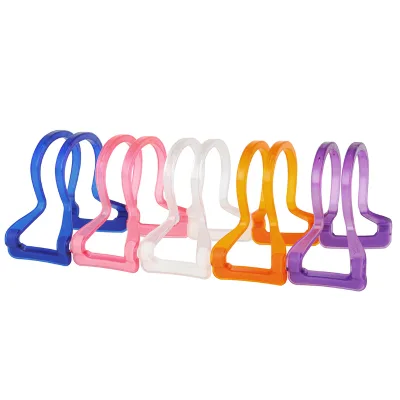
The applications for a "Touch Control Violin Bow Straightener" extend across various segments of the music industry. In professional orchestras and conservatories, where precision is paramount, a device that ensures the bow is perfectly straight before performance is invaluable. The "Specificaiton" attributes, such as "4/4, 1/2, 3/4," indicate that these devices are designed to accommodate different bow sizes, making them versatile for both adult and student instruments. The "Color" options, ranging from "Black" to "White, Blue, Yellow, Gray, Orange, Pink," suggest that aesthetic customization is a factor for retail buyers targeting younger students or specific branding needs.
For educational institutions, the durability of the device is a primary concern. The "Feature: Durable" attribute observed in the data is a key selling point for schools that require equipment to withstand frequent handling. The "Touch Control" interface offers a modern, intuitive user experience, which can be particularly beneficial for students who are not familiar with complex mechanical adjustments. However, the "Battery Properties" must be considered; a device that requires frequent battery replacement or recharging may be less suitable for a classroom setting where reliability is essential. The "Control Type: Touch" implies a need for a clean, unobstructed surface, which might be challenging in a dusty or humid practice room. Therefore, the application environment must be carefully evaluated to ensure the device's electronic components are protected.
Supplier Evaluation and Quality Control Protocols
Evaluating suppliers for this specialized category requires a multi-faceted approach. The "Brand Name" variations, including "yindu," "CIK/OEM," and "OEM," indicate a mix of branded and private-label manufacturers. Buyers should prioritize suppliers who can provide consistent quality across batches. The "Model Number" consistency is a good indicator of a stable production line. When assessing quality, buyers should focus on the "Material" consistency. For example, if a supplier claims "Carbon Fiber" construction, they must provide evidence of the fiber quality and resin bonding. The "Finish type: Matte" and "Coating Description: Coated" should be inspected for uniformity and adhesion.
Quality control protocols should include visual inspection of the "Touch" interface for responsiveness and durability. Buyers should request samples to test the "Battery Powered" functionality, ensuring that the device operates reliably over a full charge cycle. The "Single package size" and "Package size per batch" data should be used to verify that the packaging protects the device during transit, especially given the "Gross weight" variations. A robust quality control plan should also include testing the "Straightening" mechanism (if applicable) for accuracy and repeatability. For electronic devices, a burn-in test is recommended to identify early failures. The "Place of Origin: Guangdong" suggests a high volume of manufacturing, so buyers should verify that the specific factory has a track record of quality in the musical instrument sector.
Long-Term Procurement and Supply Chain Considerations
Long-term procurement of touch control violin bow straighteners requires a focus on supply chain resilience and product lifecycle management. The "Lead time" and "MOQ" flexibility are critical factors. Suppliers offering a low MOQ of "10 Pcs" or "20 Pcs" allow for more agile inventory management, reducing the risk of overstocking. However, buyers must balance this with the potential for higher unit costs. The "Selling Units" structure, such as "Multiple of 20," should be aligned with the buyer's sales forecast to avoid inventory bottlenecks.
Sustainability is another long-term consideration. The "Material" choices, such as "Wood" versus "Carbon Fiber," have different environmental impacts. Buyers should inquire about the sourcing of raw materials and the recyclability of the device components. The "Battery Properties" also raise sustainability questions; devices that use non-rechargeable batteries may face regulatory hurdles in the future. A procurement strategy that favors rechargeable battery systems or modular designs can future-proof the product line. Finally, the "Brand Name" strategy should be considered. Whether to pursue a branded product like "yindu" or a generic OEM product depends on the buyer's market positioning. For a long-term partnership, suppliers who offer customization and consistent quality are preferable to those who only offer commodity goods.
FAQs
How is the touch control interface powered on these devices?
Some models are battery powered while others operate without a battery. Buyers must verify the specific power mode for each model number before purchase to ensure compatibility with their usage needs.
What materials are used for the violin bow holders and straighteners?
Materials include wood, rubber, carbon fiber, and brazilwood depending on the specific item. The choice of material affects durability and the finish type, which can be matte or coated for better grip.
Which bow sizes are compatible with these touch control accessories?
Specifications cover sizes ranging from 1/8 to 4/4, including 3/4 and 1/2. Buyers should check the specific size list for each model to ensure the accessory fits their instrument correctly.
Can I find these products with a minimum order quantity of 10 pieces?
Yes, some listings allow a minimum order quantity of 10 pieces for specific models. Other items may require a higher MOQ of 20 pieces or more, so the exact requirement varies by supplier.
What is the typical gross weight for a single package of these items?
Single gross weights can range from 1.5 kg to 8 kg depending on the product type. Larger packages may weigh up to 8 kg, while smaller batches might be around 1.5 kg per unit.
Where are these violin bow accessories manufactured?
The place of origin for these items is Guangdong, China. This location is a common hub for manufacturing musical instrument accessories and related electronic components.
What color options are available for the touch control devices?
Colors include black, white, blue, yellow, gray, orange, and pink. Some items are listed as brown or have multiple color options to suit different aesthetic preferences.