Source Transrectal Biopsy Guide Needle for prostate, rectal, and soft tissue sampling
Find 30 listings for the Transrectal Biopsy Guide Needle suitable for prostate, rectal, and soft tissue sampling applications. Buyers can compare specifications, sterilization methods, and packaging options from verified suppliers to select the right instrument for their medical needs.
Key considerations
Products List


Surgical Pleural Biopsy Needle/Biopsy Needle Puncture Needle Abdominal Surgery Equipment
$10.00 - $15.00
MOQ: 1 Pieces

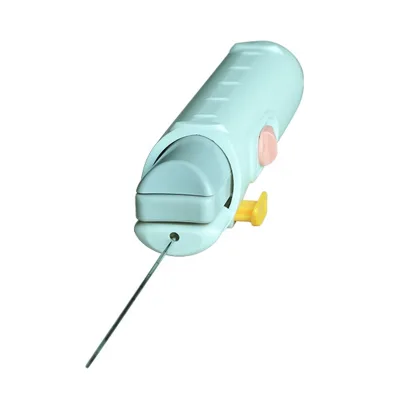
Pleural Biopsy Reusable Needle Private Label Pleural Biopsy Needle Guide
$10.20 - $15.30
MOQ: 100 Minimum


Comprehensive Sourcing Guide
Strategic Sourcing Guide for Transrectal Biopsy Guide Needles
The procurement of transrectal biopsy guide needles represents a critical intersection of clinical precision and supply chain reliability for medical device buyers. These specialized instruments are designed to facilitate accurate tissue sampling from the prostate and adjacent structures, a procedure where needle gauge, tip geometry, and sterility directly influence diagnostic outcomes. When sourcing these devices, buyers must navigate a complex landscape of material specifications, regulatory certifications, and manufacturing standards. The following guide synthesizes available market data and technical requirements to provide a structured approach for evaluating potential suppliers and securing high-quality biopsy systems.
Technical Specifications and Material Integrity
The foundational requirement for any Transrectal Biopsy Guide Needle is the integrity of its construction, specifically the material composition and dimensional accuracy. Based on observed market data, the primary material utilized for the needle shaft is Stainless Steel 304, a grade selected for its balance of corrosion resistance, mechanical strength, and biocompatibility. Some suppliers also reference "High performance stainless steel material" generally, which implies a need for rigorous verification of the specific alloy grade to ensure it meets the demands of repeated sterilization cycles and tissue penetration.
The gauge of the needle is a pivotal specification that varies according to the clinical application and the specific biopsy protocol. Observed product listings indicate a wide range of standard gauges, including 14G, 16G, 18G, 20G, and extending up to 29G. For transrectal procedures, the selection often falls within the 14G to 18G range, though specific clinical needs may dictate the use of finer gauges like 20G or 22G. Buyers must verify that the supplier can provide a consistent gauge range, as the "14G-18G" and "18G-29G" ranges observed in the market suggest that different models serve different tissue densities and sampling requirements.
Furthermore, the tip geometry is a critical design feature. While some listings describe the product as a "Pencil Point Spinal Needle," transrectal biopsy needles typically require a specific cutting or biopsy tip to ensure "Complete Sampling" of soft tissue tumors. The functional requirement is to perform cytologic biopsy of the tumor or other soft tissue, which necessitates a sharp, well-defined edge that minimizes tissue trauma while maximizing sample yield. Buyers should request detailed engineering drawings or physical samples to confirm that the tip design aligns with the intended application, whether for breast, prostate, liver, or lung biopsy.
Regulatory Compliance and Certification Verification
Navigating the regulatory landscape is perhaps the most significant hurdle in sourcing medical devices. The market data indicates that suppliers often claim compliance with major international standards, specifically citing "CE ISO FDA" certifications. However, the presence of these acronyms in a product listing does not automatically guarantee that a specific batch or model is certified. Buyers must treat these claims as observations to be verified rather than absolute facts.
The "Instrument classification" for these devices is listed as "Class II," which in many jurisdictions, including the United States under the FDA framework, requires a 510(k) premarket notification. This classification underscores the moderate-to-high risk associated with the device, necessitating a robust quality management system. The "Certificate" field often lists "CE ISO FDA," but buyers must independently verify the validity of these certificates for the specific model number, such as "ESS-8111" or "ESSBN04," which appear in the market data.
It is essential to distinguish between the manufacturer's general certification status and the specific product certification. A supplier may hold an ISO 13485 certification for their facility, but the specific transrectal guide needle model must also have its own regulatory clearance. The "Lzqtools COM" website mentioned in the data serves as an example of a supplier presence, but buyers should not rely on a single source for certification validation. Instead, the procurement process must include a request for valid, up-to-date regulatory documents that explicitly cover the transrectal biopsy application.
Cost Drivers and Pricing Structures
The pricing for transrectal biopsy guide needles is influenced by a combination of material costs, manufacturing complexity, and regulatory overhead. The observed price range in the market spans from $0.10 to $800.00 USD. This vast disparity suggests that the market includes both single-use disposable components and potentially reusable or complete system kits. The lower end of the spectrum likely corresponds to individual needles or basic components, while the higher end may reflect complete biopsy guns, guide systems, or bulk orders with specific customization.
Several factors drive these costs. First, the material grade, such as Stainless Steel 304 versus higher-performance alloys, impacts the base cost. Second, the sterilization method plays a significant role. The data confirms that "Ethylene Oxide Sterilization" (EO) is a standard process, and the cost of this sterilization, along with the associated biological safety testing, is often passed on to the buyer. Third, packaging requirements, such as "Single Blister Package with OEM Design" or "10PCS/Plastic Box," add to the unit cost. Custom packaging and branding (Logo Printing) are noted as available options, which will incur additional fees compared to standard generic packaging.
Buyers should also consider the Minimum Order Quantity (MOQ) as a cost driver. The observed MOQ ranges from 1 to 10,000 units. A lower MOQ allows for smaller initial investments but often results in a higher per-unit cost. Conversely, ordering in bulk (e.g., 100 units or more, as seen in some listings) may reduce the unit price but requires significant capital outlay and storage capacity. The "Quality Guarantee Period" of two years for some instruments suggests that durable, reusable systems may have a different cost structure compared to disposable items, requiring a total cost of ownership analysis rather than just a unit price comparison.
Typical Applications and Clinical Versatility
While the core keyword is "Transrectal Biopsy Guide Needle," the market data reveals that these instruments are often marketed with broader applications. The "Application" field lists "Dermal Filler/Mesotherapy," "Orthopedic," and specific tissue types like "Breast, Prostate Biopsy, Liver, Lung." This indicates that the same physical needle design, or a family of needles with similar specifications, may be utilized across multiple medical specialties.
For the specific context of transrectal biopsy, the primary application is the "Biopsy of Soft Tissue Tumors" within the prostate. The "Function" is explicitly described as "Cytologic Biopsy of The Tumor or Other Soft Tissue." The ability to perform "Complete Sampling" is a key performance indicator for these devices. Buyers should ensure that the needle's gauge and tip design are optimized for the prostate gland, which has a unique tissue density compared to the liver or lung.
The versatility of these needles is further highlighted by the "Size" specifications, which include "Many Systems and Sizes According to Your Any Requi" (Requirement). This suggests that suppliers offer customizable solutions to fit different biopsy systems and anatomical variations. However, this flexibility requires careful validation. A needle suitable for a dermal filler procedure may not be appropriate for a deep prostate biopsy if the length, stiffness, or tip geometry differs. Buyers must confirm that the specific model they are sourcing is validated for the transrectal route and not just a generic "biopsy needle" used for multiple purposes.
Supplier Evaluation and Manufacturing Capabilities
Evaluating a supplier for transrectal biopsy guide needles requires a deep dive into their manufacturing capabilities and quality assurance processes. The "Place of Origin" is frequently listed as "China," with specific mentions of "Shanghai" and "Henan." While these regions are known for medical device manufacturing, buyers should not assume uniform quality across all facilities. The "Brand Name" "ESS" appears in the data, associated with models like "ESS-8111" and "ESSBN03," indicating that some suppliers operate under established brand identities.
Key evaluation criteria should include the supplier's adherence to the "Instrument classification" of Class II, which implies a need for a robust Quality Management System (QMS). The "After-sale Service" of "Online Technical Support" is a positive indicator, suggesting the supplier is committed to post-purchase assistance. Additionally, the "Quality Guarantee Period" of two years for certain instruments demonstrates confidence in product durability.
Buyers should also assess the customization capabilities. The "prod_prop.Customization" is listed as "Available," and "Logo Printing" options range from "With Logo Printing" to "Without Logo Printing." This flexibility is valuable for hospitals or distributors seeking private-label products. However, the ability to customize does not guarantee that the core product meets clinical standards. The "Standard" field lists "14G-18G," "18G-29G," and "customize," indicating that while standard gauges are common, custom specifications are possible. Buyers must ensure that any custom order undergoes the same rigorous testing and validation as standard products.
Quality Control and Long-Term Procurement Considerations
Ensuring consistent quality in the supply chain is paramount for medical devices. The "prod_packing" varies from "Single Blister Package" to "Carton" and "10PCS/Plastic Box," each with different implications for sterility maintenance and logistics. The "Sterilization" method is confirmed as "Eo" (Ethylene Oxide), which is a standard for medical devices but requires careful handling to ensure the sterility assurance level (SAL) is maintained throughout the supply chain.
Long-term procurement considerations include the "Lead Time" and "MOQ" stability. While specific lead times are not provided in the data, the wide range of MOQs (1 to 10,000) suggests that suppliers have varying production capacities. Buyers should establish a relationship with suppliers who can scale production to meet fluctuating demand without compromising quality. The "Power Source" is listed as "Manual," which simplifies the device mechanics but requires precise manual operation by the clinician, making the needle's tactile feedback and durability critical.
Finally, buyers must plan for the lifecycle of the product. The "Quality Guarantee Period" of two years implies that the supplier stands behind the product's performance for a significant duration. This is particularly relevant for reusable components or systems that may require maintenance or replacement parts. For disposable needles, the focus shifts to the consistency of the sterilization process and the integrity of the blister packaging. By maintaining a rigorous quality control protocol and fostering a transparent relationship with suppliers, buyers can ensure a steady supply of high-quality transrectal biopsy guide needles that meet the demanding needs of modern medical practice.
Comparative Analysis of Product Attributes
To assist in the decision-making process, the following table summarizes key attributes observed in the market data for transrectal biopsy guide needles. This comparison highlights the variability in specifications and helps buyers identify the specific requirements for their procurement strategy.
| Attribute | Observed Range/Options | Relevance to Procurement |
|---|---|---|
| Material | Stainless Steel 304, High performance stainless steel | Determines durability and biocompatibility. |
| Gauge (Standard) | 14G, 16G, 18G, 20G, 22G, 29G | Critical for tissue sampling depth and volume. |
| Sterilization | Ethylene Oxide (EO) | Essential for clinical safety and regulatory compliance. |
| Packaging | Single Blister, Plastic Box, Carton | Affects sterility maintenance and logistics. |
| Certification | CE, ISO, FDA (Claims vary) | Must be verified for specific model numbers. |
| MOQ | 1 to 10,000 units | Impacts initial capital investment and inventory. |
| Origin | China (Shanghai, Henan) | Influences lead times and shipping costs. |
| Customization | Available (Logo, Gauge, Packaging) | Allows for branding and specific clinical needs. |
This table serves as a reference point for buyers to compare potential suppliers. It underscores the importance of verifying each attribute against the specific clinical and operational needs of the buyer's organization. By systematically evaluating these factors, buyers can make informed decisions that balance cost, quality, and regulatory compliance in the procurement of transrectal biopsy guide needles.
FAQs
What materials are used for transrectal biopsy guide needles?
The needles are primarily constructed from Stainless Steel 304 or high-performance stainless steel materials. This ensures the necessary corrosion resistance and mechanical strength required for repeated sterilization cycles and safe tissue penetration during procedures.
Which sterilization methods are available for these medical devices?
Ethylene Oxide Sterilization is the standard method used for these products to ensure sterility. Buyers should verify that the specific batch includes valid sterilization documentation to meet the safety requirements for Class II medical instruments.
Can buyers request custom packaging and logo printing for orders?
Yes, customization is available including options for logo printing and specific packaging designs like single blister or plastic boxes. Suppliers offer these services to accommodate OEM requirements, though this may affect the minimum order quantity and unit pricing.
What certifications do Transrectal Biopsy Guide Needle manufacturers typically hold?
Suppliers often claim compliance with CE, ISO, and FDA standards for their products. However, buyers must independently verify that the specific model number holds valid regulatory clearance for Class II instruments before finalizing any procurement agreement.
How does the needle gauge affect the biopsy procedure outcomes?
The gauge ranges from 14G to 29G, influencing the sample size and tissue trauma levels. Selecting the correct gauge, such as 14G to 18G for prostate biopsies, is critical for achieving complete sampling of soft tissue tumors effectively.
What is the typical minimum order quantity for these surgical supplies?
The minimum order quantity varies significantly, ranging from 1 unit up to 10,000 units depending on the supplier. Lower MOQs allow for smaller initial investments but often result in higher per-unit costs compared to bulk orders.
Where are these medical devices typically manufactured and shipped from?
Most products originate from China, with specific manufacturing hubs located in Shanghai and Henan. Buyers should confirm the exact place of origin to assess logistics costs and ensure the supplier meets their specific regional compliance requirements.