Source Travel Polyester Cosmetic Storage Case for Travel, Sports, and Camping
Compare 30 Travel Polyester Cosmetic Storage Case options featuring waterproof designs, soft or partial hard materials, and customizable logos. Buyers can review specifications for carry-on bags, cosmetic bags, and multifunctional storage solutions suitable for sports, camping, and student use.
Key considerations
Products List


Large Beauty Cosmetic Box Trolley Make up Case Trolley Makeup Beauty Box Case
$26.99 - $35.00
MOQ: 1 Pieces


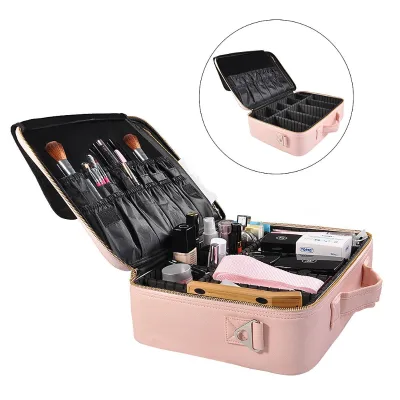

Large Capacity Makeup Carry Case Brush Pocket Portable Cosmetic Storage Bag
$5.89 - $7.86
MOQ: 500 Pieces

Travel Portable Makeup Cosmetic Storage Case Custom Luggage Organizer Bag
$6.00 - $10.00
MOQ: 200 Pieces

Makeup Beauty Handy Cosmetic Case Brush Organizer Pouch Toiletry Storage Travel Bag
$1.57 - $2.14
MOQ: 100 Pieces




Comprehensive Sourcing Guide
Strategic Sourcing Guide for Travel Polyester Cosmetic Storage Cases
Understanding Product Specifications and Material Composition
When sourcing travel polyester cosmetic storage cases, buyers must first establish a clear understanding of the technical specifications that define the product category. The core material for these items is consistently identified as polyester, often utilizing a 210d (denier) specification for the internal lining or structural components. This material choice balances durability with lightweight portability, a critical factor for travel accessories. The physical construction typically features a box-type or horizontal square shape, designed to maximize internal volume while maintaining a compact footprint suitable for carry-on luggage.
The hardness profile of these cases varies significantly across the market. While some units are classified as "soft" to allow for flexible packing, others are described as "partial hard," offering structural rigidity to protect contents like cosmetics or electronics. The closure mechanism is almost universally a zipper, with plastic zippers being a common specification. This choice impacts the overall weight and cost, though buyers should verify the quality of the zipper teeth and slider to ensure longevity.
Dimensions are a primary differentiator in this category. Observed standard sizes include compact units measuring approximately 22820cm, while larger variants can reach 26cm23cm9cm. For specific models, dimensions such as 3619.616.5 inches have been noted, though these likely represent expanded or specific model configurations. Buyers must cross-reference these measurements against their intended use case, whether for personal travel, sports equipment, or student needs. The capacity is generally categorized as "big" or "large," supporting a multifunctional usage profile that extends beyond simple cosmetic storage to include laptop protection, camping gear, and general outdoor supplies.
Compliance, Certification, and Safety Standards
Navigating the compliance landscape for travel accessories requires careful verification of safety standards and certifications. While specific certification statuses like BSCI or ISO9001 may appear in broader market contexts, they should not be assumed as standard for every listing without direct confirmation from the supplier. Instead, buyers should look for explicit mentions of recognized safety standards such as CE, RoHS, and SGS. These certifications indicate that the product meets specific European and international safety, environmental, and quality requirements.
The waterproofing capability is another critical compliance and performance metric. The market presents a dichotomy in this area. Some products are explicitly marketed as "waterproof" with water-resistant coatings applied to the polyester fabric. Conversely, other listings specify that the product is "not waterproof." This distinction is vital for procurement decisions. A buyer sourcing cases for outdoor camping or sports activities must prioritize the waterproofed variants to protect contents from moisture. For indoor or dry-weather travel, the non-waterproof options may suffice and offer cost savings.
Buyers must also verify the origin of the goods. The primary manufacturing location for these items is China. While this is a known hub for textile manufacturing, it necessitates rigorous due diligence regarding labor standards and environmental regulations. The "All" season designation suggests these products are designed for year-round use, implying that the materials must withstand varying temperature conditions without degrading.
Cost Drivers and Pricing Dynamics
The pricing structure for travel polyester cosmetic storage cases is influenced by several key variables. The observed price range in the market spans from $0.50 to $46.40 USD. This wide disparity is not arbitrary but is driven by differences in material quality, customization levels, and order volume. The lower end of the spectrum typically corresponds to basic, non-customized units with standard dimensions and minimal branding. The higher end reflects complex designs, partial hard structures, advanced waterproofing, and significant customization efforts.
Order Volume is the most significant cost driver. The Minimum Order Quantity (MOQ) ranges from as low as 1 unit for samples to 1000 units for bulk production. Specific listings indicate an MOQ of 500 units for certain models. Buyers should be aware that unit costs generally decrease as the order quantity increases, but the threshold for reaching the most competitive pricing varies by supplier.
Customization is a major factor in cost escalation. The ability to customize logos, colors, and dimensions is widely available. However, adding a customized logo via silkscreen printing or other methods incurs additional setup and production costs. The "Style" of the bag, whether it leans toward "Simplicity" or incorporates "Fashion Elements" like trolley bag compatibility, also impacts the final price. Buyers must balance the desire for unique branding against the budget constraints, understanding that every customization step adds to the per-unit cost.
Typical Applications and Usage Scenarios
The versatility of travel polyester cosmetic storage cases allows them to serve a wide array of applications. The primary intended use is for travel, specifically catering to carry-on requirements. The "Unisex" gender classification and "Travel Bag" style make these products suitable for a broad demographic. Beyond general travel, the product usage extends to sports, camping, and student needs.
For sports and camping enthusiasts, the "Outdoor" suitability and "Multifunctional" features are key selling points. These cases can organize gear for hiking, gym sessions, or outdoor expeditions. The "Big" capacity ensures that essential items can be transported efficiently. In the student market, the cases serve as organizers for laptops, stationery, and personal items, with the "Laptop" usage tag confirming this application.
The "Single Open" feature mentioned in some specifications suggests a design focused on quick access, which is beneficial for travelers who need to retrieve items rapidly during transit. The "Fashion Element" of trolley bag compatibility indicates that these cases are designed to be attached to or used in conjunction with rolling luggage, enhancing mobility for frequent flyers. The "All" season attribute reinforces that these are not seasonal items but rather essential tools for year-round organization.
Supplier Evaluation and Production Capabilities
Evaluating suppliers for this product category requires a focus on their production capabilities and logistical reliability. A critical metric is the lead time, which varies between 30-40 days and 45-60 days depending on the order complexity and volume. Buyers must factor this into their supply chain planning, especially for time-sensitive travel seasons.
Sample availability is another crucial aspect of supplier evaluation. Sample times typically range from 7-10 days to 10 days. This period allows buyers to verify the quality of the polyester material, the strength of the zippers, and the accuracy of the dimensions before committing to a bulk order. The ability to provide samples quickly indicates a responsive and efficient production line.
Payment terms are standardized in this sector, with "T/T" (Telegraphic Transfer) being the dominant method. Specific terms often include a 30% deposit and 70% payment after shipping, or a full T/T arrangement. Buyers should ensure these terms are clearly defined in the contract to mitigate financial risk. The "Customization" availability is a standard feature, but the extent of this customization—such as logo placement and color options—must be clarified during the negotiation phase.
Quality Control and Inspection Protocols
Implementing a robust quality control (QC) protocol is essential when sourcing travel accessories. Given the variation in hardness (soft vs. partial hard) and waterproofing (waterproof vs. not waterproof), inspections must be tailored to the specific product specifications ordered. Visual inspections should verify the integrity of the polyester fabric, ensuring there are no loose threads or uneven stitching.
The zipper mechanism requires specific attention. Since plastic zippers are common, buyers should test the slider for smooth operation and check the teeth for alignment. The closure should be secure to prevent accidental opening during transit. For waterproof models, a water resistance test is necessary to confirm the efficacy of the coating. This can be done by spraying water on the exterior and checking for leakage.
Packaging standards are also part of the QC process. The standard packing method is "One Bag in One Polybag" or "1 PCS Packed in a Poly Bag." This ensures that the product arrives in a clean, protected state. However, for bulk orders, buyers may request reinforced packaging to prevent damage during long-distance shipping. The "prod_packing" specification should be verified against the supplier's actual packaging to ensure it meets the buyer's logistical requirements.
Long-Term Procurement and Relationship Management
Sourcing travel polyester cosmetic storage cases is not a one-time transaction but a strategic partnership that requires long-term management. Buyers should focus on building relationships with suppliers who demonstrate consistency in lead times and quality. The variability in lead times (30-60 days) suggests that communication and planning are vital to avoid supply chain disruptions.
Future-proofing the procurement strategy involves staying informed about material trends and design innovations. As the market evolves, new materials or waterproofing technologies may emerge. Maintaining open lines of communication with suppliers allows buyers to adapt to these changes quickly. Additionally, reviewing the supplier's ability to handle customization requests over time is crucial. As branding needs change, the supplier must be able to accommodate new logo designs or color schemes without compromising quality.
Finally, buyers should regularly audit their supplier's compliance status. While certifications like CE, RoHS, and SGS are observed, they may require renewal or re-verification. Ensuring that the supplier maintains these standards protects the buyer from regulatory risks in their own markets. By treating the procurement process as a continuous cycle of evaluation and improvement, buyers can secure a reliable supply of high-quality travel polyester cosmetic storage cases that meet their evolving business needs.
FAQs
What material is used for travel polyester cosmetic storage cases?
These cases are constructed from polyester, often featuring a 210d inside material for durability. Some units include a water-resistant coating, while others are not waterproof, so verify the specific coating status before purchase.
Can I customize the logo on these travel bags?
Yes, customization is available with options like silkscreen printing for logos. Buyers should note that customized logos and specific dimensions may increase the unit cost and require a minimum order quantity of 500 units.
What are the typical lead times for production?
Production lead times generally range from 30 to 60 days depending on the order complexity. Specific models may require 30-40 days or 45-60 days, so plan your supply chain accordingly to avoid delays.
Which certifications are commonly found on these products?
Some listings explicitly mention CE, RoHS, and SGS standards for safety and quality compliance. While broader certifications like ISO9001 exist in the market, buyers must verify these specific standards directly with the supplier.
How much is the minimum order quantity for bulk purchases?
The minimum order quantity varies from 1 unit for samples up to 1000 units for bulk orders. Specific models often require a minimum of 500 units, which influences the per-unit pricing structure significantly.
Are these cases suitable for outdoor camping and sports?
Yes, many models are designed for outdoor use, sports, and camping with big capacity options. However, waterproofing varies, so select models with water-resistant coatings if you plan to use them in wet conditions.