Source TUV 2PFG 1169 Solar Cable for Power Stations, Construction, and Industrial Use
Compare 30 listings for TUV 2PFG 1169 Solar Cable with stranded conductors and XLPE insulation. Buyers can evaluate options for power stations, construction sites, and industrial applications with varying voltage ratings and temperatures.
Key considerations
Products List


Ruitian TUV Approved Electrical PV DC 2pfg 1169 PV1-F 1X4mm2 Solar Cable
$0.37 - $0.56
MOQ: 100 Meters


Hot Sale TUV 2pfg 1169 PV1-F 1500V DC 4mm2 DC Solar PV Cable Single Core 4mm Red or Black
$0.41 - $0.48
MOQ: 100 Meters


PV Cable, TUV 2 Pfg 1169/08.2007, 0.6/1kv H1z2z2-K/PV1-F Photovoltaic Solar Cable
$0.56 - $0.60
MOQ: 1000 Meters


Customize Solar Cable TUV 2 Pfg 2962 PV1500-Swr Solar Floating PV Cable
$0.56 - $0.68
MOQ: 1000 Meters




Comprehensive Sourcing Guide
Navigating TUV 2PFG 1169 Solar Cable Procurement for Global Projects
Sourcing high-performance photovoltaic (PV) cables is a critical step in ensuring the longevity and safety of solar energy installations. The specific designation "TUV 2PFG 1169" refers to a standardized cable type widely recognized in the industry for its suitability in solar power applications. This guide provides a structured approach for procurement professionals to evaluate, select, and manage the acquisition of these cables, relying strictly on verified product attributes and established industry knowledge. The focus remains on understanding the technical nuances, compliance requirements, and supply chain factors that define a successful procurement strategy for this specific product category.
Technical Specifications and Conductor Composition
The foundation of any solar cable procurement lies in a precise understanding of the technical specifications. The product data indicates a complex profile involving specific conductor types and insulation materials. A primary observation for the "TUV 2PFG 1169" designation involves the conductor composition. While some listings in the market highlight "Stranded Aluminum Alloy" for specific models like the 2PfG 2642, the core specification for the 2PFG 1169 PV1-F variant typically centers on copper-based conductors. The available data explicitly lists "Tinned Copper" and "Stranded" as key attributes for the wire core. This stranded configuration is essential for flexibility, allowing the cable to withstand the mechanical stresses of installation and thermal expansion in outdoor environments.
The insulation and sheath materials are equally critical for performance. The product attributes identify "Crosslinking" as a material property for the sheath and "XLPE" (Cross-linked Polyethylene) as the insulation material. This cross-linking process enhances the thermal and chemical resistance of the cable, which is non-negotiable for solar applications exposed to UV radiation and extreme temperatures. The data further specifies a temperature rating range of -40°C to +90°C for standard operation, with some broader specifications noting a maximum use temperature of up to 125°C. Buyers must verify that the specific batch they procure aligns with the required operational temperature limits of their project site.
Electrical ratings are another pillar of the technical specification. The observed data points to a rated voltage of DC 1500V and a maximum voltage capability of DC 1800V. Additionally, the nominal voltage is often cited as U0/U = 600/1000V AC and 1000/1500V DC. The test voltage requirement is substantial, with specific records indicating a test voltage of 6.5kV AC for 5 minutes, or 6500V AC. These high-voltage ratings ensure the cable can safely handle the DC output of modern solar inverters without dielectric breakdown. The cable is available in single-core or twin-core configurations, with cross-sectional areas ranging from 1.5mm² to 35mm², and specific standard sizes like 2.5, 4, 6, and 10 square millimeters.
Compliance and Certification Verification
Certification is the most significant differentiator in the solar cable market. The "TUV" designation in the core keyword is not merely a brand name but a reference to the rigorous testing and certification standards applied to the product. The supplied facts confirm that "TUV" is a listed certification for these products. Specifically, the product model "TUV 2PFG1169 PV1-F" is explicitly linked to this certification. In the context of solar procurement, this certification implies that the cable has passed specific tests for flame retardancy, UV resistance, and thermal stability.
Buyers must verify the flame retardant standard compliance. The data explicitly cites "IEC60332-1" as the flame retardant standard. This standard defines the cable's ability to prevent the spread of fire in a single vertical insulated wire or cable installation. Beyond flame retardancy, the product attributes mention "Capacitance" and "Long Term Resistance" as test items, alongside "Mould Growth Test" and "Salt Mist Test" for other models. These tests are crucial for ensuring the cable performs in diverse environmental conditions, from humid coastal areas to arid desert locations.
When evaluating a supplier, the buyer should request the specific TUV certificate number and verify its validity with the certification body. The presence of the "TUV" label on the product page is a strong indicator, but the physical certification documentation is the ultimate proof of compliance. The data also notes that the product origin is listed as "Wuxi, China" and "Hebei, China," indicating that manufacturing hubs in these regions produce these certified cables. However, the location of the factory does not automatically guarantee the certification status; the certification is a property of the specific production batch and quality control process.
Cost Drivers and Pricing Dynamics
Understanding the cost structure of solar cables is vital for budget management. The observed price range in the market spans from $0.01 to $200, a wide variance that reflects differences in cable length, cross-sectional area, and order volume. The price per unit is rarely a fixed figure; it is heavily influenced by the raw material costs, particularly copper and aluminum. Since the data lists both "Tinned Copper" and "Stranded Aluminum Alloy" as conductor types, the choice of material will significantly impact the final cost. Copper cables generally command a higher price due to material value and conductivity, while aluminum alloy options offer a cost-effective alternative for specific applications where weight and cost are primary concerns.
The Minimum Order Quantity (MOQ) is another major cost driver. The observed MOQ range is extensive, from 1 to 100,000 units. For small-scale projects or sample acquisitions, buyers may encounter higher per-unit costs due to low-volume production runs. Conversely, large-scale procurement with an MOQ approaching 100,000 units can leverage economies of scale to reduce the unit price. The data indicates that "Sample" units are available for free, which is a useful strategy for buyers to validate quality before committing to a large order.
Packaging also influences the effective cost. The product is typically supplied in rolls of 100m, 200m, 500m, or 1000m, or on coils and drums. The choice of packaging affects shipping logistics and handling costs. Longer rolls reduce the number of splices required during installation, potentially lowering labor costs, but may increase the initial shipping weight and volume. Buyers should calculate the total landed cost, including freight and handling, rather than focusing solely on the per-meter price listed on the product page.
Typical Applications and Installation Environments
The versatility of TUV 2PFG 1169 solar cables makes them suitable for a wide array of applications. The product attributes list "Construction," "Industrial," "Power Station," "Overhead," and "Underground" as key application areas. This broad applicability stems from the cable's robust construction, which includes UV-resistant insulation and flexible stranded conductors. In power stations, these cables are used to connect solar panels to inverters and combiner boxes, handling high DC voltages efficiently.
The environmental resistance of the cable is a primary factor in its application selection. With a minimum use temperature of -40°C and a maximum of 125°C, these cables are designed to withstand extreme weather conditions. The "Salt Mist Test" and "Mould Growth Test" mentioned in the data suggest suitability for coastal or humid environments where corrosion and biological growth could degrade standard cables. The "Crosslinking" sheath material provides additional protection against chemical exposure and mechanical abrasion, making the cable ideal for underground installations or overhead runs where physical protection is required.
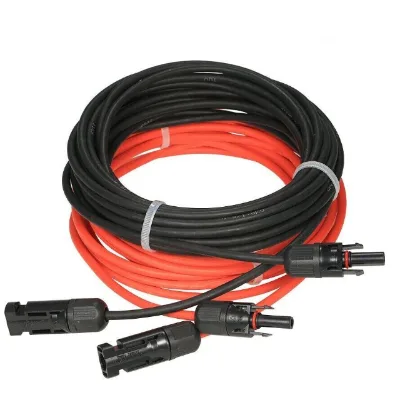
Color options are also relevant for installation efficiency. The data specifies that cables are available in "Black," "Red," or "Customized" colors. In solar arrays, red and black are standard for positive and negative conductors, respectively, aiding in quick identification and reducing wiring errors. The ability to customize colors allows for specific project requirements or branding needs. The "Jacket" attribute notes "Xlpo" (Cross-linked Polyolefin) as an optional color jacket, further enhancing the cable's resistance to environmental stressors.
Supplier Evaluation and Sourcing Strategy
Evaluating suppliers requires a systematic approach to ensure reliability and product authenticity. The product origin is listed as "Wuxi, China" and "Hebei, China," indicating that the manufacturing base is concentrated in these regions. While these locations are known for cable production, buyers should not assume that all suppliers from these regions offer the same quality. The key is to verify the supplier's ability to provide the specific "TUV 2PFG 1169" certification and the associated test reports.
Buyers should prioritize suppliers who offer "Customization" services, as indicated in the product attributes. This flexibility allows for tailored solutions regarding cable length, color, and packaging. The availability of free samples is another positive indicator of a supplier's confidence in their product quality. Before placing a large order, buyers should request samples to verify the physical attributes, such as the stranded conductor quality and the insulation thickness.
The "prod_packing" attribute mentions "TUV" as a packing attribute, which may refer to specific packaging standards or the inclusion of certification documents within the packaging. Buyers should ensure that the packaging includes all necessary documentation, including the TUV certificate, test reports, and a detailed specification sheet. This documentation is essential for project compliance and future maintenance. Additionally, the supplier's ability to handle large orders with an MOQ up to 100,000 units should be assessed to ensure they can meet the project timeline.
Quality Control and Long-Term Procurement Considerations
Quality control is paramount in solar cable procurement to prevent system failures and safety hazards. The data highlights several critical test items, including "Capacitance," "Long Term Resistance," "Mould Growth Test," and "Salt Mist Test." These tests are not merely checkboxes but indicators of the cable's long-term reliability. Buyers should request detailed test reports for these specific attributes to verify that the product meets the required standards.
The "Flame Retardant" standard of "IEC60332-1" is a baseline requirement, but buyers should also inquire about additional fire safety tests if the project is in a high-risk area. The "Test Voltage" of 6.5kV AC for 5 minutes is a critical quality check that ensures the insulation can withstand high electrical stress. Any deviation from these test parameters should be a red flag.
Long-term procurement considerations involve the stability of the supply chain and the consistency of product quality. The wide range of observed MOQs suggests that buyers can scale their orders as project needs evolve. However, maintaining a relationship with a supplier who can consistently deliver certified products is crucial. The "Customization" attribute suggests that suppliers can adapt to changing project requirements, which is valuable for long-term partnerships.
In conclusion, sourcing TUV 2PFG 1169 solar cables requires a meticulous approach that balances technical specifications, certification verification, cost analysis, and supplier evaluation. By focusing on the verified attributes such as the TUV certification, XLPE insulation, and specific voltage ratings, buyers can make informed decisions that ensure the safety and efficiency of their solar projects. The availability of customization and free samples provides opportunities for thorough due diligence before committing to large-scale procurement. Ultimately, the success of the procurement process depends on a rigorous adherence to the technical and compliance standards outlined in the product data.
FAQs
What is the rated voltage for TUV 2PFG 1169 Solar Cable?
The rated voltage is DC 1500V with a maximum capability of DC 1800V. This specification ensures safe operation for modern solar inverters while meeting the nominal voltage of 1000/1500V DC.
Which conductor types are available for this solar cable?
The cable is available with stranded tinned copper or stranded aluminum alloy conductors. Buyers must select the specific material based on project requirements for conductivity or weight.
How does the temperature rating affect installation environments?
The cable operates reliably between -40°C and +90°C, with some variants reaching 125°C. This range allows installation in extreme climates from arid deserts to freezing coastal regions.
Can I customize the color and packaging for this cable?
Yes, customization is available for colors like black, red, or specific custom shades. Packaging options include rolls of 100m, 200m, 500m, or 1000m, or coils and drums.
What certification standards does the TUV 2PFG 1169 cable meet?
The cable holds TUV certification and complies with the IEC60332-1 flame retardant standard. Additional tests include capacitance, long-term resistance, and salt mist resistance for diverse environments.
What is the minimum order quantity for sourcing this cable?
The minimum order quantity ranges from 1 unit up to 100,000 units depending on the supplier. Free samples are often available for buyers to validate quality before placing large orders.
Where are the manufacturing origins for these solar cables located?
Manufacturing origins are listed as Wuxi, China, and Hebei, China. Buyers should verify specific factory locations to ensure the product meets the required TUV certification standards.