Source TUV Certified Bimetal Thermostat for Appliances
Find and compare 30 listings for TUV Certified Bimetal Thermostat components designed for electric appliance safety. Evaluate specifications such as rated voltage, current capacity, and temperature control ranges to identify suitable suppliers for your manufacturing needs.
Key considerations
Products List


Temperature Protector Thermostat Thermal Protector Bimetallic Thermostat
$0.16 - $0.20
MOQ: 1000 Pieces


Bimetal Thermostat for Medical Power Supply Temperature Controlled Switch
$0.35 - $0.50
MOQ: 1000 Pieces


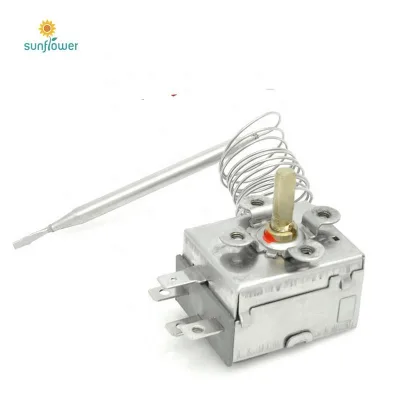


Comprehensive Sourcing Guide
TUV Certified Bimetal Thermostat Sourcing Guide
Sourcing bimetal thermostats requires a disciplined approach to verifying both the physical construction and the regulatory compliance of the components. While the core keyword emphasizes TUV certification, the available market data indicates that many suppliers offer products certified under CE, RoHS, and CCC standards. Buyers must understand that "TUV certified" is a specific third-party validation that may not be universally present across all listings. Therefore, the primary task is to distinguish between general safety certifications and specific TUV marks, ensuring that the selected component meets the exact regulatory requirements of the target export market. This guide provides a structured framework for evaluating these devices based on observed product attributes, technical specifications, and commercial realities.
The bimetal thermostat is a fundamental safety and control component used in a wide range of electric appliances. These devices operate by using two dissimilar metals bonded together, which expand at different rates when heated. This physical reaction causes the bimetal strip to bend, triggering a mechanical switch to open or close an electrical circuit. This mechanism is critical for preventing overheating in household appliances, industrial equipment, and HVAC systems. Understanding this basic principle helps buyers evaluate the reliability of the switch mechanism, particularly regarding the reset characteristics, which can be either automatic or manual, depending on the specific application requirements.
Product Scope and Observed Listing Signals
The current market for bimetal thermostats presents a diverse array of models, with observed listings ranging from basic KST series units to more specialized stem thermostats. The product count indicates a robust supply base, with models such as KST201 A, B, and C, as well as KSD and BH-TB02B-B8D variants, readily available. These models often share common physical characteristics, such as a rated voltage of 250V and a rated current of 16A, though customized ratings are frequently available. Buyers should note that while the base models are standardized, the ability to customize voltage and current ratings allows for greater flexibility in integrating these components into specific appliance designs.
Packaging and origin data provide additional context for supply chain planning. Most observed products originate from China, with specific manufacturing hubs identified in Zhejiang and Dongguan. The standard export packing typically involves carton packaging, with some suppliers specifying quantities such as 1000 pieces per carton. This information is crucial for logistics planning, as it affects storage requirements and handling procedures. Additionally, the observed price range of $0.08 to $8.20 USD suggests a wide variance in quality, complexity, and certification levels. Buyers must correlate price points with the specific certifications and material quality to avoid under-specifying critical safety components.
Technical Specifications to Verify
When evaluating bimetal thermostats, the temperature control range is a primary technical parameter. Observed data indicates an available temperature range of 30°C to 350°C, which covers a broad spectrum of industrial and domestic applications. Buyers must verify that the selected model’s trip point aligns precisely with the thermal limits of the appliance being protected. The sensing type is another critical factor; while some listings mention thermocouples, bimetal thermostats typically rely on direct thermal contact. It is essential to confirm whether the device uses a contact or contactless sensing mechanism, as this impacts the installation method and thermal response time.
Electrical performance metrics must be rigorously checked to ensure compatibility with the target circuit. Key specifications include insulation resistance, which should be greater than 100 megaohms, and contact resistance, which is typically less than or equal to 50 milliohms. These values are indicative of the device’s ability to maintain electrical integrity under load and prevent leakage currents. Furthermore, the rated frequency of 50/60Hz ensures compatibility with global power standards. Buyers should also pay attention to the switch type, which can be either auto-reset or manual-reset, as this determines how the appliance behaves after a thermal overload event.
Compliance and Safety Documentation
Certification status is a non-negotiable aspect of sourcing safety-critical components. The observed listings frequently cite CE, RoHS, and CCC certifications, with some products also holding ISO standards. While TUV certification is the core keyword, buyers must verify if the specific supplier offers TUV-marked products or if they rely on other recognized safety marks. The presence of CE certification indicates conformity with health, safety, and environmental protection standards for products sold within the European Economic Area. RoHS compliance ensures that the device is manufactured without certain hazardous substances, which is increasingly important for global supply chains.
Documentation verification should extend beyond the certificate itself to include test reports and quality manuals. Buyers should request evidence that the certifications are valid and applicable to the specific model being purchased. For instance, the KST series and stem thermostats may have different certification scopes. Additionally, the IP rating, often listed as wall-mounted type or similar, provides insight into the device’s protection against solid objects and water. Ensuring that the documentation matches the physical product is a critical step in mitigating regulatory risk during customs clearance and final product assembly.
Cost Drivers and Commercial Terms
The cost of bimetal thermostats is influenced by several factors, including material quality, certification level, and order volume. The observed MOQ range of 1 to 5000 units suggests that suppliers are flexible, catering to both prototyping and mass production needs. However, buyers should be aware that lower MOQs may come with higher unit prices. The material composition, primarily bimetal and ceramics, also plays a role in cost determination. Higher-grade materials that offer better thermal stability and longer life cycles will typically command a premium price.
Commercial terms such as lead time and payment conditions are not explicitly detailed in the observed data but are standard considerations in B2B transactions. Buyers should negotiate clear terms regarding packaging, shipping, and liability. The standard export packing and carton specifications observed in the listings provide a baseline for logistics, but custom packaging requirements may incur additional costs. It is advisable to establish a clear understanding of the total landed cost, including duties and taxes, to ensure accurate budgeting. Transparency in pricing structures helps prevent unexpected expenses during the procurement process.
Supplier Qualification and Quality Control
Supplier qualification is essential for ensuring consistent product quality and reliable supply. Buyers should verify the supplier’s production capabilities, particularly their adherence to standard export packing and quality control processes. The observed production process, described as normal wirewound for some components, indicates a specific manufacturing technique that should be validated for consistency. Suppliers with ISO certifications or similar quality management systems are generally more reliable in maintaining product standards across large batches.
Quality control measures should include incoming material inspections, in-process checks, and final product testing. Buyers should request sample units for rigorous testing before committing to large orders. Key tests should include thermal cycling, electrical endurance, and insulation resistance checks. The observed life cycle of 10,000 to 100,000 operations varies significantly between models, so buyers must align the expected lifespan with the application’s usage patterns. Establishing a clear quality agreement with the supplier helps define acceptable defect rates and remediation procedures.
Long-Term Procurement Checks
Long-term procurement success depends on continuous monitoring of supplier performance and product reliability. Buyers should establish key performance indicators (KPIs) related to delivery times, product quality, and responsiveness to issues. Regular audits of the supplier’s facility and quality management systems can help identify potential risks early. Additionally, staying informed about changes in regulatory standards, such as updates to CE or RoHS directives, is crucial for maintaining compliance over time.
Supply chain resilience is another critical aspect of long-term procurement. Diversifying the supplier base and maintaining safety stock can mitigate the risk of disruptions. Buyers should also consider the availability of replacement parts and technical support from the supplier. As technology evolves, newer models may offer improved performance or efficiency. Regularly reviewing the product portfolio and engaging with suppliers for updates ensures that the procurement strategy remains aligned with market trends and technological advancements.
FAQs
What certifications do these bimetal thermostats hold?
These thermostats hold CE, ISO, and RoHS certifications. Some models also include CCC certification. These standards ensure compliance with international safety and environmental requirements for electric appliances.
Can the rated voltage and current be customized?
Yes, the rated voltage and current are available as customized ratings. While standard models offer 250V and 16A, buyers can request specific electrical parameters to match their unique appliance requirements.
What is the temperature control range for these units?
The temperature control range spans from 30 to 350 degrees Celsius. This wide range allows the bimetal thermostat to function effectively across various heating and cooling applications in electric appliances.
How is the reset characteristic configured for these thermostats?
The reset characteristic is automatic for most standard models. However, the switch type can also be configured as manual reset depending on the specific product model and customer customization needs.
Which models are available for this bimetal thermostat product?
Available models include KST201 A, KST201 B, KST201 C, KST201-E, KSD, and KST2. Each model offers specific specifications while maintaining the core bimetal material and temperature sensing capabilities.
What is the expected life cycle of these thermostats?
The life cycle is rated at 100,000 operations for certain models. Other variants may have a life cycle of 10,000 times, ensuring durability for long-term use in various electric appliances.
Where are these thermostats manufactured and packaged?
These products originate from China, specifically Zhejiang and Dongguan regions. They are packed in standard export cartons, with some models offering 1000 pieces per carton for efficient shipping.