Source Twin Conductor Underfloor Heating Cable for Homes, Offices, and Warehouses
Compare 29 Twin Conductor Underfloor Heating Cable options with varying wattage, insulation materials, and certifications. Buyers can evaluate electric heating systems from manufacturers in Anhui, China, featuring stranded copper conductors and PVC or XLPE jackets.
Key considerations
Products List




Comprehensive Sourcing Guide
Sourcing Guide for Twin Conductor Underfloor Heating Cables
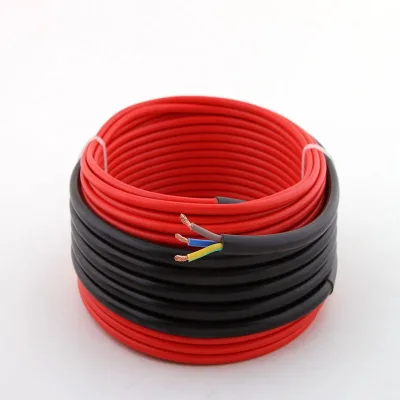
Procuring twin conductor underfloor heating cables requires a rigorous approach to technical verification, as these systems form the backbone of radiant floor heating solutions. The core keyword, Twin Conductor Underfloor Heating Cable, refers to a specific electrical configuration where two conductors run parallel within a single sheath, allowing for the return path of the current to be contained within the cable itself. This design simplifies installation by eliminating the need for a separate return wire, a critical factor for residential and commercial flooring projects. Buyers must navigate a complex landscape of material properties, power densities, and regulatory compliance to ensure the selected product meets safety and performance standards. The following guide details the essential parameters for sourcing these heating elements effectively.
Technical Specifications and Construction Standards
The fundamental architecture of a twin conductor heating cable dictates its performance in underfloor applications. Based on observed product attributes, the conductor material is typically copper, often in a stranded configuration to enhance flexibility and durability during installation. The specific construction often involves twin conductors insulated with fluoroplastic or XLPE (Cross-Linked Polyethylene), depending on the required thermal resistance. The sheath material is frequently PVC (Polyvinyl Chloride) or FEP (Fluorinated Ethylene Propylene), with some variants offering XLPE insulation for higher thermal stability.
A critical specification to verify is the wattage output, which determines the heating capacity per meter. Observed data indicates a range of power densities, including specific outputs of 12W/M and 15W/M, as well as broader ranges such as 6W/M to 40W/M. The rated voltage for these systems is commonly observed at 110V, 220V, or a specific range of 220V-240V. Buyers must ensure the voltage rating aligns with local grid standards. The cable thickness is another physical constraint; for instance, a standard thickness of 2.0mm is noted in specific models. Additionally, the cold tail length, which is the non-heating section required for connection to the power supply, is often standardized at 2.5m, though this should be confirmed for each specific order.
The heating element technology is another differentiator. Some systems utilize PTC (Positive Temperature Coefficient) heating elements, which offer self-regulating properties, while others rely on standard resistive heating wires. The maximum surface temperature is a vital safety metric, with observed limits set at 70°C ± 5°C, while the maximum withstand temperature can reach 105°C. These figures are not universal claims for all products but represent observed attributes that buyers must verify against their specific floor covering requirements. The minimum installation temperature is also a key operational constraint, with some cables rated for installation down to -60°C, ensuring reliability in cold climates.
Compliance and Certification Verification
Navigating the regulatory landscape is essential for any B2B procurement of electrical heating systems. The market data highlights a variety of certifications that indicate compliance with international safety and environmental standards. Commonly observed certifications include CE (Conformité Européenne), RoHS (Restriction of Hazardous Substances), EAC (Eurasian Conformity), and CSA (Canadian Standards Association). Furthermore, ISO 9001 for quality management and TUV certification are frequently cited, alongside specific regional standards like ISOHEATING.
Buyers should not assume that a single listing satisfies all regulatory requirements. The presence of a CE mark, for example, indicates conformity with European health, safety, and environmental protection standards, but it does not automatically guarantee compliance with North American or Asian regulations. Similarly, while RoHS compliance is standard for restricting hazardous substances, the specific limits must be verified. The standard IEC 60800 is mentioned in background contexts, but buyers should verify if the specific product meets the latest version of this standard or other applicable national codes.
When evaluating a supplier, request the full certificate documentation rather than relying on a logo on a product page. Verify that the certification is current and covers the specific model number being purchased. The observed data also mentions "ISOHeating Type: Electric Heating Systems" as a certification attribute, which suggests specialized industry recognition. However, the most reliable approach is to cross-reference the supplier's provided certificates with the issuing body's database to ensure authenticity.
Cost Drivers and Pricing Dynamics
Understanding the cost structure of twin conductor heating cables is vital for budgeting. The observed price range in the market spans from $0.36 to $10.00 USD, a significant variance that reflects differences in material quality, wattage density, and certification levels. Several factors drive these costs. First, the conductor material and insulation type play a major role; cables with fluoroplastic insulation or specialized PTC elements typically command higher prices than standard PVC/XLPE variants.
Second, the wattage output directly impacts the price. Higher wattage cables, such as those delivering 40W/M, require more copper and advanced insulation to handle the heat, increasing the unit cost compared to lower density cables like 6W/M. Third, customization is a significant cost driver. The observed data confirms that customization is available for voltage, power, and standard specifications. Custom orders often incur higher per-unit costs due to the setup and lower economies of scale compared to standard SKUs.
The Minimum Order Quantity (MOQ) also influences the effective unit price. The observed MOQ range is 1 to 1000 units. Buyers purchasing small quantities may face higher per-meter costs, while bulk orders often benefit from volume discounts. Additionally, packaging requirements, such as the use of carton boxes, can add to the logistics cost. Buyers should request a detailed breakdown of costs, including raw materials, manufacturing, certification fees, and packaging, to understand the true value proposition of a supplier.
Typical Applications and Installation Considerations
Twin conductor underfloor heating cables are designed for a wide range of applications, primarily in residential, commercial, and industrial settings where radiant floor heating is preferred. The observed application category is broadly "Heating," with specific suitability for flame-retardant environments. The cables are often used in concrete screeds, tile installations, and wooden flooring systems. The maximum surface temperature of 70°C ± 5°C makes them suitable for most standard floor coverings, but buyers must ensure the floor material can withstand this heat without degradation.
Installation constraints are equally important. The minimum installation temperature of -60°C suggests these cables can be installed in cold environments, but the ambient conditions during the actual pouring of the screed or laying of the floor must be considered. The twin conductor design simplifies the wiring process, as the cable can be looped back and forth without the need for a separate return leg, reducing labor time. However, the cold tail length of 2.5m must be accounted for in the room layout to ensure the connection point is accessible.
The choice of insulation and sheath materials also dictates the application. For instance, cables with PVC sheaths are common for general indoor use, while those with FEP or XLPE may be preferred for high-moisture or high-temperature environments. The "Flat Wire" material shape observed in some listings suggests specific flexibility characteristics that may be advantageous for tight corners or uneven subfloors. Buyers should consult with their installation contractors to ensure the selected cable profile matches the specific floor construction method.
Supplier Evaluation and Quality Assurance
Evaluating suppliers requires a focus on their technical capabilities and quality control processes. The observed data indicates that the product origin is primarily Anhui, China (Mainland), with some listings simply stating "China." While this provides a geographic context, it does not guarantee quality. Buyers should prioritize suppliers who offer transparent after-sales support, such as online technical support, which is listed as a standard service attribute.
Quality assurance should be verified through the supplier's adherence to standards. The observed product standards include FSL/FSM/FSH and customized specifications, indicating that some manufacturers offer tailored solutions. Buyers should request a quality control plan that outlines testing procedures for electrical resistance, insulation resistance, and thermal cycling. The resistance tolerance of +10/-5% is a specific metric observed in the data; verifying that the supplier consistently meets this tolerance is crucial for system uniformity.
Furthermore, the warranty period is a strong indicator of supplier confidence. A standard warranty of 2 years is observed, but buyers should scrutinize the terms and conditions. Does the warranty cover the heating element only, or does it include the entire system? Are there specific installation requirements that must be met to keep the warranty valid? Suppliers who are willing to provide detailed warranty documentation and demonstrate a track record of honoring claims are generally more reliable.
Long-Term Procurement and Maintenance Strategy
Long-term procurement success depends on establishing a relationship with a supplier who can support the product throughout its lifecycle. The availability of customization suggests that suppliers should be capable of adapting to future project requirements, such as changes in voltage or power density. Buyers should also consider the availability of spare parts and replacement components, such as connectors and splices, which are listed as "out Splice" in some contexts.
Maintenance of underfloor heating systems is generally low, but the initial installation quality determines long-term reliability. Buyers should ensure that the supplier provides comprehensive installation guides and technical documentation. The use of certified connectors and proper splicing techniques is essential to prevent hot spots or electrical failures. Additionally, the supplier should be able to provide guidance on troubleshooting common issues, leveraging the "Online Technical Support" attribute observed in the market.
Finally, buyers should plan for scalability. If a project expands, the ability to source additional cables with matching specifications is critical. Verifying that the supplier can maintain consistent quality across different production batches is essential. The observed range of power outputs and customization options provides flexibility, but buyers must ensure that the specific model numbers (e.g., Uth-Cable-PRO or Uth-Cable) remain consistent to avoid compatibility issues in future expansions. By focusing on these long-term factors, buyers can secure a reliable heating solution that meets both current and future needs.
FAQs
What certifications are available for these cables?
Common certifications include CE, RoHS, EAC, CSA, and ISO9001. Buyers must verify that the specific model holds current documentation for each required standard before purchase.
Can I customize the voltage and power output?
Yes, customization is available for voltage, power, and standard specifications. Buyers should confirm the exact wattage range, such as 6W/M to 40W/M, with the supplier.
What is the minimum installation temperature for this cable?
The minimum installation temperature is rated at -60°C. This allows installation in cold climates, but ambient conditions during screed pouring must still be considered.
How long is the cold tail length for connection?
The standard cold tail length is 2.5 meters. This non-heating section is required for connecting the cable to the power supply and must be accounted for in layout.
Which materials are used for the conductor and sheath?
The conductor is typically stranded copper, and the sheath is often PVC or FEP. Insulation materials may include XLPE or fluoroplastic depending on the specific model requirements.
What is the maximum surface temperature of the heating cable?
The maximum surface temperature is 70°C ± 5°C. This limit ensures safety for most standard floor coverings but requires verification against specific flooring material tolerances.
Can I find suppliers offering a 2-year warranty?
A 2-year warranty is an observed standard for these products. Buyers should review the specific terms to ensure coverage includes the heating element and system components.