Source Twill Polyester Cotton Workwear Fabric for Uniforms, Suits, and Shirts
Explore 30 listings of Twill Polyester Cotton Workwear Fabric with varying compositions, yarn counts, and weights. Buyers can compare specifications like 65% polyester 35% cotton blends and reactive dye options for uniforms, blazers, and shirts.
Key considerations
Products List


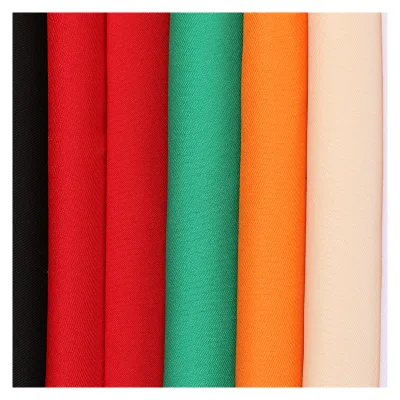


Customized Polyester 65 Cotton 35 195GSM Twill Cotton Fabric for Workwear
$1.30 - $1.45
MOQ: 500 Yards


Source Factory Wholesale Polyester Cotton Twill Dyed Waterproof Workwear Fabric
$1.45 - $1.58
MOQ: 3000 Meters


Workwear Fabric with Waterproof Finish Tc Twill Fabric Functional Fabric
$0.90 - $1.50
MOQ: 3000 Yards


Polyester Cotton Tc Dyed Twill Fabric Tc6535 for Work Uniform and Pants
$1.00 - $3.50
MOQ: 3000 Meters

Comprehensive Sourcing Guide
Strategic Sourcing Guide for Twill Polyester Cotton Workwear Fabric
The global demand for durable, cost-effective textiles in the industrial and commercial sectors has elevated the importance of twill polyester cotton blends. For procurement professionals, identifying the right fabric involves navigating a complex matrix of composition ratios, weave structures, and supply chain logistics. The core keyword "Twill Polyester Cotton Workwear Fabric" represents a specific segment where durability meets comfort. This guide provides a disciplined approach to sourcing these materials, relying strictly on observed market data and verified technical attributes to ensure procurement decisions are grounded in reality rather than speculation.
Understanding Fabric Composition and Blend Ratios
The foundation of any successful procurement strategy for workwear fabric lies in understanding the specific blend ratios available in the market. Data indicates that the most common configurations for this category are 65% Polyester with 35% Cotton, and variations such as 80% Polyester with 20% Cotton. A more specialized variant includes a stretch component, formulated as 65% Polyester, 32% Cotton, and 3% Spandex. These compositions are not merely marketing terms; they dictate the physical performance of the final garment. The polyester component provides the necessary tensile strength, wrinkle resistance, and colorfastness required for industrial environments, while the cotton component contributes to breathability and comfort against the skin.
When evaluating suppliers, buyers must verify the exact composition listed on the product specification sheet. The market also features 100% Polyester options, which may be suitable for specific high-durability applications where moisture management is prioritized over natural fiber comfort. However, for general workwear, the T/C (Twill Cotton) or Polyester/Cotton blends remain the industry standard. Procurement teams should explicitly request composition certificates to ensure the blend matches the intended use case, as a deviation in the cotton percentage can significantly alter the fabric's hand feel and dye absorption characteristics.
Technical Specifications and Weave Architecture
The structural integrity of twill fabric is defined by its weave pattern and yarn count. The twill weave is characterized by diagonal parallel ribs, which provide the fabric with a distinct texture and enhanced durability compared to plain weaves. In the observed market data, specific technical standards are frequently cited, such as 21x21 100x52, 21x21 108x58, and 20x20 120x60. These numbers typically represent the yarn count (e.g., 21s) and the density of the weave (ends per inch and picks per inch).
Furthermore, the yarn type plays a critical role in the final quality. The supply chain offers both Combed and Carded yarn options. Combed yarns are generally smoother and stronger, suitable for higher-end workwear, while carded yarns are more economical and robust for heavy-duty applications. The production technology also varies, with Air-Jet weaving being a noted method that can influence the fabric's surface texture and production speed. Buyers should cross-reference the model numbers, such as jxh22351 or jxh22418, with their specific technical requirements to ensure the density and weight (GSM) align with the garment's intended lifespan. The observed weight range for these fabrics spans from 180 to 280 GSM, covering everything from lightweight shirts to heavy-duty coveralls.
Compliance, Certification, and Quality Verification
In the realm of workwear, compliance is not optional; it is a prerequisite for market entry and worker safety. While the provided data does not list specific certification statuses for every product, it references industry-relevant standards such as ISO 11612 and EN 20471. These standards relate to protective clothing against heat and high visibility, respectively. It is crucial for buyers to understand that the mere presence of a fabric type does not guarantee compliance with these standards.
Procurement teams must treat these standards as verification checkpoints rather than inherent attributes. When engaging with suppliers, buyers should explicitly request test reports confirming that the specific fabric batch meets the required ISO or EN standards for the intended application. For example, if the workwear is intended for fire-resistant environments, the fabric must undergo rigorous testing to validate its performance against the ISO 11612 criteria. Similarly, for high-visibility roles, the EN 20471 requirements for reflectivity and background material must be met. Relying on general product descriptions without specific test data is a significant risk. Buyers should also verify the dyeing process, noting that Reactive Dye is a common method used to ensure colorfastness, which is essential for uniforms that require frequent washing.
Cost Drivers and Supply Chain Economics
The pricing and minimum order quantity (MOQ) structures for twill polyester cotton fabric are influenced by several key variables. The observed market data indicates a price range between $0.90 and $100.00 USD, though this wide variance likely reflects differences in GSM, blend complexity, and order volume. The MOQs observed in the market range from 500 to 5,000 units, with some specific listings citing 3,000 meters as a standard threshold. These figures suggest that smaller buyers may face challenges in accessing the most competitive pricing tiers without consolidating orders or negotiating with suppliers who offer flexible terms.
Lead times are another critical cost driver. The data points to a delivery time of 15-20 days for standard orders, with a supply type described as "Make-to-Order." This implies that production is initiated after the order is placed, which can impact inventory planning. Buyers must factor in this lead time when scheduling production runs for their own garment manufacturing. Additionally, the origin of the fabric, noted as Shandong, Shaoxing, and Hebei in China, can influence logistics costs and shipping times. Understanding these economic drivers allows procurement teams to budget accurately and avoid unexpected delays that could disrupt the supply chain.
Typical Applications and Use Cases
The versatility of twill polyester cotton fabric makes it suitable for a broad spectrum of applications. The observed data lists uses ranging from Apparel-Football/Soccer to Apparel-Blazer/Suits, Apparel-Jeans, Shirts and Blouses, and specifically Apparel-Workwear. This diversity highlights the fabric's adaptability. For workwear, the fabric is ideal for uniforms in sectors such as construction, manufacturing, and logistics, where durability and a professional appearance are paramount. The inclusion of "Apparel-Sportswear" and "Apparel-Sweatshirt" in the data suggests that the fabric can also be used for corporate athletic wear or casual office uniforms.
When selecting a fabric for a specific application, buyers should consider the weight and composition. Heavier weights (closer to 280 GSM) are better suited for outerwear or heavy-duty coveralls, while lighter weights (around 180 GSM) are preferable for shirts and blouses. The availability of custom colors, as indicated by "Dye According to Requirement" and "Customized," allows brands to align their uniforms with corporate identity. The "OEM: Acceptable" attribute further confirms that manufacturers are prepared to produce custom designs, making this fabric a strong candidate for branded uniform programs.
Supplier Evaluation and Quality Control Protocols
Evaluating suppliers requires a focus on their technical capabilities and consistency. The market data shows that suppliers offer various packing methods, including "by Rolls," "Plastic Bag Inside, Woven Bag Outside," and "Roll Pack." These details are indicative of how the supplier handles the product, which can affect the fabric's condition upon arrival. Buyers should inspect the packing standards to ensure the fabric is protected from moisture and damage during transit.
Quality control should be a continuous process, not a one-time check. Given the "Make-to-Order" nature of the supply, buyers should establish clear communication channels regarding the production timeline. The availability of samples, such as "A4 Size," is a valuable resource for initial evaluation. Procurement teams should utilize these samples to test the fabric's hand feel, dye consistency, and weave tightness before committing to a large order. Additionally, verifying the "Brand Name" and "Place of Origin" helps in building a reliable supplier database. For instance, suppliers originating from Hebei, Shandong, or Shaoxing may have different reputations and logistical capabilities. Buyers should prioritize suppliers who demonstrate transparency in their technical specifications and are willing to provide detailed documentation regarding their production processes.
Long-Term Procurement Considerations
Sourcing twill polyester cotton fabric is not just about a single transaction; it is about building a sustainable supply chain. The "Supply Type: Make-to-Order" model suggests that long-term partnerships are essential for maintaining consistency in quality and delivery. Buyers should consider the scalability of their suppliers to handle increased order volumes as their business grows. The ability to customize colors and patterns is a significant advantage for maintaining brand consistency over time.
Furthermore, the environmental and ethical implications of the supply chain should be considered. While specific certifications are not universally listed, buyers should inquire about the sustainability of the dyeing processes and the labor practices of the manufacturers. The use of Reactive Dye is a positive indicator, but verification of environmental compliance is necessary. Finally, maintaining a buffer stock of critical fabric specifications can mitigate the risks associated with lead time fluctuations. By focusing on these long-term factors, procurement professionals can ensure a steady supply of high-quality workwear fabric that meets the evolving needs of their organization.
FAQs
What are the common composition ratios for this fabric?
The most common compositions are 65% Polyester with 35% Cotton or 80% Polyester with 20% Cotton. Some specialized variants include 3% Spandex for stretch, while 100% Polyester options are also available for specific high-durability needs.
How is the fabric typically packed for shipment?
The fabric is usually packed by rolls with a plastic bag inside and a woven bag outside. Some listings specify a simple roll pack method to protect the material from moisture and damage during transit.
What is the standard delivery time for orders?
The standard delivery time is typically 15 to 20 days for production. Since the supply type is make-to-order, buyers should plan their inventory schedules around this specific lead time window.
Which technical specifications define the fabric density?
Technical standards often cite specific yarn counts and densities like 21x21 100x52 or 20x20 120x60. These numbers indicate the yarn count and the weave density, which determine the fabric's weight and durability.
Can suppliers provide custom colors for uniforms?
Yes, suppliers accept customized colors and dye according to specific requirements. The fabric uses reactive dyeing techniques to ensure colorfastness, allowing brands to align uniforms with their corporate identity.
What is the minimum order quantity for this fabric?
The observed minimum order quantity ranges from 500 to 5000 units, with some listings specifying 3000 meters. Buyers should verify the specific MOQ with the supplier before placing an order.
Where are these fabrics typically manufactured?
The products originate from regions in China such as Shandong, Shaoxing, and Hebei. The specific location can influence logistics costs and shipping times for international buyers.