Source Two Stage Automatic Milk Homogenizer for Dairy Processing
Find and compare 30 Two Stage Automatic Milk Homogenizer models from Chinese manufacturers. Evaluate PLC control systems, high-pressure capabilities up to 1500 bar, and capacities up to 30,000 liters per hour for yogurt, cheese, and milk powder production lines.
Key considerations
Products List


Hot Sale 2 Stage Juice Homogenization Machine Milk Homogenizer 50-500L
$8500.00 - $10000.00
MOQ: 3 set

Homogenizer Milk Homogenizer Dairy Homogenizer High Pressure Homogenizer
$8500.00 - $10000.00
MOQ: 3 set

Homogenizer Soymilk Homogenizer Automatic Homogenizer 3000L Homogenizer
$8500.00 - $10000.00
MOQ: 3 set


Multi Stage Homogenizer for Dairy Plant Yogurt and Plant Based Milk
$13000.00 - $20000.00
MOQ: 1 Pieces


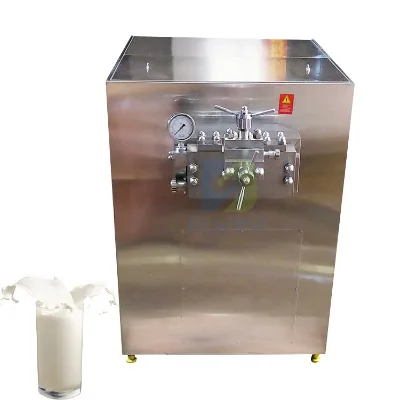


High Performance Homogenizer for Milk Juice / High Pressure Homogenizer
$1875.00 - $2439.00
MOQ: 1 Sets


High Pressure Homogenizer / Juice Homogenizing Machine / Milk Homogenizer
$1805.00 - $2349.00
MOQ: 1 Sets

High Performance Soybean Milk Homogenizer / Homogenizer for Milk Juice
$1805.00 - $2349.00
MOQ: 1 Sets

High Pressure Beverage Milk Homogenization Equipment / Milk Homogenizer
$1665.00 - $2165.00
MOQ: 1 Sets
Comprehensive Sourcing Guide
Two Stage Automatic Milk Homogenizer Sourcing Guide
Procuring industrial homogenization equipment requires a disciplined approach to aligning technical performance with operational reliability. The two-stage automatic milk homogenizer is a specialized unit designed to reduce particle size and ensure emulsion stability in dairy processing lines. Buyers must evaluate these machines not just as isolated components, but as critical nodes in a continuous processing workflow. The decision to source this equipment involves balancing high-pressure capabilities with automated control systems to maintain consistent product quality across large volumes.
This guide provides evidence-based procurement advice for sourcing two-stage automatic milk homogenizers. It focuses on verifying technical specifications, ensuring regulatory compliance, and managing commercial risks. The guidance is derived from observed market listings and trusted industry knowledge regarding dairy processing machinery. Buyers should use this framework to conduct due diligence, ensuring that the selected equipment meets their specific throughput requirements and sanitary standards without relying on unverified marketing claims.
Product Scope and Observed Listing Signals
The market for two-stage automatic milk homogenizers includes units designed for various dairy applications, including milk, yogurt, milk powder, and cheese production. Observed listings indicate a wide range of capacities, with some units rated for up to 30,000 liters per hour and others for 20,000 liters per hour. These variations suggest that suppliers offer modular or scalable solutions to fit different production scales. Buyers should carefully match the stated capacity to their actual line throughput to avoid bottlenecks or underutilization of expensive equipment.
Listings also reveal significant variation in model designations, such as JZH3000-40, JZH2000-25, and JZH1000-30, which likely correspond to specific flow rates and pressure ratings. The observed price range spans from $999 to $999,999, reflecting differences in build quality, material grade, and automation depth. Minimum Order Quantities (MOQ) are typically low, ranging from 1 to 3 units, indicating that these are often custom-engineered or made-to-order items rather than mass-produced commodities. This pricing and MOQ structure necessitates detailed technical negotiation before committing to a purchase.
Technical Specifications to Verify
Pressure capability is the most critical technical parameter for a two-stage homogenizer. Observed data shows maximum pressures reaching 1500 bar, with working pressures ranging from 10 to 100 MPa. Buyers must verify that the first stage pressure is sufficient for initial particle breakdown and the second stage is optimized for emulsion stability. It is essential to confirm whether the pressure ratings are continuous operating limits or peak values, as this impacts long-term reliability and maintenance intervals.
Automation and control systems are equally important for consistent operation. Many observed units feature PLC control systems and automatic grading, which reduce manual intervention and improve process repeatability. The layout is typically horizontal, and the stirring type is often forced, ensuring uniform processing within the vessel. Buyers should verify the specific brand and reliability of core components such as bearings, motors, and pumps, as these are the most frequent points of failure in high-pressure dairy equipment.
Dimensional constraints and packaging requirements must also be assessed. Observed standard dimensions include 150010001200mm for some models, while larger units may reach 25000150002800mm. Packaging is typically provided in wooden cases or wood case packages to protect the machinery during transit. Buyers need to ensure that their facility has adequate space for installation and that loading docks can accommodate the specified dimensions and weight of the packaged unit.
Compliance and Safety Documentation
Regulatory compliance is non-negotiable for dairy processing equipment. Observed listings frequently cite certifications such as ISO, CE, and CCC, which indicate adherence to international safety and quality management standards. Buyers must request valid, current certificates from accredited bodies rather than accepting self-declared compliance. The presence of ISO 9001:2015 certification suggests a robust quality management system, which is a positive indicator for manufacturing consistency.
Safety documentation should include detailed electrical schematics, pressure vessel compliance records, and material safety data sheets for all wetted parts. Since the equipment operates at high pressures, verification of pressure relief valves and emergency stop mechanisms is crucial. Buyers should ensure that the supplier provides comprehensive operation and maintenance manuals in English, covering troubleshooting procedures for common issues such as pressure drops or seal failures.
Cost Drivers and Commercial Terms
The cost of a two-stage automatic milk homogenizer is driven by several factors, including material grade, pressure rating, and automation level. Stainless steel grade, typically 304 or 316L for dairy applications, significantly impacts the base price. Higher pressure ratings require thicker walls and more robust pump assemblies, increasing manufacturing costs. Buyers should request a detailed breakdown of costs to understand the value proposition of each component.
Commercial terms often include customization options, as observed listings indicate that products can be customized to specific requirements. Buyers should clarify the scope of customization, including any additional engineering fees or lead time extensions. Payment terms, warranty periods, and after-sales support services should be explicitly defined in the contract. It is advisable to negotiate for a comprehensive warranty that covers core components like motors and pumps for a reasonable duration.
Supplier Qualification and Quality Control
Supplier qualification should begin with a thorough review of their manufacturing capabilities and quality control processes. Buyers should verify the supplier’s origin, with many observed listings indicating production in Shanghai, China. While this is a major industrial hub, buyers should conduct site audits or request third-party inspection reports to verify factory conditions and production capacity. Understanding the supplier’s supply chain for critical components, such as bearings and motors, is also essential.
Quality control procedures should include factory acceptance testing (FAT) before shipment. Buyers should define specific test protocols, including pressure testing, flow rate verification, and noise level measurements. Requesting video evidence of previous FATs for similar models can provide insight into the supplier’s testing rigor. Additionally, buyers should inquire about the supplier’s experience in the dairy industry and their ability to provide references from existing clients.
Long-Term Procurement Checks
Long-term procurement success depends on the availability of spare parts and technical support. Buyers should establish a clear agreement with the supplier regarding the supply of wear parts, such as seals and valves, for at least five years. This ensures that maintenance can be performed without significant downtime due to part shortages. It is also important to verify the supplier’s ability to provide remote troubleshooting support or on-site service visits if needed.
Energy efficiency and operational costs should be monitored over time. The observed power source for these units is electric, and buyers should track energy consumption relative to throughput to identify any inefficiencies. Regular maintenance schedules should be developed in collaboration with the supplier to extend the lifespan of the equipment. By maintaining a proactive approach to maintenance and support, buyers can maximize the return on investment for their two-stage automatic milk homogenizer.
FAQs
What is the maximum pressure capacity for this homogenizer?
The maximum pressure capacity reaches 1500 bar for high-pressure applications. This unit supports working pressures between 10 and 100 MPa to ensure effective processing of milk and yogurt products.
Can the machine handle liquid with suspended solids?
Yes, the equipment is designed to process liquids with suspended solids effectively. It features a forced stirring type and operates continuously to maintain product consistency during industrial milk processing.
Which certifications does the homogenizer hold?
The product holds ISO, CE, and CCC certifications for quality assurance. Some models also meet ISO9001:2015 standards, ensuring compliance with international safety and manufacturing requirements for food processing.
How is the product packed for shipping?
The unit is packed in a wooden case package to ensure safe transport. This robust packaging protects the machinery during transit from the origin in Shanghai, China, to the final destination.
What is the production capacity of the JZH3000 model?
The JZH3000 model offers a maximum capacity of 30000 liters per hour. This high output makes it suitable for large-scale milk powder and cheese production facilities requiring continuous operation.
Is the machine customizable for specific needs?
Yes, the homogenizer is available in a customized configuration to meet specific production requirements. Buyers can request tailored specifications while maintaining the core electric power source and automatic grade features.