Source U Bolt for Machinery, Chemical, and Building Uses
Compare 30 U Bolt listings from Chinese manufacturers offering carbon steel and stainless steel options. Buyers can evaluate grades, thread sizes, and customization services for machinery, chemical, and building applications; compare the available evidence and request quotations based on your requirements.
Key considerations
Products List


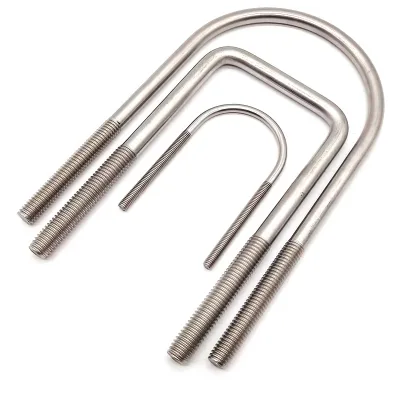


High Quality Fastener and Low Price Automotive Partstruck Parts Center Bolts
$0.33 - $0.66
MOQ: 2000 Pieces


Comprehensive Sourcing Guide
U Bolt Sourcing Guide
U bolts are critical fastening components used to secure pipes, tubes, and cylindrical structures to surfaces or frames. These hardware items typically feature a U-shaped body with threaded ends, designed to work in conjunction with nuts and often a saddle or pad to distribute load and prevent damage to the secured object. In industrial procurement, they serve as essential line fittings and structural connectors across diverse sectors, including machinery assembly, chemical processing plants, environmental infrastructure, and building construction.
The market offers a wide variety of configurations, ranging from standard round head styles to specialized pull-line fittings for power lines. Buyers must navigate a complex landscape of materials, primarily carbon steel and stainless steel, to ensure compatibility with environmental conditions and load requirements. Understanding the specific thread types, such as UNC, and head styles, like flat or round, is vital for ensuring mechanical integrity and proper installation in high-stress applications.
Product Scope and Observed Listing Signals
Current market listings reveal a broad spectrum of U Bolt specifications, with observed price points ranging from $0.01 to $1,000 USD, reflecting significant variation in material quality, size, and order volume. Minimum order quantities (MOQs) span from single units to ten thousand pieces, indicating flexibility for both prototype testing and large-scale industrial deployment. This wide range suggests that buyers can source small batches for immediate needs or negotiate bulk rates for long-term supply chains, depending on their operational scale.
Product attributes highlight customization availability, with suppliers offering OEM services and sample availability to facilitate quality verification before mass production. Common packing methods include bags with pallets, cartons, wooden cases, and even specific dimensional packaging like 1000cm x 200cm x 200cm, which may indicate bulk industrial shipping or specialized handling requirements. Origin data points to major manufacturing hubs in China, including Shandong, Shan Dong, and Hebei provinces, where specialized industrial clusters produce these fasteners for global distribution.
Technical Specifications to Verify
Verifying material composition is the first critical step, as listings indicate options in carbon steel, stainless steel, and general steel grades. Buyers must confirm specific grade ratings, such as 4.8, 8.8, 10.9, or 12.9, which dictate tensile strength and yield limits for the application. Additionally, thread specifications like M6, M8, M10, M12, and M16, along with lengths ranging from 40mm to 70mm, must align precisely with the diameter of the pipes or structures being secured, such as the observed 25cm diameter fittings.
Standard compliance is equally important, with references to DIN, GB, ANSI, BSW, JIS, GOST, and ISO standards appearing in product data. Buyers should verify if the U bolts meet Non-GB or specific international standards required by their project specifications. Technical processes like welding may be involved in manufacturing certain types, such as power line fittings, requiring inspection of weld integrity. Furthermore, confirming included parts, such as nuts, and thread types like UNC, ensures that the fastener system is complete and ready for immediate installation without additional sourcing delays.
Compliance and Safety Documentation
Safety and regulatory compliance require thorough documentation review, especially for applications in the chemical industry or environmental sectors where corrosion resistance and structural integrity are paramount. Buyers should request material test certificates that verify the chemical composition and mechanical properties of the steel, ensuring it matches the specified grade and standard. For stainless steel variants, confirming resistance to specific corrosive environments is essential to prevent premature failure and potential safety hazards in critical infrastructure.
Documentation should also include proof of adherence to relevant industry standards, such as ASTM A36 or ASTM F1554, if applicable to the specific use case, though these are noted as low-confidence background items. Buyers must ensure that the supplier provides clear labeling and packaging instructions, as observed packing methods vary from simple bags to complex palletized arrangements. Verifying that the product origin and manufacturing processes comply with international trade regulations and quality management systems helps mitigate risks associated with supply chain disruptions and product liability.
Cost Drivers and Commercial Terms
Cost variations are driven by material type, with stainless steel typically commanding higher prices than carbon steel due to corrosion resistance and processing complexity. The grade of the steel, such as 10.9 or 12.9, also significantly impacts cost, as higher grades require more rigorous heat treatment and quality control processes. Buyers should consider the total cost of ownership, including shipping and handling, as observed packing methods like ocean freight or wooden cases can add substantial logistical expenses to the final invoice.
Commercial terms often include customization options, allowing buyers to specify colors, thread types, and dimensions, which may incur additional setup fees. MOQs play a crucial role in pricing, with larger orders typically benefiting from economies of scale. Buyers should negotiate clear terms regarding sample availability and costs, as well as lead times for production and delivery. Understanding the supplier’s flexibility in handling custom orders and their capacity to meet specific packaging requirements can influence the overall value proposition and operational efficiency.
Supplier Qualification and Quality Control
Supplier qualification involves assessing their manufacturing capabilities, particularly their experience with welding techniques and precision threading for U bolts. Buyers should verify the supplier’s ability to produce consistent quality across large batches, given the observed wide range of MOQs. Checking for certifications and quality management systems ensures that the supplier adheres to international standards and maintains rigorous internal controls. It is also important to evaluate their customer service responsiveness, especially for OEM requests and sample approvals.
Quality control processes should include visual inspections for surface defects, dimensional checks for thread size and bolt length, and mechanical testing for strength and durability. Buyers should request detailed inspection reports and, if necessary, conduct third-party inspections before shipment. Given the diverse applications, from machinery to power line fittings, the supplier must demonstrate expertise in producing U bolts that meet specific performance criteria. Establishing a clear communication channel for addressing quality issues and returns is essential for maintaining a reliable supply chain.
Long-Term Procurement Checks
Long-term procurement success depends on establishing a robust relationship with suppliers who can consistently meet evolving project requirements. Buyers should regularly review supplier performance metrics, including on-time delivery rates, product quality consistency, and responsiveness to technical queries. Maintaining a diversified supplier base can mitigate risks associated with single-source dependencies, especially given the geographic concentration of manufacturers in specific Chinese provinces. Regular audits and feedback loops help ensure continuous improvement and alignment with project goals.
As technology and standards evolve, buyers must stay informed about new materials, coatings, and design innovations in U Bolt manufacturing. Periodic re-evaluation of specifications and compliance requirements ensures that the procured components remain suitable for their intended applications. Building a history of successful transactions and clear documentation facilitates smoother negotiations and better terms in future orders. Ultimately, a strategic approach to supplier management and quality assurance will secure a reliable supply of high-quality U bolts for critical infrastructure and industrial applications.
FAQs
What materials are u bolts typically made from?
U bolts are typically made from carbon steel or stainless steel, depending on the application environment. Carbon steel suits general machinery and construction use, while stainless steel offers better corrosion resistance for chemical or outdoor settings. Surface finish and color can often be customized, and grades such as 4.8, 8.8, 10.9, and 12.9 are commonly available.
Which thread sizes are commonly available for u bolts?
Common thread sizes include M6, M8, M10, M12, and M16 for metric requirements, with UNC thread types also offered for inch-based applications. Bolt lengths frequently range from 40 mm to 70 mm. Buyers should confirm diameter, length, and thread pitch against their mounting drawings before ordering, since custom specifications are widely accepted.
Can u bolts be customized to my specifications?
Yes, customization is generally available for u bolts, including diameter, length, thread type, head style, color, and finish. Suppliers usually accept OEM orders and may provide samples for evaluation before mass production. Provide drawings or samples with your inquiry, and confirm minimum order quantities, since they can range from a single piece to thousands depending on the supplier.
How are u bolts packed for shipping?
U bolts are commonly packed in bags placed on pallets, or in cartons, pallets, and wooden cases for larger export shipments. Ocean freight is the typical transport method for bulk orders. Packaging choice depends on order size and destination, so buyers should state preferred packing and shipping terms early to avoid delays and extra handling costs.
Which standards do u bolts usually follow?
U bolts are commonly produced to standards such as DIN, GB, ANSI, BSW, JIS, GOST, and ISO, with non-standard versions available for special applications. Metric sizes typically run from M3 to M30, and inch sizes from 1/8 to 1-1/2. Always verify the required standard and dimensional tolerance with the supplier before confirming a purchase order.
How do I choose the right U Bolt size?
Choose a U Bolt by measuring the pipe, tube, or component diameter it must wrap, then match the inner width and length to the mounting plate thickness and nut engagement. Confirm thread size, such as M8, and required grade like 8.8 or 10.9. If unsure, share your application details so the supplier can recommend a suitable configuration.
What applications use u bolts?
U bolts are used to clamp pipes, secure axles and leaf springs, and fasten round components to brackets in machinery, chemical industry equipment, environmental systems, and building construction. Power line fittings also use related designs. Select material, grade, and coating based on load, vibration, and exposure conditions to ensure long-term clamping performance.
Can I get samples before placing a bulk U Bolt order?
Yes, samples are commonly available from suppliers before bulk production. Request a sample matching your exact specification, including diameter, thread size, material, and finish, and clarify who pays sample and courier costs. Evaluate fit, threading, and coating quality first, then confirm mass production terms such as pricing, lead time, and packing on pallets or in cartons.