Source Ultraviolet Sensor UV Light Meter for weather stations
Compare 30 Ultraviolet Sensor UV Light Meter options from Chinese manufacturers. Buyers can evaluate specifications like spectral range, output signals, and accuracy for solar radiation monitoring applications.
Key considerations
Products List
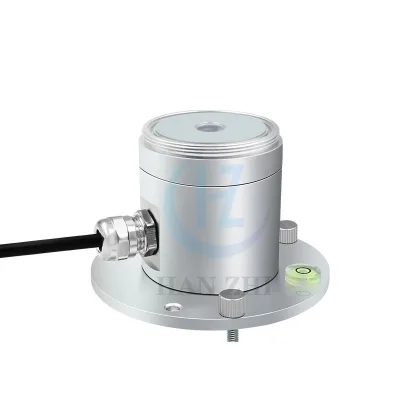


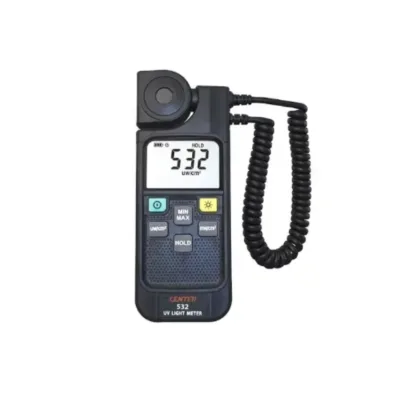
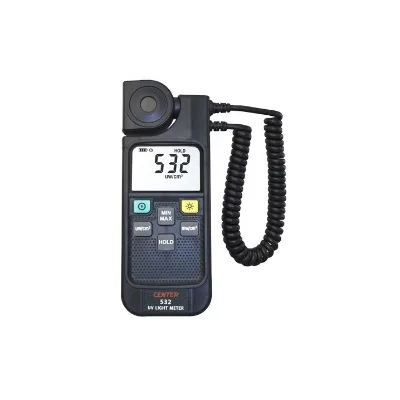


UV Energy Meter for UV Curing System UV Light Intensity Tester UV Radiometer
$580.00 - $599.00
MOQ: 1 Pieces


Comprehensive Sourcing Guide
Strategic Sourcing Guide for Ultraviolet Sensors and UV Light Meters
Navigating the global market for ultraviolet (UV) sensors and UV light meters requires a disciplined approach to technical verification and supplier evaluation. These devices are critical for applications ranging from solar radiation monitoring to industrial curing processes and environmental safety. The procurement landscape is characterized by a wide variance in sensor technologies, output signal standards, and environmental tolerances. Buyers must move beyond generic marketing descriptions to scrutinize specific performance attributes, ensuring that the selected hardware aligns with precise operational requirements. This guide outlines the essential factors for sourcing these instruments effectively, focusing on technical specifications, compliance verification, and long-term reliability.
Technical Specifications and Performance Metrics
The foundation of a successful procurement strategy lies in a rigorous understanding of the technical specifications that define sensor performance. When evaluating UV sensors, buyers must prioritize the spectral range, as different applications require sensitivity to specific wavelengths. For instance, solar radiation sensors often operate within a broad spectrum, typically covering the range of 280 to 400 nanometers, which encompasses the UVA and UVB bands essential for measuring solar intensity. Some specialized units may specify a narrower range, such as 290 to 390 nanometers, tailored for specific atmospheric monitoring or material testing needs.
Accuracy is another paramount specification. High-precision applications demand sensors with tight tolerances, often citing typical accuracy figures such as 10% Full Scale (FS) under controlled conditions of 25 degrees Celsius and 60% relative humidity. For general intensity measurement, accuracy might be expressed in absolute units, such as 0.01 MW/cm². The measurable intensity range is equally critical; devices must be capable of handling the expected environmental or industrial loads. Common ranges observed in the market span from 0 to 15 MW/cm², ensuring the sensor does not saturate during peak solar exposure or fail to detect low-level UV sources.
The response time of the sensor dictates its suitability for dynamic environments. A response time of less than or equal to 1 second (99% response) is standard for real-time monitoring applications where rapid fluctuations in UV intensity need to be captured immediately. Additionally, the cosine response is a vital optical characteristic. In solar applications, the sensor must accurately measure radiation regardless of the sun's angle. A cosine response error of less than 4% when the sun angle is 30 degrees is a benchmark for high-quality optical design, ensuring that measurements remain consistent throughout the day.
Output Signal Standards and Power Requirements
Selecting the correct output signal and power supply configuration is essential for system integration. UV sensors are not standalone devices; they must interface with data loggers, PLCs, or cloud-based monitoring systems. The market offers a variety of output standards, including analog voltages like 0-5V and 0-10V, current loops such as 4-20mA, and digital communication protocols like RS485. Some advanced units offer upgrade capabilities, allowing the transition from RS485 to 4G signal transmission for remote telemetry. The choice of output depends on the distance of the transmission, the noise environment of the installation site, and the input capabilities of the receiving controller.
Power consumption and supply voltage are also key integration factors. Most industrial-grade UV sensors operate on a DC power supply, with a default range often specified between 10 and 30 volts DC. However, some models may support lower voltages such as 5V, 12V, or 24V, offering flexibility for battery-operated or low-power applications. Buyers should verify the maximum power consumption, which can be as low as 0.06W for energy-efficient models, to ensure compatibility with existing power distribution systems. The rated voltage for insulation, often up to 300V, is another specification to consider for safety in high-voltage industrial environments.
Environmental Durability and Physical Construction
The physical robustness of the sensor determines its longevity in harsh outdoor or industrial settings. Mounting types vary, with threaded installation being a common standard for securing sensors to poles or brackets, ensuring stability against wind and vibration. The operating temperature range is a critical specification; sensors must function reliably across extreme conditions, with some units rated for ambient temperatures up to 80 degrees Celsius. This high-temperature tolerance is essential for installations in direct sunlight where internal component heating can occur.
Packaging and dimensions also play a role in logistics and installation. Single package sizes, such as 25x10x10 cm, and gross weights around 2.000 kg per unit, influence shipping costs and handling requirements. Buyers should verify the packaging standards, which often include carton packing or specialized boxes to protect the delicate optical components during transit. The physical dimensions of the sensor itself, such as 165x50x32mm or 160x78x43mm, must be compatible with the available mounting space and the optical aperture requirements of the application.
Supplier Verification and Origin Considerations
When sourcing UV sensors, verifying the origin and brand reputation is a necessary step in risk management. The global supply chain for these instruments includes manufacturers from various regions, including Shaanxi, Sichuan, and Qingdao in China, as well as Taiwan. While the place of origin does not inherently dictate quality, it provides context for the supply chain logistics and potential lead times. Buyers should be aware that different models, such as the HZGF03 or Veinasa-ZW, may originate from different manufacturing hubs, each with its own production capabilities.
Brand names like "hanzhi" or "CENTER" indicate specific manufacturers, but buyers should not rely solely on brand recognition. Instead, they must evaluate the supplier's ability to provide detailed technical documentation and support. The availability of customization is a significant differentiator; many suppliers offer customized solutions to meet specific spectral or output requirements. However, buyers must ensure that customization does not compromise the core performance metrics or the warranty terms. The warranty period, often cited as 1 year, serves as a baseline for manufacturer confidence, but the specific terms and conditions should be clearly defined in the procurement contract.
Cost Drivers and Procurement Economics
The cost of UV sensors is influenced by a complex interplay of factors, including the complexity of the optical design, the precision of the calibration, and the type of output interface. The observed price range in the market spans from 15 to 1000 USD, reflecting the diversity from basic detection units to high-precision scientific instruments. Several variables drive these costs. Sensors with wider spectral ranges, higher accuracy, and advanced digital communication capabilities typically command higher prices. Similarly, units designed for extreme environmental conditions with robust housing and high-temperature ratings will be more expensive than standard indoor models.
Minimum Order Quantities (MOQ) are another economic factor to consider. The market shows an MOQ range of 1 to 10 units, offering flexibility for small-scale pilots or large-scale deployments. Buyers should negotiate based on their volume requirements, as higher volumes may unlock better pricing tiers. It is important to note that the selling unit is often a single item, meaning that pricing is typically per unit rather than per batch, unless specified otherwise. Total cost of ownership should also factor in installation costs, maintenance, and the potential need for calibration services over the lifespan of the device.
Quality Control and Compliance Verification
Ensuring the quality of UV sensors requires a proactive approach to verification. While specific certifications like ISO17025 are often referenced in the broader industry, buyers must verify the actual certification status of the specific supplier and product batch. The absence of a specific certification claim in the product listing does not preclude quality, but it necessitates a request for third-party test reports or calibration certificates. Buyers should look for evidence of rigorous testing procedures that validate the sensor's accuracy, response time, and cosine response under standardized conditions.
Quality control processes should also extend to the manufacturing stage. Buyers should inquire about the supplier's quality assurance protocols, including how they handle batch-to-batch consistency and the calibration of each unit before shipment. The "Customized" attribute often implies a tailored production process, which requires additional quality checks to ensure the custom specifications are met without introducing defects. For applications involving safety or regulatory compliance, such as UV exposure monitoring in workplaces, the ability to trace the calibration history of each unit is essential.
Long-Term Procurement and Application Suitability
The final consideration in sourcing UV sensors is the long-term suitability of the product for the intended application. Whether the sensor is used for solar radiation monitoring, industrial curing, or environmental research, the device must maintain its performance over time. The response time and accuracy should remain stable despite environmental stressors. Buyers should evaluate the availability of spare parts and the supplier's support for firmware updates or signal transmission upgrades, such as the transition from RS485 to 4G.
The versatility of the sensor is also a key factor. Models that support multiple output types (0-5V, 4-20mA, RS485) offer greater flexibility for future system expansions or modifications. The theory of operation, typically photoelectric, should be understood to ensure compatibility with the specific light sources being measured. By carefully evaluating these long-term factors, buyers can secure a reliable supply chain that supports their operational goals without the need for frequent replacements or recalibrations.
Comparative Overview of Key Specifications
To assist in the decision-making process, the following table summarizes the key technical attributes observed in the market for ultraviolet sensors. This comparison highlights the variance in specifications that buyers must evaluate against their specific project requirements.
| Specification Category | Typical Observed Range/Value | Application Implication |
|---|---|---|
| Spectral Range | 280-400nm / 290-390nm | Determines suitability for solar vs. specific UV-A/B monitoring. |
| Accuracy | 10% FS / 0.01 MW/cm² | Critical for scientific measurement vs. general industrial monitoring. |
| UV Intensity Range | 0-15 MW/cm² | Must cover expected peak solar or industrial UV loads. |
| Output Signal | 0-5V, 4-20mA, RS485, 4G | Dictates compatibility with existing data acquisition systems. |
| Power Supply | 10-30VDC / 5V, 12V, 24V | Impacts power infrastructure requirements and energy efficiency. |
| Response Time | ≤1s (99%) | Essential for real-time monitoring of fluctuating UV levels. |
| Cosine Response | ≤4% (at 30° angle) | Vital for accurate solar radiation measurement at varying sun angles. |
| Operating Temp | Up to 80°C | Required for outdoor installations in high-heat environments. |
| Mounting Type | Threaded installation | Standard for secure outdoor pole or bracket mounting. |
| Warranty | 1 Year | Baseline for manufacturer support and reliability assurance. |
By systematically analyzing these specifications and understanding the underlying cost and quality drivers, buyers can make informed decisions that ensure the successful deployment of ultraviolet sensors and UV light meters. The focus must remain on verifying facts against the specific needs of the application, avoiding assumptions about performance, and maintaining a rigorous standard for supplier evaluation.
FAQs
What is the typical accuracy of the Ultraviolet Sensor UV Light Meter?
The typical accuracy is 10% Full Scale under controlled conditions of 25 degrees Celsius and 60% relative humidity. Some models also specify an absolute accuracy of 0.01 MW/CM2 for precise intensity measurements.
Which spectral range does the solar radiation sensor cover?
The sensor covers a spectral range of 280 to 400 nanometers, encompassing UVA and UVB bands. Specific models may define a narrower range of 290 to 390 nanometers for specialized atmospheric monitoring needs.
Can the Ultraviolet Sensor UV Light Meter support multiple output signals?
Yes, the device supports multiple output standards including 0-5V, 4-20mA, and RS485. Some advanced units offer upgrade capabilities to 4G signal transmission for remote telemetry applications.
How is the Ultraviolet Sensor UV Light Meter mounted for installation?
The sensor uses a threaded installation type for secure attachment to poles or brackets. This mounting method ensures stability against wind and vibration in outdoor environments.
What is the response time for the Ultraviolet Sensor UV Light Meter?
The response time is less than or equal to 1 second for 99% response. This speed allows for real-time monitoring of rapid fluctuations in UV intensity.
Which power supply options are available for the Ultraviolet Sensor UV Light Meter?
The device typically operates on a DC power supply ranging from 10 to 30 volts. Some models also support lower voltages such as 5V, 12V, or 24V for flexible integration.
What is the warranty period for the Ultraviolet Sensor UV Light Meter?
The standard warranty period is 1 year. This baseline coverage reflects manufacturer confidence in the product's reliability and performance over time.