Source Umbrella Style Chocolate Cookies for gifts, parties, and events
Compare 30 listings of Umbrella Style Chocolate Cookies from verified manufacturers in Guangdong, China. Buyers can evaluate specifications, certifications, and pricing for bulk orders of these chocolate biscuit snacks.
Key considerations
Products List
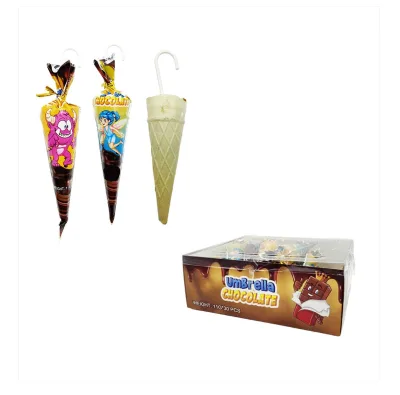
Halal Umbrella Shape Cone Biscuit Umbrella Chocolate Snack Chocolate Candy
$23.00 - $27.00
MOQ: 50 Minimum




Comprehensive Sourcing Guide
Strategic Sourcing Guide for Umbrella Style Chocolate Cookies
Understanding Product Specifications and Form Factors
When sourcing Umbrella Style Chocolate Cookies, buyers must first distinguish between the core product definition and the specific variations available in the global market. The primary category encompasses confectionery items that combine chocolate with biscuit or cookie elements, often shaped to resemble an umbrella or featuring umbrella-themed packaging. Based on available market data, these products frequently appear as solid forms where the chocolate acts as a coating or a structural component surrounding a biscuit core. The specific shape is a critical differentiator, with "umbrella" being a distinct design choice that often implies a cone-like or parasol-like geometry, which can influence both the manufacturing process and the final consumer experience.
The physical specifications of these items vary significantly across suppliers. Some listings indicate a unit weight of 10 grams per piece, packaged in quantities of 30 pieces per box, with 20 boxes constituting a master carton. This results in a total net weight of 6 kilograms per carton, a standard configuration for bulk B2B transactions. However, other variations in the market may adhere to different standard weights, such as 300 grams per bag or 500 grams per bag, packaged in different quantities like 12 or 24 bags per master unit. The shape is not limited to the umbrella motif; heart shapes and other confectionery forms are also prevalent in the same supply chain, requiring buyers to verify the exact mold or die-cut specifications before placing an order. The color of the chocolate coating can also vary, with black chocolate being a noted option, though standard milk or dark chocolate varieties are common.
The composition of the product is another vital specification. These items are typically classified as sweet chocolate or biscuit-based confectionery. The internal structure often includes additional ingredients such as jam or biscuit layers, creating a composite texture that differs from pure chocolate bars. The presence of artificial colors and flavors is a standard attribute in many commercial listings, which buyers must account for in their ingredient compliance checks. The shelf life is a critical specification that fluctuates based on the specific formulation and packaging method; observed ranges extend from 6 months to 24 months. This variance necessitates a clear agreement on the minimum shelf life required upon delivery to ensure the product remains viable for the intended distribution channel.
Compliance and Certification Verification
Navigating the regulatory landscape for food products intended for international trade requires rigorous verification of certifications. For Umbrella Style Chocolate Cookies, the target markets of Europe and North America impose strict standards on food safety and labeling. Buyers should expect to see a portfolio of certifications that may include EN71, which is often associated with toy safety but can appear in products marketed as "play and eat" items, as well as ISO standards for quality management. More critical for food importation are the BRC (British Retail Consortium), FDA (Food and Drug Administration), HACCP (Hazard Analysis and Critical Control Points), and Halal certifications.
The presence of these certifications is not guaranteed across all listings. Some suppliers may hold a comprehensive suite including BRC, ISO, FDA, HACCP, and Halal, while others might only possess ISO or EN71. The distinction is vital because the absence of a specific certification, such as Halal, can restrict market access in regions with significant Muslim populations, while the lack of FDA approval can block entry into the United States. Buyers must treat certification claims as observations that require validation rather than absolute facts. The verification process should involve requesting current, valid certificates directly from the manufacturer and cross-referencing them with the issuing bodies.
Furthermore, the "Play + Eat" attribute found in some product descriptions introduces a unique compliance layer. If a product is marketed as a toy that is also edible, it must meet the safety standards of both categories. This often necessitates EN71 certification, which covers mechanical and physical safety, in addition to food safety standards. The packaging material, often plastic or cardboard, must also comply with food contact regulations. Buyers should verify that the packaging material is suitable for direct food contact and does not leach harmful substances, especially given the storage requirements of keeping the product in a cool, dry place away from sunshine. The storage method, whether normal or requiring specific temperature control, must align with the product's shelf life claims to prevent spoilage during transit.
Cost Drivers and Pricing Dynamics
The pricing of Umbrella Style Chocolate Cookies is influenced by a complex interplay of factors, including raw material costs, packaging complexity, and order volume. The observed price range in the market spans from 0.18 to 33 USD per unit, a wide disparity that reflects differences in product quality, brand positioning, and order quantities. The lower end of this spectrum typically corresponds to bulk orders of standard formulations with minimal customization, while the higher end may reflect premium ingredients, custom branding, or smaller order volumes.
The Minimum Order Quantity (MOQ) is a significant driver of unit cost. Suppliers often set MOQs ranging from 10 units to 14,400 units, with a common baseline of 50 cartons for standard items. Adhering to the MOQ is essential to secure the most competitive pricing. Orders falling below the standard MOQ may incur surcharges or be subject to higher per-unit costs. Conversely, larger orders that approach the supplier's maximum supply ability, such as 10,000 cartons per week, can often negotiate better rates due to economies of scale. The supply ability of the manufacturer is a key metric; a supplier with a capacity of 10,000 cartons per week is better positioned to handle large, consistent orders without compromising lead times or quality.
Packaging details also impact the final cost. The specification of 10g30pcs20boxes in a carton with dimensions of 42.536.540cm and a CBM of 0.062 affects shipping logistics. Buyers must calculate the total landed cost, which includes the product price, packaging, and freight charges. Customization options, such as custom logos or specific packaging designs, add to the production cost and may require additional setup fees. The choice of packaging material, whether plastic bags or cartons, also influences the price. Buyers should request a detailed breakdown of costs to understand the proportion of the price attributed to materials, labor, and logistics.
Typical Applications and Market Segmentation
Umbrella Style Chocolate Cookies serve a diverse range of applications, catering to various consumer demographics and usage scenarios. The primary application is as a snack food, suitable for consumption by children, adults, and the elderly. The "Play + Eat" attribute suggests a dual-purpose use, where the product serves as both a treat and a playful item, making it particularly attractive for children's parties, events, and promotional activities. The heart shape and umbrella design add a visual appeal that enhances the product's suitability for gifting and special occasions.
The target markets for these products are predominantly Europe and North America, regions with high demand for confectionery and snack foods. The main market orientation indicates that suppliers are experienced in meeting the regulatory and consumer preference standards of these developed economies. The product's versatility allows it to be used in various retail channels, including supermarkets, convenience stores, and specialty confectionery shops. The shelf life of 6 to 24 months ensures that the product can withstand the logistics of international shipping and long-term storage in retail environments.
In terms of consumer segments, the product appeals to a broad audience. The inclusion of biscuit and jam ingredients provides a texture and flavor profile that is generally well-accepted across different age groups. The specific shape and design can also be leveraged for marketing campaigns targeting specific demographics, such as children for school events or adults for gift-giving. The ability to customize the logo and packaging allows brands to tailor the product to their specific marketing strategies, enhancing its appeal in competitive markets.
Supplier Evaluation and Selection Criteria
Selecting the right supplier for Umbrella Style Chocolate Cookies requires a thorough evaluation of their capabilities, reliability, and compliance record. The manufacturer, such as Shantou Jinju Candy Toy Co., Ltd., represents a typical profile of a supplier in this sector, located in Guangdong, China. Buyers should verify the manufacturer's location, as the port of dispatch, such as Shantou Port or Shenzhen Port, affects shipping times and costs. The lead time for delivery is another critical factor, with standard times around 15 days being common. Buyers must confirm if this lead time is consistent and if it can be expedited for urgent orders.
The supply ability of the supplier is a key indicator of their capacity to meet demand. A supplier with a weekly supply ability of 10,000 cartons is capable of handling large-scale orders, whereas a supplier with lower capacity may struggle with volume spikes. Buyers should also assess the supplier's customization capabilities, as the availability of custom logos and packaging can be a decisive factor in brand differentiation. The ability to provide OEM (Original Equipment Manufacturer) services is a positive indicator of a supplier's flexibility and commitment to meeting client needs.
Compliance and certification are paramount in supplier evaluation. Buyers should verify that the supplier holds the necessary certifications for their target markets, such as BRC, ISO, FDA, HACCP, and Halal. The presence of these certifications should be validated through official documentation. Additionally, the supplier's track record in maintaining quality standards and adhering to food safety regulations should be assessed. Buyers can request references or case studies from other clients to gauge the supplier's reliability and performance.
Quality Control and Long-Term Procurement Considerations
Ensuring consistent quality in Umbrella Style Chocolate Cookies requires a robust quality control (QC) framework. Buyers should implement a multi-stage QC process that includes raw material inspection, in-process monitoring, and final product testing. The specifications for the product, such as weight, shape, and ingredient composition, must be strictly adhered to. The shelf life of the product, which can range from 6 to 24 months, must be verified through stability testing to ensure that the product remains safe and palatable throughout its intended lifespan.
Storage conditions are critical for maintaining product quality. The product should be stored in a cool, dry place, away from direct sunlight, to prevent melting or degradation. The packaging material, whether plastic or cardboard, must provide adequate protection against moisture and physical damage. Buyers should verify that the packaging is sealed properly and that the product is protected from contamination during transit.
Long-term procurement considerations involve building a sustainable relationship with the supplier. This includes establishing clear communication channels, agreeing on consistent quality standards, and planning for future demand fluctuations. Buyers should also consider the environmental impact of the packaging and the supply chain, seeking suppliers who are committed to sustainability. The ability to scale production up or down based on market demand is another important factor. Buyers should negotiate flexible terms that allow for adjustments in order quantities without incurring excessive penalties.
Summary of Key Procurement Parameters
To facilitate informed decision-making, the following table summarizes the key parameters buyers should verify when sourcing Umbrella Style Chocolate Cookies.
| Parameter | Typical Range / Observation | Verification Requirement |
|---|---|---|
| Product Type | Chocolate, Biscuit, Candy | Confirm specific formulation (e.g., Chocolate Biscuit) |
| Shape | Umbrella, Heart, Solid | Verify mold specifications and visual consistency |
| Certifications | EN71, ISO, BRC, FDA, HACCP, Halal | Request valid certificates for target markets |
| Shelf Life | 6 Months - 24 Months | Confirm minimum shelf life upon delivery |
| MOQ | 10 - 14,400 units (e.g., 50 cartons) | Negotiate based on order volume and budget |
| Lead Time | ~15 Days | Confirm production schedule and delivery date |
| Packaging | Box, Plastic Bag, Carton | Verify packaging material and dimensions |
| Origin | Guangdong, China | Confirm port of dispatch (Shantou/Shenzhen) |
| Ingredients | Biscuit, Jam, Artificial Colors/Flavors | Check for allergens and dietary restrictions |
| Customization | Logo, Packaging, Shape | Assess feasibility and cost of customization |
By systematically addressing these parameters, buyers can mitigate risks and ensure a successful procurement process for Umbrella Style Chocolate Cookies. The focus should remain on verifying facts, understanding market dynamics, and maintaining high standards of quality and compliance throughout the supply chain.
FAQs
What certifications are available for Umbrella Style Chocolate Cookies?
Available certifications include EN71, ISO, BRC, FDA, HACCP, and Halal. Some listings specify EN71 for play-and-eat items, while others hold comprehensive food safety suites like BRC and FDA for international markets.
What is the typical shelf life for these chocolate biscuit products?
Shelf life ranges from 6 months to 24 months depending on the specific formulation and packaging. Buyers must verify the minimum shelf life required upon delivery to ensure viability for their intended distribution channels.
Can suppliers provide custom logos for Umbrella Style Chocolate Cookies?
Yes, customization including custom logos is available for these products. Buyers should note that custom branding may incur additional setup fees and requires coordination with the manufacturer's production schedule.
What are the standard packaging specifications for bulk orders?
Standard packaging often involves 10g pieces in boxes of 30, with 20 boxes per master carton. Other variations include 300g or 500g bags packed in cartons, with dimensions and CBM varying by configuration.
Where are the primary manufacturing locations for these products?
Primary manufacturing locations are in Guangdong, China, with dispatch ports in Shantou or Shenzhen. Buyers should account for these origins when calculating shipping times and logistics costs for international orders.
What is the minimum order quantity for these chocolate snacks?
Minimum order quantities typically start at 50 cartons but can range from 10 to 14,400 units depending on the supplier. Orders below standard MOQs may face surcharges or higher per-unit costs.
How long is the standard delivery time for these orders?
Standard delivery time is approximately 15 days from order confirmation. Buyers must confirm if this lead time is consistent and if expedited options are available for urgent procurement needs.