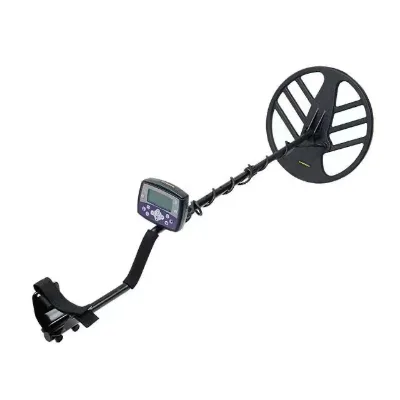
Source Underground Treasure Hunting Metal Detector for Factory, Public Area, and Research
Compare 30 listings for the Underground Treasure Hunting Metal Detector designed for industrial, commercial, and research applications. Buyers can evaluate models with battery power, LCD displays, and varying detection depths to find the right equipment for gold and metal searching.
Key considerations
Products List


Outdoor High Precision Handheld Underground Treasure Hunt Visual Metal Detector
$118.00 - $138.00
MOQ: 1 Pieces


Updated Underground Gold Diamond Silver Copper Treasure Metal Detector
$549.00 - $999.00
MOQ: 1 Pieces

Professional Deep Search Waterproof Treasure Hunting Underground Gold Metal Detector
$199.00 - $225.00
MOQ: 1 Pieces




Comprehensive Sourcing Guide
Strategic Sourcing Guide for Underground Treasure Hunting Metal Detectors
Procuring specialized underground treasure hunting metal detectors requires a rigorous approach that balances technical performance with supply chain reliability. Buyers in the B2B sector must navigate a market where product attributes vary significantly between industrial-grade equipment and consumer-grade search tools. This guide outlines the critical factors for sourcing these devices, focusing on verified specifications, compliance requirements, and operational capabilities observed in current market listings. The objective is to equip procurement teams with the knowledge to evaluate suppliers based on tangible data rather than marketing assertions.
Technical Specifications and Performance Parameters
The core functionality of an underground metal detector relies on its ability to distinguish between target metals and ground mineralization while providing accurate depth and location data. When evaluating potential inventory, buyers must scrutinize specific technical parameters. Observed market data indicates that power supply systems vary, with many units operating on battery power, which is essential for extended field operations without access to grid electricity. The operating voltage for specific high-performance models is noted to be 12V, ensuring stable power delivery during intensive use.
Signal processing capabilities are equally critical. Advanced units feature indication modes that combine visual and auditory feedback. For instance, specific models utilize an LCD digital screen display with dimensions of 0.5*6.5 inches, allowing operators to view real-time data. This is often paired with sound indicators to alert the user to the presence of a target. The detection frequency is another vital metric; some units operate at 100Hz, a frequency that influences the depth and sensitivity of the search.
Depth capability is a primary differentiator in this category. While standard detectors may offer limited range, specialized underground models claim a depth capability of up to 50 meters. This specification is particularly relevant for heavy-duty applications where targets are buried deep. Additionally, the directional capability of the search coil is significant. Some units support 360° autorotation, which allows for comprehensive scanning without the need to reposition the entire unit frequently. The laser guidance systems, specified as 5MW at 5V, further assist in pinpointing the exact location of a detected object, reducing excavation time.
Compliance, Certification, and Safety Standards
In the B2B procurement of electronic search equipment, verifying compliance with international standards is non-negotiable. Buyers must ensure that the equipment meets the necessary safety and quality benchmarks before placing large orders. Market observations confirm that many suppliers provide products with CE certification, indicating conformity with health, safety, and environmental protection standards for products sold within the European Economic Area. Some listings also reference ISO certification, which suggests adherence to international management system standards.
It is important to note that while certifications like CE are frequently observed, the specific scope of these certifications must be verified against the product's intended use. The standard packaging for these units often includes a carton box for single orders and wood packaging for larger shipments, which implies a need for robust logistics handling to maintain product integrity during transit. The production origin is frequently listed as Shanghai or generally China, which necessitates a thorough review of the supplier's export compliance history.
Buyers should also consider the standard classification of the equipment. Some units are categorized under "Test Equipment," which may trigger different regulatory requirements depending on the destination country. The condition of the products is typically listed as "New," but verification of the manufacturing date and storage conditions is advisable to ensure battery health and electronic component longevity.
Cost Drivers and Pricing Structures
The pricing of underground metal detectors is influenced by a complex array of factors, including the complexity of the electronics, the depth of detection, and the durability of the build. The observed price range in the current market spans from 1 USD to 2750 USD, reflecting a vast disparity between basic models and high-end industrial systems. This wide range suggests that cost is not solely determined by the brand but by the specific technical specifications and customization options available.
Minimum Order Quantity (MOQ) is another significant cost driver. The observed MOQ range varies from 1 to 100 units. For buyers seeking to test the market or fulfill small-scale needs, suppliers with an MOQ of 1 offer flexibility. However, for bulk procurement, an MOQ of 100 may be required to access volume pricing tiers. The production capacity of suppliers, observed at 5000 PCS, indicates that large-scale orders can generally be fulfilled without significant lead time delays, provided the specifications are standard.
Customization is a key variable affecting cost. While some units are listed as "Non-Customized" with standard features, others offer "Available" customization options. Customized units, which may include specific branding, modified coil sizes, or tailored software interfaces, will inherently command a higher price point. Buyers must weigh the cost of customization against the operational benefits it provides for their specific use case.
Typical Applications and Operational Context
Understanding the intended application is crucial for selecting the right detector. The market data reveals a diverse range of applications, from industrial and commercial use to research and specific treasure hunting scenarios. Industrial applications often require robust, non-portable units capable of continuous operation in factory settings or public areas. These units are designed for security and quality control, utilizing sound and light alarms to signal the presence of metal.
Conversely, the "Underground Metal Detector" category is specifically tailored for gold and metal searching in natural environments. These units are often portable, weighing approximately 2.8kg to 3kg, which allows for extended use by a single operator. The usage is explicitly defined as detecting underground metal objects, distinguishing them from general-purpose metal finders used in construction or security.
The application context also dictates the required features. For example, detectors used in examination rooms or factories may prioritize high sensitivity and alarm forms that include both sound and light. In contrast, units used for gold searching in remote locations prioritize battery life, depth capability, and directional accuracy. The color of the device, often black, white, brown, or a combination, may also be a factor for camouflage in outdoor environments or visibility in industrial settings.
Supplier Evaluation and Production Capabilities
When evaluating potential suppliers, buyers must look beyond the product listing and assess the underlying production capabilities. The production capacity of 5000 PCS suggests that established manufacturers can handle significant order volumes. However, the origin of the products, primarily from Shanghai and China, requires careful vetting of the supplier's logistics and quality control infrastructure.
Video outgoing-inspection is a valuable feature offered by some suppliers, allowing buyers to verify the condition and functionality of the product before shipment. This service adds a layer of transparency to the procurement process. Furthermore, the after-sales service is a critical component of supplier evaluation. A standard offering of 1 year of after-sales service provides a safety net for buyers, ensuring that any manufacturing defects or operational issues can be addressed promptly.
The packaging standards, ranging from bare packing to original aluminum boxes within carton boxes, indicate the level of care taken in product preparation. For high-value items, the use of plywood pallets and wood packaging for big orders is essential to prevent damage during international shipping. Buyers should verify that the supplier's packaging standards align with the fragility of the electronic components and the requirements of the destination market.
Quality Control and Long-Term Procurement Considerations
Ensuring consistent quality in metal detector procurement requires a proactive approach to quality control. The distinction between "New" condition units and refurbished or used equipment must be clearly defined in the contract. Buyers should request detailed test results or performance data to validate claims regarding depth, frequency, and detection accuracy. While specific test results are not always publicly listed, the availability of video inspection services provides a practical alternative for verification.
Long-term procurement considerations include the availability of spare parts and the durability of the product. The weight of the units, typically around 2.8kg to 3kg, suggests a balance between portability and structural integrity. However, the "Non Portable" classification for certain industrial models indicates that some units are designed for stationary use, which may affect their long-term maintenance requirements.
Buyers should also consider the standardization of the product. The use of carton boxes for single units and wood for large orders implies a standardized packaging process, which is a positive indicator of a mature supply chain. The "Test Equipment" standard classification suggests that these units undergo rigorous testing before leaving the factory. To mitigate risks, buyers should establish clear acceptance criteria based on the observed specifications, such as the 12V operating voltage and the specific alarm forms, ensuring that the delivered goods match the agreed-upon technical parameters.
Comparison of Key Product Attributes
To facilitate decision-making, the following table summarizes the key attributes observed in the current market for underground treasure hunting metal detectors. This comparison highlights the diversity in specifications and helps buyers identify the features most relevant to their specific needs.
| Attribute | Observation A | Observation B | Observation C |
|---|---|---|---|
| Product Model | BVE-HD20 | GPX6000 | PD-T90 |
| Portability | Non Portable | Portable | Portable |
| Application | Factory, Public Area | Industrial | Industrial, Commercial, Research |
| Usage | Metal Finder | Detect Underground Metal Objects | Gold and Metal Searching |
| Depth Capability | Not Specified | Not Specified | 50m |
| Power Supply | Battery | Battery | Battery Powered |
| Indication Mode | Sound and Light Alarm | Display Alarm | LCD & Sound Indicator |
| Weight | Not Specified | 2.8kg | 3kg |
| Certification | ISO, CE | CE | CE |
| Customization | Available | Non-Customized | Not Specified |
| Origin | Shanghai | China | China |
This table illustrates that while there is a common thread of battery power and CE certification, the specific capabilities vary widely. Buyers must align these attributes with their operational requirements, ensuring that the selected model offers the necessary depth, portability, and indication modes for their specific use case. By focusing on these verified facts, procurement teams can make informed decisions that minimize risk and maximize the utility of the acquired equipment.
FAQs
What certifications do underground treasure hunting metal detectors typically have?
Many units carry CE certification, indicating conformity with European safety standards. Some listings also show ISO certification, suggesting adherence to international management systems. Buyers should verify the specific scope of these certifications against the product's intended use before placing orders.
How is the power supply configured for these metal detectors?
Most units operate on battery power to support extended field operations without grid access. Specific high-performance models utilize a 12V operating voltage to ensure stable power delivery during intensive use. This configuration is essential for maintaining functionality in remote search locations.
Which customization options are available for metal detector orders?
Customization is available for some models, allowing for specific branding or modified interfaces. Other units are listed as non-customized with standard features. Buyers must weigh the cost of customization against the operational benefits it provides for their specific use case and application requirements.
Can buyers verify product condition before shipment?
Yes, some suppliers provide video outgoing-inspection services to verify product condition and functionality. This adds transparency to the procurement process and helps ensure the equipment matches agreed-upon technical parameters. Buyers should request this service for high-value items to mitigate risks.
What is the typical depth capability for underground models?
Specialized underground models claim a depth capability of up to 50 meters for heavy-duty applications. This specification is relevant for detecting targets buried deep in the ground. Standard detectors may offer limited range, so depth capability is a primary differentiator when selecting equipment.
How do suppliers handle packaging for large orders?
Standard packaging includes a carton box for single orders and wood packaging for larger shipments. Some units use plywood pallets to ensure robust logistics handling during transit. This approach maintains product integrity and protects electronic components during international shipping.
What after-sales service is typically provided for these devices?
A standard offering includes one year of after-sales service to address manufacturing defects or operational issues. This safety net ensures buyers can resolve problems promptly after delivery. Buyers should confirm the specific terms of this service during the procurement negotiation phase.