Source Underwater Repair Epoxy Putty for Construction, Woodworking, and Footwear
Explore 30 listings for Underwater Repair Epoxy Putty suitable for construction, woodworking, and footwear applications. Buyers can compare specifications such as setting time, color options, and certification details to find the right adhesive solution.
Key considerations
Products List
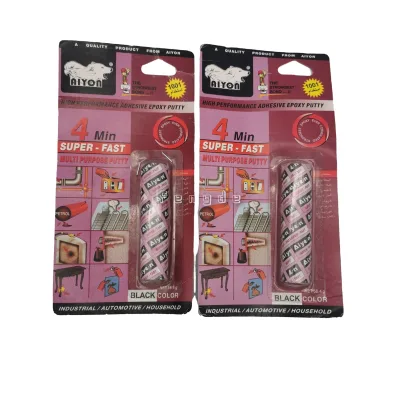

E323cr 114G Underwater Repair Epoxy Putty Stick for Emergency Repairs Adhesive
$0.95 - $1.04
MOQ: 2000 pieces/pieces

E323cr 57g Underwater Repair Epoxy Putty Stick for Emergency Repairs Adhesive
$0.54 - $0.60
MOQ: 5000 pieces/pieces


Steel Repair Epoxy Putty 2 Ounces for Plumbing Sets Under Water in 2 Mins
$0.45 - $0.85
MOQ: 5000 Pieces


Cheap Custom Widely Used in Machinery and Equipment Resin Pool Metal Epoxy Putty
$0.30 - $0.50
MOQ: 10000 Pieces


$1000.00 - $2000.00
MOQ: 1 Tons


Industrial Paint Paint Waterborne Underside Integrated Paint Made in China
$1000.00 - $2000.00
MOQ: 1 Tons


Comprehensive Sourcing Guide
Strategic Sourcing Guide for Underwater Repair Epoxy Putty
Procuring Underwater Repair Epoxy Putty requires a disciplined approach that balances immediate operational needs with long-term supply chain reliability. The market for these specialized adhesives is characterized by a diverse range of formulations, from double-component systems to single-component putties, each designed for specific environmental conditions. Buyers must navigate a complex landscape where product attributes, such as setting time, curing mechanism, and chemical composition, directly impact the success of repair operations in submerged or high-moisture environments. This guide outlines the critical factors for sourcing these materials, focusing on verified specifications, compliance requirements, and supplier evaluation criteria based on current market data.
Technical Specifications and Formulation Analysis
The fundamental distinction in underwater epoxy putty lies in its chemical classification and physical properties. Market data indicates that high-performance variants are often classified as "Double Components Adhesives," requiring the mixing of a main agent and a promoter to initiate the curing process. The primary raw material for these systems is typically epoxy, which provides the necessary structural integrity and chemical resistance. However, buyers must also be aware of alternative formulations where the main agent composition may include rubber or other organic materials, while the promoter composition often consists of fillers.
Setting time is a critical performance metric that dictates the workflow of repair teams. Observed specifications in the current market show setting times as short as five minutes, which is essential for rapid repairs in emergency scenarios. Conversely, other formulations may offer longer working times to accommodate complex application geometries. The morphology of the product is another vital consideration; while some products are water emulsions, others may be solvent-based or present as solid putties. The curing mechanism is frequently described as "Room Curing," allowing for application without the need for external heat sources, which is a significant advantage in field operations.
A key physical characteristic of high-quality underwater epoxy is its ability to cure without shrinkage or deformation. This property ensures that the repaired structure maintains its dimensional stability and watertight integrity. The product is often available in various colors, including black, white, red, green, and transparent options, which can be selected based on aesthetic requirements or the need for visual contrast against the substrate. The final cured product must exhibit strong bonding functions, often described as instant adhesive capabilities once the chemical reaction is complete.
Compliance, Certification, and Regulatory Standards
Navigating the regulatory landscape is essential for industrial procurement, particularly when materials are used in construction, transportation, or food-adjacent industries. Buyers should verify that suppliers possess recognized international certifications. Commonly observed certifications in this sector include SGS, ROHS, and ISO9001. These certifications indicate that the manufacturer adheres to specific quality management systems and environmental standards.
Chemical compliance is equally important. Procurement teams must request documentation regarding the European Inventory of Existing Commercial Chemical Substances (EINECS) and the Chemical Abstracts Service (CAS) registry. Specific entries such as EINECS No. 211311 and CAS No. 1012 are frequently associated with epoxy-based formulations, though the exact chemical makeup (MF) can vary, with some formulations citing compositions like C3H4O2. It is crucial to note that while these numbers appear in product listings, they represent specific chemical identifiers that must be cross-referenced with the actual batch data to ensure the product matches the intended safety profile.
Furthermore, the composition of the material, whether organic or inorganic, determines its disposal and handling requirements. Buyers should confirm that the product composition aligns with local environmental regulations. For applications involving potable water or food processing, additional verification of non-toxicity and compliance with relevant food-grade standards is mandatory, even if the general product classification suggests broad industrial usage.
Cost Drivers and Pricing Structures
The pricing of underwater epoxy putty is influenced by a complex interplay of factors, including raw material costs, packaging specifications, and order volume. The observed price range in the market is extensive, spanning from $0.20 to $2,000 per unit. This wide variance is not indicative of quality alone but reflects differences in packaging formats, such as single-item units versus bulk cartons containing hundreds of pieces.
Packaging plays a significant role in the final cost. Standard packaging often involves cartons containing 288 pieces, but variations exist, such as specific weight standards of 114g or 57g per unit. The total cost is also driven by the Minimum Order Quantity (MOQ). Market data reveals MOQs ranging from 50 cartons to 10,000 pieces, with specific listings showing thresholds like 2,000 or 5,000 pieces. Buyers must calculate the total cost of ownership, which includes the unit price, shipping costs, and the capital tied up in inventory due to high MOQ requirements.
Logistics and delivery terms further impact the effective cost. Lead times are a critical variable, with standard delivery times observed at 25 days after payment. Shipping methods, including sea, air, and courier services like FedEx or DHL, add another layer of cost variability. Air freight offers speed but at a premium, while sea freight is more economical for large volumes but requires longer planning horizons. Buyers should factor in these logistics costs when comparing supplier quotes to ensure an accurate budget assessment.
Typical Applications and Industry Use Cases
Underwater epoxy putty serves a multitude of industries, each with unique demands on the material's performance. The primary application sectors include construction, woodworking, and transportation. In the construction industry, these putties are used for sealing leaks in concrete structures, repairing underwater pipelines, and fixing cracks in dams or reservoirs. The "Waterproof" characteristic is a non-negotiable requirement for these applications.
The footwear and leather industry utilizes these adhesives for repairing damaged goods, where resistance to moisture and flexibility are key. Similarly, the fiber and garment sectors rely on the bonding strength of these putties for repairs that must withstand washing and wear. In the transportation sector, particularly for automobiles, the putty is used for body repairs and sealing, where the "No Shrinkage or Deformation After Curing" feature ensures a seamless finish.
The versatility of the product is further highlighted by its use in packing and general industrial maintenance. The ability to bond various substrates, including ceramics, metals, and plastics, makes it a universal solution for emergency repairs. However, buyers must ensure that the specific product selected matches the substrate requirements of their application, as some formulations may be optimized for specific material types.
Supplier Evaluation and Sourcing Strategy
Evaluating suppliers requires a rigorous assessment of their capabilities beyond the basic product listing. The "Place of Origin" is a significant factor, with many suppliers based in regions like Hubei, China. While this location offers competitive pricing, buyers must verify the supplier's capacity to meet international shipping and quality standards. The "Brand Name" associated with the product, such as AURE SUPER ALLURE, EZGLUE, ALLICO, or ARLOLDITEE, can indicate the level of brand recognition and market presence, but buyers should not rely solely on brand names without verifying the actual manufacturing entity.
OEM (Original Equipment Manufacturer) capabilities are a crucial differentiator. Many suppliers accept OEM requests, allowing buyers to customize the product with their own branding or specific formulation adjustments. The availability of customization options should be confirmed early in the sourcing process. Additionally, the "Selling Units" and "Package" details must be scrutinized to ensure they align with the buyer's inventory management systems.
Suppliers should be evaluated on their ability to provide consistent quality over time. The "Shelf Life" of the product, typically listed as more than 12 months, is a critical factor for inventory planning. Buyers should verify the actual shelf life of the specific batch they are purchasing, as storage conditions can affect the longevity of the adhesive. A reliable supplier will provide batch-specific test reports and quality certificates to validate the product's performance.
Quality Control and Long-Term Procurement Considerations
Implementing a robust quality control (QC) protocol is essential for mitigating the risks associated with sourcing specialized adhesives. Buyers should establish clear acceptance criteria based on the product's key attributes, such as setting time, color consistency, and bonding strength. Regular sampling and testing of incoming shipments are recommended to ensure that the product meets the specified standards.
Long-term procurement strategies should focus on building strong relationships with suppliers who demonstrate reliability and flexibility. The ability to handle fluctuations in demand, such as increasing orders from 50 cartons to 10,000 pieces, is a sign of a mature supply chain. Buyers should also consider the environmental impact of the product, particularly regarding the "Organic Material" or "Inorganic Material" composition, and ensure that the supplier adheres to sustainable manufacturing practices.
Finally, buyers must remain vigilant regarding the "Feature" claims made by suppliers. While attributes like "Instant Adhesive" and "Waterproof" are standard, the actual performance can vary based on application conditions. Continuous monitoring of product performance in the field is necessary to validate supplier claims and ensure that the chosen product continues to meet the operational needs of the organization. By adhering to these rigorous sourcing and quality control practices, buyers can secure a reliable supply of high-quality Underwater Repair Epoxy Putty for their critical operations.
FAQs
What is the setting time for underwater epoxy putty?
The setting time is typically five minutes for rapid repair scenarios. This fast cure allows immediate handling, though specific formulations may vary based on the ambient temperature and mixing ratio used during application.
Which certifications do underwater epoxy putty suppliers usually hold?
Suppliers commonly hold SGS, ROHS, and ISO9001 certifications for quality and safety. These documents verify that the product meets international standards for chemical composition and manufacturing processes before shipment.
How is the minimum order quantity determined for this product?
Minimum order quantities vary significantly, ranging from 50 cartons to 10,000 pieces depending on the supplier. Buyers must check specific listings as some vendors require 2,000 or 5,000 pieces per order.
Can I request custom branding for the underwater epoxy putty?
Yes, OEM customization is generally accepted by most manufacturers in this sector. Buyers can often request specific packaging or labeling, provided they meet the supplier's minimum order thresholds for production runs.
What is the shelf life of the underwater epoxy putty?
The shelf life is typically more than 12 months when stored correctly. This duration ensures the adhesive remains effective for emergency repairs, though storage conditions like temperature and humidity can influence longevity.
Which locations are the primary sources for this adhesive?
Major production origins include Hubei, China, where many manufacturers are located. Buyers should verify the specific place of origin on the product page to confirm logistics and potential shipping costs.
What colors are available for the underwater epoxy putty?
Available colors include transparent, black, white, red, and green options. These variations allow users to select a shade that matches the substrate or provides visual contrast for inspection purposes.