Source Unfolded Garden Shear for Pruning, Trimming, and Cutting
Compare 30 Unfolded Garden Shear options from Chinese manufacturers. Buyers can evaluate blade materials, pruning types, and customization features to find the right tool for garden pruning and home use.
Key considerations
Products List
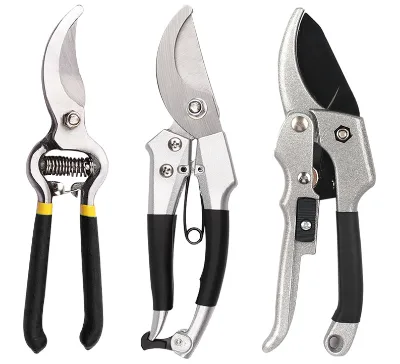


Garden Tools Steel Pruner Shears Cutting Scissors Orchard Pruning Shears
$0.67 - $1.59
MOQ: 1200 Pieces


6.5in Ergonomic Shears for Tall Shrub Maintenance Garden Shears with Safety Lock
$3.45 - $3.95
MOQ: 500 Pieces

Hedge Clippers Shears, Garden Shears for Hedges, Hedge Shears for Trimming Borders
$8.00 - $8.50
MOQ: 1200 Pieces


Garden Tools Steel Pruner Shears Cutting Scissors Orchard Pruning Shears
$1.00 - $6.00
MOQ: 1000 Pieces

Comprehensive Sourcing Guide
Sourcing Strategy for Unfolded Garden Shears
Understanding the Product Category and Configuration
When sourcing unfolded garden shears, buyers must first distinguish this specific configuration from folding or telescopic variants. The defining characteristic of an unfolded shear is that the blades and handles remain in a fixed, extended position during operation, offering a rigid structure that maximizes leverage for cutting tasks. Based on observed market data, these tools are frequently categorized under specific types such as anvil or bypass pruners. Anvil models feature a single sharp blade that closes against a flat, stationary surface, making them ideal for cutting dead wood or thick stems. In contrast, bypass models operate like scissors, where two curved blades slide past each other, providing a cleaner cut for live vegetation. The observed product attributes indicate that "unfolded" is a standard state for many industrial-grade pruning shears, with specific listings noting the "Folded" attribute as "Unfolded" to confirm the tool is ready for immediate use without assembly.
The physical dimensions of these tools are critical for ergonomic assessment. Market observations show specific length specifications, such as a 215mm blade or overall length, which directly influences the cutting capacity and the force required by the operator. Weight is another significant factor; observed units range from lightweight handheld versions to heavier industrial models weighing up to 11.5 kg per single package, suggesting a wide spectrum of applications from delicate home gardening to heavy-duty agricultural maintenance. The handle material often varies, with steel handles providing durability for high-force applications, while plastic-coated finishes are common to reduce user fatigue and improve grip. Understanding these baseline configurations helps buyers filter suppliers who offer the specific mechanical advantage required for their intended use case.
Technical Specifications and Material Composition
The performance of an Unfolded Garden Shear is fundamentally dictated by its material composition. The blade material is the most critical component, with observed listings highlighting two primary types: 50# Carbon Steel and Stainless Steel. Carbon steel, specifically grade 50#, is known for its ability to hold a sharp edge and its high hardness, making it suitable for tough pruning tasks. However, this material requires protection against corrosion, which is often addressed through finishing processes like plastic coating. Stainless steel blades offer superior rust resistance, a feature explicitly listed as an advantage in several product profiles, making them preferable for humid environments or applications involving frequent contact with sap and moisture.
The handle and structural integrity are equally important. Some industrial-grade shears feature steel handles to withstand high hydraulic pressure or manual force, while others utilize composite materials. The "Grade" attribute observed in the market often points to "Industrial" classification, implying that these tools are built to withstand rigorous daily use rather than occasional home gardening. The finishing process, such as plastic coating, serves a dual purpose: it protects the metal from rust and provides a non-slip surface for the operator. Additionally, the blade tip is often described as "sharp," a necessary attribute for clean cuts that promote plant health by minimizing tissue damage. Buyers should verify the specific steel grade and coating thickness when evaluating potential suppliers, as these factors directly correlate with the tool's lifespan and cutting efficiency.
Compliance, Certification, and Safety Standards
In the B2B procurement of garden tools, compliance with safety and quality standards is paramount, though specific certification data for individual listings can be sparse. While some background information mentions "reach" compliance, this should be treated as a general reference rather than a confirmed attribute for every product. Buyers must actively verify that their selected supplier can provide documentation for relevant safety standards, such as ISO certifications for manufacturing processes or specific product safety standards for hand tools. The "Condition" of the product is consistently listed as "New," which is a baseline requirement, but buyers should also inquire about the testing protocols used to ensure the shears meet safety thresholds for blade sharpness and handle strength.
Customization capabilities often intersect with compliance. Many suppliers offer "Customized Logo" services via laser engraving, which requires adherence to specific marking standards to ensure the logo does not compromise the structural integrity of the tool. Furthermore, the "Standard" attribute in some listings refers to packaging dimensions (e.g., 21.5x6x3 cm) rather than product safety standards. This distinction is crucial; buyers must not confuse packaging standards with product certification. When sourcing from regions like Guangdong or Zhejiang in China, buyers should request proof of compliance with international safety regulations, particularly if the tools are intended for export to markets with strict liability laws. The absence of explicit certification data in general listings means that due diligence is required to confirm that the specific batch of shears meets the necessary regulatory requirements for the destination market.
Cost Drivers and Procurement Economics
The pricing and minimum order quantity (MOQ) for unfolded garden shears are influenced by several variables, including material costs, customization levels, and order volume. Observed price ranges in the market span from $0.50 to $19.00 USD, a wide disparity that reflects differences in material quality, brand positioning, and production complexity. Lower-priced units typically utilize standard carbon steel with basic plastic coatings, while higher-priced models may feature stainless steel blades, ergonomic handle designs, or specialized industrial-grade components. The MOQ is another significant cost driver; observed ranges vary from 1 unit for sampling to 3000 units for bulk orders, with a common baseline MOQ of 100 pieces for customized orders.
Customization adds a layer of cost and complexity to the procurement process. Suppliers offering "Customized Logo" via laser engraving or "OEM" support often have higher MOQs and longer lead times. The "Sample Time" for customized products is typically 3-5 days, while the "Delivery Time" after payment can range from 7 to 10 days for standard orders, though this may extend for larger volumes. Buyers should also consider the packaging costs, as options like "Slider Card," "PVC Head Bag," or bulk cartons affect the final landed cost. For instance, a single unit packed in a slider card is suitable for retail, whereas bulk packing of 24 or 50 pieces per carton is more economical for wholesale distribution. Understanding these cost drivers allows buyers to negotiate effectively and select the right balance between unit price and order volume to meet their budget constraints.
Typical Applications and Operational Use Cases
Unfolded garden shears are versatile tools designed for a variety of applications, ranging from home gardening to industrial agriculture. The "Application" attribute observed in the market includes "Garden Pruning," "Home, Pruning," and "Electrican" (likely referring to electrical wire stripping in a specialized context). The specific type of shear, such as anvil or bypass, dictates its primary use. Anvil pruners are best suited for cutting dead wood, thick branches, or dry stems where a crushing cut is acceptable. Bypass pruners, on the other hand, are designed for live plants, providing a clean, scissor-like cut that promotes faster healing and reduces the risk of disease transmission.
The "Function" attribute further expands the utility of these tools, with some models offering dual functionality for "Cutting" and "Wire Stripping." This versatility is particularly valuable for electricians or maintenance workers who require a single tool for multiple tasks. The "Use Place" attribute, such as "Electrican," suggests that certain industrial-grade shears are designed to handle non-vegetative materials, requiring high durability and specific blade geometries. For agricultural applications, the "Advantage" of being "Rust Resistant" is critical, as tools are often exposed to wet soil and plant sap. Buyers should match the specific application requirements with the tool's design features, ensuring that the selected shear has the appropriate blade material, handle grip, and cutting mechanism for the intended workload.
Supplier Evaluation and Quality Control Protocols
Evaluating suppliers for unfolded garden shears requires a rigorous assessment of their manufacturing capabilities and quality control systems. The "Place of Origin" for many observed products is Guangdong or Zhejiang, China, regions known for their manufacturing clusters. Buyers should verify the supplier's ability to maintain consistent quality across batches, particularly regarding the "Material of Blade" and "Finishing" processes. The "Customization" availability is a strong indicator of a supplier's flexibility, but it also necessitates a review of their quality assurance protocols for custom orders.
Quality control should focus on several key areas: blade sharpness, handle durability, and coating adhesion. Buyers should request samples to test the "Blade Tip" sharpness and the "Condition" of the tool upon arrival. The "Single Package Size" and "Single Gross Weight" are also useful metrics for verifying that the supplier is shipping the correct product specifications. For industrial-grade tools, the "Grade" attribute should be confirmed as "Industrial" to ensure the tool meets the demands of heavy use. Additionally, buyers should assess the supplier's ability to provide "Customized Support" for branding and packaging, as this can be a differentiator in the market. Establishing a clear communication channel for addressing defects or inconsistencies is essential for long-term procurement success.
Long-Term Procurement and Supply Chain Considerations
Sourcing unfolded garden shears is not just a one-time transaction but a strategic decision that impacts long-term operational efficiency. Buyers should consider the "Delivery Time" and "Sample Time" when planning their inventory levels. A sample time of 3-5 days and a delivery time of 7-10 days after payment suggest a relatively agile supply chain, but buyers must account for potential delays during peak seasons or logistical disruptions. The "MOQ" of 100 pieces for customized orders implies that buyers should plan for sufficient demand to justify the order size, or consider negotiating lower MOQs for initial trials.
Long-term relationships with suppliers can lead to better pricing and priority service. Buyers should look for suppliers who offer "OEM" support and have a track record of delivering consistent quality. The "Advantage" of rust resistance and the "Feature" of hydraulic pressure or laser engraving indicate that suppliers are investing in product innovation. By maintaining a focus on quality and reliability, buyers can ensure a steady supply of high-performance garden shears that meet the needs of their customers. Regular audits of the supplier's production processes and quality control measures will help mitigate risks and ensure that the procurement strategy remains effective over time.
FAQs
What materials are used for the blades of unfolded garden shears?
Blades are typically made from 50# Carbon Steel or Stainless Steel. Carbon steel offers high hardness for tough cuts, while stainless steel provides rust resistance for humid environments.
Which pruning types are available for unfolded garden shears?
Both Anvil and Bypass pruner types are available in the market. Anvil models crush against a flat surface for dead wood, while bypass models slide past each other for live vegetation.
Can buyers request customized logos on these tools?
Yes, customized logos are available via laser engraving. Suppliers typically require a minimum order quantity of 100 pieces to accommodate custom branding and packaging requirements.
How long does delivery take after payment is made?
Delivery time is generally 7 to 10 days after payment. Sample preparation for custom orders usually takes 3 to 5 days before the bulk production begins.
What is the minimum order quantity for custom orders?
The standard minimum order quantity for customized products is 100 pieces. Some suppliers may offer lower MOQs for standard items, but bulk orders often range up to 3000 units.
Where are these garden shears manufactured?
Products originate from Guangdong and Zhejiang provinces in China. These regions are known for their manufacturing clusters specializing in industrial-grade hand tools and pruning equipment.