Source Unfolding Powder Coated Wheelbarrow and Hand Trolley Set for Warehouse, Construction, and Garden
Compare 30 options for the Unfolding Powder Coated Wheelbarrow and Hand Trolley Set featuring steel construction, pneumatic wheels, and fixed or double handles. These units support applications in warehouse, construction, and garden settings with capacities up to 3 cubic yards.
Key considerations
Products List


80L Water Capacity Wheel Barrow and Hand Trolley From Factory Cheap Price
$13.00 - $16.00
MOQ: 500 Pieces

Hand Trolley with PU Foam/Foaming Tyre – Wheelbarrow Solid Rubber Wheel
$1.95 - $8.85
MOQ: 1000 Pieces


Supermarket Shopping Luggage Cart Hand Trolley Unfolding Manufactory Ht1005
$15.00 - $25.00
MOQ: 100 Pieces


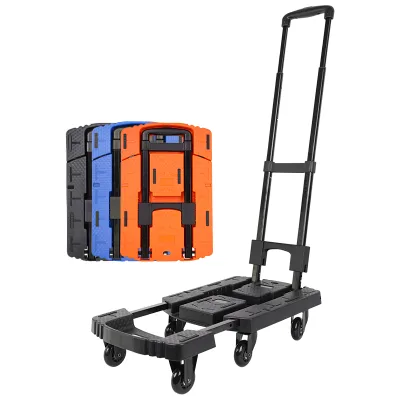


Comprehensive Sourcing Guide
Strategic Sourcing Guide for Unfolding Powder Coated Wheelbarrow and Hand Trolley Sets
The global demand for durable material handling equipment has driven a surge in procurement interest regarding specialized wheelbarrows and hand trolleys. Specifically, the "Unfolding Powder Coated Wheelbarrow and Hand Trolley Set" represents a critical category for buyers in construction, agriculture, and logistics sectors. This guide provides a comprehensive, evidence-based framework for sourcing these assets, focusing on technical specifications, compliance verification, and supply chain reliability. Buyers must navigate a market where product attributes vary significantly between listings, requiring a disciplined approach to specification matching and quality assurance.
Technical Specifications and Material Composition
When evaluating the core keyword, the first step is to dissect the technical attributes that define the product's utility and longevity. The supplied data indicates a diverse range of material compositions. While some listings specify Steel as the primary structural component, others note a composite of Wood, Steel, and Plastic. A critical observation for the "unfolding" variant is the presence of Steel and Plastic combinations, often utilizing a Raw Material PP Tray for the load-bearing surface. The tray thickness is a vital specification, with available options ranging from 0.6mm to 1.0mm. Buyers must verify this thickness against their expected load capacity, as thinner gauges may deform under heavy industrial loads.
The structural integrity of the frame is further defined by the handle specifications. Standard configurations include a Handle Diameter of 32mm and a Handle Thickness of 1.2mm. The handle type varies between Fixed Handle and Double Handles, with the latter offering enhanced leverage for heavier loads. The "unfolding" characteristic is explicitly noted as a Style attribute, distinguishing these units from rigid, non-foldable models. This feature is essential for storage efficiency in warehouses or transport logistics where space is constrained.
Regarding mobility, the wheel configuration is a primary differentiator. The data shows a spectrum of wheel types, including Pneumatic Wheels and specific air wheel models like 4.00-8 Air Wheel. Wheel sizes range from *10"3.5" to 14"*4", and the wheel count varies between 1 and 2 wheels per unit. The selection of wheel type directly impacts the terrain suitability; pneumatic wheels are generally preferred for uneven surfaces such as construction sites or gardens, whereas solid wheels may be better for smooth indoor floors. The Surface Handling is consistently noted as Powder Coated, a process that provides superior corrosion resistance compared to standard painting, which is crucial for equipment exposed to the elements.
Compliance, Certification, and Standardization
Navigating the regulatory landscape is essential for B2B procurement, particularly when sourcing from international markets. The supplied facts highlight that products originate primarily from China, with specific manufacturing hubs identified in Shangdong and Qingdao. For international buyers, verifying the Authentication and Certification status is non-negotiable. The data explicitly lists CE authentication and ISO, GS, RoHS certifications as available attributes.
Buyers must treat these certifications as observations of specific listings rather than universal guarantees for all products in the category. The CE mark indicates conformity with health, safety, and environmental protection standards for products sold within the European Economic Area. Similarly, ISO certification suggests adherence to international management system standards, while RoHS compliance ensures the absence of specific hazardous materials. The GS mark is a German safety certification, often implying rigorous testing.
Dimensional standards also play a role in compliance and logistics. The data presents specific product standards, such as 1275614560mm and 1390680585mm, which likely represent the folded or operational dimensions of specific models. Another standard listed is 1400025003900mm, which appears to be a container or bulk shipping dimension rather than a unit dimension. Procurement teams must cross-reference these dimensions with their own storage and transport constraints. Furthermore, the prod_packing method is noted as in Bulk or Pallets, which influences shipping costs and inventory handling procedures.
Cost Drivers and Pricing Dynamics
Understanding the cost structure of wheelbarrows and hand trolleys requires an analysis of the observed market data. The listed price range in USD spans from 1.95 to 126.79. This wide variance indicates a market segmented by quality, material thickness, and feature complexity. The lower end of the spectrum likely corresponds to basic models with thinner tray gauges (0.6mm) and simpler wheel configurations. Conversely, the higher price points likely reflect heavy-duty units with thicker steel (1.0mm), advanced powder coating, larger pneumatic wheels (14"*4"), and higher load capacities.
The Load Capacity is a significant cost driver, with observed capacities ranging from 800 lbs to volumetric measures like 2 Cubic Yards or 3 Cubic Yards. Products with higher volumetric capacities, such as those holding 6cbf of sand or 80L-90L of water, often command a premium due to the increased material usage and structural reinforcement required. Additionally, the Warranty period, observed between Half Year and 1-3 years, serves as a proxy for manufacturer confidence and long-term cost of ownership. A longer warranty often correlates with higher initial unit costs but reduces the total cost of acquisition over the product's lifecycle.
The MOQ (Minimum Order Quantity) ranges from 1 to 1000, offering flexibility for both small businesses and large enterprises. Buyers should note that unit prices often decrease as order quantities approach the higher end of the MOQ spectrum, making bulk purchasing a viable strategy for cost optimization. However, the After-Sales Service terms, such as the One Year service guarantee, should be factored into the total cost of ownership calculation.
Typical Applications and Usage Scenarios
The versatility of these products is evidenced by the broad range of Usage categories listed. These include Warehouse, Retail, Office, Industrial, Hospital, Home, Garden, Construction, and Farming. The specific configuration of the wheelbarrow or trolley should align with the intended environment. For instance, Gardening and Farming applications benefit significantly from Pneumatic Wheels and larger tray capacities (up to 3 Cubic Yards) to handle soil, mulch, and harvests. The Deep Tray shape is particularly suited for loose materials like sand or gravel, preventing spillage during transport.
In Industrial and Construction settings, the Powder Coated finish is critical for resisting rust and chemical exposure. The *10"3.5" or *14"4" wheels provide the necessary traction on rough terrain. For Hospital and Office environments, the Unfolding style and Double Handles offer ergonomic benefits and space-saving storage. The Regular Tray shape is often preferred for general retail or warehouse tasks where uniformity and ease of stacking are prioritized.
The Own Weight of the unit, observed at 15kg, is a key factor in user fatigue and operational efficiency. Heavier units may offer greater durability but can be difficult to maneuver for extended periods. Buyers must balance the weight against the required load capacity. For example, a unit with a 15kg own weight and an 800 lbs load capacity is suitable for heavy industrial lifting, whereas a lighter unit might be better for light gardening tasks.
Supplier Evaluation and Quality Control
Evaluating suppliers requires a rigorous assessment of their capabilities and track record. The data indicates that products originate from Shangdong and Qingdao, regions known for their manufacturing clusters. Buyers should verify the supplier's ability to provide the specific prod_model numbers, such as WB6414 or WB5009, which serve as unique identifiers for specific configurations.
Quality control should focus on the Surface Handling process. Powder Coated finishes must be inspected for uniformity, adhesion, and resistance to chipping. The Tray Thickness must be measured to ensure it meets the specified range of 0.6mm to 1.0mm. Suppliers should provide documentation verifying the Certification status, including ISO, GS, and RoHS compliance. The Warranty terms, whether Half Year or 1-3 years, should be clearly defined in the contract, along with the scope of the After-Sales Service.
Buyers should also assess the prod_packing methods. Pallets are generally preferred for international shipping to prevent damage, while Bulk packing may be suitable for domestic distribution. The Lead Time and MOQ should be negotiated based on the buyer's inventory needs. It is crucial to avoid suppliers who cannot provide clear evidence of their Authentication or who make unverifiable performance claims.
Long-Term Procurement Considerations
Sourcing wheelbarrows and hand trolleys is not merely a transactional exercise but a strategic decision impacting operational efficiency. The Unfolding feature offers long-term benefits in terms of storage density and logistics flexibility. However, the mechanical complexity of folding mechanisms introduces potential failure points that require regular maintenance. Buyers should inquire about the availability of replacement parts, such as wheels or handles, to extend the product's lifespan.
The Color options, including Red, Green, Blue, Black, are not merely aesthetic; they can be used for color-coding different departments or tasks within a facility. For example, red units might be designated for hazardous material transport, while blue units are for general waste.
Finally, the Warranty period is a critical indicator of product reliability. A 1-3 year warranty suggests a manufacturer's confidence in their product's durability, whereas a Half Year warranty may indicate a lower-quality build. Buyers should prioritize suppliers who offer comprehensive after-sales support and clear warranty terms. By focusing on these long-term factors, procurement teams can ensure a sustainable supply chain that minimizes downtime and maximizes the return on investment.
Comparative Analysis of Key Attributes
To facilitate decision-making, the following table summarizes the key attributes observed in the market data, highlighting the variability buyers must navigate.
| Attribute | Observed Range / Options | Strategic Implication |
|---|---|---|
| Material | Steel; Wood, Steel, Plastic | Steel offers durability; Plastic/PP trays reduce weight and corrosion. |
| Tray Thickness | 0.6mm to 1.0mm | Thicker trays (1.0mm) support heavier loads and last longer. |
| Wheel Type | Pneumatic; 4.00-8 Air Wheel | Pneumatic wheels are essential for rough terrain; air wheels offer cushioning. |
| Wheel Size | 10"*3.5" to 14"*4" | Larger wheels improve obstacle clearance and load distribution. |
| Load Capacity | 800 lbs; 2-3 Cubic Yards | High capacity units are critical for construction and farming. |
| Certification | CE; ISO, GS, RoHS | Essential for export compliance and safety assurance. |
| Warranty | Half Year to 1-3 Years | Longer warranties indicate higher quality and better after-sales support. |
| Origin | China (Shangdong, Qingdao) | Verify specific factory capabilities and logistics from these hubs. |
In conclusion, sourcing an "Unfolding Powder Coated Wheelbarrow and Hand Trolley Set" requires a meticulous approach to specification matching, compliance verification, and supplier evaluation. By leveraging the detailed technical data and adhering to the principles of evidence-based procurement, buyers can secure high-quality equipment that meets their operational needs while mitigating supply chain risks. The wide range of available options allows for tailored solutions across diverse industries, provided that the buyer rigorously validates each product's attributes against their specific requirements.
FAQs
What materials are used for the tray and frame?
The frame is typically made of steel, often with powder coating for corrosion resistance. The tray can be constructed from steel, plastic, or a combination of wood, steel, and plastic, with thickness options ranging from 0.6mm to 1.0mm.
Which certifications should I verify for safety compliance?
Buyers should verify that products hold CE authentication for European safety standards. Additional certifications like ISO, GS, and RoHS may also be available to ensure adherence to international management systems and hazardous material restrictions.
How does the folding style affect storage efficiency?
The unfolding style allows the unit to be collapsed for compact storage in warehouses or transport logistics. This feature distinguishes these models from rigid, non-foldable units, offering significant space savings when not in active use.
Can I customize the color and handle type?
Yes, customization is available for colors such as red, green, blue, and black. Handle types can be selected between fixed handles and double handles to suit different ergonomic needs and load requirements.
What is the typical load capacity for these units?
Load capacities vary significantly, with some units rated for 800 lbs or volumetric measures up to 3 cubic yards. Buyers must match the specific capacity to their intended usage, whether for light gardening or heavy industrial construction tasks.
Which wheel types are suitable for uneven terrain?
Pneumatic wheels, including 10x3.5 inch or 14x4 inch sizes, are ideal for uneven surfaces like construction sites or gardens. These air wheels provide better traction and shock absorption compared to solid wheels on rough ground.