Source Unsaturated Polyester Resin for Building, Vehicle, and Extrusion
Compare 30 listings of Unsaturated Polyester Resin featuring varied properties like flash point, tensile strength, and viscosity. Buyers can evaluate options for extrusion, drawing, and flame-retardant applications in buildings and vehicles.
Key considerations
Products List


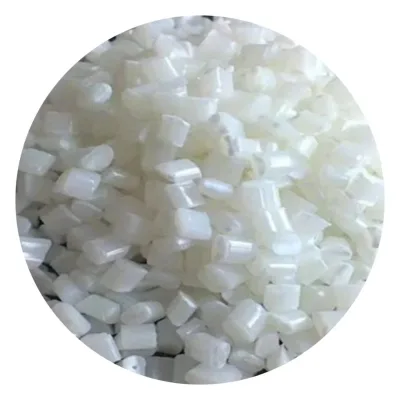


Comprehensive Sourcing Guide
Strategic Sourcing Guide for Unsaturated Polyester Resin Procurement
Understanding Technical Specifications and Material Variability
When sourcing Unsaturated Polyester Resin, buyers must recognize that product attributes are not uniform across the market. The supplied data indicates a diverse range of technical properties that define different resin grades. For instance, tensile strength observations vary significantly, with recorded values of 65 MPa and 80 MPa, while flexural strength ranges from 110 MPa to 140 MPa. This variability suggests that procurement strategies must be tailored to specific application requirements rather than relying on a single "standard" specification.
The physical state of the product is consistently observed as a liquid, yet the viscosity and solids content differ by model. Some grades, such as those identified by model FX-1203, present as a light yellow transparent liquid with a viscosity between 0.3 and 0.6 Pa·s at 25°C. In contrast, other variants may exhibit solids content ranging from 57-65% to 65-75%. Buyers must verify these parameters against their manufacturing processes, as gel time at 25°C can vary from 5 to 10 minutes, directly impacting production throughput. Furthermore, thermal stability is a critical metric, with specific observations noting stability greater than 24 hours at 80°C.
The mechanical performance of the cured resin also presents a spectrum of data. Tensile elongation is observed at 2.4%, 4.0%, and 5.0% across different product lines, while the tensile modulus ranges from 3.6 GPa to 3300 MPa. These figures highlight the importance of matching the resin's mechanical profile to the end-use environment. For applications requiring high impact resistance, data points such as an unnotched impact resistance of 20 kJ/m² become relevant. Additionally, the flash point is a safety-critical attribute, with specific observations noting a value of 33°C, which dictates storage and handling protocols.
Compliance, Certification, and Safety Standards
Navigating the compliance landscape for Unsaturated Polyester Resin requires a rigorous verification of certifications and standards. The supplied context lists several recognized certifications, including BRC, ISO, FDA, HACCP, and Bis. However, buyers should treat these as observations of specific product lines rather than universal guarantees for all unsaturated polyester resins. The presence of these certifications often correlates with specific applications, such as food contact or general industrial use, but verification is essential before procurement.
Safety standards are equally critical, particularly regarding fire performance. The data identifies specific product types as "Additive Flame Retardant Resin" and "Reactive Flame Retardant Resin." These variants are characterized by features such as "Halogen-Free Low Smoke" and "Pre-Promoted" status. For industries like construction and transportation, where fire safety is paramount, verifying that the resin meets specific flame-retardant standards is non-negotiable. The observation of "Excellent Anti-Sagging Performance and Wettability" further underscores the need for technical validation, as these characteristics directly influence the quality of the final composite.
Buyers must also be aware of the chemical composition standards. Some products are defined by "Low shrinkage isophthalic resin" standards, while others adhere to "Isophthalic acid, standard Diol" specifications. These chemical distinctions affect the curing behavior and final mechanical properties. When evaluating suppliers, procurement teams should request documentation that explicitly links the product model to the cited standard, ensuring that the "Low shrinkage" claim is backed by the specific isophthalic formulation rather than a generic marketing term.
Cost Drivers and Pricing Dynamics
The cost structure of Unsaturated Polyester Resin is influenced by multiple factors, including raw material volatility, customization levels, and packaging requirements. The observed price range in the market spans from 1.02 to 1500 USD, a wide disparity that reflects differences in grade, purity, and volume. High-purity grades, such as those with a specification of 99%, or specialized formulations like flame-retardant resins, typically command higher prices. Conversely, standard grades may fall into the lower end of the spectrum.
Packaging plays a significant role in the total landed cost. The data shows a variety of packaging options, including wooden boxes, metal drums, IBC drums, and standard drums. The choice of packaging affects shipping efficiency and handling costs. For instance, IBC drums are often more cost-effective for large-volume industrial applications, while wooden boxes might be preferred for smaller, high-value batches. Buyers should calculate the cost per unit of effective resin, considering that packaging weight and volume contribute to freight charges.
Minimum Order Quantities (MOQ) also drive cost efficiency. The observed MOQ range spans from 1 to 1000 units, indicating that suppliers cater to both prototyping needs and large-scale production. Smaller MOQs, such as 1 unit, are ideal for R&D or trial runs but often carry a higher unit cost. Larger orders, approaching 1000 units, typically benefit from economies of scale. Customization is a key cost driver; while customization is available, bespoke formulations will inevitably increase the unit price and potentially extend lead times. Buyers must balance the need for specific technical properties against the budget constraints imposed by these variables.
Typical Applications and Industry Alignment
Unsaturated Polyester Resin serves a broad spectrum of industries, with the specific application dictating the required resin grade. The supplied data explicitly links certain resin types to "Buildings" and "Vehicles," highlighting their role in construction and automotive sectors. In these applications, the flame-retardant properties and low smoke generation are critical for compliance with safety regulations. The "Halogen-Free Low Smoke" feature is particularly valuable in enclosed spaces or public transport, where fire safety is a primary concern.
Beyond construction and automotive, the resin is utilized in "Extrusion and Drawing" processes, as indicated by the application data. This suggests a role in the manufacturing of profiles, pipes, or fibers where mechanical strength and dimensional stability are paramount. The observed tensile strength of up to 80 MPa and flexural strength of 140 MPa support these demanding applications. Additionally, the "Excellent Anti-Sagging Performance" makes the resin suitable for vertical applications or complex molding processes where flow control is essential.
The versatility of the resin is further demonstrated by its compatibility with various additives and reinforcement materials. The distinction between additive and reactive flame-retardant resins allows manufacturers to choose a strategy that best fits their production line. Reactive resins, which incorporate the flame retardant into the polymer chain, often offer superior durability compared to additive types. Buyers should align their resin selection with the specific performance requirements of their end product, ensuring that the resin's mechanical and chemical properties match the operational demands of the application.
Supplier Evaluation and Verification Protocols
Evaluating suppliers for Unsaturated Polyester Resin requires a multi-faceted approach that goes beyond price comparison. The first step is verifying the origin and location of the product. The data indicates origins in Jiangsu and Tianjin, China. While these regions are known for chemical manufacturing, buyers should confirm the specific facility and its operational history. Supplier reliability is often tied to their ability to maintain consistent quality across batches, which can be assessed by reviewing their track record for delivering on the observed specifications.
Certification verification is a critical component of supplier evaluation. While the data lists BRC, ISO, FDA, HACCP, and Bis certifications, buyers must ensure these are current and applicable to the specific product being purchased. It is common for suppliers to hold certifications for their general facility but not for every individual product line. Therefore, procurement teams should request certificates of analysis (CoA) and specific certification documents for the requested model, such as FX-1203 or A400TV-957-S.
Customization capabilities are another key evaluation metric. The data confirms that customization is available, but the extent of this capability varies. Buyers should assess the supplier's ability to modify viscosity, solids content, or curing agents to meet specific project needs. The presence of "Support" for customized orders indicates a willingness to collaborate, but the technical expertise of the supplier's R&D team is equally important. A supplier with a robust technical support team can provide valuable insights into optimizing the resin for specific applications, reducing the risk of production failures.
Quality Control and Testing Requirements
Implementing a robust quality control (QC) protocol is essential for managing the risks associated with Unsaturated Polyester Resin procurement. Given the variability in observed attributes, such as tensile elongation ranging from 2.4% to 5.0%, buyers must establish clear acceptance criteria. Incoming quality checks should include verification of physical properties like viscosity, gel time, and solids content. For example, if the specification calls for a viscosity of 0.3-0.6 Pa·s, any batch falling outside this range should be rejected or subjected to further testing.
Chemical analysis is also vital to ensure compliance with the stated standards. Buyers should verify that the resin matches the "Low shrinkage isophthalic resin" or "Isophthalic acid, standard Diol" specifications. This can be achieved through spectroscopic analysis or other chemical testing methods. Additionally, safety tests should be conducted to confirm the flash point and thermal stability. The observation of a 33°C flash point and >24 hours thermal stability at 80°C serves as a benchmark, but buyers should conduct their own tests to ensure consistency.
Mechanical testing of the cured resin is the final step in the QC process. Tensile strength, flexural strength, and impact resistance should be measured on samples cured under the buyer's specific conditions. The observed values of 65-80 MPa for tensile strength and 110-140 MPa for flexural strength provide a reference range, but actual performance may vary based on the curing agent and process parameters. Establishing a baseline for these mechanical properties ensures that the resin meets the structural requirements of the final product.
Long-Term Procurement and Supply Chain Resilience
Securing a long-term supply of Unsaturated Polyester Resin requires strategic planning to mitigate supply chain risks. The observed MOQ range of 1 to 1000 units suggests that suppliers can accommodate both small and large orders, but buyers should aim to establish consistent ordering patterns to secure better pricing and priority status. Building a relationship with a supplier that offers customization support can also enhance supply chain resilience, as it allows for rapid adaptation to changing market demands or technical requirements.
Storage and handling conditions are critical for maintaining product quality over time. The data recommends storage in a "Cool Dry Place Protected," which is a standard requirement for liquid resins to prevent premature curing or degradation. Buyers should ensure that their storage facilities meet these conditions to preserve the integrity of the resin. Additionally, the packaging type, whether wooden box, metal drum, or IBC drum, should be compatible with the storage environment to prevent contamination or leakage.
Future-proofing the procurement strategy involves staying informed about industry trends and technological advancements. As regulations regarding flame retardancy and environmental impact evolve, suppliers may need to update their formulations. Buyers should engage with suppliers who demonstrate a commitment to innovation and compliance, ensuring that their supply chain remains viable in the long term. By focusing on technical alignment, certification verification, and supply chain stability, buyers can secure a reliable source of high-quality Unsaturated Polyester Resin for their operations.
FAQs
What is the flash point of this Unsaturated Polyester Resin?
The flash point is observed at 33 degrees Celsius. This low value requires strict storage protocols in cool, dry places to prevent ignition risks during handling and transport.
Which certifications apply to this Unsaturated Polyester Resin product?
Specific product lines hold BRC, ISO, FDA, HACCP, and Bis certifications. Buyers must verify these apply to the exact model requested, as certifications are not universal across all grades.
How is the Unsaturated Polyester Resin typically packed for shipment?
Packaging options include wooden boxes, metal drums, IBC drums, and standard drums. The choice depends on order volume, with IBC drums often preferred for large industrial applications.
Can I customize the Unsaturated Polyester Resin formulation for my needs?
Customization is available to support specific project requirements. Buyers should expect that bespoke formulations may increase unit costs and potentially extend lead times compared to standard grades.
What is the tensile strength range for this Unsaturated Polyester Resin?
Tensile strength values vary between 65 MPa and 80 MPa across different product models. Procurement strategies must match these mechanical profiles to specific application requirements rather than assuming a single standard.
Which origin locations supply this Unsaturated Polyester Resin?
Products originate from Jiangsu and Tianjin in China. Buyers should confirm the specific facility and its operational history to ensure consistent quality and reliable supply chain performance.
What is the minimum order quantity for this Unsaturated Polyester Resin?
MOQs range from 1 unit to 1000 units depending on the supplier and grade. Smaller quantities suit prototyping but carry higher unit costs, while larger orders benefit from economies of scale.