Source UV Resistant Artificial Green Wall for Home, Hotel, and Shop
Find 30 options for UV Resistant Artificial Green Wall suitable for home, hotel, and shop applications. Compare specifications including material, size, and installation methods from verified suppliers in China.
Key considerations
Products List


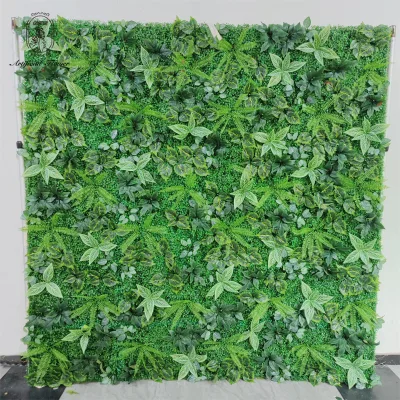
Green Plant Wall for Artificial 50cm*50cm Artificial Plants Living Wall
$2.85 - $6.87
MOQ: 100 Square Meters


Green Plant Wall Decoration Good Quality UV Resistant Artificial Plant Wall
$20.00 - $25.00
MOQ: 10 piece


High Quality Outdoor UV Resistant Look Very Realistic Artificial Plant Wall
$20.00 - $25.00
MOQ: 10 piece



Comprehensive Sourcing Guide
Strategic Sourcing Guide for UV Resistant Artificial Green Walls
Procuring artificial green walls that maintain their aesthetic and structural integrity under sunlight requires a disciplined approach to verifying material science and manufacturing standards. The core keyword, "UV Resistant Artificial Green Wall," points to a specific subset of interior and exterior decoration products designed to withstand environmental stressors. Buyers must navigate a market where product attributes vary significantly between listings. This guide synthesizes observed product data to provide a framework for evaluating suppliers, ensuring that the selected artificial greenery meets the rigorous demands of commercial and residential applications without relying on unverified marketing claims.
Material Composition and UV Resistance Verification
The foundation of any durable artificial green wall lies in its material composition. Based on the available product data, the primary material identified for these units is Polyethylene (PE), often categorized broadly under plastic. PE is a preferred choice for artificial foliage due to its flexibility and resistance to degradation. However, the mere designation of "Plastic" or "PE" is insufficient for a procurement specification. Buyers must verify that the specific PE formulation includes UV stabilizers.
The product attributes explicitly list "UV Test" and "Fire Resistant Test" as observed product tests. Furthermore, the advantage section notes "UV Resistant" as a key feature. To validate these claims, a buyer should request the specific test reports associated with the product model. While the data mentions ASTM G154 and ISO 105 as background standards, these should be treated as reference points for what should be verified rather than confirmed certifications present on every unit. The buyer must ensure the supplier can demonstrate that the PE material has undergone accelerated weathering tests that simulate prolonged sun exposure. Without this verification, the "UV Resistant" claim remains an observation rather than a guaranteed performance metric. The surface treatment, noted as "Plating" in some listings and "Plastic" in others, also plays a role in the longevity of the color, preventing fading over time.
Technical Specifications and Dimensional Standards
Standardization is critical when sourcing artificial green walls for large-scale projects where multiple panels must interlock seamlessly. The observed product data reveals a range of standard dimensions, indicating that there is no single universal size for this category. Specific models listed include dimensions of 100100 CM, 50cm50cm, and 50*50 CM. The model numbers, such as MG607000ADZ, XGG606100D, and XGG606830, serve as unique identifiers for these varying specifications.
When evaluating a supplier, the buyer must confirm the exact dimensions of the panels to ensure compatibility with the intended installation surface. The data shows that some units are packed as 5PCS/CTN, while others are 10PCS/Box or 10PCS/CTN. This variation in packaging directly impacts logistics and shipping costs. A procurement strategy should prioritize suppliers who can provide consistent dimensional tolerances. If a project requires a 100cmx100cm footprint, the buyer must ensure the selected model, such as the one with the standard "100cmx100cm," is available in sufficient quantity. The processing method, described as "Weave" or "Machine+Hand-Made," also influences the final texture and density of the wall. Hand-made elements often suggest a higher level of detail, which may be necessary for high-end applications like hotels or shopping malls, whereas machine-made units might offer more consistency for large, repetitive installations.
Compliance, Certification, and Safety Standards
Safety and regulatory compliance are non-negotiable in B2B procurement, particularly for products installed in public spaces. The observed product data highlights "SGS" and "CE" as certifications associated with these artificial green walls. These certifications indicate that the products have undergone third-party testing for quality and safety. The "Fire Resistant Test" and "Fire Retardant" advantage mentioned in the data further underscore the importance of fire safety, especially for applications in buildings, hotels, and shopping malls.
Buyers must treat these certifications as mandatory verification points. The presence of CE certification suggests compliance with European safety standards, while SGS certification implies a rigorous inspection of the product's quality and material safety. However, the data does not confirm that every listed product holds these certifications; they are observed attributes of specific listings. Therefore, the procurement process must include a request for current, valid certificates for the specific batch or model being ordered. Additionally, the "Product Test" attribute confirms that fire resistance is a tested characteristic, but the buyer should verify the specific fire rating (e.g., Class B1, Class C) against local building codes. The standard "100100 CM" or "5050 CM" dimensions do not inherently dictate safety; the material's reaction to fire is the critical factor.
Cost Drivers and Procurement Economics
Understanding the cost structure of artificial green walls is essential for budgeting and negotiation. The observed price range in the market spans from $1.61 to $171 USD. This significant variance is driven by several factors, including the size of the unit, the complexity of the manufacturing process, and the level of customization. Smaller units, such as the 50cm*50cm models, likely fall on the lower end of the price spectrum, while larger 100cmx100cm panels or custom-designed units may command higher prices.
The Minimum Order Quantity (MOQ) is another critical cost driver. The data indicates an MOQ range of 1 to 500 units, with specific models like the "Artificial Grass Wall" listing an MOQ of 40PCS. Buyers must align their order volume with these thresholds to avoid prohibitive per-unit costs. Customization is listed as "Available" and "Customized," which typically incurs additional costs and may affect the lead time. The "Sample Lead Time" of 7 days suggests that prototyping is a relatively quick process, but full production lead times are not explicitly defined in the data. Buyers should anticipate that larger orders with custom logos or specific dimensions will require longer production windows. The packaging method, whether "Carton Box" or specific counts like "5PCS/CTN," also influences shipping efficiency and overall landed cost.
Typical Applications and Suitability Analysis
The versatility of UV resistant artificial green walls makes them suitable for a wide array of environments. The product attributes explicitly list applications in "All Festivals, Weeding, Party," "Shopping Mall, Outdoor, Home, Building," and "Hotel, Shop, Restaurant." The distinction between "Public" and "Home" suitability is crucial. Products suitable for public spaces, such as shopping malls and hotels, must meet higher durability and safety standards compared to those intended for private home decoration.
The installation method varies by application. For outdoor or high-traffic areas, "Interlocking Panels" or "Zip Ties" are observed installation methods, providing a secure and stable fit. For indoor or lighter applications, "Adhesive" installation may be sufficient. The "Display" attribute notes "Decoration" and "Hang-Decoration," indicating that these products can be used as wall coverings or suspended elements. The "Style" is described as "Modern," which aligns with contemporary interior design trends. Buyers should match the installation method and material durability to the specific environment. For instance, a restaurant requiring a "Fire Retardant" wall must ensure the selected model has the necessary fire certification, while a home decoration project might prioritize the aesthetic "Weave" process over heavy-duty interlocking mechanisms.
Supplier Evaluation and Quality Control Protocols
Evaluating a supplier for artificial green walls requires a multi-faceted approach that goes beyond price comparison. The origin of the products is consistently listed as "Zhejiang, China" or simply "China." While this provides a geographical context, it does not guarantee quality. Buyers should focus on the supplier's ability to provide the specific certifications (SGS, CE) and test results (Fire Resistant, UV Test) observed in the product data.
Quality control should begin with the verification of the "Product Material." Ensuring the material is indeed PE and not a lower-grade plastic is the first step. The "Maintenance" requirements, such as "Wash with Water" or "Dust with Cloth," should be discussed with the supplier to ensure the product can be easily cleaned in its intended environment. The "Logo Printing" attribute is listed as "Without Logo Printing" in some cases, but "Customized" is also available. Buyers should clarify if logo printing is an optional add-on and what the minimum quantity is for such customization.
Furthermore, the "Processing" method, whether "Weave" or "Machine+Hand-Made," affects the visual quality. A supplier that offers hand-made elements may provide a more natural look, which is often preferred for high-end hotels and restaurants. Buyers should request samples to verify the texture and color consistency. The "Advantage" section lists "Long Using-Time," which should be substantiated by warranty terms or historical performance data from the supplier.
Long-Term Procurement Considerations
Sourcing artificial green walls is not just a one-time purchase but an investment in long-term aesthetics and safety. The "Long Using-Time" advantage suggests that these products are designed for durability, but this is contingent on proper installation and maintenance. The "Installation Method" plays a vital role in longevity; for example, interlocking panels may offer better stability in outdoor settings compared to adhesive methods.
Buyers must also consider the lifecycle of the product. While the material is UV resistant, the color may eventually fade if the UV stabilizers are insufficient. Regular maintenance, as noted in the data ("Wash with Water"), is essential to preserve the appearance. The "Packaging" details, such as "5PCS/CTN," should be reviewed to ensure that the product arrives in good condition, minimizing the risk of damage during transit.
In conclusion, successful procurement of UV resistant artificial green walls requires a balance of technical verification, compliance checking, and strategic supplier evaluation. By focusing on the observed attributes such as material composition, certification status, and dimensional standards, buyers can make informed decisions that ensure the selected products meet their specific project requirements. The variability in models, sizes, and customization options necessitates a detailed specification process to avoid mismatches between expectation and delivery. Ultimately, the goal is to secure a product that delivers the promised "UV Resistant" and "Fire Retardant" performance while fitting seamlessly into the intended application environment.
FAQs
What materials are used for UV resistant artificial green walls?
The primary material used is Polyethylene (PE), categorized under plastic. This material is selected for its flexibility and resistance to degradation, though specific UV stabilizers must be verified to ensure long-term color retention.
Which certifications should I verify for safety compliance?
Look for SGS and CE certifications to ensure quality and safety standards. These indicate third-party testing for material safety and compliance with European regulations, which is critical for public spaces like hotels and shopping malls.
How are these walls installed in different environments?
Installation methods vary by application, including zip ties, adhesive, or interlocking panels. Interlocking panels are often used for stability in outdoor or high-traffic areas, while adhesive may suffice for lighter indoor decoration projects.
What are the standard dimensions available for these products?
Standard sizes include 100cm by 100cm and 50cm by 50cm panels. Buyers must confirm the exact model dimensions, such as MG607000ADZ or XGG606100D, to ensure compatibility with their specific installation surfaces.
Can I customize the product with a logo or specific size?
Customization is available for logos and specific requirements, though some listings show no logo printing. Custom orders may affect lead times and pricing, so verify the minimum order quantity and production timeline with the supplier.
What is the minimum order quantity for these green walls?
The minimum order quantity ranges from 1 to 500 units depending on the model. Specific products like the Artificial Grass Wall may require an MOQ of 40 pieces, so check the specific model requirements before ordering.
How do I maintain the appearance of the artificial grass wall?
Maintenance involves washing with water or dusting with a cloth depending on the location. Regular cleaning is essential to preserve the UV-resistant properties and prevent dirt accumulation, especially for outdoor installations exposed to the elements.