Source UV Resistant Artificial Boxwood Hedge for Home Hotel Mall
Compare 21 listings for UV Resistant Artificial Boxwood Hedge panels designed for home, hotel, and mall applications. Buyers can evaluate specifications, pricing, and customization options to find suitable suppliers for indoor or outdoor decoration projects.
Key considerations
Products List

New Design Artificial Green Wall UV Resistant Grass Wall Decor Boxwood Hedge
$2.42 - $4.40
MOQ: 88 Pieces


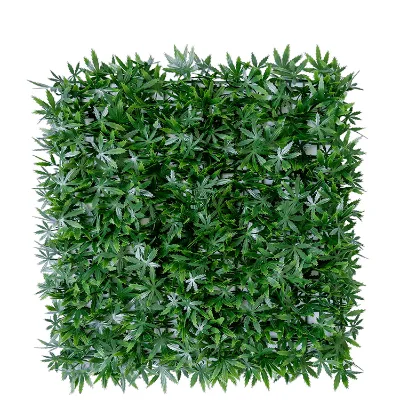


Artificial Fence Plants Hedges Artificial Boxwood Hedge for Outdoor Garden Decor
$3.00 - $12.00
MOQ: 50 Pieces


Comprehensive Sourcing Guide
Strategic Sourcing Guide for UV Resistant Artificial Boxwood Hedges
Understanding Product Specifications and Material Composition
When sourcing UV resistant artificial boxwood hedges, the primary objective is to identify products that maintain structural integrity and color fidelity under prolonged sun exposure. The core material composition is a critical determinant of performance. Based on available market data, the dominant material for these products is Polyethylene (PE), often referred to as plastic in general product descriptions. PE is preferred for its flexibility and resistance to weathering, making it suitable for both indoor and outdoor applications. The manufacturing process typically involves a combination of machine production and hand-making techniques to achieve the realistic texture of boxwood foliage. This hybrid approach ensures that the "hedge" appearance is not merely a flat plastic sheet but possesses the depth and volume associated with natural greenery.
The physical dimensions of the panels vary significantly across suppliers, which impacts installation planning and visual coverage. Standard sizes observed in the market include 25x25 cm, 50x50 cm, 100x100 cm, and 100x150 cm. Some manufacturers offer specific panel dimensions such as 23.62 inches by 15.74 inches or 19.68 inches by 19.68 inches, while others provide metric equivalents like 50 cm by 50 cm. Buyers must verify the exact dimensions of the specific model, as the interlocking mechanism often relies on precise sizing to ensure a seamless finish. The surface treatment is consistently identified as plastic, reinforcing the material's durability. It is essential to distinguish between products labeled as "Faux Grass Wall Panels" and those specifically marketed as "Artificial Green Wall" or "Plastic Hedge Artificial Garden Hedges," as the density and leaf structure may differ between these categories.
Compliance, Certification, and Safety Standards
For commercial procurement, particularly in high-traffic areas like shopping malls, hotels, and restaurants, verifying compliance with safety and environmental standards is non-negotiable. The most frequently cited certifications for these artificial greenery products include CE and ISO marks. These certifications indicate that the product meets specific European safety and quality management requirements, though buyers should always request the actual certificate documents to confirm validity. The product's fire resistance is another critical safety attribute. Many suppliers list "Fire Retardant" as a key advantage, suggesting the material has been treated or formulated to resist ignition. However, without specific test data or a reference to a recognized fire safety standard (such as ASTM or specific local building codes), buyers must treat this claim as a supplier assertion requiring verification through third-party testing reports.
The UV resistance feature is central to the product's value proposition for outdoor use. While the term "UV Resistant" is commonly listed as a feature, the specific testing methodology (such as ASTM G154, which is a background reference but not explicitly confirmed in the primary product facts) should be clarified. Buyers should inquire about the UV stabilization process used during the PE manufacturing phase. The absence of a specific standard number in the provided facts means that procurement teams cannot assume a universal standard applies to all listed products. Instead, the verification process should involve requesting a UV degradation test report that demonstrates color retention after a specified number of hours of exposure. Additionally, the origin of the products, often cited as Shandong or generally China, should be cross-referenced with the supplier's export history to ensure consistent quality control across batches.
Cost Drivers and Procurement Economics
The pricing structure for UV resistant artificial boxwood hedges is influenced by several variables, including material density, panel size, and customization requirements. The observed price range in the market spans from $0.15 to $24.86 USD, a wide disparity that reflects differences in product quality, thickness, and order volume. Lower-priced items often correspond to smaller dimensions or lower density foliage, while higher-priced units typically offer larger panels, enhanced UV protection, and more realistic textures. The Minimum Order Quantity (MOQ) is another significant cost driver. Data indicates MOQs ranging from 10 to 600 units, with specific models often requiring 88, 100, or 40 pieces. Understanding these thresholds is vital for budgeting; ordering below the MOQ may result in rejected requests or significantly higher per-unit costs.
Customization is a major factor in the final cost. While standard products are available, many suppliers offer customized logos and packaging. The availability of "Customized" logos and "Customized Package Support" allows for branding opportunities but inevitably adds to the production complexity and cost. The packaging details, such as "Master Carton with Inner Boxes" or "Polybag or in Carton," also impact shipping costs. Heavier or bulkier packaging increases freight expenses, which must be factored into the total landed cost. Furthermore, the production process, described as "Machine+Hand-Made," suggests a higher labor cost component compared to fully automated lines, which may justify a premium price point for products requiring a more natural aesthetic. Buyers should request a detailed breakdown of costs to understand how much of the price is attributed to material, labor, and logistics.
Typical Applications and Installation Methods
The versatility of UV resistant artificial boxwood hedges makes them suitable for a diverse range of applications. The product is explicitly listed for use in shopping malls, outdoor environments, homes, buildings, hotels, shops, and restaurants. The "Indoor/Outdoor" classification confirms that these products are engineered to withstand varying environmental conditions, provided they possess the necessary UV resistance. In commercial settings, these hedges serve as decorative partitions, privacy screens, or aesthetic backdrops for dining areas and retail displays. The "Evergreen" feature ensures that the visual appeal remains consistent year-round, eliminating the maintenance issues associated with live plants.
Installation methods vary depending on the product design. Two primary installation techniques are observed: "Hooks" and "Interlocking Panels." Interlocking panels are generally preferred for large-scale installations as they provide a more secure and seamless connection between units, reducing the risk of gaps or misalignment. Hook-based systems may be easier to install for temporary setups or specific wall configurations. The maintenance requirements are also application-dependent. While some products require only "Dust with Cloth," others may need to be "Wash with Water" to remove accumulated grime, especially in outdoor settings. The "Easy Maintenance/Easy Installation" advantage highlights the operational benefits for facility managers who need to minimize downtime and labor costs. Buyers should match the installation method and maintenance needs to the specific site conditions and available resources.
Supplier Evaluation and Quality Control Protocols
Evaluating suppliers for artificial greenery requires a rigorous approach to ensure the product meets the stated specifications. The brand name "Fayfun" appears in the data, but buyers should not rely on a single brand and must evaluate multiple suppliers based on their technical capabilities. Key evaluation criteria include the consistency of the PE material, the accuracy of the panel dimensions, and the reliability of the UV resistance claims. The "Processing" method of "Machine+Hand-Made" suggests that quality control is a mix of automated precision and manual inspection. Buyers should ask suppliers about their specific quality control checkpoints during the hand-making phase to ensure that the "Plastic Hedge" appearance is uniform and free from defects.
Quality control should also extend to the packaging and logistics. The "Packaging Details" of "Polybag or in Carton" must be robust enough to prevent damage during transit, especially for interlocking panels that rely on precise edge geometry. The "Delivery Detail" of "Normally in 20-30 Days" indicates a standard lead time, but buyers should verify if this includes production time or just shipping. The "Sample Lead Time" of 7 days is a critical metric for the initial evaluation phase; a short sample lead time allows for faster decision-making. When evaluating suppliers, buyers should request physical samples to test the "Fire Retardant" claim and the "UV Resistant" properties firsthand. Additionally, verifying the "Product Origin" as Shandong or China helps in understanding the supply chain dynamics and potential logistical challenges.
Long-Term Procurement and Lifecycle Management
Long-term procurement considerations for artificial boxwood hedges focus on durability and lifecycle costs. The "Long Using-Time" advantage is a key selling point, but its validity depends on the quality of the UV stabilizers used in the PE material. Over time, exposure to sunlight can cause fading or brittleness if the product is not properly formulated. Buyers should prioritize suppliers who can provide evidence of long-term performance, such as warranty periods or historical data on color retention. The "Maintenance" requirements, whether dusting or washing, should be sustainable and cost-effective over the product's lifespan.
The customization options, such as "Customized" logos, offer a unique value proposition for branding but require careful planning. Once a custom design is set, it is difficult to alter, so the initial order quantity must be sufficient to justify the setup costs. The "Product Type" being "Artificial Grass Wall Panels" or "Faux Grass Wall Panels" implies a modular approach, allowing for easy replacement of damaged sections without replacing the entire installation. This modularity is crucial for long-term maintenance. Buyers should also consider the environmental impact of the product, particularly the disposal of PE materials at the end of their lifecycle. While not explicitly detailed in the provided facts, understanding the recyclability of the PE material can be a differentiator for sustainability-focused procurement strategies. Ultimately, the goal is to select a product that balances aesthetic appeal, functional durability, and economic efficiency over its entire service life.
FAQs
What materials are used for UV resistant artificial boxwood hedges?
The primary material is Polyethylene (PE) plastic, often described simply as plastic in product descriptions. This material offers flexibility and weathering resistance suitable for both indoor and outdoor applications.
How are these panels installed on walls?
Installation methods include using hooks or interlocking panels depending on the specific product model. Interlocking panels are preferred for seamless finishes, while hooks suit temporary setups.
What certifications do these products typically hold?
Many products carry CE and ISO certifications indicating compliance with European safety and quality management standards. Buyers should verify specific certificate documents for validity before large orders.
Can I customize the logo on these hedges?
Yes, customized logos are available as a standard option for many suppliers. This feature allows for branding but may impact production complexity and final unit costs.
What is the typical minimum order quantity for these items?
Minimum order quantities vary by model, with observed values ranging from 40 to 100 pieces. Some specific models require 88 pieces as a baseline for ordering.
How do I maintain these artificial green walls?
Maintenance requirements depend on the specific product, ranging from dusting with a cloth to washing with water. Outdoor units often require water washing to remove accumulated grime.
What are the standard panel dimensions available?
Standard sizes include 50x50 cm, 25x25 cm, 100x100 cm, and 100x150 cm. Some models also offer imperial dimensions like 23.62 inches by 15.74 inches.