Source UV Resistant Pool Shade Sail for Gardens, Patios, and Pools
Find and compare 30 UV Resistant Pool Shade Sail options from Chinese manufacturers. Evaluate GSM weights, frame materials, and waterproof features to select the right shade solution for your outdoor space.
Key considerations
Products List


HDPE 100% Virgin Material Waterproof Sun Shade Sail UV Resistant for Garden Pool Patio
$2.50 - $3.50
MOQ: 2000 Square Meters


Factory Price Rectangle Shade Sail Waterproof Shade Sail Swimming Pool Sun Shade Sail
$2.50 - $3.50
MOQ: 2000 Square Meters

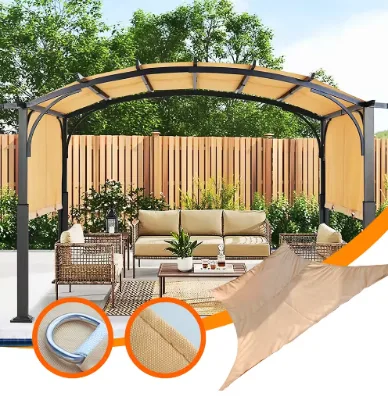

UV-Resistant Waterproof Triangle Shade Sail for Poolside and Garden Areas
$50.00 - $70.00
MOQ: 50 Pieces


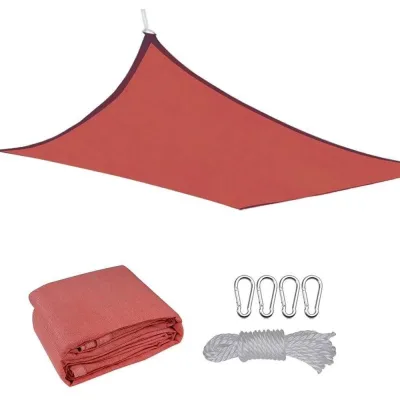


Comprehensive Sourcing Guide
UV Resistant Pool Shade Sail Sourcing Guide
Sourcing UV resistant pool shade sails from China requires buyers to balance fabric performance, structural durability, and commercial flexibility across a fragmented supplier base. The products in this category range from lightweight knitted HDPE shade cloth to heavier PVC-coated fabrics tensioned over steel or iron frames, with observed fabric weights spanning roughly 160gsm to 320gsm and sizes commonly offered at 3x3m, 3.6x3.6m, and 5x5m. Because poolside installations face constant UV exposure, chlorinated moisture, and wind loading, the difference between a well-specified sail and a poorly made one typically appears within the first season of use.
This guide is written for procurement teams and resellers evaluating listings on B2B marketplaces. It organizes the verification work into five areas: product scope, technical specification, compliance documentation, cost and commercial terms, and supplier qualification. Every section is based on attributes actually observed in current listings—such as PE plastic construction, steel frames, waterproof ratings under 1000mm, ISO 9001 references, and customization availability—so buyers can treat it as a checklist that maps directly to what suppliers are offering today.
Product Scope and Observed Listing Signals
The category covers several distinct product types that buyers should not conflate. Classic shade sails—square panels in 3x3m, 3.6x3.6m, and 5x5m sizes—dominate observed listings, typically made from PE or HDPE knitted fabric with shade rates around 95% and fabric weights from 160gsm to 185gsm, with heavier 280gsm and 320gsm options appearing at the premium end. Frame-supported structures using steel or iron posts also appear, including models with fixed mounting and manual control, and some listings describe enclosed or glass-panel structures with tempered glass and pressure-treated timbers, which sit at the boundary between shade sails and poolside gazebos. Buyers should identify which subcategory a listing belongs to before comparing prices, because a 185gsm fabric sail and a 320gsm frame structure are not substitutes.
Listing signals also reveal what suppliers compete on. Customization is explicitly available across the category, covering color, size, shade rate, and packaging—multicolor and sky-blue options are observed, and color customization is a common offering. Packaging formats vary from PVC bags and carton boxes to individual handbags and roll packing, which matters for retail-ready programs. Origin is concentrated in Shandong, Anhui, Sichuan, and Jiangsu, and MOQs in observed listings range from 1 piece to 10,000 units, indicating that both sample-level buyers and bulk programs can be served. Observed prices span roughly $0.10 to $70, so buyers should expect wide variance driven by fabric weight, size, and hardware inclusion rather than assume a single market price.
Technical Specifications to Verify
Fabric weight (GSM) is the single most important specification to confirm. Observed listings reference 160gsm, 180gsm, 185gsm, 280gsm, and 320gsm, and these differences materially affect tensile strength, UV life, and price. Buyers should request the exact GSM in writing for the production batch, not just the listing title, and confirm whether the fabric is virgin HDPE with UV stabilizer or recycled content, since renewable-source and eco-friendly claims appear in listings but require verification. Also confirm the weave construction—knitted HDPE allows air permeability and reduces wind load, which is a genuine advantage for pool sails, while woven or coated fabrics behave differently under tension.
Waterproofing and shade performance need explicit clarification. One observed listing states an outer tent waterproof index below 1000mm, which indicates water-resistant rather than fully waterproof fabric; standard knitted shade cloth is inherently porous, and buyers wanting true rain protection should confirm whether a coated or laminated alternative is offered. Shade rate is quoted at 95% with customization available, so buyers should request the actual UV-blockage or UPF test data rather than rely on the shade-rate figure alone. Additional attributes worth pinning down include sail finishing (one listing explicitly states "not coated"), hardware and D-ring material, stitching thread UV resistance, and for frame models, the steel or iron post gauge, treatment, and whether "manual control" or "fixed" describes the installation method accurately.
Compliance and Safety Documentation
Certification claims in observed listings include ISO 9001-2000 and ISO9001 quality management references, but buyers should treat these as starting points rather than guarantees. Request the actual certificate number, issuing body, and validity period, and verify that the certificate is held by the manufacturing entity rather than a trading company. The listed standard "can be customized" in some records signals that the supplier has not committed to a fixed specification—acceptable for bespoke projects, but it shifts the burden of defining acceptance criteria onto the buyer.
For poolside products, documentation should go beyond general quality management. Ask for UV-resistance test reports (such as accelerated weathering data), material safety declarations for the PE/HDPE fabric, and, where relevant to the destination market, confirmation of REACH or similar chemical compliance for dyes and coatings. Structural safety matters for frame-supported models: request load calculations or wind-resistance statements for the steel or iron frames, especially for the 5x5m size where tension forces are significant. Note that tempered glass and pressure-treated timber attributes observed in some listings carry their own compliance requirements, including breakage and treatment documentation. Do not accept marketing claims like "eco friendly" or "30% energy saving rate" at face value without supporting data.
Cost Drivers and Commercial Terms
Price variance in this category is driven primarily by fabric weight and size. A 160–185gsm sail in 3.6x3.6m sits at the low end, while 320gsm fabric, larger 5x5m spans, coated finishes, and complete steel-frame kits push costs upward. Hardware inclusion is a frequent hidden variable: some listings include D-rings, ropes, and mounting accessories; others ship fabric only. Customization in color, size, shade rate, or packaging usually carries tooling or setup charges at low volumes, so buyers should request itemized quotes separating fabric, hardware, printing, and packaging costs before comparing suppliers.
Commercial terms require equal scrutiny. Observed MOQs range from 1 to 10,000 pieces, suggesting flexible suppliers exist for pilot orders, but buyers should confirm whether sample pricing, sample lead time, and sample fees are refundable against bulk orders. Packing formats—PVC bag, carton box, handbag, roll, or fully customized per customer—should be specified in the purchase contract because packaging affects both freight cost and retail presentation. Since no lead time or payment terms are verifiable from the observed data, buyers must negotiate these explicitly, including incoterms, container loading efficiency for bulky low-density cargo, and whether reorders at the same specification are guaranteed production-consistent.
Supplier Qualification and Quality Control
Supplier qualification should begin with verifying the stated origin and production capability. Listings trace to Shandong, Anhui, Sichuan, and Jiangsu, and buyers should confirm whether the counterparty is the manufacturer or a trading company, since this affects quality control access and pricing. Request factory photos or a virtual audit focusing on knitting or weaving lines, cutting and stitching equipment, and packaging areas. Cross-check the claimed product models (such as JC008, SN-SS, SU-SS, SG-SS-028, SS-7) against actual production records to ensure they represent current capability rather than legacy listings.
Quality control should be structured around a pre-production sample and defined acceptance criteria. Require a golden sample covering fabric GSM, color, stitch density, hem construction, and hardware, and specify tolerance limits in the contract. For orders of meaningful volume, a third-party inspection before shipment should check weight per square meter, seam strength, color consistency against the approved sample, and packaging conformity (PVC bag vs. carton). When receiving goods, verify fabric weight on-site with a GSM cutter and scale, since this is the most commonly disputed specification. Suppliers offering "customized according to customer" packing should be asked for previous export documentation to confirm they can execute the agreed format reliably.
Long-Term Procurement Checks
Long-term value in shade sails depends on field durability, so buyers should institute a feedback loop from end-user installations back to supplier specifications. Track warranty claims or return reasons by failure mode—UV degradation, seam failure, hardware corrosion, or color fade—and share this data with the supplier to drive corrective action. Because fabric weight and UV stabilizer content are the main durability levers, buyers running repeat programs should lock in a written specification sheet (GSM, UV package, thread type, hardware grade) that becomes the contractual standard for all reorders, preventing silent downgrades that are common when raw material costs rise.
Finally, evaluate supplier continuity and scalability before committing to a multi-season program. Confirm capacity headroom for peak-season reorders, whether the supplier can extend the range (larger sizes, coated fabrics, frame structures with manual control options), and whether customization commitments—colors, shade rates, packaging—remain available at production volumes. Maintain at least one qualified alternate supplier per specification to reduce single-source risk, and periodically re-verify certifications and origin claims, since marketplaces allow listing attributes to drift from actual product. Buyers who treat the specification sheet, inspection protocol, and supplier audits as a living system, rather than a one-time procurement event, consistently achieve better multi-year outcomes in this category.
FAQs
What sizes are available for pool shade sails?
Standard sizes include 3x3m, 3.6x3.6m, and 5x5m options. These dimensions provide flexible coverage for various pool areas. Custom sizes can also be arranged to fit specific spatial requirements. Buyers should verify exact dimensions before ordering to ensure adequate shade coverage for their specific installation site.
Can I customize the color of the shade sail?
Yes, multicolor and customized color options are available. Buyers can select from standard shades like sky blue or request specific custom colors. This flexibility allows for better aesthetic integration with existing poolside decor. Customization ensures the shade sail complements the overall landscape design effectively.
What material is used for the frame structure?
Frames are typically constructed from steel or iron materials. These metals provide the necessary structural integrity to support the sail fabric. The choice of metal ensures durability against environmental stressors. Buyers should consider the frame material when evaluating long-term stability and load-bearing capacity for their installation.
Is the fabric waterproof and eco-friendly?
The fabric features waterproof properties and is made from eco-friendly PE plastic. It is sourced from renewable materials, aligning with sustainable practices. The material offers reliable protection against rain while maintaining environmental responsibility. This combination ensures both functional performance and ecological consideration for modern pool installations.
What GSM options are available for the fabric?
Fabric options include 185gsm, 280gsm, and 320gsm weights. Higher GSM values generally indicate greater durability and shade density. The 185gsm option provides a lighter alternative, while heavier weights offer enhanced protection. Selecting the appropriate GSM depends on the desired balance between weight, durability, and UV resistance.
How is the product packed for shipping?
Products are packed in carton boxes, PVC bags, or PE bags. Some items are individually packed into handbags for convenience. Customized packaging options are also available to meet specific logistical needs. Proper packaging ensures the product arrives in optimal condition, protecting it from damage during transit.