Source UV Resistant PPR Pipe Fittings for Water Supply, Hot Water, and Cold Water
Find 30 verified options for UV Resistant PPR Pipe Fittings suitable for hot and cold water systems. Buyers can compare specifications like Pn25 pressure ratings, material types including PP-R, and customization services from manufacturers in Hebei, China.
Key considerations
Products List


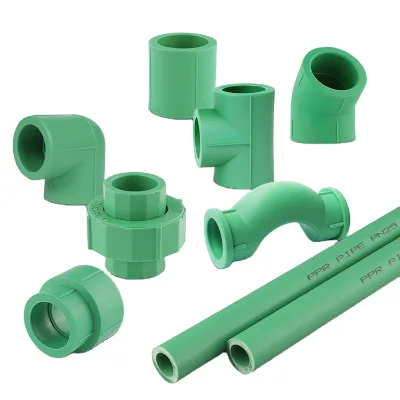


$0.30
MOQ: 20000 Meters

$0.40
MOQ: 10000 Meters


PPR Plastic Tube Fittings High Quality and Durable PPR Pipe Accessories Fittings
$15.00 - $300.00
MOQ: 1 Pieces


Comprehensive Sourcing Guide
Strategic Sourcing Guide for UV Resistant PPR Pipe Fittings
Understanding Material Properties and UV Stability in PPR Systems
When sourcing Polypropylene Random Copolymer (PPR) pipe fittings, the primary technical challenge lies in balancing the inherent benefits of the thermoplastic with its susceptibility to ultraviolet (UV) radiation. The supplied product data confirms that the core material is PP-R, a thermoplastic pipe kind known for its durability in hot and cold water applications. However, the raw material properties listed, such as a tensile strength of 30~40MPa or 3.46MPa depending on the specific formulation, and a water absorption rate of less than 0.01%, describe the baseline performance of the polymer. These figures indicate a material with excellent chemical resistance and low moisture uptake, which are critical for long-term integrity in plumbing systems.
The specific requirement for "UV resistant" fittings necessitates a deeper look at the material composition beyond the standard PP-R classification. While the provided facts list standard colors including White, Orange, Green, Grey, and options based on buyer requests, it is crucial to understand that standard PPR is inherently sensitive to UV exposure. Prolonged sunlight can degrade the polymer matrix, leading to brittleness and failure. Therefore, a buyer must verify that the "UV resistant" claim is supported by the addition of carbon black or specific UV stabilizers during the manufacturing process. The data indicates a contraction percentage ranging from 1.0% to 2.5% or less than 0.4%, which suggests variability in material density and crystallinity. Buyers should request technical data sheets that explicitly state the UV stabilization method used, as the standard PPR properties alone do not guarantee outdoor longevity without these additives. The observation of "Kind: Thermoplastics Pipes" confirms the category, but the specific UV resistance is a functional attribute that must be validated through supplier documentation rather than assumed from the base material name.
Technical Specifications and Dimensional Compliance
The technical specifications for PPR fittings are governed by strict dimensional standards to ensure compatibility with pipes and system pressure ratings. The supplied facts highlight several critical parameters that define the product's physical characteristics. The nominal diameter ranges are observed as DNTechnique:Casting, with specific model references indicating sizes from 20mm up to 110mm, and in some contexts extending to 160mm. The standard product models are listed as "ppr fitting," "ppr union F," and "ppr pipe," suggesting a comprehensive range of socket union types and straight pipes.
Pressure ratings are a vital component of the technical specification. The data explicitly mentions a pressure rating of Pn25, while other entries reference Pn20 and Pn25. This indicates that the fittings are designed to withstand high-pressure environments, suitable for both hot and cold water supply systems. The working pressure of Pn25 corresponds to a maximum operating pressure of 25 bar at a specific temperature, which is a standard benchmark for residential and commercial plumbing. Buyers must ensure that the specific fittings ordered match the system's pressure requirements, as Pn20 and Pn25 fittings are not always interchangeable without verifying the temperature derating curves.
Furthermore, the processing service is listed as "Customized," and the customization support includes OEM and ODM. This flexibility allows for tailored solutions, such as specific thread types or connection methods. The connection type is identified as "Welding," which is the standard fusion method for PPR systems, ensuring a leak-free joint that is as strong as the pipe itself. The structure of the fittings, such as the "Socket Union," is designed for this fusion process. When evaluating technical compliance, buyers should verify that the product standard aligns with the listed "S20-110" or "20-110mm" and "20-160mm" specifications. These ranges likely refer to the nominal diameter coverage rather than a specific international standard code, so cross-referencing with DIN or GB standards, which are mentioned in the data, is essential for ensuring global compatibility.
Compliance Verification and Certification Standards
Navigating the compliance landscape for PPR fittings requires a rigorous verification of standards and certifications. The supplied facts mention standards such as "S20-110," "20-110mm," "20-160mm," and references to "DIN" and "GB." These acronyms point to German (Deutsches Institut für Normung) and Chinese (Guobiao) national standards, which are widely recognized in the plumbing industry. However, the data does not provide specific certification numbers or third-party test results. Consequently, buyers cannot assume that a product listing automatically meets these standards without requesting proof.
For UV-resistant applications, compliance often extends beyond pressure and dimensional standards to include material safety and environmental regulations. The "Standard" field lists "DIN, GB," which suggests the products may adhere to European and Chinese manufacturing norms. Buyers should specifically request certification documents that confirm the fittings meet the relevant DIN EN ISO or GB/T standards for PPR pipes and fittings. Additionally, for applications involving drinking water, compliance with health and safety standards is non-negotiable. While the data mentions "Use: Hot and Cold Water" and "Media: Water," it does not explicitly state compliance with NSF, WRAS, or KTW standards.
The presence of "Customized Support: OEM and ODM" implies that suppliers can modify products to meet specific regional certification requirements. This is a significant advantage for international buyers who need fittings that comply with local building codes. However, the buyer must explicitly communicate these certification needs during the inquiry phase. The "Manufacturer: Yes" attribute confirms that the suppliers are direct manufacturers, which often facilitates better access to certification documentation compared to trading companies. Buyers should verify that the "prod_standard" listed on the product page matches the specific regulatory requirements of the destination country, as standards can vary significantly between regions.
Cost Drivers and Pricing Structure Analysis
The pricing structure for PPR fittings is influenced by several key factors, including material costs, manufacturing complexity, and order volume. The observed price range in the market is between 0.01 and 300 USD, which represents a vast spectrum from small individual components to bulk orders or specialized high-pressure systems. The Minimum Order Quantity (MOQ) ranges from 1 to 30,000 units, indicating that suppliers cater to both small-scale projects and large industrial contracts.
Material costs are a primary driver, particularly for UV-resistant variants. The addition of carbon black or UV stabilizers increases the raw material cost compared to standard white or colored PPR. The data lists colors such as White, Orange, Green, and Grey, but does not specify which colors inherently possess UV resistance. Typically, black fittings contain carbon black, which provides superior UV protection, while colored fittings may require additional stabilizers. Buyers should be aware that the "Free Sample" and "Free Sample" attributes are common, but the cost of shipping samples may not be included.
Volume discounts are likely available given the high MOQ ceiling of 30,000. The "Customized Service: OEM & ODM" also introduces variable costs, as custom molding or branding requires additional setup fees and production time. The packing methods, ranging from "OPP & Carton" to "Jhpi Packaging" and "PP Bags," also impact the final cost. Bulk packaging in woven bags or large cartons is generally more cost-effective for large orders, while smaller, individual packaging increases unit costs. Buyers should negotiate based on the total landed cost, considering that the low-end price of 0.01 USD likely applies only to high-volume orders of standard sizes, while specialized UV-resistant fittings will command a premium.
Typical Applications and System Integration
PPR fittings are predominantly used in hot and cold water supply systems, as indicated by the "Use: Hot and Cold Water" and "Usage: Water Supply" attributes. The "Temperature: Ordinary Temperature" specification suggests that while PPR is suitable for hot water, extreme temperature fluctuations or direct exposure to high heat sources outside of the pipe's rated range should be avoided. The "Working Pressure: Pn20, Pn25" confirms their suitability for standard residential and commercial plumbing, including heating systems and underfloor heating.
The "UV resistant" requirement specifically targets outdoor applications where pipes and fittings are exposed to sunlight. This includes rooftop installations, external water supply lines, and irrigation systems. In these scenarios, standard PPR would degrade rapidly, making the UV-resistant variant essential. The "Structure: Angle Type Globe Valve" and "Stem Thread Position: Inside Screw Stem Globe Valve" attributes indicate that the product line may also include valves for flow control, which are often integrated into the same piping systems. The "Actuator: Manual" suggests that these valves are operated by hand, which is typical for residential and light commercial applications.
Integration into existing systems requires attention to the connection type. The "Welding" connection method means that PPR fittings are fused to the pipe, creating a monolithic joint. This is highly reliable but requires specialized tools and skilled labor. The "Socket Union" type is particularly useful for connecting pipes of different diameters or for creating branch lines. Buyers should ensure that the fittings they select are compatible with the pipes they are using, paying close attention to the nominal diameter ranges (20mm to 110mm or 160mm) and the pressure ratings.
Supplier Evaluation and Quality Control Protocols
Evaluating suppliers for PPR fittings requires a focus on their manufacturing capabilities and quality control processes. The data confirms that the suppliers are manufacturers located in Hebei, China, and that they offer "Customized Support: OEM and ODM." This suggests a high level of production flexibility. However, the location alone does not guarantee quality. Buyers should verify the supplier's production capacity and their ability to maintain consistent quality across large batches.
Quality control should be a central part of the evaluation process. The "Tensile Strength" values of 30~40MPa and 3.46MPa, along with the "Contraction Percentage" and "Water Absorption" rates, are key metrics for quality. Buyers should request test reports that verify these values for the specific batch of UV-resistant fittings. The "Standard" references to DIN and GB provide a baseline, but independent third-party testing is often necessary to confirm compliance. The "Sample: Free" and "Provide Free Sample" attributes are useful for initial quality checks, allowing buyers to test the material's flexibility, color consistency, and UV resistance before placing a large order.
The "Processing Service: Customized" indicates that the supplier can adapt their production lines to meet specific requirements. This is beneficial for buyers with unique project needs, but it also introduces variability. Buyers should establish clear quality control protocols, including pre-shipment inspections and random sampling. The "prod_packing" options, such as "Jhpi Woven Bag" or "Plastic Bag," should be evaluated for their ability to protect the fittings during transit, especially if they are to be stored outdoors before installation.
Long-Term Procurement Considerations and Risk Management
Long-term procurement of PPR fittings involves managing risks related to supply chain stability, material consistency, and technological obsolescence. The "Location: Hebei, China" and "prod_origin: China" indicate a concentration of supply in a specific region. While this can offer cost advantages, it also introduces potential risks related to logistics, geopolitical factors, and seasonal production fluctuations. Buyers should diversify their supplier base or establish strong relationships with multiple manufacturers to mitigate these risks.
The "Customized Service: OEM & ODM" offers a strategic advantage for long-term projects. By working closely with the manufacturer, buyers can develop proprietary designs or specifications that lock in a supply chain advantage. However, this also requires a commitment to long-term contracts and clear communication of technical requirements. The "Standard: 20mm-110mm" and "20-160mm" ranges suggest a broad product line, but buyers should verify that the supplier can maintain these specifications over time.
Finally, the "Lead time" and "MOQ" are critical factors for long-term planning. The observed MOQ range of 1 to 30,000 units allows for flexibility, but buyers should plan their inventory levels carefully to avoid stockouts or overstocking. The "Free Sample" policy is a valuable tool for initial testing, but buyers should be prepared to cover shipping costs for larger sample batches. By focusing on these long-term considerations, buyers can ensure a stable and reliable supply of UV-resistant PPR fittings for their projects.
FAQs
How can I verify UV resistance for PPR fittings?
You must request technical data sheets confirming the addition of carbon black or UV stabilizers. Standard PP-R material degrades in sunlight, so baseline properties like tensile strength do not guarantee outdoor longevity without these specific additives.
What pressure ratings are available for these fittings?
The fittings are available with working pressure ratings of Pn20 and Pn25. These ratings indicate suitability for hot and cold water supply systems, with Pn25 corresponding to a maximum operating pressure of 25 bar at specific temperatures.
Which connection method is used for PPR pipe fittings?
The connection method is welding, which is the standard fusion process for this material. This technique creates a leak-free joint that is as strong as the pipe itself, typically used with socket union structures.
Can I get free samples for UV resistant PPR fittings?
Yes, suppliers offer free samples for evaluation of the product quality. While the sample material itself is free, buyers should verify if shipping costs are included when requesting these samples for testing.
What is the minimum order quantity for these products?
The minimum order quantity ranges from 1 to 30,000 units depending on the supplier and product type. This flexibility allows buyers to source small quantities for projects or large volumes for industrial contracts.
Where are these PPR fittings manufactured?
The products originate from Hebei, China, where direct manufacturers are located. Buyers can expect customization support including OEM and ODM services from these manufacturing facilities.
What standards do these fittings comply with?
The fittings reference standards such as DIN, GB, and specific product codes like S20-110. Buyers should request proof of compliance with these standards to ensure global compatibility and safety for water supply systems.