Source Vertical Lifting PE Filter Bag with Plastic Hoop for Cement, Metal, and Wood
Find 30 listings for the Vertical Lifting PE Filter Bag with Plastic Hoop designed for industrial dust collection. Buyers can compare specifications including filtration grades, materials like polyester and microfiber, and customization options for cement, metal, and wood applications.
Key considerations
Products List


Low Temp Filter Bag Media Polyester PE Filter Bag Dust Collector Filter Bags
$4.99 - $29.90
MOQ: 2 Pieces


Customizable Weight PE Filter Bags for Industrial Dust Removal Systems
$3.80 - $108.00
MOQ: 100 Pieces


Polyester Needle-Punched Filter Bag High Capacity Adjustable Filter Bag
$500.00 - $2500.00
MOQ: 100 Pieces
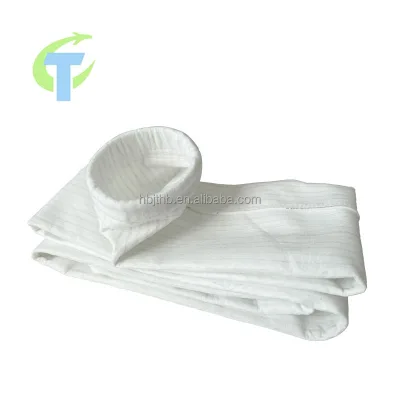


Comprehensive Sourcing Guide
Strategic Sourcing Guide for Vertical Lifting PE Filter Bags with Plastic Hoops
Understanding the Core Product Architecture and Material Composition
When sourcing a vertical lifting PE filter bag with a plastic hoop, buyers must first distinguish between the structural components and the filtration media. The term "PE" in this context typically refers to Polyethylene, though the supplied product data indicates a broader spectrum of materials including Polyester, Polypropylene (PP), Nylon, and Microfiber. The core product is often categorized under "Fabric Dust Collector" or "Mesh Filter Bag" types, depending on the specific application environment. The vertical lifting mechanism is a critical design feature, implying that the installation method is strictly vertical, which aligns with systems requiring easy removal and replacement without dismantling the entire housing.
The filtration media itself varies significantly across available listings. Some products utilize "Needle Non Woven Polyester Fiber" with a gram weight ranging from 450 to 600 grams, with 500 grams being a common standard. Others specify "Medium Material" as Glassfiber or Microfiber, while some are explicitly labeled as "Synthetic Fiber." The "Filtration Grade" is not uniform; observed data includes "Medium Filter," "ULPA Filter," and varying micron ratings from 0.3 to 300 microns. This variance suggests that the "PE filter bag" keyword often serves as a generic descriptor for a class of bags rather than a single, uniform specification. Buyers must verify if the specific "PE" designation refers to the hoop material, the bag body, or a specific coating, as the data also lists "PTFE Coating" and "Water and Oil Repellent" treatments.
The structural integrity of the bag is often enhanced by the "plastic hoop" mentioned in the core keyword. While the provided text does not explicitly detail the hoop's material composition beyond the general "plastic" descriptor, it notes that the "Bottom of Bag" is normally round but can be customized. The "Filter Bag Sectional Shape" is consistently listed as "Round Bag." The installation process is described as "Vertical Lifting," which is a specific operational requirement that dictates how the bag interacts with the dust collector housing. This method is distinct from other installation types and requires compatible dust collector systems that support vertical extraction.
Technical Specifications and Operational Parameters
The technical viability of a vertical lifting PE filter bag depends heavily on its operational environment and physical dimensions. The supplied data highlights a diverse range of working temperatures. Some products are designed for "High-Temperature" environments, while others are rated for "Room Temperature" or specific ranges such as "80-90 Degree." This discrepancy necessitates rigorous verification of the thermal limits before procurement. A bag rated for room temperature will fail catastrophically in a high-temperature cement or metal processing application, regardless of its structural hoop strength.
Dimensional customization is a primary feature of this product category. The "Standard" section indicates that "Regular size" is available, but "Customizable" sizes are the norm. Specifically, the "Length and Diameter Can Be Customized," allowing buyers to match the bag to specific housing dimensions. The "Micron Rating" varies widely from 0.3 to 300, indicating that these bags can serve both fine particulate filtration (ULPA) and coarse industrial dust collection. The "Dust Collecting Method" is listed as "Dry," which is standard for fabric filters, but the "Operation Type" is "Manually," suggesting that the vertical lifting mechanism is designed for human intervention rather than automated robotic replacement.
The "Finish Treatment" of the filter cloth is another critical technical specification. Options include "Singeing," "PTFE Coating," and "Water and Oil Repellent" treatments. These processes alter the surface properties of the fabric, affecting dust release and resistance to moisture. For applications involving sticky dusts or oily mists, the "Water and Oil Repellent" treatment is essential. The "Filter Bag Filter" type is described as "Outside the Filter Type" in some contexts, while others simply state "The Filter Type," requiring clarification on whether the filtration occurs on the outer surface or inner surface of the bag. The "Cartridge Filter" attribute mentions "Non-Woven Polyester Fiber," which may be relevant if the vertical lifting system is being adapted for cartridge-style collectors.
Compliance, Certification, and Standard Verification
In the B2B procurement of industrial filtration components, compliance and certification are non-negotiable. The supplied data explicitly lists "ISO" as a certification attribute. While a low-confidence background note mentions "ISO9001," the primary high-confidence fact is simply "ISO." Buyers should not assume a specific ISO standard (such as 9001 for quality management or 14001 for environmental management) without explicit verification from the supplier. The presence of "ISO" indicates that the manufacturer claims adherence to international standards, but the specific scope of this adherence must be confirmed through documentation.
The "Product Standard" is listed as "Regular size; Customizable" or "customized size, material." This implies that there is no single universal standard governing the dimensions or material composition of these bags. Instead, the standard is often defined by the buyer's specific requirements or the internal standards of the dust collector manufacturer. Buyers must verify if the supplier adheres to any industry-specific standards for dust collection, such as those related to explosion proofing in the "Cement, Metal, Wood, Iron, Steel" sectors. The "Application" list includes "Pharmacy" and "Food," which often triggers additional regulatory requirements regarding material safety and hygiene that go beyond general ISO certification.
Regarding material safety, the "Material Available" list includes "PP PE Nylon Polyester." For applications in the "Food" or "Pharmacy" sectors, buyers must verify that the specific "PE" or "Polyester" material used is food-grade or compliant with relevant health regulations. The "Anti Statice Polyester Dust Collector Filter Bag" attribute suggests that static control is a feature in some models, which is crucial for preventing dust explosions in flammable environments. However, the "Anti Statice" spelling in the source data indicates a potential variation in terminology, and buyers should confirm the exact nature of the anti-static treatment (e.g., carbon fiber integration vs. surface coating).
Cost Drivers and Pricing Dynamics
The observed price range for these products is exceptionally wide, spanning from $0.39 to $2500 USD. This variance is not indicative of a single product type but rather reflects the diversity of the category, ranging from simple mesh bags to complex, high-temperature, custom-sized filter assemblies. The "Minimum Order Quantity (MOQ)" ranges from 1 to 300 units, suggesting that buyers can source small quantities for testing or replacement, but larger orders may yield better unit economics. The "Packing" method, which includes "Carton Packaging," "Plastic Bag Into Carton," or "Carton or Wooden Case," also influences the final cost, especially for international shipping.
Several factors drive the cost of a vertical lifting PE filter bag. First, the "Material" is a primary cost driver. "Glassfiber" and "Microfiber" materials are generally more expensive than standard "Polyester" or "PP" due to their superior thermal and chemical resistance. Second, the "Filtration Grade" significantly impacts price; "ULPA Filter" bags are more costly than "Medium Filter" bags due to the tighter tolerances and specialized manufacturing processes required. Third, the "Finish Treatment" adds value and cost; bags with "PTFE Coating" or "Water and Oil Repellent" treatments command a premium over untreated "Needle Non Woven" bags.
The "Customization" factor is perhaps the most significant cost driver. While "Regular size" is available, the "Customizable" nature of the "Length and Diameter" and "Bottom of Bag" shape means that bespoke orders often incur higher tooling and setup costs. The "Gram Weight" of the cloth, typically 450-600gms, also affects the raw material cost. Heavier cloths require more fiber and may involve more complex weaving or non-woven processes. Buyers should expect that a "Vertical Lifting" system with a specialized "plastic hoop" and custom dimensions will be priced at the higher end of the observed range, whereas a standard "Round Bag" with a generic hoop may fall near the lower end.
Typical Applications and Industry Suitability
The versatility of vertical lifting PE filter bags is evident in the wide range of "Application" sectors listed. These include "Cement, Metal, Wood, Iron, Steel, Pharmacy, Food," as well as "Water Treatment" for "Liquid Filter" applications. The "Dust Collector Houseing Type" compatibility is noted as "Both Blowback Dust Collector and Pulse Dust Collector," indicating that these bags are designed to work with the two most common industrial dust collection technologies.
In the "Cement" and "Metal" industries, the "High-Temperature" capability of certain bags is essential. The "Work Temperature" of 80-90 degrees may be sufficient for some processes, but others may require higher ratings. The "Anti Statice" feature is particularly valuable in "Wood" and "Iron" processing where dust explosion risks are high. For "Pharmacy" and "Food" applications, the "Material Available" must be verified for purity and lack of contamination. The "Usage" as both "Dust Filter" and "Air Filter" suggests dual functionality, allowing these bags to serve in general ventilation systems as well as dedicated dust collection units.
The "Water Treatment" application for "Liquid Filter" bags indicates a different use case entirely. Here, the "Micron Rating" of 0.3-300 is critical for separating solids from liquids. The "Mesh Filter Bag" type is often used in this context, where the "Vertical Lifting" mechanism facilitates the removal of clogged bags for cleaning or replacement. Buyers must ensure that the "Filter Bag Environment" matches the application; a bag designed for "Room Temperature" air filtration will not perform in a "High-Temperature" industrial process or a corrosive liquid treatment system.
Supplier Evaluation and Quality Control Protocols
Evaluating suppliers for vertical lifting PE filter bags requires a focus on their ability to deliver consistent quality across the "Customizable" spectrum. The "Location" of the supplier is listed as "Shanghai" or "China," which provides a geographical context but does not guarantee quality. Buyers should verify the "Certification" status, specifically looking for the "ISO" claim and requesting documentation to confirm the specific standard. The "Process" section mentions "Finish Treatment" methods like "Singeing" and "PTFE Coating," which require specialized equipment and expertise. A supplier's ability to consistently apply these treatments is a key indicator of quality.
Quality control should focus on the "Weight of Cloth," which is specified as 450-600gms with a normal of 500gms. Deviations from this range may indicate inconsistent material density, affecting filtration efficiency and durability. The "Bottom of Bag" shape, normally "Round" but customizable, must be inspected for structural integrity, especially when a "plastic hoop" is involved. The hoop must securely hold the bag open without deforming under the pressure of the "Vertical Lifting" process.
Buyers should also assess the "Packing" standards. The options of "Carton Packaging," "Plastic Bag Into Carton," or "Wooden Case" suggest different levels of protection during transit. For international shipments, "Carton or Wooden Case" is often preferred to prevent damage to the "Filter Bag" and its "plastic hoop." The "Product" description, such as "Low Temp Filter Bag Media Polyester PE Filter Bag" or "Anti Statice Polyester Dust Collector Filter Bag," must match the ordered specifications exactly. Any discrepancy in the "prod_model" (e.g., 013, 005) or "prod_standard" should be flagged immediately.
Long-Term Procurement and Lifecycle Management
Sourcing vertical lifting PE filter bags is not a one-time transaction but part of a long-term maintenance strategy. The "Operation Type" being "Manually" implies that the bags will be replaced periodically by human operators. This necessitates a procurement plan that ensures a steady supply of compatible bags to minimize downtime. The "Customizable" nature of the "Size" and "Material" means that once a specific configuration is proven effective, it should be standardized to ensure consistency in future orders.
The "Filter Bag Environment" and "Work Temperature" are critical for determining the lifespan of the bag. Bags operating in "High-Temperature" environments will degrade faster than those in "Room Temperature" settings. Buyers should monitor the performance of the "Filtration Grade" over time; a drop in efficiency may indicate that the "Needle Non Woven Polyester Fiber" is wearing out or that the "PTFE Coating" is degrading. The "Dust Collecting Method" being "Dry" suggests that the bags are not designed for wet filtration, and any deviation from this could lead to premature failure.
Long-term cost management involves balancing the initial purchase price with the replacement frequency. While a "Medium Filter" bag may be cheaper than a "ULPA Filter" bag, the latter may offer better efficiency and longer life in specific applications, reducing the total cost of ownership. The "Gram Weight" and "Material" choices should be optimized based on the specific dust load and chemical composition of the air or liquid being filtered. Regular audits of the "Finish Treatment" effectiveness are recommended to ensure that "Water and Oil Repellent" properties remain intact.
Summary of Key Procurement Considerations
| Feature Category | Key Observation | Buyer Verification Action |
|---|---|---|
| Material | Polyester, PP, PE, Nylon, Glassfiber, Microfiber | Confirm specific material grade for application (e.g., Food, High-Temp). |
| Filtration Grade | Medium, ULPA, 0.3-300 Microns | Match micron rating to required particle size removal. |
| Temperature | Room Temp, High-Temp, 80-90 Degree | Verify thermal limits against process operating conditions. |
| Dimensions | Customizable Length/Diameter, Round Bag | Provide exact housing dimensions for custom sizing. |
| Installation | Vertical Lifting, Manual Operation | Ensure dust collector housing supports vertical extraction. |
| Certification | ISO (Specific standard unverified) | Request specific ISO documentation and scope. |
| Packing | Carton, Plastic Bag, Wooden Case | Select packaging based on shipping distance and fragility. |
In conclusion, sourcing a vertical lifting PE filter bag with a plastic hoop requires a meticulous approach to matching technical specifications with operational needs. The wide variance in materials, filtration grades, and customization options means that buyers cannot rely on generic descriptions alone. By focusing on the specific "Material," "Filtration Grade," and "Temperature" requirements, and by rigorously verifying "Certification" and "Quality Control" protocols, buyers can secure a reliable supply chain for their industrial filtration needs. The "Customizable" nature of the product offers flexibility but demands clear communication and precise specifications to avoid mismatches in performance or compatibility.
FAQs
What installation method is used for vertical lifting PE filter bags?
The installation method is strictly vertical, often involving vertical lifting mechanisms for easy removal. This design allows operators to replace bags without dismantling the entire dust collector housing, ensuring minimal downtime during maintenance.
Which materials are available for these filter bags?
Available materials include Polyester, PP, PE, Nylon, Glassfiber, and Microfiber. The specific material choice depends on the application, with options ranging from standard polyester for room temperature to glassfiber for high-temperature environments.
Can the dimensions of the filter bag be customized?
Yes, the length and diameter can be customized to fit specific housing requirements. While regular sizes exist, the product standard explicitly supports customized sizes and materials to meet unique operational needs.
What certifications do these filter bags typically hold?
These products typically hold ISO certification. Buyers should verify the specific ISO standard with the supplier, as the data confirms general compliance but does not specify a particular standard like ISO9001 without further documentation.
How is the filter bag packed for shipping?
Packaging options include plastic bags inside cartons, standard carton packaging, or wooden cases. The specific packing method depends on the order size and shipping requirements, with customization available for special needs.
What is the typical working temperature range for these bags?
Working temperatures vary, with some bags rated for room temperature and others for high temperatures up to 80-90 degrees. Specific applications like cement or metal processing may require bags designed for higher thermal resistance.
Which industries commonly use these filter bags?
Common applications include cement, metal, wood, iron, steel, pharmacy, and food processing. They are also used in water treatment as liquid filters, serving both dust collection and air filtration roles.