Source Vertical Metallographic Sample Cutting Machine for Lab Testing, Research, and Quality Control
Compare 30 vertical metallographic sample cutting machines from verified suppliers in China. These units support automatic feeding, water cooling, and precise cutting for stainless steel and metal alloys in lab testing environments.
Key considerations
Products List
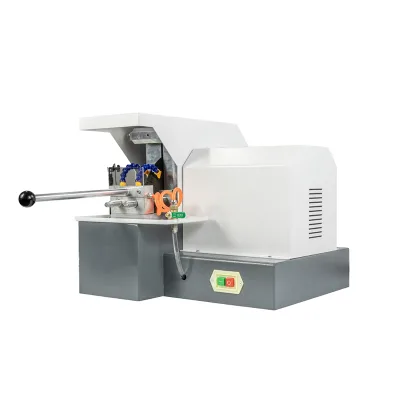


Large Fully Automatic Vertical Cutting Machine for Metallographic Sample Preparation
$69177.00 - $86470.00
MOQ: 1 Pieces


Lsq-120 Manual Metallographic Sample Cutting Machine with Vertical Type
$1300.00 - $1500.00
MOQ: 1 Sets


Metallographic Sample Cutting Machine with Multi-Piece Cutting Function
$1900.00 - $2200.00
MOQ: 1 Pieces


Comprehensive Sourcing Guide
Strategic Sourcing Guide for Vertical Metallographic Sample Cutting Machines
Understanding the Vertical Metallographic Sample Cutting Machine Landscape
The Vertical Metallographic Sample Cutting Machine represents a critical piece of equipment in materials science, metallurgy, and quality assurance laboratories. Unlike horizontal counterparts, these machines are engineered to slice specimens with precision, preparing them for subsequent polishing and microscopic analysis. The core functionality relies on a rotating abrasive or diamond blade that cuts through various conductive and non-conductive materials. In the current market, buyers encounter a diverse array of configurations, ranging from fully automated systems to semi-manual units designed for specific laboratory workflows.
When evaluating the Vertical Metallographic Sample Cutting Machine, procurement professionals must distinguish between machines designed for high-volume industrial testing and those tailored for research and development environments. The market offers solutions with varying power outputs, ranging from 900W to 1400W, which directly influences the cutting speed and the ability to handle harder alloys. Furthermore, the vertical orientation often necessitates specific cooling mechanisms, such as water cooling or dipped coolant systems, to prevent thermal damage to the sample's microstructure during the cutting process. Understanding these fundamental operational differences is the first step in aligning procurement needs with technical capabilities.
Technical Specifications and Performance Parameters
Selecting the correct machine requires a deep dive into the technical specifications that define its cutting capability and versatility. The blade diameter is a primary determinant of the maximum sample size that can be processed. Available models in the market feature blade diameters such as 180mm, which typically accommodates round shapes up to 30mm and square sections up to 30x100mm. However, more robust industrial units may support larger dimensions, with some specifications indicating a maximum square section capacity of 190x360mm. Buyers must verify the arbor size, commonly found at 12.7mm, to ensure compatibility with the wide range of available cutting blades.
Speed control is another critical specification. The rotational speed of the blade, measured in revolutions per minute (rpm), dictates the efficiency of the cut and the heat generated. Observed performance ranges in the market span from 200 to 3000rpm, with some models offering a more specialized range of 500 to 2500rpm. This variability allows operators to select the optimal speed based on the material hardness; softer materials like aluminum may require lower speeds to prevent deformation, while harder alloys like stainless steel or carbon steel demand higher torque and specific speed settings. The feeding method is equally important, with options including constant speed cutting, pulse cutting, and automatic feeding to ensure consistent results.
The physical dimensions and weight of the machine also play a significant role in laboratory layout planning. A typical unit might have dimensions around 470x505x359mm in a closed state, expanding to 470x556x631mm when open for operation. The weight of these units varies significantly, with some compact models weighing approximately 45kg, while larger, more heavy-duty versions can weigh up to 130kg. This weight difference often correlates with the stability of the machine and its ability to dampen vibrations during high-speed cutting. Additionally, the single package size for shipping, often around 85x74x75 cm, must be considered for logistics and storage planning.
Compliance, Certification, and Safety Standards
In the realm of industrial machinery, compliance with international safety and quality standards is non-negotiable. Buyers must prioritize suppliers who can provide verifiable certification documents. The CE certification is a widely recognized standard in the market, indicating that the product meets EU safety, health, and environmental requirements. While some suppliers list CE as a standard certification, it is imperative for buyers to request the specific test reports and documentation to validate the claim, as the presence of a certification mark does not automatically guarantee compliance without supporting evidence.
Electrical safety is a paramount concern, particularly given the high-voltage requirements of these machines. Most units operate on standard electrical equipment voltages, with common configurations supporting 220V. However, to accommodate international markets, some models offer dual voltage capabilities, such as 110V/220V with a 1-phase, neutral, and earth (1pH/N/PE) configuration. The protection class is another vital safety metric; an IP65 rating is frequently observed, signifying that the machine is dust-tight and protected against water jets from any direction. This level of protection is essential for environments where coolant splashes are common, ensuring the electrical components remain safe from moisture ingress.
Furthermore, the warranty period serves as an indicator of the manufacturer's confidence in their product. A standard warranty of 1 Year is typical in the current market, covering defects in materials and workmanship. Buyers should scrutinize the terms of this warranty, specifically regarding the coverage of the motor, blade drive system, and cooling pumps. The origin of the product, often listed as Guangdong, China, provides context for the manufacturing ecosystem but does not inherently dictate quality; therefore, the certification and warranty terms remain the primary indicators of reliability.
Cost Drivers and Pricing Structures
The pricing of vertical metallographic sample cutting machines is influenced by a complex interplay of factors, including power output, automation level, and brand positioning. The observed price range in the market is substantial, spanning from approximately $500 to $86,470. This wide disparity reflects the difference between basic manual units and sophisticated, fully automated systems with digital displays and advanced control interfaces. The minimum order quantity (MOQ) for these machines is typically low, often allowing for single-item purchases, which facilitates procurement for smaller laboratories or pilot projects.
Several specific attributes drive the cost upward. Machines featuring a digital display for precise speed and feed control command a premium over those with analog dials or manual controls. The inclusion of advanced cooling systems, such as an internal water tank with a capacity of around 3 liters, adds to the manufacturing cost compared to simple external hose connections. Additionally, the customization options available, such as OEM, OBM, and ODM support, can influence the final price. Buyers seeking custom branding or specific modifications should anticipate higher costs and potentially longer lead times.
It is crucial for buyers to look beyond the sticker price and consider the total cost of ownership. This includes the cost of consumables like cutting blades, the energy consumption of the motor, and the maintenance requirements of the cooling system. A machine with a 1400W motor will consume more power than a 900W unit, impacting long-term operational expenses. Similarly, the weight and dimensions of the machine affect shipping costs, especially for the larger units with a single gross weight of 130kg.
Typical Applications and Material Compatibility
The versatility of the Vertical Metallographic Sample Cutting Machine is defined by its ability to process a wide array of materials. These machines are specifically designed for lab testing applications where precise sample preparation is required. The cutting material compatibility is extensive, covering stainless steel, metal alloys, aluminum, iron, carbon steel, and copper. This broad material range makes the equipment suitable for diverse industries, including automotive, aerospace, electronics, and general manufacturing.
The accuracy of the cut is a critical performance metric for these applications. The market offers machines with an accuracy of 0.01mm, which is essential for preparing samples that will undergo high-magnification microscopic analysis. The accuracy class is generally standardized, ensuring that the cuts are clean and free from excessive burrs or thermal distortion. The layout of the machine, typically horizontal in terms of the cutting path but vertical in the machine's structural orientation, allows for efficient specimen handling. The manual operation mode, where the specimen is fixed and the blade is fed back and forth, provides operators with direct control over the cutting process, which is beneficial for irregularly shaped samples.
For high-volume environments, the automatic grade of the machine becomes a deciding factor. Automatic models offer consistent feeding rates and reduced operator fatigue, ensuring uniform sample preparation across large batches. The maximum round and square shape capacities determine the upper limit of the sample size that can be processed in a single pass. Buyers must match these specifications to their specific testing requirements to avoid the need for multiple setups or the inability to process larger components.
Supplier Evaluation and Quality Assurance
Evaluating potential suppliers requires a rigorous approach that goes beyond surface-level marketing claims. Buyers should verify the supplier's ability to provide OEM, OBM, and ODM support, as this indicates flexibility in meeting specific project needs. The brand name, such as Derui, may appear in product listings, but buyers should conduct due diligence to ensure the brand has a track record of reliability and after-sales support. The place of origin, Guangdong, China, is a major manufacturing hub, but the specific factory's quality control processes are what truly matter.
Quality control should be integrated into the procurement process. Buyers must request detailed specifications for the single package size and gross weight to ensure proper handling and shipping. The packaging itself, often described as a standard case or customized, plays a vital role in protecting the machine during transit. For machines with a weight of 45kg or up to 130kg, the packaging must be robust enough to prevent damage to the precision components, such as the blade arbor and the motor.
Furthermore, the environment in which the machine operates should be considered. The equipment is designed for normal pressure and temperature conditions, but buyers should assess whether their facility meets these requirements. The presence of a digital display and the ability to perform constant speed or pulse cutting are features that should be validated through product demonstrations or third-party testing reports.
Long-Term Procurement and Operational Considerations
Sourcing a Vertical Metallographic Sample Cutting Machine is a long-term investment that requires careful planning for maintenance and scalability. The cooling method, whether water cooling or dipped into the coolant, requires regular maintenance to prevent clogging and ensure efficient heat dissipation. The internal water tank capacity of around 3 liters means that coolant levels must be monitored and refilled regularly, which impacts the operational workflow. Buyers should ensure that the supplier provides clear guidelines for coolant maintenance and blade replacement.
The travel distance of the cutting mechanism, typically around 100mm, defines the range of motion and the types of cuts that can be executed. This parameter should be aligned with the specific cutting modes required, such as saw cutting, which is the standard mode for these machines. The power source, being electric, requires a stable power supply, and the voltage compatibility (110V/220V) must be verified against the local electrical infrastructure.
Finally, buyers should consider the future-proofing of their investment. As laboratory requirements evolve, the ability to upgrade the machine or adapt it to new materials is crucial. The customization options available, including the ability to tailor the machine to specific needs, offer a pathway for long-term adaptability. By focusing on these operational considerations, procurement professionals can ensure that the selected Vertical Metallographic Sample Cutting Machine remains a valuable asset for years to come.
| Feature | Observation 1 | Observation 2 | Observation 3 |
|---|---|---|---|
| Model Number | DR-80Z | CT-2300 | Beta500 |
| Power | 1400W | 900W | N/A |
| Voltage | 220V | 110/220V | 220V |
| Speed Range | 200-3000rpm | 500-2500rpm | N/A |
| Blade Diameter | 180mm | N/A | N/A |
| Max Square Section | 30x100mm | 190x360mm | N/A |
| Cooling Method | Water Cooling | Dipped Into Coolant | N/A |
| Weight | 130kg | 45kg | N/A |
| Certification | CE | CE | N/A |
| Accuracy | 0.01mm | N/A | N/A |
| Warranty | 1 Year | 1 Year | N/A |
| Origin | Guangdong, China | China | N/A |
This table summarizes the key technical variations observed in the market, highlighting the diversity in specifications that buyers must navigate. The data underscores the importance of matching specific technical requirements to the available models, as no single machine fits all applications perfectly. By carefully analyzing these parameters, buyers can make informed decisions that align with their laboratory's specific needs and operational constraints.
FAQs
What is the accuracy of the Vertical Metallographic Sample Cutting Machine?
The machine offers an accuracy of 0.01mm for precise sample preparation. This standard accuracy class ensures clean cuts suitable for lab testing applications involving various metal alloys.
Which cooling method does the machine use during operation?
It utilizes water cooling with an internal tank holding approximately 3 liters of coolant. The blade is dipped directly into the coolant to prevent thermal damage to the specimen microstructure.
Can the machine cut stainless steel and carbon steel effectively?
Yes, it is designed to cut stainless steel, carbon steel, aluminum, iron, and copper. The automatic grade and specific blade speed settings handle these diverse materials efficiently.
What is the maximum square section size the machine can process?
The maximum square section capacity is 190x360mm for larger industrial models. Some compact units may support smaller dimensions like 30x100mm depending on the specific model configuration.
Does the machine support OEM and ODM customization services?
Yes, the product supports OEM, OBM, and ODM customization options. Buyers can request specific branding or modifications, though this may influence the final pricing and lead time.
What voltage options are available for the electrical equipment?
The machine operates on 220V or 110V/220V with a 1-phase neutral and earth configuration. This flexibility allows the equipment to function in various international electrical environments.
How is the machine protected against dust and water ingress?
It features an IP65 protection class rating for safety. This ensures the unit is dust-tight and protected against water jets, making it suitable for wet cutting environments.