Source Vertical Polyurethane Packaging Machine for Tea, Rice, and Snacks
Compare 30 vertical polyurethane packaging machines available for tea, rice, and snacks. These units support forming, filling, and sealing functions with automatic or manual grades to suit diverse industrial needs.
Key considerations
Products List


Polyurethane Application Machine 2 Part Polyurethane Applying Machine
$8000.00 - $15000.00
MOQ: 1 Unit


Versatile Polyurethane Foam Filling Machine for High-Quality Cushion Packaging
$3599.00 - $4999.00
MOQ: 1 set

Instant Foaming Polyurethane Expanding Foam Packaging Machine for Instruments
$3599.00 - $4999.00
MOQ: 1 set


Polyurethane PU Foaming Machine /PU Machine/Polyurethane Machine/PU Injection Machine
$1000.00 - $15000.00
MOQ: 1 Pieces


PU Polyurethane Machine/PU Foaming Machine/Polyurethane Foam Insulation Filling Machine
$1000.00 - $12000.00
MOQ: 1 Pieces

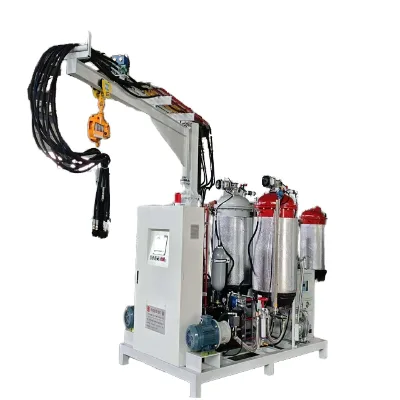
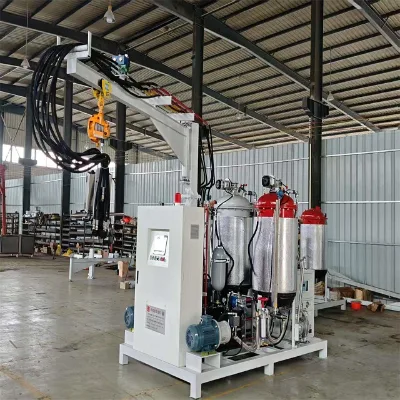
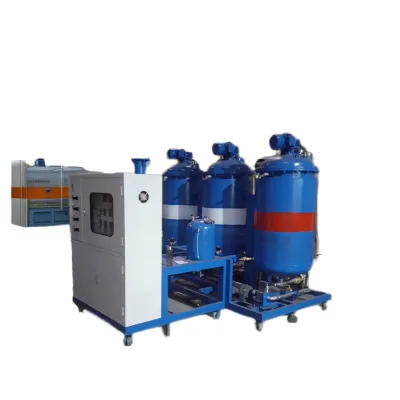


Advanced Polyurethane Foam Machine for Superior Insulation Solutions
$9900.00 - $55400.00
MOQ: 1 Pieces


Comprehensive Sourcing Guide
Strategic Sourcing Guide for Vertical Polyurethane Packaging Machines
The global demand for automated packaging solutions has driven significant innovation in vertical form, fill, and seal (VFFS) machinery, particularly for industries requiring precise handling of diverse materials. When sourcing a Vertical Polyurethane Packaging Machine, buyers must navigate a complex landscape of technical specifications, material compatibility, and regulatory compliance. The core keyword "Vertical Polyurethane Packaging Machine" often points to equipment capable of handling film-based packaging for a wide array of products, ranging from food items to industrial chemicals. This guide provides a structured approach to evaluating potential suppliers and machines, ensuring that procurement decisions are grounded in verified data and practical operational requirements rather than speculative marketing claims.
Technical Specifications and Operational Capabilities
Understanding the technical architecture of a vertical packaging machine is the first step in ensuring it meets production needs. The machinery in this category typically integrates forming, filling, and sealing functions into a single automated unit. Based on observed product attributes, these machines are available in both electric and mechanical driven types, offering flexibility for different power infrastructure setups. The forming species is frequently identified as "Bag Moulding," which indicates the machine's ability to create the bag structure from a roll of film material before filling and sealing.
The material type processed often includes grain-based products, yet the application scope extends far beyond. Verified application lists include vegetables, fruits, snacks, rice, flour, seasoning, drinks, dairy products, oil, cleaning agents, and detergents. This versatility suggests that the machine's internal mechanisms, such as the filling augers or volumetric cups, must be adaptable to various viscosities and particle sizes. For instance, specific models like the ZL520 or the HT-550 series demonstrate varying capabilities, with some units featuring a forming function that explicitly includes sealing, while others may focus primarily on the forming aspect.
Weight and physical dimensions are critical for facility planning. Observed data indicates a machine weight of approximately 2000kg, which necessitates a reinforced floor and specialized logistics for installation. The standard dimensions for certain models can be substantial, with one reference standard listing a footprint of L5300 x W2100 x H2200 mm. Conversely, other compact units may adhere to standards like 700x700x100 mm or 9075143cm, depending on the specific model configuration. Buyers must verify the exact footprint against their available floor space, as the installation method is often vertical, requiring overhead clearance and specific utility hookups.
Compliance, Certification, and Safety Standards
In the international B2B market, compliance is not merely a formality but a prerequisite for market access and operational safety. When evaluating a vertical packaging machine, buyers should prioritize suppliers who can provide documented proof of certification. The observed data highlights several key certifications, including ISO, CE, and RoHS. The presence of ISO certification suggests adherence to international management system standards, while CE marking indicates conformity with health, safety, and environmental protection standards for products sold within the European Economic Area. RoHS certification further ensures that the machine does not contain restricted hazardous substances, which is increasingly important for environmental compliance.
Some suppliers may list certifications as "ISO/CE," implying a dual compliance status, but buyers must verify the specific scope of these certificates. It is crucial to distinguish between the certification of the machine itself and the certification of the factory where it is manufactured. Additionally, the "Made in China" or "Guangzhou China" origin points to the manufacturing hub, but this does not automatically guarantee compliance with local regulations in the buyer's destination country. Buyers should request copies of the actual certificates and verify their validity with the issuing bodies.
Safety standards also encompass the machine's operational parameters. Voltage requirements are a significant factor; observed data lists 220V 50Hz and 380V 50Hz as common specifications. This variability means that a machine designed for a 380V industrial grid may not function correctly in a facility with only 220V single-phase power without a transformer. Similarly, the power consumption, noted as 9kw in some models, must be accounted for in the facility's electrical load calculations. The maximum working pressure of 15MPa for certain pneumatic or hydraulic components also requires careful inspection to ensure that all safety valves and pressure relief mechanisms are functioning correctly.
Cost Drivers and Pricing Structure
The pricing of vertical packaging machines is influenced by a multitude of factors, including automation level, material capacity, and customization options. The observed price range in the market spans from 100 to 90,000 USD, a vast disparity that reflects the difference between basic manual units and high-end fully automatic systems. The "Automatic Grade" is listed as Automatic for many models, which typically commands a higher price point due to the inclusion of advanced sensors, PLC controls, and servo motors. However, the presence of "Manual" method types in the data suggests that semi-automatic or manual-operated machines are also available, likely occupying the lower end of the price spectrum.
Customization is a significant cost driver. The availability of customization options allows buyers to tailor the machine to specific product shapes, bag sizes, or filling volumes. For example, a machine designed for a "Ring Winding Machine" shape or specific "PU Foam Material" coating processes will likely incur additional engineering costs. The packing speed, observed at 30-50 bags per minute per lane, is another variable that impacts price; higher speeds generally require more robust mechanical components and advanced control systems.
Buyers should also consider the "Packaging" and "Packing" costs associated with the machine itself. The product is often shipped in a wooden box, poly wood case, or plywood box, with some options including seaworthy packaging with pallets. These packaging requirements add to the overall landed cost and must be factored into the budget. Furthermore, the warranty period, typically observed as 1 year or 12 months, can influence the initial purchase price, with extended warranties often available at an additional cost.
Typical Applications and Material Compatibility
The versatility of vertical packaging machines makes them suitable for a broad range of industries. The observed application list is extensive, covering food and beverage sectors as well as industrial and chemical markets. In the food industry, these machines are ideal for packaging dry goods like rice, flour, and grains, as well as fresh produce such as vegetables and fruits. The ability to handle snacks and dairy products indicates that the machine can manage both loose granular materials and semi-liquid or viscous products.
For the industrial sector, the machine's capability to package cleaning agents, detergents, and oils is particularly valuable. The "Filling Capacity" of 1-50 grams per bag suggests that the machine can handle small-quantity packaging, which is common for sample packs or high-value ingredients. The "Ratio of Raw Material" of 1:1 mentioned in the context of PU foam material coating implies that the machine may also be used for processing specific chemical mixtures or foam-based products, although this requires specific nozzle and mixing configurations.
The material type "Grain" and "Film" are central to the machine's operation. The film material is used to form the bag, while the grain or other product is the content. The "Coating" process involving PU foam material suggests that the machine might be part of a larger production line where the packaging material itself undergoes a coating process before or during the forming stage. Buyers must ensure that the film material they intend to use is compatible with the machine's forming and sealing mechanisms, as different film thicknesses and compositions can affect the sealing quality and bag integrity.
Supplier Evaluation and Quality Control
Selecting the right supplier is as critical as selecting the right machine. Buyers should evaluate suppliers based on their ability to provide comprehensive technical support, spare parts availability, and after-sales service. The "Condition" of the machine is listed as "New," which is standard for new equipment, but buyers should verify the manufacturing date and storage conditions to ensure the machine has not degraded during transit or storage. The "Precision" of the machine is noted as "High Precision," which is essential for consistent bag dimensions and seal quality.
Quality control measures should be a priority during the procurement process. Buyers should request detailed specifications regarding the machine's construction, including the materials used for the frame and contact parts. Stainless steel is often preferred for food-grade applications to prevent corrosion and contamination. The "Installation" method being vertical requires careful planning for the factory layout, and the supplier should provide detailed installation diagrams and on-site support if necessary.
When evaluating suppliers, buyers should also consider the "prod_packing" details. Options like "Wooden Packaging with Pallet" or "Seaworthy Package" indicate a commitment to safe transport, but the buyer should verify that the packaging meets the specific requirements of their logistics provider. Additionally, the "Standard" dimensions and "Weight" of the machine should be cross-referenced with the supplier's shipping documentation to avoid discrepancies that could lead to delays or additional costs.
Long-Term Procurement and Operational Considerations
Long-term success with a vertical packaging machine depends on maintenance, operational efficiency, and adaptability to future needs. The "Warranty" of 1 year or 12 months provides a baseline for support, but buyers should consider the long-term cost of ownership, including energy consumption, spare parts, and labor. The "Speed" of the machine, described as "High," is a key performance indicator, but it must be balanced against the reliability of the sealing and forming mechanisms.
Buyers should also plan for potential upgrades or modifications. The "Customization" availability suggests that the machine can be adapted to new product lines or packaging formats, which is essential for businesses looking to expand. The "Driven Type" being either electric or mechanical offers flexibility, but the choice should be based on the specific power requirements and maintenance capabilities of the facility.
Finally, the "Location" of the supplier, often in China or specifically Guangzhou, should be considered in the context of lead times and logistics. While the "prod_origin" is consistently listed as China, the specific location can impact shipping costs and delivery times. Buyers should establish clear communication channels with the supplier to ensure that any issues are resolved promptly and that the machine is delivered in the condition promised. By focusing on these long-term considerations, buyers can ensure that their investment in a Vertical Polyurethane Packaging Machine delivers sustained value and operational efficiency.
FAQs
What applications does the Vertical Polyurethane Packaging Machine support?
The machine supports diverse applications including vegetables, fruits, snacks, rice, flour, seasoning, drinks, dairy products, oil, cleaning agents, and detergents. It handles both granular materials like grain and viscous substances, making it versatile for food and industrial chemical packaging needs.
Can the machine be customized for specific packaging requirements?
Yes, customization is available to tailor the machine to specific product shapes, bag sizes, or filling volumes. Buyers can request modifications for unique forming species like bag moulding or specific coating processes involving PU foam materials to meet distinct production lines.
What certifications are typically associated with these machines?
Common certifications include ISO, CE, and RoHS, ensuring compliance with international management systems and safety standards. These certifications verify that the machine adheres to health, safety, and environmental protection requirements for products sold in various global markets.
How is the machine driven and what is its power requirement?
The machine is available in electric and mechanical driven types, with power consumption around 9kw and voltage options of 220V or 380V. This flexibility allows installation in facilities with different power infrastructures while maintaining high-speed operational capabilities.
What is the warranty period for the vertical packaging machine?
The standard warranty period is 1 year or 12 months, providing a baseline for support and maintenance. Extended warranties may be available at an additional cost, ensuring long-term operational reliability for the new equipment purchased.
Which specifications define the physical dimensions of the machine?
Dimensions vary by model, with some units measuring L5300 x W2100 x H2200 mm while others are compact at 700x700x100 mm. The weight is approximately 2000kg, requiring reinforced flooring and careful planning for vertical installation and overhead clearance.
What is the typical packaging speed and filling capacity?
Packing speed ranges from 30 to 50 bags per minute per lane, depending on the specific material used. The filling capacity is designed for small quantities, handling 1 to 50 grams per bag, suitable for sample packs or high-value ingredients.