Source Vertical Pump for Irrigation, Water Supply, and Industrial Use
Explore 30 verified listings for Vertical Pump solutions suitable for irrigation, water supply, and industrial applications. Buyers can compare specifications such as head, capacity, and impeller types from suppliers in China.
Key considerations
Products List


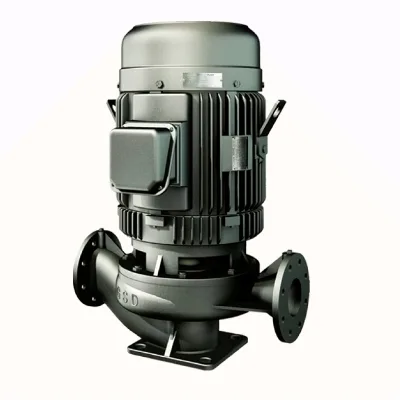
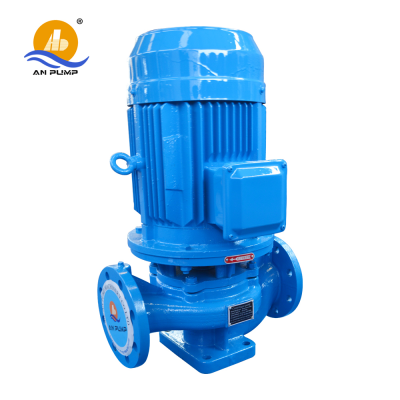

Comprehensive Sourcing Guide
Strategic Sourcing Guide for Vertical Pump Procurement
The global market for vertical pumps presents a complex landscape where engineering precision, operational environment, and supply chain reliability intersect. For procurement professionals, the decision to source vertical pumps requires a granular understanding of the specific configurations available, ranging from vertical turbine designs to multistage centrifugal units. The observed product data indicates a diverse inventory originating primarily from China, with specific manufacturing hubs in Shanghai and Zhejiang Hangzhou. Buyers must navigate a wide spectrum of technical attributes, including casing types, impeller configurations, and power requirements, to ensure the selected equipment aligns with project specifications. This guide outlines the critical factors for evaluating Vertical Pump suppliers, focusing on technical verification, compliance standards, and cost structures derived from current market observations.
Technical Configuration and Hydraulic Performance
The first step in sourcing vertical pumps is defining the hydraulic and mechanical configuration. The data reveals that vertical pumps are not a monolithic category but a family of designs distinguished by shaft orientation, impeller type, and casing construction. A primary distinction lies in the "Position of Pump Shaft," which is explicitly identified as "Vertical Pump" in several listings, contrasting with horizontal alternatives. Within the vertical category, the "Name" attribute further categorizes units as "Vertical Turbine Pump" or "Vertical Multistage Pump," each serving different head and flow requirements.
Performance capabilities vary significantly based on the "Impeller Number" and "Max.Head" specifications. Some units are identified as "Multistage Pump" designs capable of achieving a "Max.Head" exceeding 150 meters, making them suitable for high-rise water supply or deep well applications. Conversely, other configurations, such as those with a "Single-Stage Pump" impeller count, are observed with a "Max.Head" ranging between 10 and 30 meters, or 30 to 50 meters, indicating suitability for lower-head, higher-flow scenarios. The "Max.Capacity" data further illustrates this divergence, with observed ranges spanning from 200-300 L/min to capacities exceeding 400 L/min.
The "Pump Casing Combined" attribute offers another layer of technical differentiation. While some vertical pumps utilize a "Verticaljoint Surface Pump" design, others may be part of a broader catalog that includes "Horizontal Split Pumps," though the latter typically implies a different shaft orientation. The "Influent Type of Impeller" is equally critical; buyers must verify if the unit is a "Single Suction Pump" or a "Double-Suction Pump," as this affects the hydraulic balance and net positive suction head (NPSH) requirements. Furthermore, the "Impeller" type, whether "Semi-Open" or "Closed," dictates the pump's efficiency in handling liquids with varying solids content or viscosity. The "Theory" of operation is consistently noted as "Centrifugal Pump," confirming the fundamental mechanism driving fluid movement in these units.
Material Integrity and Construction Standards
Material selection is a decisive factor in the longevity and suitability of a Vertical Pump for specific industrial applications. The observed product data highlights two primary material classes: "Cast Iron" and "Stainless Steel." Cast iron units are typically cost-effective for general water transfer applications where corrosion resistance is not the primary concern. In contrast, "Stainless Steel" construction is essential for applications involving corrosive chemicals, saline water, or high-purity requirements, such as the "Clarified Water Pump" applications noted in the data.
The "Working Pressure" classification also influences material choice. The market data indicates the presence of "Low Pressure Pump," "Middle Pressure Pump," and "High Pressure Pump" variants. High-pressure applications generally demand higher-grade materials and more robust casing designs to withstand the internal stresses generated during operation. The "Mounting Height" attribute, described variably as "Since Irrigation Centrifugal Pumps" or "Suction Centrifugal," suggests that the physical installation height relative to the fluid source is a critical design parameter that must be matched to the pump's suction capabilities to prevent cavitation.
Compliance, Certification, and Regulatory Adherence
Navigating the regulatory landscape is essential for international procurement. The supplied facts confirm that several products carry the "Ce" certification and adhere to the "CE" standard. This indicates that the manufacturing processes and product designs meet the European Union's health, safety, and environmental protection standards. For buyers targeting markets in Europe or regions that recognize CE marking as a baseline for quality, this is a mandatory verification point. However, buyers must not assume that all listed products possess this certification; it must be verified on a per-supplier basis.
The "Standard" attribute explicitly lists "CE," reinforcing the importance of checking for this specific designation in technical datasheets. Beyond CE, buyers should inquire about other relevant industry standards depending on the application, such as ISO standards for pump efficiency or specific national standards for fire protection or irrigation. The "Customization" attribute being marked as "Available" suggests that suppliers may offer tailored solutions to meet specific local regulatory requirements or unique operational constraints, which can be a significant advantage for complex projects.
Cost Drivers and Commercial Terms
Understanding the cost structure of vertical pumps requires analyzing the interplay between specifications, materials, and commercial terms. The observed price range is exceptionally broad, spanning from 1 to 100,000 USD. This variance is not arbitrary but is driven by the complexity of the unit. A simple "Single-Stage Pump" with a "Max.Head" of 10-30m will naturally be priced lower than a "Vertical Multistage Pump" with a head exceeding 150m and constructed from "Stainless Steel."
The "Power" attribute is consistently listed as "Electric," with a "Start Up" mechanism also described as "Electric Pump." The specific power rating (kW or HP) is a major cost driver, as higher power requirements necessitate larger motors and more robust electrical components. Additionally, the "Usage" is broadly categorized as "Pump" or "Pumps," but the specific application, such as "Irrigation," influences the price through the need for specialized features like specific mounting heights or suction types.
Commercial terms also play a pivotal role. The "MOQ" (Minimum Order Quantity) observed ranges from 1 to 200 units. This flexibility allows buyers to source single units for pilot projects or small-scale installations, while larger orders can leverage volume discounts. The "prod_packing" attribute reveals that units are typically shipped in "Export" packaging, specifically "Export Wood Case," "Fumigation Wooden Case," or "Carton, Polywood Box." The choice of packaging affects shipping costs and protection during transit, particularly for heavy cast iron units. The "Colour" attribute being listed as "OEM" indicates that buyers can often request specific color coding for branding or safety identification, which may involve a minimum order threshold or a surcharge.
Supplier Evaluation and Geographic Sourcing
The geographic origin of the pumps is a key factor in logistics and supply chain management. The data identifies "China" as the primary origin, with specific manufacturing clusters in "Shanghai, China" and "Zhejiang Hangzhou." These regions are known for their robust manufacturing ecosystems and specialized pump industries. Buyers should evaluate suppliers based on their proximity to these hubs, as this often correlates with supply chain efficiency and access to specialized components.
When evaluating suppliers, the "Customization" capability is a strong indicator of technical competence. A supplier that offers customization is more likely to have the engineering resources to solve unique challenges, such as specific mounting heights or non-standard impeller types. The "Driving Type" is noted as "Motor," which is standard, but the integration of the motor with the pump shaft and the efficiency of the drive system should be scrutinized. Buyers should request detailed technical drawings and performance curves to verify that the "Theory" of operation aligns with the actual hydraulic performance.
Quality Control and Long-Term Procurement Strategy
Ensuring long-term reliability requires a robust quality control strategy. The "Working Pressure" and "Max.Head" specifications must be validated against actual test results, which are not explicitly provided in the general data but are critical for high-pressure applications. Buyers should insist on factory acceptance tests (FAT) for critical units, particularly those with "High Pressure" ratings or "Stainless Steel" construction. The "Performance" attribute, described as "Automatic Pump" in some contexts, suggests that some units may include integrated control systems or sensors, which adds a layer of complexity to quality assurance.
For long-term procurement, the availability of spare parts and the "Customization" policy are vital. A supplier that offers "Customization" is more likely to support long-term maintenance and modifications. The "Mounting Height" and "Position of Pump Shaft" must be compatible with the site's civil works to avoid costly retrofits. Additionally, the "Product Model" codes, such as "HLB," "LC," "DL," "DFW," "SDL," "SDLT," and "MV," serve as unique identifiers that should be used consistently in procurement documents to ensure the correct replacement parts are ordered in the future.
Comparative Analysis of Vertical Pump Configurations
To assist in decision-making, the following table summarizes the key technical variations observed in the market data, highlighting the trade-offs between different configurations.
| Feature Category | Configuration A | Configuration B | Configuration C |
|---|---|---|---|
| Pump Name | Vertical Turbine Pump | Vertical Multistage Pump | Horizontal Centrifugal Pump |
| Shaft Position | Vertical Pump | Vertical Pump | Horizontal Pump |
| Impeller Number | Multistage Pump | Single-Stage Pump | Single-Stage Pump |
| Max Head | >150m | 30-50m | 10-30m |
| Max Capacity | >400 L/min | 200-300 L/min | 200-300 L/min |
| Material | Stainless Steel | Cast Iron | Cast Iron |
| Working Pressure | High Pressure Pump | Middle Pressure Pump | Low Pressure Pump |
| Impeller Type | Semi-Open | Closed | Closed |
| Influent Type | Single Suction | Double-Suction | Single Suction |
| Typical Model | DL, SDL | HLB, LC | DFW, MV |
| Packing | Fumigation Wooden Case | Export Wood Case | Carton, Polywood Box |
This comparison illustrates that there is no single "best" Vertical Pump; the optimal choice depends entirely on the specific head, capacity, and fluid characteristics of the application. High-head applications require multistage designs with high-pressure ratings, while lower-head applications may benefit from single-stage units with double-suction impellers for better balance.
Final Procurement Considerations
In conclusion, sourcing vertical pumps requires a meticulous approach that balances technical specifications with commercial realities. Buyers must verify the "CE" certification, confirm the material composition (Cast Iron vs. Stainless Steel), and ensure the "Max.Head" and "Max.Capacity" align with project needs. The wide range of "MOQ" values offers flexibility, but the "Customization" options should be leveraged to tailor the pump to specific site conditions. By focusing on these evidence-based criteria and avoiding assumptions about unverified performance claims, procurement professionals can secure reliable Vertical Pump solutions that meet the demanding requirements of modern industrial and municipal applications. The diversity of models from "HLB" to "MV" underscores the need for precise specification matching to avoid procurement errors and ensure operational success.
FAQs
What materials are used for vertical pumps?
Vertical pumps are constructed from cast iron or stainless steel. Cast iron is suitable for general water transfer, while stainless steel is required for corrosive chemicals or clarified water applications.
Which certifications do vertical pumps hold?
Many vertical pumps carry CE certification and adhere to CE standards. Buyers must verify this specific designation on individual technical datasheets as it is not guaranteed for every listed product.
Can vertical pumps be customized for specific needs?
Customization is available for vertical pumps to meet unique operational constraints. Suppliers with this capability often have the engineering resources to adjust mounting heights, impeller types, or casing designs.
What is the maximum head capacity for these pumps?
Maximum head capacity varies significantly, ranging from 10 to 30 meters up to over 150 meters. Multistage designs typically achieve the higher heads required for deep well or high-rise water supply.
How are vertical pumps packaged for export?
Export packaging includes wooden cases, fumigation wooden cases, or carton and polywood boxes. The specific packaging choice depends on the unit weight and protection requirements during transit.
Where are these vertical pumps manufactured?
Vertical pumps originate primarily from China, with manufacturing hubs in Shanghai and Zhejiang Hangzhou. Buyers should evaluate suppliers based on their proximity to these established industrial clusters.