Source Volvo Iron Hand Pump for Industrial, Hydraulic, and Maintenance
Find 30 listings for the Volvo Iron Hand Pump suitable for industrial machinery, hydraulic systems, and maintenance tasks. Buyers can compare specifications like pressure, flow rate, and material to select the right unit for their needs.
Key considerations
Products List


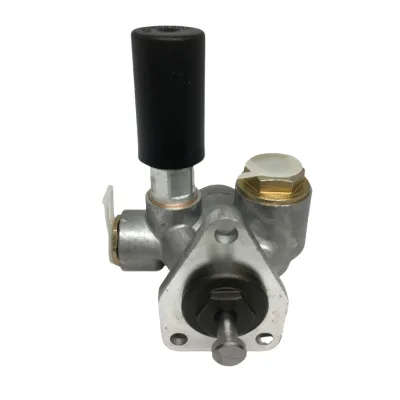


$650.00 - $1043.00
MOQ: 1 Pieces


Comprehensive Sourcing Guide
Strategic Sourcing Guide for Volvo Iron Hand Pumps
Understanding the Product Landscape and Technical Specifications
When sourcing a "Volvo Iron Hand Pump," buyers must first navigate the distinction between brand-specific engineering and the broader category of industrial cast iron hydraulic equipment. The core keyword suggests a search for robust, manually operated fluid transfer devices, often utilized in heavy machinery maintenance or industrial settings where electric power is unavailable. Based on the available product data, the market offers a diverse range of hand pumps that share the fundamental characteristic of cast iron construction but vary significantly in their specific operational parameters.
The material composition is a primary differentiator. The supplied facts indicate that a significant portion of the market utilizes Cast Iron as the primary material, valued for its durability and resistance to high pressures. However, alternative materials such as Al-Ti Alloy and Stainless Steel are also present in the catalog, suggesting that buyers must verify if the specific "iron" requirement is a strict constraint or if a corrosion-resistant alloy is more suitable for their application environment. The product attributes reveal that these units are often classified as Handheld or Hand Pump types, designed for manual operation rather than electric drive systems, despite some listings mentioning "Electric" drive attributes for other pump categories.
Technical specifications for these cast iron units typically include a 1 Inch port size, which is a standard interface for many industrial fluid systems. The suction and lift distances are critical performance metrics; observed data points to a Suction Distance of approximately 6 Meters and a Lift Distance reaching 25 Meters. These figures define the vertical and horizontal reach of the pump, essential for applications involving deep tanks or elevated reservoirs. Furthermore, the flow rate is a variable attribute. While some units are rated for a Flow Rate of 22.5 L/Min, others are described as having Variable Pump capabilities, allowing the operator to adjust output based on the viscosity of the fluid or the required pressure.
Pressure ratings vary widely across the supply base. Some units are engineered for High Pressure applications with a Max. Pressure capacity ranging from 1600 to 4000 bar, while others are designed for lower pressure environments with a Max. Pressure of 700 bar. The Pressure Medium is consistently identified as Oil, indicating that these pumps are primarily intended for hydraulic fluid transfer, lubrication, or fuel transfer rather than water or chemical processing. The Oil Tank capacity for certain models is listed at 2200 cm³, while fuel tank capacities for related equipment can range from 656 to 7480 cm³, highlighting the need for precise specification matching.
Compliance, Certification, and Standard Verification
In the B2B procurement of industrial machinery, compliance is not merely a formality but a critical risk mitigation strategy. The supplied product facts indicate that manufacturers often adhere to international standards such as ISO, CE, and SGS. These certifications are essential for ensuring that the equipment meets safety and quality benchmarks required in various global markets. For instance, the ISO standard is frequently cited, suggesting a commitment to quality management systems, while CE certification implies compliance with European health, safety, and environmental protection standards.
Buyers must exercise caution when interpreting these certifications. The data shows that some products list CE, ISO, and SGS together, while others may only list CE and ISO. It is vital to verify that the specific unit being purchased carries the relevant certification for the destination country. For example, if the equipment is intended for use in the European Union, the CE mark is mandatory. Similarly, if the project requires third-party verification, the SGS certification provides an additional layer of assurance regarding the product's integrity.
The HS Code is another critical compliance element. One of the listed products explicitly references 841320, which is the Harmonized System code for hand-operated pumps. This classification is crucial for customs clearance and duty calculation. Buyers should ensure that the supplier provides the correct HS code for the specific model to avoid delays at the border. Additionally, the Product Name often includes the HS code, such as "841320 HS Code Hydraulic Hand Pump," which serves as a quick reference for logistics teams.
When evaluating suppliers, buyers should request copies of the actual certificates rather than relying on marketing claims. The presence of a CE mark on a product does not automatically guarantee compliance if the manufacturer has not undergone the necessary conformity assessment procedures. Similarly, ISO certification applies to the manufacturer's quality management system, not necessarily to every individual unit, though it strongly implies a consistent production process. The SGS certification, being a third-party inspection service, offers a more direct verification of the product's specific attributes.
Cost Drivers and Pricing Dynamics
The pricing of cast iron hand pumps is influenced by a complex interplay of factors, including material costs, manufacturing complexity, and certification requirements. The observed price range in the market spans from 5 USD to 2500 USD, a wide variance that reflects the diversity of the product offerings. At the lower end of the spectrum, basic models with simple Cast Iron construction and standard 1 Inch ports may be available for a few dollars. These units typically have lower pressure ratings and simpler designs.
Conversely, the upper end of the price range, approaching 2500 USD, likely corresponds to high-performance units with advanced features. These may include Stainless Steel or Al-Ti Alloy construction, higher pressure ratings up to 4000 bar, and specialized Variable Pump mechanisms. The inclusion of CE and SGS certifications also adds to the cost, as these require rigorous testing and documentation. Additionally, the Gross Weight of the product, which can be as high as 19 Kg, impacts shipping costs, a significant factor in the total landed cost for international buyers.
The MOQ (Minimum Order Quantity) is another critical cost driver. The observed MOQ range is between 1 and 100 units. For buyers requiring small quantities, the per-unit cost may be higher due to the lack of economies of scale. However, for bulk purchasers, negotiating a lower price per unit becomes feasible, especially when the MOQ is met. The Payment terms, often cited as T/T (Telegraphic Transfer), also influence the financial dynamics. Buyers should be aware that suppliers may offer discounts for upfront payments or larger orders, but they must also consider the risks associated with different payment structures.
Packaging and logistics play a significant role in the overall cost. The prod_packing details indicate that products are often shipped in Cartons or Wooden Cases. A Wooden Case is typically more expensive than a standard Carton but offers superior protection for heavy or high-value items. The Package Size of 47.532.528.5cm and the Quantity in Each Package of 2 PC are specific details that affect freight calculations. Buyers should factor in the volume and weight of the packaging when estimating shipping costs, as these can vary significantly depending on the origin and destination.
Typical Applications and Operational Context
The versatility of cast iron hand pumps makes them suitable for a wide array of industrial applications. Their primary function is the manual transfer of Oil and other hydraulic fluids, making them indispensable in maintenance scenarios where electric pumps are impractical or unavailable. The High Pressure capability of some models allows them to be used in hydraulic systems that require significant force, such as lifting heavy machinery components or operating hydraulic jacks.
In the context of heavy machinery, such as that manufactured by Volvo, these pumps are often used for refueling, lubrication, and hydraulic fluid replacement. The 1 Inch port size is compatible with standard industrial fittings, ensuring ease of connection to various systems. The Suction Distance of 6 Meters and Lift Distance of 25 Meters enable the pumps to operate effectively in challenging environments, such as deep fuel tanks or elevated reservoirs. This capability is particularly valuable in remote locations or during emergency repairs where power sources are limited.
The Handheld nature of these pumps also makes them ideal for portable applications. They can be easily transported to different sites, making them a versatile tool for field maintenance teams. The Variable Pump feature allows operators to adjust the flow rate based on the specific needs of the task, providing greater control and efficiency. This is particularly useful when transferring fluids with varying viscosities or when precise dosing is required.
Furthermore, the Cast Iron construction ensures durability in harsh environments. These pumps can withstand exposure to dust, moisture, and extreme temperatures, making them suitable for use in construction sites, mining operations, and agricultural settings. The Max. Head of less than 10 meters for some models indicates their suitability for low-lift applications, while others with higher pressure ratings are designed for more demanding tasks. The Position of Pump Shaft being Horizontal is a standard configuration that facilitates easy installation and operation.
Supplier Evaluation and Quality Assurance
Selecting the right supplier is paramount to ensuring the quality and reliability of the procured hand pumps. Buyers should evaluate suppliers based on their adherence to ISO, CE, and SGS standards, as well as their ability to provide detailed product specifications. The prod_origin of China and specifically Shanghai, China is a common source for these products, indicating a mature manufacturing ecosystem with a wide range of options.
When evaluating suppliers, buyers should request detailed technical documentation, including material certificates, pressure test reports, and compliance certificates. The Material of Cast Iron should be verified to ensure it meets the required strength and durability standards. Similarly, the Certification status should be confirmed through direct communication with the manufacturer or third-party inspection agencies.
The Delivery Time is another critical factor in supplier evaluation. The observed Delivery Time of 15 Days After Receive Payment suggests a relatively quick turnaround, but buyers should confirm this with the specific supplier. Lead times can vary based on order volume, customization requirements, and logistical constraints. Buyers should also inquire about the Stock availability, as some suppliers may have immediate stock while others require production lead times.
Quality control measures should be a key part of the supplier evaluation process. Buyers should ask about the manufacturer's quality assurance protocols, including in-process inspections and final testing procedures. The prod_packing method, such as One Nozzle with on Carton or Wooden Case, should be reviewed to ensure it provides adequate protection during transit. Additionally, the Net Weight and Gross Weight of the product should be verified to ensure accurate shipping and handling.
Long-Term Procurement and Maintenance Considerations
For long-term procurement success, buyers must consider the total cost of ownership, including maintenance, spare parts availability, and lifecycle costs. The Cast Iron construction of these pumps generally offers a long service life, but regular maintenance is essential to prevent wear and tear. Buyers should inquire about the availability of spare parts, such as seals, valves, and nozzles, to ensure minimal downtime during maintenance.
The Customization availability is another important consideration. Many suppliers offer Customization options, allowing buyers to tailor the pump to their specific needs. This could include modifications to the Output Interface (e.g., 3/8NPT or G1/4") or the Size of the unit. Customization can enhance the pump's compatibility with existing systems and improve overall efficiency.
Buyers should also consider the Payment terms and financial stability of the supplier. The T/T payment method is common, but buyers should negotiate terms that protect their interests, such as partial payments upon delivery or performance guarantees. Additionally, the Lead Time and Delivery Time should be factored into the procurement timeline to ensure that the equipment is available when needed.
Finally, buyers should plan for the end-of-life disposal of the equipment. The Cast Iron material is recyclable, but proper disposal procedures should be followed to comply with environmental regulations. By considering these long-term factors, buyers can ensure a sustainable and cost-effective procurement strategy for cast iron hand pumps.
Comparative Analysis of Key Product Attributes
To facilitate informed decision-making, the following table summarizes the key attributes observed in the market for cast iron hand pumps. This comparison highlights the diversity of options available and helps buyers identify the most suitable product for their specific needs.
| Attribute | Observation Range | Typical Value | Notes |
|---|---|---|---|
| Material | Cast Iron, Al-Ti Alloy, Stainless Steel | Cast Iron | Cast iron offers durability; alloys offer corrosion resistance. |
| Max. Pressure | 700 bar to 4000 bar | 1600-4000 bar | High pressure models are for heavy-duty hydraulic systems. |
| Flow Rate | 22.5 L/Min to Variable | Variable | Variable pumps offer flexibility for different fluid viscosities. |
| Port Size | 1 Inch | 1 Inch | Standard industrial interface size. |
| Suction Distance | 6 Meters | 6 Meters | Defines vertical reach for fluid intake. |
| Lift Distance | 25 Meters | 25 Meters | Defines vertical reach for fluid discharge. |
| Certification | CE, ISO, SGS | CE, ISO | Essential for compliance in international markets. |
| Weight | 11-12 Kg to 19 Kg | 18-19 Kg | Heavier units often indicate higher pressure capacity. |
| Packaging | Carton, Wooden Case | Wooden Case | Wooden cases offer superior protection for heavy units. |
| Origin | China (Shanghai) | Shanghai, China | Major manufacturing hub for industrial pumps. |
This comparative analysis underscores the importance of matching specific product attributes to the buyer's operational requirements. By carefully evaluating these factors, buyers can select a cast iron hand pump that delivers optimal performance and reliability for their specific application.
FAQs
What materials are used for Volvo iron hand pumps?
Cast iron is the primary material used for these pumps, ensuring durability and high-pressure resistance. Some models also utilize Al-Ti Alloy or Stainless Steel for specific corrosion-resistant applications.
How much pressure can these hand pumps handle?
Maximum pressure ratings vary significantly, ranging from 700 bar to as high as 4000 bar depending on the specific model. High-pressure units are designed for demanding hydraulic applications requiring substantial force.
Which certifications do these pumps typically hold?
Many units are certified with CE, ISO, and SGS standards to ensure safety and quality compliance. Buyers should verify specific certificates for their target market, as not all listed products carry every certification.
Can these pumps operate with a 1-inch port size?
Yes, a 1-inch port size is a standard specification for many of these cast iron hand pumps. This dimension ensures compatibility with common industrial fluid systems and standard fittings.
What is the typical delivery time for these orders?
The standard delivery time is 15 days after receiving payment. This timeline applies to confirmed orders and may vary based on customization requirements or current stock availability.
How much does the packaging weigh for a single unit?
A single package containing two units has a gross weight of 19 kg and a net weight of 18 kg. The packaging is typically a carton or wooden case depending on the specific product model.