Source Wafer Head Self-Drilling Screw for Windows, Doors, and Frames
Find 30 listings for wafer head self-drilling screw options in carbon steel and stainless steel. Buyers can compare specifications including thread types, drive types, and surface treatments from Tianjin suppliers to match industrial fastening needs.
Key considerations
Products List


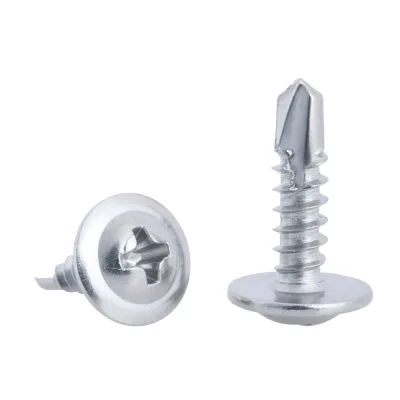


3.5*10mm Wafer Head Self Drilling Screws White Zinc Self Drilling Screw
$990.00 - $1499.00
MOQ: 1 Tons

Philip Wafer Head Self Drilling Screw White Zinc Self Drilling Screws 3.5*10mm
$990.00 - $1499.00
MOQ: 1 Tons

Hardware DIN7504 Black Phosphate Wafer Head Self Tapping Drilling Screw
$998.00 - $1499.00
MOQ: 1 Tons


4.2X25mm White Zinc Plated Self Drilling Screws Wafer Head Self Drilling Screw
$990.00 - $1499.00
MOQ: 1 Tons


Comprehensive Sourcing Guide
Strategic Sourcing Guide for Wafer Head Self-Drilling Screws
Understanding Product Variants and Technical Definitions
The term "wafer head" in fastener procurement often intersects with "pan head" or "round head" configurations depending on regional nomenclature and specific application requirements. In the context of self-drilling screws, the head style is a critical determinant for torque application and surface finish aesthetics. Based on available market data, buyers frequently encounter products labeled as "Pan Head Self-Drilling Screw" or those with "Round" head styles, which may serve similar functional roles in specific assembly scenarios. The core functionality of these fasteners relies on their ability to drill through material and form a mating thread in a single operation, eliminating the need for pre-drilling.
The technical architecture of these screws typically involves a specific drive type to ensure efficient installation. Common observations in the market include "Phillip Drive" and "Hexagonal" head styles, which dictate the tooling required for installation. The "Cross" groove pattern is a standard feature observed in high-performance variants, designed to improve the grip of the driver bit and prevent cam-out during high-torque applications. The thread profile is another vital specification; "Fine Thread" options are available, which are often preferred for thinner gauge metals or applications requiring higher pull-out strength.
Material composition is the primary differentiator between standard and heavy-duty self-drilling screws. The market offers distinct grades, with "Carbon Steel" being a prevalent choice for general construction and industrial fastening, while "Stainless Steel" variants are selected for environments requiring corrosion resistance. The diameter specifications for these fasteners generally span from M3.5 (#6) up to M6.3 (#14), with specific models covering sizes like M4.2 (#8) and M4.8 (#10). Lengths typically range from 11mm to 150mm, allowing for versatility in joining materials of varying thicknesses. Buyers must carefully align the screw length with the total material thickness to ensure the thread engages sufficiently without protruding excessively on the opposite side.
Compliance Standards and Certification Verification
When sourcing wafer head self-drilling screws, verifying adherence to international standards is essential for ensuring structural integrity and compatibility. The supply chain for these components is often governed by a mix of regional and global standards. Observed product listings frequently reference compliance with "GB" (Chinese National Standards), "DIN" (German Institute for Standardization), "ANSI" (American National Standards Institute), "BSW" (British Standard Whitworth), and "JIS" (Japanese Industrial Standards). Some suppliers also indicate adherence to "GOST" standards, reflecting the diverse origins of manufacturing facilities, particularly those based in regions like Tianjin, China.
Certification serves as a proxy for quality management systems rather than a direct measure of the screw's mechanical properties. Buyers should look for evidence of ISO 9001 certification, which indicates a supplier's commitment to consistent quality management. Specific industry certifications, such as "ISO 9001:2008" or "ISO 9001," are commonly cited. For applications involving specific safety or environmental regulations, certifications like "RoHS" (Restriction of Hazardous Substances) may be relevant. Additionally, standards like "En 14592:2008+A1:2012" may appear in documentation, particularly for products intended for construction or structural fastening in European markets.
It is crucial for procurement teams to distinguish between general quality certifications and product-specific performance standards. While a supplier may hold an ISO 9001 certificate, this does not automatically guarantee that every batch of screws meets specific mechanical load requirements. Buyers should request test reports or mill certificates that correlate the specific batch of screws to the claimed standards. The presence of multiple standards in a single listing, such as "GB, DIN, ANSI, BSW, JIS," suggests a manufacturer capable of producing to various international specifications, but the buyer must specify which standard applies to their specific order to avoid compliance gaps.
Surface Treatments and Material Durability
The longevity of a self-drilling screw is heavily influenced by its surface treatment and underlying material grade. The most common finish observed in the market is "Yellow Zinc Plated," which provides a baseline level of corrosion resistance suitable for indoor or mild outdoor environments. Some suppliers offer "White Zinc Plated" options, which may provide a different aesthetic or slightly different corrosion protection characteristics. The choice between yellow and white plating often depends on the specific environmental exposure of the application and aesthetic requirements of the final product.
Material selection dictates the inherent strength and corrosion resistance of the fastener. "Carbon Steel" is the standard material for general-purpose self-drilling screws, offering high tensile strength at a cost-effective price point. For applications exposed to moisture, chemicals, or harsh weather, "Stainless Steel" is the preferred material. The grade of the stainless steel is a critical factor that should be verified, as different grades offer varying levels of resistance to rust and pitting. The "Groove" design, specifically the "Cross" type, is engineered to work in tandem with the material hardness to ensure the screw can penetrate the target substrate without stripping the drive head.
Surface treatment processes are not merely cosmetic; they are functional barriers against degradation. Buyers should verify the thickness of the plating and the type of passivation used, as these factors directly impact the salt spray resistance of the fastener. While specific test results like hours of salt spray resistance are not universally listed in general product summaries, the presence of a defined surface treatment is a strong indicator of a manufacturer's attention to durability. For industrial applications, the combination of a robust material grade like carbon steel with a high-quality zinc plating offers a balanced solution for cost and performance.
Cost Drivers and Procurement Economics
The pricing structure for wafer head self-drilling screws is influenced by a complex interplay of material costs, manufacturing complexity, and order volume. The observed price range in the market can vary significantly, from nominal values to over $1900 for large bulk orders, reflecting the difference between small sample quantities and massive industrial shipments. The "Minimum Order Quantity" (MOQ) is a critical economic factor, with observed ranges spanning from 1 unit for samples to 100,000 units for large-scale production runs. This wide variance allows buyers to test products with low-risk samples before committing to large inventory investments.
Material costs are the primary driver of unit price fluctuations. The transition from carbon steel to stainless steel represents a significant cost increase due to the raw material value and the more complex manufacturing processes required for stainless steel. Similarly, specialized surface treatments, such as high-grade zinc plating or alternative coatings, add to the production cost. The diameter and length of the screw also affect the price, as larger screws require more raw material and may require different machining parameters.
Logistics and packaging play a secondary but important role in the total cost of ownership. Suppliers often offer various packaging options, including "Bag/Box/Carton," "Wooden Box Packaging," or "Pallet" configurations. The choice of packaging affects the shipping weight and volume, which in turn influences freight costs. Buyers should consider whether the packaging is optimized for their specific storage and handling requirements to avoid unnecessary expenses. Additionally, the availability of "Free" samples can reduce the initial research cost, allowing buyers to validate quality without financial commitment.
Typical Applications and Installation Context
Wafer head self-drilling screws are designed for a wide array of applications, primarily centered around fastening metal-to-metal or metal-to-wood assemblies. The "Common Bolt" connection type and "Pan Head" or "Round Head" styles make these screws ideal for securing sheet metal panels, HVAC ductwork, and light gauge steel framing. The specific application of "Used for Fastening in Window or Door Frames" highlights their utility in construction and architectural contexts where precision and speed are paramount. The "Precise Cutting Edges" feature mentioned in product attributes is specifically engineered to improve drill performance, ensuring clean holes in various substrates without the need for pre-drilling.
In the industrial sector, these screws are utilized for equipment assembly, where the "Industry" application keyword suggests their use in machinery and structural components. The ability to self-drill allows for faster assembly lines and reduced labor costs compared to traditional fastening methods that require separate drilling and tapping operations. The "Fine Thread" option is particularly valuable in applications where the base material is thin, as it provides better thread engagement and reduces the risk of stripping.
The versatility of these fasteners extends to their use in various environments. The availability of different materials and finishes allows them to be deployed in both indoor and outdoor settings. For example, stainless steel variants with white zinc plating might be used in coastal environments or food processing facilities where hygiene and corrosion resistance are critical. Conversely, carbon steel screws with yellow zinc plating are suitable for general construction projects where cost-effectiveness is a priority. Buyers must match the screw's specifications to the specific mechanical and environmental demands of their project to ensure long-term reliability.
Supplier Evaluation and Quality Assurance Protocols
Evaluating a supplier for wafer head self-drilling screws requires a multi-faceted approach that goes beyond price comparison. The geographic origin of the product, such as "Tianjin" or "China," provides insight into the manufacturing ecosystem, but it is not a sole determinant of quality. Buyers should prioritize suppliers who demonstrate transparency in their production processes and offer clear documentation of their quality control measures. The presence of certifications like "ISO 9001" is a baseline requirement, but buyers should also inquire about specific quality control protocols implemented during the manufacturing of self-drilling screws.
Key performance indicators for supplier evaluation include the consistency of product dimensions, the reliability of surface treatments, and the accuracy of thread specifications. Buyers should request samples to verify that the "Cross" groove and "Phillip Drive" or "Hexagonal" head styles match the required specifications. The ability of the supplier to provide "Customized" solutions is also a valuable indicator of their flexibility and technical capability. While some suppliers offer "Non-Customized" standard products, those willing to accommodate specific diameter, length, or material requirements often provide better long-term value for specialized applications.
Quality assurance should also encompass the supplier's logistics and delivery capabilities. The "Delivery Time" of 15-30 days is a common range observed in the market, but buyers should confirm lead times for their specific order volume and customization needs. The availability of various shipping methods, including "Sea Freight," "Land Freight," and "Air Freight," allows for flexibility in managing inventory and project timelines. A reliable supplier will provide clear communication regarding production status and potential delays, ensuring that procurement schedules are met without disruption.
Long-Term Procurement and Supply Chain Resilience
Establishing a long-term procurement strategy for wafer head self-drilling screws involves more than just securing a single order; it requires building a resilient supply chain capable of adapting to market fluctuations and changing project requirements. The wide range of available specifications, from M3.5 to M6.3 diameters and lengths from 11mm to 150mm, suggests that a single supplier may not be able to meet all needs. Buyers should consider diversifying their supplier base to ensure continuity of supply, especially for critical applications where fastener failure could lead to significant downtime or safety issues.
The "Regular Bulk" packaging options, such as 25kg per bag or carton, facilitate efficient inventory management and storage. However, buyers should also evaluate the scalability of the supplier's production capacity to handle large orders without compromising quality. The ability to accept "Customized" orders allows for the development of proprietary fastening solutions that may offer competitive advantages in specific markets. As the industry evolves, suppliers who invest in advanced manufacturing technologies and maintain strict quality control standards will be better positioned to support long-term procurement goals.
Furthermore, buyers should monitor market trends regarding material costs and regulatory changes that could impact the availability or specifications of self-drilling screws. Staying informed about updates to international standards like "DIN," "ANSI," or "GB" ensures that procurement decisions remain compliant with evolving industry requirements. By maintaining a proactive approach to supplier relationship management and quality assurance, buyers can secure a reliable supply of high-performance wafer head self-drilling screws that meet the demands of their projects for years to come.
Comparative Analysis of Key Product Attributes
To assist buyers in making informed decisions, the following table summarizes the key attributes observed in the market for wafer head self-drilling screws. This comparison highlights the variability in specifications and helps identify the features most relevant to specific applications.
| Attribute | Observation A | Observation B | Observation C |
|---|---|---|---|
| Head Style | Pan Head | Hexagonal | Round |
| Material | Carbon Steel | Stainless Steel | Carbon Steel |
| Drive Type | Phillip Drive | Hexagonal | Cross Groove |
| Diameter Range | M3.5 to M4.8 | M4.2 to M6.3 | M4.2 to M4.8 |
| Length Range | 13mm to 100mm | 11mm to 150mm | 13mm to 50mm |
| Surface Finish | Yellow Zinc Plated | Yellow/White Zinc | Yellow Zinc Plated |
| Standards | GB, DIN, ANSI | GB, DIN, ANSI, BSW | GOST, GB, DIN, ANSI |
| Certification | ISO 9001 | ISO 9001:2008 | ISO, RoHS |
| Origin | Tianjin | Tianjin, China | China |
| Customization | Available | Accept | Non-Customized |
This table illustrates that while there is significant overlap in core specifications, the specific combination of head style, material, and standards varies by supplier and product model. Buyers should use this framework to filter options based on their specific technical requirements, ensuring that the selected fasteners meet the precise demands of their application.
FAQs
What materials are available for wafer head self-drilling screws?
These screws are available in carbon steel and stainless steel grades. Carbon steel offers high tensile strength for general construction, while stainless steel provides superior corrosion resistance for harsh environments.
Which standards do these screws comply with?
Products comply with multiple international standards including GB, DIN, ANSI, BSW, JIS, and GOST. Buyers should verify which specific standard applies to their order to ensure structural integrity and compatibility.
How long is the delivery time for bulk orders?
The standard delivery time ranges from 15 to 30 days for regular bulk orders. This timeline applies to standard production runs and may vary based on order volume and specific customization requirements.
Can I get free samples before placing a large order?
Yes, free samples are available for evaluation purposes. This allows buyers to verify product quality and specifications before committing to larger quantities with minimum order quantities ranging from one to 100,000 units.
What surface treatments are offered for these screws?
Common surface treatments include yellow zinc plating and white zinc plating. These finishes provide baseline corrosion resistance suitable for indoor or mild outdoor environments depending on the specific application needs.
What certifications do the manufacturers hold?
Manufacturers typically hold ISO 9001 certification for quality management systems. Some listings also reference ISO 9001:2008 and specific industry standards like En 14592:2008+A1:2012 for structural fastening applications.
Where are these screws manufactured?
The primary manufacturing origin for these products is Tianjin, China. This location is a known hub for fastener production, offering access to various supply chains and logistics networks for global distribution.