Find water-cooled excavator engine starter for industrial, mining, and construction
Source 30 water-cooled excavator engine starter options from verified Chinese manufacturers. Compare specifications including voltage, power, and OEM compatibility for Caterpillar and Mitsubishi applications to find the right fit for your equipment.
Key considerations
Products List


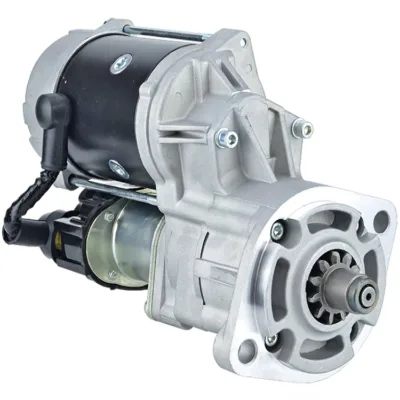
320d Excavator 3545671 Starter for Caterpillar C7.1 Diesel Engine Parts
$50.00 - $100.00
MOQ: 2 Pieces

2724774 320d Excavator Starter for Caterpillar C6.4 Diesel Engine Parts
$100.00 - $150.00
MOQ: 2 Pieces





Comprehensive Sourcing Guide
Strategic Sourcing Guide for Water-Cooled Excavator Engine Starters
The procurement of water-cooled excavator engine starters represents a critical decision point in heavy equipment maintenance and supply chain management. These components are not merely auxiliary parts; they are the primary ignition source for the hydraulic and mechanical systems that drive excavation operations. When sourcing these high-torque electrical devices, buyers must navigate a complex landscape of technical specifications, certification requirements, and compatibility matrices. The following guide synthesizes observed market data and technical attributes to provide a disciplined framework for evaluating potential suppliers and products without relying on unverified claims.
Technical Specifications and Performance Parameters
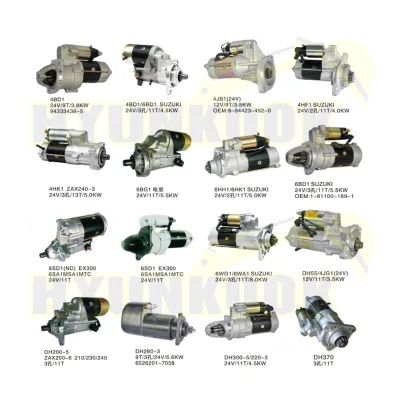
Understanding the precise technical architecture of a water-cooled excavator starter is the first step in ensuring operational reliability. Unlike standard automotive starters, these units are engineered to withstand the harsh thermal and vibrational environments inherent to heavy machinery. Based on available product data, the market offers units with varying voltage and power configurations. For instance, specific models are rated at 24V with a power output of 6.0kw, while others operate at 12V with 1.7kw. This variance necessitates a strict verification process where the buyer matches the starter's electrical profile to the excavator's battery system and alternator capacity.
The physical engagement mechanism is equally critical. Data indicates that successful units often feature a "Forced Intermeshing" driving type, which ensures robust gear engagement with the engine's flywheel ring gear. The number of teeth on the starter gear is a precise metric; observed specifications include configurations such as 11 teeth with a 47.8mm diameter or 13 teeth with a 40mm diameter. Mismatching these dimensions can lead to catastrophic gear failure or an inability to crank the engine. Furthermore, the stator configuration is a key differentiator. Some units are identified as single-phase motors with a specific number of poles, such as six poles, which influences the torque curve and starting speed. Buyers must verify that the "Starting Mode" aligns with their operational needs, as some advanced units support "Variable Frequency Starting" to reduce inrush current and mechanical stress.
Compliance, Certification, and Regulatory Standards
In the global B2B market, certification is not merely a formality but a prerequisite for liability protection and operational safety. When sourcing excavator starters, buyers must demand evidence of compliance with internationally recognized standards. The supply chain data highlights several critical certifications that should be present on product documentation. These include ISO 9001 and its variants, such as ISO 9001:2000, which attest to the manufacturer's quality management systems. Additionally, specific product certifications like RoHS, SGS, Reach, and TUV are observed in the market, indicating adherence to environmental and safety regulations.
For products intended for specific regional markets, local certifications are mandatory. The presence of CCC (China Compulsory Certification) is noted in several listings, which is essential for products manufactured in or destined for the Chinese market. However, buyers must exercise caution; the mere listing of a certification name does not guarantee that every SKU in a supplier's catalog is certified. Verification should be performed on a per-model basis. For example, while one model may carry an ISO 9001 certificate, another model from the same manufacturer might not. The "Quality" attribute often cited as "100% Tested 100% New" should be backed by actual test reports rather than marketing claims. Buyers should request specific test data regarding the "Casing Protection" type to ensure the unit meets the IP rating required for the excavator's operating environment.
Cost Drivers and Pricing Dynamics
The pricing structure for excavator starters is influenced by a complex interplay of factors, including voltage, power output, and the complexity of the internal motor design. The observed market price range is extensive, spanning from $1.80 to $1,500. This wide disparity suggests that the market includes everything from low-cost generic components to high-performance, OEM-equivalent units with advanced features like variable frequency starting. The lower end of the spectrum may correspond to basic 12V units or those with simpler driving types, while the higher end likely reflects 24V, 6.0kw industrial-grade motors with comprehensive testing and certification.
Beyond the unit price, the Minimum Order Quantity (MOQ) is a significant cost driver. The observed MOQ range is between 1 and 7,500 units. A buyer requiring a single replacement part will face a different cost structure than a fleet manager ordering 500 units. High-volume orders may unlock tiered pricing, but they also require significant capital outlay and storage capacity. The "Standard" and "Packing" specifications also impact logistics costs. For instance, units packed in "Carton Package" with specific dimensions (e.g., 422518CM) or palletized shipments (e.g., 2500 cartons per 20'ft container) will have different freight costs compared to bulk loose shipments. Buyers must calculate the total landed cost, including shipping, insurance, and potential duties, rather than focusing solely on the per-unit price.
Typical Applications and Compatibility Matrices
The application scope for water-cooled excavator starters is broad, yet specific compatibility is paramount. The data indicates that these starters are primarily designed for "Industrial" applications, specifically within the heavy machinery sector. Compatibility is often defined by the engine model and the OEM part numbers. For example, specific starter models are cross-referenced with Caterpillar engine part numbers such as 6D102, and OEM numbers like 3e5381, 6t0380, and 7c5731. Other listings reference OE numbers such as 281001790 and 03507020226, which are critical for ensuring the starter fits the target engine block.
Furthermore, the "Applications" field lists specific excavator models or engine series, such as Ek100, Ef550, and K13c. This suggests that a single starter model might be compatible with multiple machine variants, but this requires careful verification. The "Replace Part Numbers" attribute is particularly useful for maintenance teams looking to source aftermarket alternatives. However, buyers must be wary of generic replacements that do not match the original specifications for "Teeth" count or "Driving Type." A mismatch in the "Number of Stator" or "Starting Mode" can lead to insufficient cranking power in cold weather or excessive wear on the flywheel. The "Brand" attribute also plays a role; while some products are branded as "Aeropak" or "Mitsubishi," others may be unbranded or generic. Buyers should prioritize products that explicitly state their compatibility with the specific engine model they are servicing.
Supplier Evaluation and Market Analysis
Evaluating suppliers for heavy machinery components requires a rigorous approach that goes beyond simple price comparisons. The "Main Market" for these products is observed to be South America, which may indicate a specific supply chain focus or distribution network. However, the "Product Origin" is consistently listed as China, reflecting the manufacturing hub for a significant portion of global industrial components. Buyers should verify the supplier's ability to provide consistent quality across different batches, especially given the "Customization: Available" attribute. Customization options can be a double-edged sword; while they allow for tailored solutions, they introduce variability in lead times and quality control.
The "Validity" of the product is another key evaluation metric, with some units listed as having a 3-year validity period. This suggests a warranty or shelf-life expectation that should be clarified in the purchase agreement. Suppliers should also demonstrate a robust "Control System," such as "Direct Manipulation" or advanced electronic controls, depending on the complexity of the starter. When assessing a supplier, buyers should request documentation for the "OEM" acceptance status. Some suppliers explicitly state "OEM: Acceptable," indicating they can produce parts that meet original equipment manufacturer standards. Conversely, others may only offer aftermarket alternatives. The "Skus" provided in the data, such as Ap2d17 through Ap2d36, highlight the need for a clear inventory management system on the supplier's end to prevent errors in order fulfillment.
Quality Control and Long-Term Procurement Considerations
Ensuring long-term reliability requires a proactive quality control strategy. The "Quality" attribute often states "100% Tested 100% New," but buyers must verify the methodology behind these claims. Are the tests performed on the final assembly line? Do they include load testing at the specified voltage and power? For water-cooled units, thermal cycling tests are essential to ensure the cooling system does not fail under high-load conditions. The "Casing Protection" type must be verified against the environmental conditions of the excavation site, particularly regarding dust, water ingress, and vibration.
Long-term procurement considerations also involve the availability of spare parts and the stability of the supply chain. The "Standard" specifications, such as 500mL or 10kg, may refer to packaging weights or fluid capacities, which can impact logistics planning. Buyers should establish a relationship with suppliers who can provide consistent lead times, especially given the wide range of observed MOQs. For critical applications, maintaining a safety stock of starters is advisable to prevent downtime. The "Function" of the starter, listed as "Driving, Control," implies that it is integral to the machine's operation; therefore, any failure can halt production. Buyers should prioritize suppliers who offer comprehensive after-sales support and technical assistance for troubleshooting installation issues.
Comparative Analysis of Starter Specifications
To facilitate decision-making, the following table summarizes key observed specifications for different starter models found in the market. This comparison aids in identifying the most suitable unit for specific excavator models and operational requirements.
| Specification | Model APK-8311 | Model HGBP3002 | Model MDN612 | Model MDH110 |
|---|---|---|---|---|
| Voltage | Not Specified | Not Specified | 24V | 12V |
| Power | Not Specified | Not Specified | 6.0kw | 1.7kw |
| Teeth | Not Specified | Not Specified | 11t (47.8mm) | 13t (40mm) |
| Driving Type | Not Specified | Forced Intermeshing | Not Specified | Not Specified |
| Standard | 500mL | 10kg | Caterpillar 6D102 | 422518CM |
| Packing | 500ml/PC; 12PCS/CTN | Carton Package | Pallet | Standard Packing |
| Certifications | RoHS, SGS, Reach, TUV | Not Specified | ISO 9001:2000 | Not Specified |
| OEM Ref | Not Specified | Caterpillar 6D102 | 281001790, 03507020226 | Not Specified |
| Brand | Aeropak | Not Specified | Not Specified | Not Specified |
This table illustrates the diversity in the market. While some models offer detailed technical data like voltage and power, others rely on OEM references for identification. Buyers must cross-reference these details with their specific machinery requirements to avoid costly mismatches.
Conclusion
Sourcing water-cooled excavator engine starters requires a meticulous approach that balances technical precision with commercial viability. By focusing on verified specifications such as voltage, power, and gear teeth count, and by demanding robust certifications like ISO 9001 and RoHS, buyers can mitigate the risks associated with equipment failure. The wide range of prices and MOQs necessitates a clear understanding of the total cost of ownership, including logistics and inventory management. Ultimately, the goal is to secure a reliable supply of high-quality starters that ensure the continuous operation of heavy machinery in demanding industrial environments.
FAQs
What certifications do water-cooled excavator engine starters typically have?
These units often carry ISO 9001, RoHS, SGS, Reach, TUV, and CCC certifications. Buyers must verify specific model compliance as not every SKU shares the same certification status, requiring per-model validation for safety and liability protection.
Which voltage and power specifications are available for these starters?
Available configurations include 24V units rated at 6.0kw and 12V units rated at 1.7kw. Selecting the correct electrical profile is critical to match the excavator battery system and ensure sufficient cranking power for the specific engine model.
How does the driving type affect starter performance?
Successful units frequently feature a Forced Intermeshing driving type for robust gear engagement. This mechanism ensures the starter gear meshes correctly with the engine flywheel ring gear to prevent catastrophic failure during operation.
Can I find water-cooled starters with variable frequency starting?
Yes, some advanced models support Variable Frequency Starting to reduce inrush current and mechanical stress. This feature is particularly useful for heavy machinery applications where minimizing wear on the flywheel and electrical system is essential.
What are the typical MOQ and price ranges for these components?
The observed MOQ ranges from 1 to 7,500 units with prices spanning $1.80 to $1,500. High-volume orders may unlock tiered pricing, but buyers must calculate total landed costs including shipping and duties rather than focusing solely on the unit price.
Which OEM part numbers are compatible with these starter models?
Compatible references include Caterpillar 6D102, 3e5381, 6t0380, 7c5731, and OE numbers like 281001790. Verification of these replace part numbers is necessary to ensure the starter fits the target engine block and machine variant.
Where are these water-cooled starters primarily manufactured and shipped?
The product origin is consistently listed as China, with a main market focus on South America. Buyers should verify the supplier's ability to maintain consistent quality and lead times given the customization options and specific packaging requirements.