Source Water Cooled Ozone Generator for Industry, Agriculture, and Hospitals
Find 30 Water Cooled Ozone Generator options from verified suppliers in China. Compare specifications including ozone production, cooling methods, and certifications to select the right unit for industrial, agricultural, or hospital applications.
Key considerations
Products List

Water Treatment Ozone Generator
$2100.00 - $2300.00
MOQ: 1 Pieces
Shandong Longantai Environmental Protection Sci-Tech Co., Ltd.


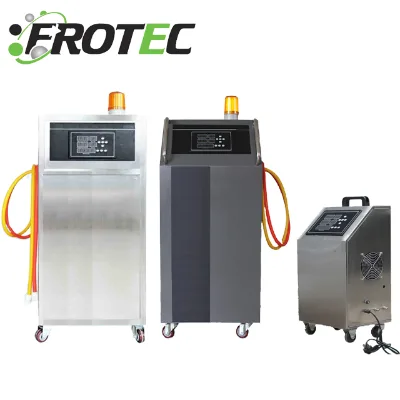
High Quality air Feeding Ozone Therapy Machine /ozone Generator Water Ozonator
$91.66 - $101.85
MOQ: 1 pieces

Comprehensive Sourcing Guide
Water Cooled Ozone Generator Sourcing Guide
Sourcing industrial-grade water-cooled ozone generators requires a disciplined approach to technical verification and supplier qualification. These systems are critical for applications ranging from wastewater treatment and swimming pool disinfection to agricultural preservation and livestock breeding. The core value proposition lies in the ability to generate high-concentration ozone consistently, which is essential for effective oxidation and sterilization in large-scale operations. Buyers must navigate a market where specifications vary significantly, making it imperative to distinguish between standard off-the-shelf units and customizable solutions tailored to specific operational demands.
The procurement process involves evaluating multiple dimensions, including power consumption, gas feed requirements, and cooling efficiency. Unlike air-cooled alternatives, water-cooled systems offer superior stability for continuous high-output operations, reducing the risk of thermal degradation of the ozone output. However, this advantage introduces complexity regarding water quality management and infrastructure requirements. Procurement teams must therefore assess not only the generator’s performance metrics but also the compatibility of the surrounding utility infrastructure to ensure seamless integration and long-term reliability.
Product Scope and Observed Listing Signals
The observed market for water-cooled ozone generators reveals a wide spectrum of capabilities, with listed prices ranging from approximately $1 to $130,000 USD. This broad range reflects the diversity in production capacity, material construction, and intended application scale. Minimum Order Quantities (MOQ) are typically low, often ranging from 1 to 5 units, indicating that suppliers are accustomed to fulfilling individual project-based orders rather than bulk commodity shipments. Buyers should interpret these price variations as indicators of differing core component quality, such as the type of dielectric material used, and the level of customization available, rather than assuming uniform performance across all price points.
Product listings frequently highlight specific technical attributes that define the generator’s suitability for particular tasks. For instance, some units are specified with an ozone production rate of 200 g/h and a concentration of 100-120 mg/L, powered by a 2 kW energy consumption rate. Other models may focus on higher productivity, such as 30 kg/h, utilizing corona discharge technology with stainless steel 316L construction. The presence of core components like pressure vessels and PLCs suggests a level of automation and safety integration that is crucial for industrial environments. Buyers must carefully cross-reference these observed signals with their actual operational needs, as not every listed product will satisfy every potential application requirement.
Technical Specifications to Verify
Verifying the core technical specifications is the most critical step in ensuring the generator meets operational demands. Key parameters to validate include the ozone production rate, concentration levels, and power consumption per hour. For example, a unit producing 200 g/h of ozone with a concentration of 100-120 mg/L requires a specific oxygen flow rate, observed at 2.05 m³/h, and consumes approximately 2 kW of power. Buyers must ensure that their facility can provide the necessary feed gas type, such as pure oxygen, and that the electrical infrastructure supports the required voltage, which is often 380V for industrial models. Discrepancies in these fundamental metrics can lead to significant inefficiencies or failure to meet disinfection targets.
Cooling and pressure dynamics are equally vital for the longevity and safety of the system. Water-cooled generators require a steady supply of cooling water, with observed flow rates around 0.4 m³/h and inlet pressures of 0.2 MPa. The cooling water temperature must be maintained within a specific range, typically 5~28°C, to prevent overheating and maintain ozone stability. Additionally, the ozone outlet pressure, observed at 0.095 MPa, must be compatible with the downstream application system. Buyers should also verify the physical dimensions and weight of the unit, as some models weigh up to 9.4 tons and require specific floor loading capacity and spatial clearance for installation and maintenance access.
Compliance and Safety Documentation
Compliance with international safety and quality standards is non-negotiable for industrial equipment. Buyers should insist on certifications such as CE, which indicates conformity with health, safety, and environmental protection standards for products sold within the European Economic Area. While some listings mention ISO certification, buyers must verify the specific ISO standard applicable to the manufacturing process and quality management system, rather than accepting generic claims. The presence of these certifications provides a baseline assurance that the manufacturer adheres to recognized regulatory frameworks, reducing legal and operational risks associated with equipment deployment.
Safety documentation must also cover the operational hazards inherent to ozone generation. Ozone is a potent oxidant and respiratory irritant, requiring robust containment and monitoring systems. Buyers should request detailed manuals that outline safe handling procedures, leak detection protocols, and emergency shutdown mechanisms. The use of materials like stainless steel 316L and glass tube dielectrics suggests a design focused on corrosion resistance and electrical insulation, but this must be corroborated by material test reports. Ensuring that the supplier provides comprehensive safety guidelines and that the equipment includes necessary safety interlocks is essential for protecting personnel and maintaining a compliant work environment.
Cost Drivers and Commercial Terms
Understanding the factors that drive cost is essential for effective budgeting and negotiation. The primary cost drivers include the ozone production capacity, the quality of core components like the PLC and pressure vessel, and the material of construction, such as 316L stainless steel. Customization options, such as specific dimensions or integrated control systems, can significantly increase the base price. Buyers should also consider the packaging requirements, which may range from simple bags to robust plywood cases for standard exporting, as this impacts shipping costs and the risk of transit damage. A thorough understanding of these variables allows for more accurate total cost of ownership calculations.
Commercial terms should be clearly defined to mitigate financial and logistical risks. Buyers must clarify the warranty period, after-sales service provisions, and the availability of free spare parts. Some suppliers offer video outgoing-inspection services, which can provide transparency into the manufacturing and testing process before shipment. It is also crucial to agree on the delivery terms, including lead times and responsibility for customs clearance, especially when sourcing from international locations like Weifang, Shandong, China. Clear communication regarding these terms ensures that there are no hidden costs or unexpected delays that could disrupt project timelines.
Supplier Qualification and Quality Control
Supplier qualification extends beyond checking certifications to evaluating the manufacturer’s technical capability and quality control processes. Buyers should verify the supplier’s experience in producing ozone generators for specific industries, such as wastewater treatment or agriculture. Requesting references or case studies can provide insight into the supplier’s reliability and the real-world performance of their equipment. Additionally, assessing the supplier’s ability to provide customization, as indicated by their willingness to adapt to specific customer requirements, is a strong indicator of their engineering competence and flexibility.
Quality control measures should be explicitly outlined in the procurement agreement. Buyers should insist on pre-shipment inspections, which may include video documentation of the testing process. The inclusion of core components like PLCs and pressure vessels suggests that the supplier has access to high-quality sub-components, but buyers should verify the sourcing and testing of these parts. Establishing a clear protocol for handling defects or performance failures during the warranty period is also essential. A supplier that proactively offers video outgoing-inspection and detailed quality reports demonstrates a commitment to transparency and customer satisfaction.
Long-Term Procurement Checks
Long-term procurement success depends on establishing a sustainable relationship with the supplier and ensuring ongoing support. Buyers should evaluate the supplier’s capacity for providing continuous technical support and maintenance services. The availability of free spare parts is a significant advantage, as it reduces downtime and maintenance costs over the life of the equipment. Additionally, buyers should monitor the supplier’s ability to adapt to evolving industry standards and technological advancements, ensuring that their equipment remains relevant and efficient over time.
Regular performance reviews and feedback loops are crucial for maintaining high standards. Buyers should document the operational performance of the ozone generators, including any issues related to cooling efficiency, ozone concentration stability, or material degradation. This data can be used to negotiate better terms, request improvements, or inform future purchasing decisions. By maintaining a proactive approach to supplier management and equipment monitoring, buyers can maximize the return on investment and ensure the reliable operation of their water-cooled ozone generator systems.
FAQs
What is the ozone production capacity of this generator?
The unit produces 200 grams of ozone per hour with a concentration of 100-120 mg/L. This output supports industrial applications like wastewater treatment and livestock breeding. The system operates at 380V and consumes 2 kW/h. It includes a pressure vessel and PLC for stable performance. The weight is 450 kg for the standard model.
Can the ozone generator be customized for specific needs?
Yes, customization is available for this equipment. You can adjust dimensions to fit specific spaces, with options like 1160*700*1700 mm or larger configurations. The standard export packing ensures safe transport. The product origin is Weifang, China, allowing for tailored industrial solutions. Contact suppliers for specific dimensional requirements.
What certifications does the Water Cooled Ozone Generator have?
The generator holds CE and ISO certifications. These standards ensure compliance with international safety and quality requirements. The device uses corona discharge technology for efficient ozone generation. It is suitable for hospitals, agriculture, and public places. Verify specific certification documents with the manufacturer before purchase.
How is the cooling system managed in this unit?
The system uses water cooling to maintain optimal operating temperatures. Cooling water inlet pressure should be 0.2 MPa, with a flow rate of 0.4 m³/h. The temperature range is 5-28 degrees Celsius. This method ensures stable ozone output and extends component life. The dielectric material is a glass tube for durability.
What are the main applications for this ozone generator?
It is used for industrial disinfection, fruit preservation, and wastewater treatment. Applications also include livestock breeding, swimming pools, and public places. The gas feed type is oxygen source for high purity. The productivity is 30 kg/h for specific models. It serves home, hospital, and agricultural sectors effectively.
What is the minimum order quantity for this product?
The minimum order quantity ranges from 1 to 5 units. This flexibility allows small businesses to test the equipment. Prices vary from 1 to 130,000 USD depending on specifications. Suppliers offer free spare parts for after-sales service. Check with vendors for bulk pricing and lead times.