Source Water-Cooled Single Cylinder Diesel Engine for Pumps, Generators, and Construction
Compare 30 available options for the water-cooled single cylinder diesel engine designed for pumps, generators, and construction equipment. Buyers can evaluate specifications like stroke, cooling methods, and ignition modes to find suitable units for land use applications.
Key considerations
Products List


China Low Speed Water Cooling Diesel Engine for Engineering Machinery
$5600.00 - $8000.00
MOQ: 1 Pieces


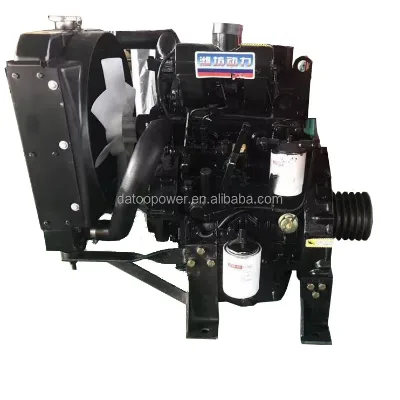


6 Cylinders Water Cooled Diesel Engine for Generator Diesel Generator Engine
$1900.00 - $2800.00
MOQ: 1 Pieces


Single Cylinder Water-Cooled Diesel Engine for Tractor/Generator/Water Pump
$280.00 - $300.00
MOQ: 1 Pieces


38HP Small Diesel Engine Water Cooled Two Cylinder Diesel Engine for Sale
$760.00 - $800.00
MOQ: 1 Pieces


Comprehensive Sourcing Guide
Strategic Sourcing Guide for Water-Cooled Single Cylinder Diesel Engines
The global demand for compact, reliable power generation and mechanical drive systems continues to drive the procurement of water-cooled single cylinder diesel engines. These units are distinct from their air-cooled counterparts due to their superior thermal management capabilities, making them ideal for applications requiring sustained high-load operation. For procurement professionals, navigating the market requires a disciplined approach to verifying technical attributes, understanding the specific constraints of the supply chain, and ensuring that the selected unit aligns with the intended operational environment. This guide synthesizes available market data to provide a framework for sourcing these engines without relying on unverified claims or speculative pricing models.
Technical Architecture and Operational Specifications
Understanding the fundamental architecture of a water-cooled single cylinder diesel engine is the first step in defining procurement requirements. The core distinction lies in the cooling mechanism; unlike air-cooled variants that rely on fins and airflow, these engines utilize a liquid coolant circulating through a jacket surrounding the cylinder. This design allows for more consistent temperature regulation, which is critical for maintaining efficiency and preventing thermal stress during continuous operation.
Market observations indicate that the piston movement in these engines is predominantly reciprocating, a standard configuration that converts linear motion into rotational output. The intake pressure impulse can vary significantly between suppliers, ranging from naturally aspirated configurations to supercharged variants. Buyers must verify the specific intake method required for their application, as supercharged units offer higher power density but may require more complex auxiliary systems. Furthermore, the ignition mode for diesel engines is universally compression-ignition, where fuel auto-ignites due to the heat generated by compressing air within the cylinder. This eliminates the need for spark plugs or external ignition systems, contributing to the robustness of the unit.
The physical arrangement of the cylinder is another critical specification. While many single-cylinder engines are designed in a vertical orientation, some configurations may utilize an L-shaped cylinder arrangement, which can influence the mounting footprint and center of gravity. The number of strokes is a frequent point of confusion; while the majority of modern diesel engines are four-stroke, the market data also reflects the existence of two-stroke variants. Procurement teams must explicitly confirm the stroke count, as this dictates the firing frequency, maintenance intervals, and fuel consumption characteristics. The speed rating is equally variable, with options ranging from low-speed applications suitable for heavy machinery to high-speed (HSS) configurations intended for power generation or light industrial use.
Compliance, Certification, and Standard Verification
In the B2B procurement landscape, compliance is not merely a formality but a prerequisite for market access and operational safety. When sourcing water-cooled single cylinder diesel engines, buyers must rigorously verify the standards to which the manufacturer claims adherence. The supply chain data highlights the presence of ISO CB standards, which often relate to specific component certifications or quality management systems. However, the mere mention of a standard does not guarantee that every unit in a catalog meets that specific threshold.
Buyers should request documentation proving that the specific model number, such as the BF6M1015 or ZS1105 series, has been tested against the claimed standard. It is also essential to verify the origin of the product, as regional manufacturing hubs like Jiangshu, China, or other domestic Chinese locations may have different regulatory baselines. The standard "105*115" observed in some listings likely refers to bore and stroke dimensions or a specific internal model designation rather than a universal safety certification. Therefore, procurement professionals must not assume that a listed standard applies to the entire product line without explicit confirmation from the supplier.
Additionally, the "Land Use" condition and "Ordinary" land use type suggest that these engines are designed for general-purpose applications rather than specialized environments like marine or extreme cold. This classification impacts the necessary certifications; for instance, if the engine is intended for use in a regulated industrial zone, additional emissions or noise certifications may be required beyond the basic ISO CB reference. Buyers should verify if the engine meets local environmental regulations for the destination country, as these often supersede general manufacturer claims.
Cost Drivers and Pricing Dynamics
The pricing of water-cooled single cylinder diesel engines is influenced by a complex interplay of factors, including the cooling system complexity, the specific model series, and the level of customization offered. The observed price range in the market spans from $5 to $8,000, a vast disparity that reflects the difference between basic raw components and fully assembled, high-performance units. A unit priced at the lower end of this spectrum is likely a bare engine block or a minimal configuration, whereas the higher price points typically include the cooling system, mounting hardware, and potentially an integrated generator set if the product is marketed as a "Self-Starting Diesel Generator."
Customization is a significant cost driver. The availability of customization options allows buyers to tailor the engine to specific voltage requirements, shaft orientations, or mounting configurations. However, each customization request adds to the production time and unit cost. The packing method also influences the final landed cost; engines shipped in wooden cases or pallets incur higher logistics costs compared to those in standard cartons, but they offer superior protection during transit.
Furthermore, the fuel type is a fixed attribute for diesel engines, but the efficiency of the fuel system and the quality of the injection components can drive price variations. High-speed variants generally command a premium over low-speed models due to the tighter tolerances required for their operation. Buyers should analyze the total cost of ownership, considering that a higher initial investment in a water-cooled unit with superior cooling efficiency may result in lower maintenance costs and longer service life compared to cheaper, less efficient alternatives.
Typical Applications and Usage Scenarios
The versatility of water-cooled single cylinder diesel engines makes them suitable for a wide array of applications, primarily driven by their ability to handle continuous loads. The "Common Units" usage classification suggests these engines are designed for general industrial and agricultural purposes. In the agricultural sector, these engines are frequently employed in irrigation pumps, where the water-cooling system prevents overheating during long hours of operation in hot climates.
In the construction and infrastructure sectors, these engines power portable light towers, small concrete mixers, and welding machines. The "Fixed" installation method indicates that many of these units are designed to be mounted permanently on a chassis or frame, rather than being handheld. This is particularly relevant for generator sets where the engine drives an alternator to produce AC three-phase power. The "Self-Starting" capability is a critical feature for these applications, ensuring that the power source is available immediately without manual intervention.
The "Ordinary" land use type implies that these engines are not specifically rated for hazardous or explosive environments. Therefore, they are best suited for standard outdoor or indoor industrial settings. The single-cylinder design, while compact, may produce higher vibration levels compared to multi-cylinder engines, which necessitates the use of vibration dampening mounts in sensitive applications. Buyers should assess the specific operational environment to ensure that the engine's vibration profile and noise output are compatible with the site requirements.
Supplier Evaluation and Quality Assurance
Evaluating suppliers for water-cooled single cylinder diesel engines requires a focus on transparency and technical capability. The market data shows a variety of model numbers, including the ZS1100, ZS1105, ZS1110, and R180 series, as well as the BF6M1015. The presence of multiple model numbers from a single supplier, such as "CHANGZHOU," suggests a broad manufacturing capability. However, buyers must verify that the specific model they are ordering matches the technical specifications they require, particularly regarding the cylinder arrangement and stroke count.
Quality control should be a central part of the supplier evaluation process. Buyers should request evidence of the manufacturing process, including how the water-cooling jackets are tested for leaks and how the compression-ignition system is calibrated. The "Small Orders: Accepted" attribute indicates flexibility in order volume, which can be beneficial for testing or small-scale projects, but it does not necessarily imply a lower quality threshold. Conversely, the "MOQ" range of 1-10 suggests that suppliers are willing to accommodate small batch sizes, which is advantageous for prototyping.
When assessing a supplier, procurement professionals should look for consistency in their product descriptions. Discrepancies in the listed attributes, such as conflicting information about the number of strokes or the cooling method, should be treated as red flags. A reputable supplier will provide clear, consistent data sheets that align with the physical product. Additionally, the "Product Type" classification as a "Diesel Engine" or "Combustion Engine" should be consistent with the intended use, ensuring that the supplier is not misrepresenting a generic component as a specialized unit.
Long-Term Procurement and Maintenance Considerations
Sourcing a water-cooled single cylinder diesel engine is a long-term investment that requires careful consideration of maintenance and lifecycle management. The water-cooling system introduces additional maintenance requirements compared to air-cooled engines, including the need to monitor coolant levels, check for leaks, and ensure the radiator or heat exchanger remains free of debris. The "Reciprocating" and "Rotary" piston movement options listed in the market data highlight the need to verify the specific mechanism, as this affects the availability of spare parts and the complexity of repairs.
The "Electric start" feature is a standard convenience, but the reliability of the starting system, including the battery and starter motor, should be verified. In remote or off-grid applications, the availability of spare parts for the starting system and the cooling components is crucial. The "Wooden Case" or "Carton" packing options should be evaluated based on the shipping distance and the potential for environmental damage during transit.
Finally, buyers should consider the scalability of their procurement strategy. If the initial order is small, the supplier should be capable of scaling production to meet future demand without compromising quality. The "Customization" availability suggests that the supplier can adapt to changing requirements, but this should be formalized in the contract to ensure that future orders maintain the same technical specifications. By focusing on these long-term factors, buyers can secure a reliable supply chain for their water-cooled single cylinder diesel engine needs.
Comparative Analysis of Key Specifications
To assist in the decision-making process, the following table summarizes the key technical attributes observed in the market data. This comparison highlights the variability in specifications that buyers must navigate when selecting a specific unit.
| Attribute | Observed Variations | Procurement Verification Point |
|---|---|---|
| Stroke Count | Four Stroke, Two-Stroke | Confirm the specific cycle required for the application. |
| Cooling Method | Water Cooling, Air-Cooled/Water-cooled | Verify the cooling jacket design and radiator compatibility. |
| Cylinder Count | Single-Cylinder, Multi-Cylinder, 6-Cylinder | Ensure the unit is strictly single-cylinder as per requirement. |
| Intake Pressure | Naturally Aspirated, Supercharged | Check for boost requirements and exhaust system design. |
| Speed Rating | HSS, Low Speed, Speed | Match the RPM to the driven equipment's requirements. |
| Ignition Mode | Compression-Ignition, Electric Ignition | Confirm diesel compression ignition is the standard. |
| Piston Movement | Reciprocating, Rotary | Verify the mechanical linkage and vibration characteristics. |
| Origin | Jiangshu, China, China | Check for regional compliance and shipping logistics. |
| Standard | ISO CB, 105*115 | Request specific test reports for the claimed standard. |
This table serves as a checklist for buyers to ensure that all critical specifications are explicitly defined in the purchase order, minimizing the risk of receiving a unit that does not meet the operational needs of the project. By adhering to these verification steps, procurement professionals can effectively navigate the complexities of the water-cooled single cylinder diesel engine market.
FAQs
What is the ignition mode for water-cooled single cylinder diesel engines?
The ignition mode is compression-ignition, where fuel auto-ignites due to compressed air heat. This design eliminates spark plugs, ensuring robust operation for standard land use applications without external ignition systems.
Which cooling methods are available for these diesel engines?
Water cooling is the primary method for superior thermal management during sustained high-load operation. Some listings also indicate air-cooled options, but water-cooled variants are preferred for consistent temperature regulation in continuous use.
Can I find engines with a four-stroke cycle?
Yes, four-stroke cycles are available and are the standard for modern diesel engines. Buyers must verify this attribute explicitly as some market data also reflects two-stroke variants, which affect maintenance intervals and fuel consumption.
What is the typical price range for these units?
The observed price range spans from 5 to 8000 USD depending on configuration. Lower prices often reflect bare engine blocks, while higher costs include fully assembled units with cooling systems and generator integration.
Which certifications should I verify for these engines?
Buyers should verify adherence to ISO CB standards and specific model testing documentation. The standard 105*115 may refer to dimensions rather than safety certification, so explicit confirmation for the specific model is required.
What is the minimum order quantity for these engines?
The minimum order quantity ranges from 1 to 10 units, allowing for small batch sizes. This flexibility supports prototyping and small-scale projects while accommodating suppliers who accept small orders.