Source Waterproof Aluminum Lantern Bulb Rivets for Machinery, Furniture, Building
Find 30 verified options for Waterproof Aluminum Lantern Bulb Rivets suitable for machinery, furniture, and building applications. Buyers can compare materials, head types, and delivery times from suppliers in Jiangsu, China.
Key considerations
Products List


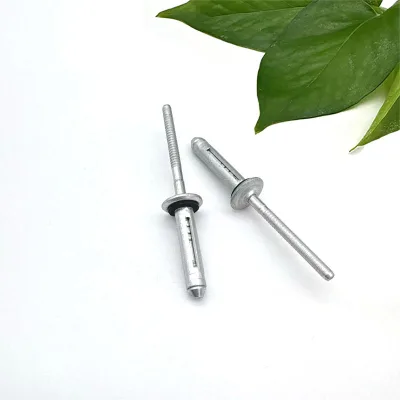
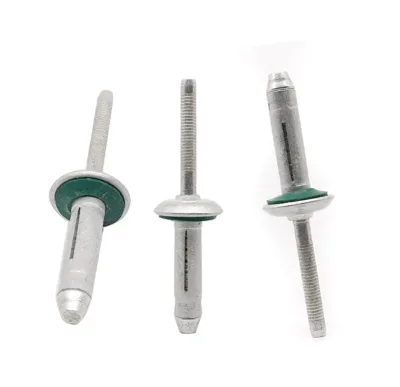
Aluminum Lantern Bulb Tite Rivets Aluminum Waterproof Tri-Fold Automotive Rivets
$0.10 - $0.18
MOQ: 10000 Pieces


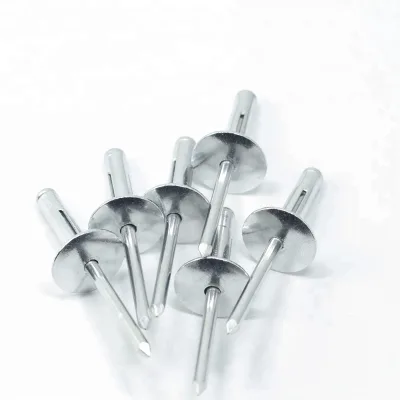
Aluminium Bulb Tite Waterproof Tri Fold Lantern Blind Rivet Bulbex Blind Rivets
$0.12 - $0.18
MOQ: 10000 Pieces


Comprehensive Sourcing Guide
Strategic Sourcing Guide for Waterproof Aluminum Lantern Bulb Rivets
Understanding Product Specifications and Technical Variants
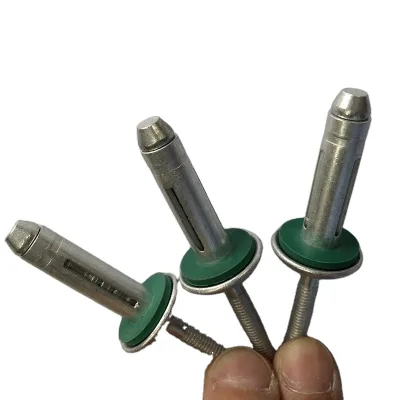
When sourcing Waterproof Aluminum Lantern Bulb Rivets, buyers must first navigate a complex landscape of technical specifications that define the product's functionality and compatibility. The core product, often described as "Waterproof Lantern Bulb Blind Rivets" or "Bulb-Tite Rivets," is distinct from standard blind rivets due to its unique expansion mechanism. Unlike traditional rivets that expand against a single hole wall, these rivets feature a bulbous head that expands within the material to create a watertight seal, making them ideal for applications requiring high environmental resistance.
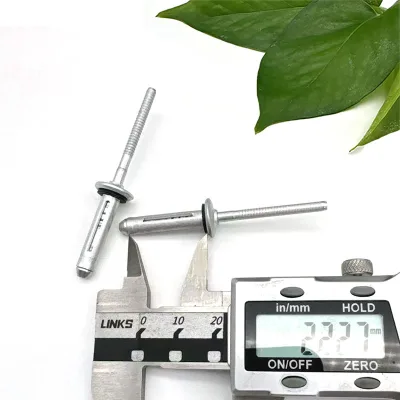
The available material composition is a primary technical differentiator. Suppliers typically offer options in High Strength Steel, Stainless Steel, and Carbon Steel, with specific listings highlighting Aluminum 5056 as a grade for the rivet body itself. This aluminum variant is particularly relevant for the "lantern" style, where weight reduction and corrosion resistance are paramount. The size range for these fasteners is extensive, with observed specifications spanning from M3 up to M55, and in some industrial contexts extending to M100. Buyers should verify the exact diameter requirements against the specific application, as the standard diameters observed in the market include 5.2mm, 6.4mm, and 7.5mm.
The head type and groove configuration further dictate the installation method and torque requirements. The product catalog presents a variety of head types, including Dome Head, Round Head, Countersunk Head, and Flat Head. For the specific "lantern" or "tri-fold" variants, the Dome Head is frequently observed. The drive groove, which engages the installation tool, varies significantly, with options such as Triangle, Cross, Flower, and Special Sha. Selecting the correct groove is critical to prevent tool slippage during the high-force expansion phase required to form the bulb.
| Specification Category | Observed Variants | Application Implication |
|---|---|---|
| Material Grade | Aluminum 5056, High Strength Steel, Stainless Steel, Carbon Steel | Determines corrosion resistance and structural load capacity. |
| Size Range | M3-M55, M3-M100, Specific diameters 5.2/6.4/7.5mm | Must match the substrate thickness and hole diameter. |
| Head Type | Dome, Round, Countersunk, Flat | Affects aerodynamics, clearance, and aesthetic finish. |
| Groove Type | Triangle, Cross, Flower, Special Sha | Dictates the specific driver tool required for installation. |
| Surface Finish | Hot Galvanizing, Black, Color-Zinc, Blue-White Zinc | Essential for environmental protection and chemical resistance. |
Compliance and Certification Verification
In the global fastener market, compliance is not merely a formality but a critical risk mitigation strategy. The supply chain for Waterproof Aluminum Lantern Bulb Rivets often cites a robust array of certifications, though buyers must verify these claims against current documentation. The most frequently observed certifications include ISO, GS, RoHS, and CE. These certifications indicate adherence to international quality management systems, safety standards, and restrictions on hazardous substances.
Specifically, the RoHS (Restriction of Hazardous Substances) directive is crucial for products destined for the European market or electronics applications, ensuring the rivets do not contain lead, mercury, or other restricted materials. Similarly, CE marking suggests conformity with health, safety, and environmental protection standards for products sold within the European Economic Area. While ISO certification is a common claim, buyers should request the specific standard number (e.g., ISO 9001) to confirm the scope of the supplier's quality management system.
It is important to note that while some product listings mention "SGS" and "ROHS" under product standards, these are often treated as observations rather than guaranteed attributes for every unit. Therefore, procurement teams must treat these as claims to be validated through third-party testing reports or valid certificates of conformity provided by the supplier. The origin of the products is frequently listed as Jiangsu, China, a major manufacturing hub, which implies a specific regulatory environment that buyers should be aware of when auditing supply chain compliance.
Cost Drivers and Pricing Dynamics
The pricing structure for Waterproof Aluminum Lantern Bulb Rivets is influenced by several volatile factors, primarily material costs, order volume, and customization requirements. The observed price range in the market is quite broad, spanning from $0.01 to $0.50 per unit. This wide variance is not indicative of a single product tier but rather reflects differences in material grade, size, and order quantity. A unit priced at $0.01 likely represents a standard, high-volume purchase of a smaller diameter carbon steel rivet, whereas a price near $0.50 could correspond to a specialized, larger diameter stainless steel or aluminum 5056 unit with custom surface treatments.
Material selection is the most significant cost driver. Aluminum 5056, while offering excellent corrosion resistance and lightweight properties, generally commands a higher price point than carbon steel. Similarly, the choice of surface finish impacts cost; processes like Hot Galvanizing or specialized Color-Zinc treatments add steps to the manufacturing process, increasing the unit price compared to a standard black or uncoated finish.
Order volume plays a decisive role in the final landed cost. The Minimum Order Quantity (MOQ) observed in the market ranges from as low as 1 unit to as high as 100,000 units. Suppliers often employ tiered pricing models where the unit cost decreases significantly as the order volume increases. For instance, an MOQ of 10,000 pieces is a common threshold for specialized items like the "Tri Fold blind rivet," suggesting that smaller buyers may face a premium per unit or be unable to access certain custom configurations.
Customization is another factor that elevates costs. While the product line offers "Customized Design" services, any deviation from standard dimensions, head types, or materials introduces non-recurring engineering (NRE) costs and potentially higher tooling expenses. Buyers should balance the need for specific performance characteristics against the budgetary impact of customization.
Typical Applications and Industry Usage
The versatility of Waterproof Aluminum Lantern Bulb Rivets makes them suitable for a diverse array of industrial applications. The primary use cases identified in the market include Machinery, Chemical Industry, Environmental engineering, and Building construction. The "lantern" or "bulb" design is specifically engineered to provide a seal against moisture and dust, making it indispensable in environments where standard rivets would fail due to corrosion or leakage.
In the machinery sector, these rivets are used to assemble components that require high vibration resistance and a secure, sealed connection. The chemical industry relies on them for equipment housing and piping systems where exposure to corrosive agents is a constant risk, necessitating the use of stainless steel or high-grade aluminum variants. Environmental applications often involve outdoor infrastructure, such as signage, lighting fixtures, and enclosures, where the "Waterproof Lantern" designation is particularly relevant.
The construction and building sectors utilize these fasteners for facade assembly, roofing, and structural connections where weatherproofing is a priority. The availability of various colors, including Silver, White, Black, Green, Yellow, Brown, and Red, allows for aesthetic integration into architectural designs without compromising the structural integrity of the joint. Furthermore, the "Tri-fold" or "Tri-Lock" variants are specifically noted for automotive applications, suggesting their use in vehicle bodies or components that require both strength and sealing capabilities.
Supplier Evaluation and Origin Considerations
Evaluating suppliers for Waterproof Aluminum Lantern Bulb Rivets requires a focus on origin, capacity, and logistical reliability. The majority of the supply base is concentrated in Jiangsu, China, a region known for its robust manufacturing infrastructure and export capabilities. The "Global" export market designation indicates that these suppliers are experienced in international trade, but buyers must still conduct due diligence regarding the specific factory's capabilities.
Key evaluation criteria should include the supplier's ability to meet the observed MOQ ranges, which vary widely. A supplier claiming an MOQ of 1 unit may lack the economies of scale for large orders, while one requiring 100,000 units may be unsuitable for prototyping or small-batch production. Buyers should also assess the supplier's lead time capabilities. Observed delivery times range from 5 to 20 days, a relatively short window that suggests efficient production cycles, but this can be impacted by order volume and customization complexity.
Packaging is another critical factor in supplier evaluation. The market observes several packaging standards, including 251625cm Carton Boxes, Polywood Boxes, and combinations of Cartons with Wooden Pallets and Plastic Bags. Proper packaging is essential to prevent damage during transit, especially for rivets that may be sensitive to moisture or physical deformation. Buyers should verify that the packaging method aligns with their storage and handling requirements.
Quality Control and Performance Assurance
Ensuring the quality of Waterproof Aluminum Lantern Bulb Rivets is paramount, as failure in these fasteners can lead to catastrophic structural or environmental issues. The market lists "Top Quality" as a common attribute, but this is a subjective claim that must be substantiated through objective quality control measures. Buyers should request detailed inspection reports that cover dimensional accuracy, tensile strength, and peel strength.
The surface finish is a critical quality indicator. Processes such as Hot Galvanizing and Color-Zinc are listed as available options, and the uniformity and thickness of these coatings are essential for long-term corrosion resistance. Buyers should verify that the surface treatment meets the specific requirements of the application environment, particularly for chemical or outdoor uses.
Performance claims such as "Eco-Friendly" and "Waterproof" should be backed by test data. While the product descriptions highlight these features, the actual performance depends on the manufacturing process and material integrity. For instance, the "Tri-fold" mechanism must expand correctly to form the bulb without cracking the rivet body. Buyers should consider requesting sample testing to validate the expansion ratio and the seal integrity under simulated environmental conditions.
Long-Term Procurement and Supply Chain Stability
For long-term procurement, stability and scalability are as important as the initial product specifications. The observed lead times of 5-20 days indicate a responsive supply chain, but buyers must plan for potential disruptions, especially when dealing with international shipping from Jiangsu, China. Establishing a relationship with a supplier who can consistently meet the 15-20 day delivery window for standard orders and accommodate expedited requests for critical projects is essential.
Sustainability is increasingly becoming a procurement priority. The "Eco-Friendly" attribute and the availability of materials like Aluminum 5056 align with green manufacturing trends. Buyers should inquire about the supplier's environmental management systems and their ability to provide recycled or sustainably sourced materials.
Finally, the flexibility of the supplier to handle custom orders is a key long-term consideration. The availability of "Customized Design" services allows for adaptation to evolving product designs. However, buyers should establish clear communication channels and define the scope of customization early in the relationship to avoid delays. By focusing on these strategic elements, procurement teams can secure a reliable supply of high-performance Waterproof Aluminum Lantern Bulb Rivets that meet both current and future operational needs.
FAQs
What materials are available for Waterproof Aluminum Lantern Bulb Rivets?
Available materials include High Strength Steel, Stainless Steel, Carbon Steel, and Aluminum 5056. Buyers can select specific grades based on corrosion resistance and structural load requirements for their machinery or environmental applications.
Which head types and groove configurations are offered for these rivets?
Common head types include Dome, Round, Countersunk, and Flat heads. Drive grooves vary to include Triangle, Cross, Flower, and Special Sha configurations, ensuring compatibility with specific installation tools and torque requirements.
Can suppliers provide customized designs for these aluminum rivets?
Yes, customized design services are available for these rivets. Buyers can request specific dimensions, materials, or surface finishes like Hot Galvanizing, though customization may affect lead times and minimum order quantities.
What is the typical delivery time for these rivets from China?
The typical delivery time ranges from 5 to 20 days depending on order volume and customization. Suppliers located in Jiangsu, China, generally offer this lead time for standard and specialized orders.
Which certifications do these rivets typically meet for global export?
Products often meet ISO, GS, RoHS, and CE certifications. These standards ensure compliance with international quality management systems and restrictions on hazardous substances for global markets.
How are these rivets packaged for international shipping?
Packaging options include 25*16*25cm carton boxes, polywood boxes, or cartons with wooden pallets and plastic bags. Proper packaging prevents damage during transit and protects against moisture for environmental applications.