Source Waterproof Knitted Minky Fabric for garments, bedding, and toys
Compare 30 listings of Waterproof Knitted Minky Fabric suitable for garments, bedding, and toys. Buyers can evaluate specifications like weight, certifications, and supply terms to find the right supplier.
Key considerations
Products List
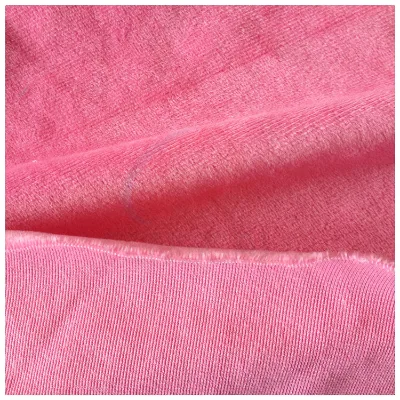

100% Polyester Solid Color Minky Plush Plain Knitted Double Side Brush Fabric
$1.60 - $1.68
MOQ: 1000 Meters


100% Recycled Polyester Plain Waterproof PU Milky Breathable Coated Fabric
$2.75 - $3.05
MOQ: 1000 Meters


Comprehensive Sourcing Guide
Sourcing Guide for Waterproof Knitted Minky Fabric
Understanding Technical Specifications and Material Composition
When sourcing Waterproof Knitted Minky Fabric, the primary objective is to identify materials that balance softness with functional durability. The core of this textile is typically a 100% polyester composition, often utilizing filament fiber types to achieve the desired plush texture. Buyers must verify the yarn count, which in verified product data appears as 55D+75D/144F, indicating a specific blend of filament deniers that contributes to the fabric's density and hand feel. The knitting method is a critical differentiator; high-quality minky is often warp-knitted, providing superior dimensional stability compared to weft-knitted alternatives. This structural integrity is essential for applications requiring four-way stretch, allowing the fabric to move with the wearer or product without losing its shape.
The weight of the fabric is a significant variable in procurement. Observed data suggests a weight range of 180 to 240 grams per square meter (gsm), classified as medium weight. This density is sufficient for heavy-duty applications like bedding and upholstery while remaining manageable for garment construction. The surface finish is characterized by a short hair texture, often described as brushed, which creates the signature softness associated with minky. However, the "waterproof" attribute requires careful scrutiny. While some product listings claim waterproof features alongside anti-static and flame-retardant properties, buyers should treat these as specific product attributes rather than universal guarantees for all minky fabrics. The standard width is typically observed around 58 to 60 inches, or approximately 150 centimeters, though adjustable widths are common in make-to-order scenarios.
Compliance, Certification, and Safety Standards
In the B2B textile market, compliance is not merely a formality but a prerequisite for market access, particularly in regions with strict safety regulations. When evaluating potential suppliers, the presence of recognized certifications is a primary indicator of quality assurance. Verified product data highlights several key certifications, including EN standards, Oeko-Tex Standard 100, and RoHS compliance. These certifications address different aspects of safety: Oeko-Tex ensures the absence of harmful substances, RoHS addresses restrictions on hazardous materials, and EN standards often relate to broader European safety requirements. Additionally, third-party testing bodies such as Intertek, SGS, and BV are frequently cited as the entities performing these verifications.
Beyond material safety, social and environmental compliance is increasingly vital. Certifications like BSCI (Business Social Compliance Initiative) and ISO 9000 indicate that the supplier adheres to specific labor standards and quality management systems. Buyers should request current, valid certificates rather than relying on general claims. It is important to note that while "Oeko-Tex" is a recognized standard, the specific version (e.g., Standard 100) must be confirmed. Furthermore, color fastness is a critical performance metric; observed data indicates a rating of 3-4 Grade, which is a moderate standard. For high-end applications, buyers may need to verify if the supplier can meet higher color fastness grades, as this affects the longevity of the product's appearance under washing and light exposure. The dyeing process is also a factor; "environment dyed" processes suggest a commitment to reduced environmental impact, which aligns with modern sustainability goals.
Cost Drivers and Pricing Structures
The pricing of Waterproof Knitted Minky Fabric is influenced by a complex interplay of material costs, production complexity, and order volume. The base cost is driven by the price of 100% polyester filament yarn, which fluctuates with global oil prices. However, the processing costs are often more significant. The warp knitting process, combined with the brushing and finishing treatments required to achieve the short hair texture and waterproof properties, adds layers of manufacturing expense. The "make-to-order" supply type further impacts pricing, as it often involves higher setup costs compared to stock items.
Minimum Order Quantity (MOQ) is a major cost driver in this sector. Data indicates an MOQ range of 200 to 2000 units, with specific constraints such as 200 kilograms per color or 500 to 1200 meters per color. These thresholds mean that small buyers may face a higher effective cost per unit due to the inability to spread fixed costs over large volumes. The packaging requirements also contribute to the final landed cost. Standard packing involves inner plastic bags and outer woven bags, with specific load capacities for containers (e.g., 9,000 kg for a 20-inch GP container). Non-standard packaging, often required for custom branding, can increase logistics expenses. Buyers should also consider the "Selling Units" structure; if the supplier sells in single items or specific roll configurations, the pricing model may differ from bulk roll pricing.
Typical Applications and Functional Versatility
The versatility of Waterproof Knitted Minky Fabric makes it suitable for a diverse range of industries. The primary application areas include garment construction, home textiles, and specialized lining. In the garment sector, the fabric is used for dresses, trousers, and shoes, where the four-way stretch and soft hand feel are highly valued. The waterproof and flame-retardant features make it particularly suitable for children's clothing and outdoor wear. In the home textile market, the fabric is extensively used for bedding, blankets, and sofa covers. The medium weight and plush texture provide comfort and warmth, while the waterproof property adds a layer of protection against spills and moisture.
The lining application is another significant use case. The fabric's ability to provide a soft barrier while maintaining structural integrity makes it ideal for mattress covers and toy manufacturing. The "anti-static" feature is particularly relevant for electronic packaging or environments where static discharge is a concern. Additionally, the fabric's "black-out" function suggests potential use in window treatments or privacy applications. The specific combination of features—tear-resistant, memory, and shrink-resistant—expands its utility to durable goods like bags and upholstery. Buyers should match the specific functional requirements of their end product with the verified attributes of the fabric, ensuring that the "waterproof" claim aligns with the intended use case, whether it is for a toy, a garment, or a home furnishing item.
Supplier Evaluation and Supply Chain Reliability
Selecting the right supplier requires a rigorous evaluation of their production capabilities and logistical reliability. The "make-to-order" nature of the supply indicates that the supplier must have flexible production lines capable of handling custom orders. A key metric for evaluation is the supply ability, with verified data showing a capacity of 60,000 meters per day. This high capacity suggests the potential for rapid scaling, but buyers must verify if this is a theoretical maximum or a consistent operational average. Lead times are another critical factor; delivery times are typically estimated at 15-20 days, with sample times ranging from 1-3 days for available colors. These timelines must be factored into the overall project schedule.
Geographic location plays a role in logistics and communication. Suppliers based in regions like Xiamen or with dispatch ports in Shanghai offer established logistics networks, which can facilitate smoother shipping processes. The "Shipping" attribute, noted as within 7 working days, likely refers to the time from order confirmation to dispatch, not total transit time. Buyers should also assess the supplier's customization capabilities. The availability of OEM (Original Equipment Manufacturer) services and customized colors is a strong indicator of a supplier's flexibility. However, the "Fiber Cross Section" listed as "GOAT" in some data appears to be an anomaly or a specific proprietary term, as standard minky is polyester. Buyers must clarify this to ensure the material composition matches their expectations. A reliable supplier will provide transparent documentation regarding their production process, quality control measures, and ability to meet specific customization requests.
Quality Control and Long-Term Procurement Strategy
Effective quality control is essential to mitigate the risks associated with textile procurement. Given the diverse attributes of the fabric, such as color fastness, density, and functional properties, a robust QC plan is necessary. Buyers should implement a multi-stage inspection process, starting with raw material verification to confirm the 100% polyester composition and yarn count. During production, in-line inspections should monitor the knitting density and brushing uniformity to ensure the 180-240 gsm weight is consistent. Post-production testing should include physical tests for tear resistance, flame retardancy, and waterproof performance, as well as color fastness testing to the 3-4 Grade standard or higher, depending on requirements.
For long-term procurement, establishing a strategic partnership with the supplier is more beneficial than transactional buying. This involves negotiating clear terms for customization, such as the ability to adjust width or weight within the 150cm range. Buyers should also consider the environmental impact of the "environment dyed" process and the sustainability of the packaging. The "Single gross weight" of 25.000 kg per package and the specific packing details (plastic and woven bags) should be optimized to reduce waste. Finally, maintaining a buffer stock of standard colors while keeping the supply chain agile for custom orders can help manage the 15-20 day delivery lead time effectively. By focusing on these strategic elements, buyers can ensure a steady supply of high-quality Waterproof Knitted Minky Fabric that meets both current and future market demands.
FAQs
What certifications does the Waterproof Knitted Minky Fabric have?
The fabric holds EN, Oeko-Tex Standard 100, and RoHS certifications. It also carries BSCI, ISO 9000, and SGS or BV certificates verified by Intertek testing to ensure safety and compliance.
How is the material composition defined for this knitted textile?
This fabric is composed of 100% polyester filament yarn. The specific yarn count is 55D+75D/144F, creating a medium-weight plush texture suitable for various garment and home textile applications.
What is the minimum order quantity for custom colors?
The minimum order quantity is 200 kilograms per color or 500 meters per color. Some listings specify an alternative threshold of 1200 meters per color for specific customization requests.
Can the fabric width be adjusted for specific needs?
Yes, the width is typically 58 to 60 inches or 150 centimeters and is adjustable. This flexibility supports make-to-order production requirements for diverse garment and home textile projects.
What is the typical lead time for delivery of this fabric?
The delivery time is estimated at 15 to 20 days after order confirmation. Sample times for available colors are shorter, typically ranging from 1 to 3 days for preparation.
Which functional features are included in this minky fabric?
The fabric features anti-static, flame retardant, tear-resistant, and waterproof properties. It also offers shrink resistance, memory, and black-out functions for enhanced durability and performance.
How is the fabric surface texture described in product specifications?
The surface is characterized by a short hair texture with a brushed finish. This creates a comfortable and soft hand feel while maintaining the structural integrity of the warp-knitted type.