Source Waterproof Kids Jumpsuit for outdoor play, skiing, and rain protection
Explore 30 listings of Waterproof Kids Jumpsuit options featuring varied materials like polyester and organic cotton. Buyers can compare specifications including hood styles, zipper types, and customization capabilities to find suitable suppliers for children's outdoor wear needs.
Key considerations
Products List


Child Sports Wear Suit Jumpsuit Outdoor Waterproof Kids One Piece Jumpsuit
$15.00 - $17.00
MOQ: 1000 Pieces

Water Resistant Outdoor Sports Suit Kids Winndproof Waterproof 1 Piece Jumpsuit
$15.00 - $17.00
MOQ: 1000 Pieces

Wholesale Kids Lovely Multi Colors Children Warm Wear Jacket Suit Ski Jumpsuit
$5.60 - $6.60
MOQ: 1000 Pieces

Outdoor Children's Suit One Piece Winter Clothing Warm Kids Waterproof Hooded Jumpsuit
$15.00 - $17.00
MOQ: 1000 Pieces


OEM Kids Clothing Waterproof Hooded Romper Coverall Rain Coat Overalls Jumpsuit
$7.00 - $8.00
MOQ: 1000 Pieces


Girls' Waterproof Jumpsuit Winter Snowmobile Ski Suit Coveralls Kids' Snowsuit
$47.30 - $49.30
MOQ: 1000 Pieces

Outdoor Sporting Wear Winter Children's Snow Suit Jumpsuit Kids Ski Overall
$22.80 - $27.30
MOQ: 500 Pieces




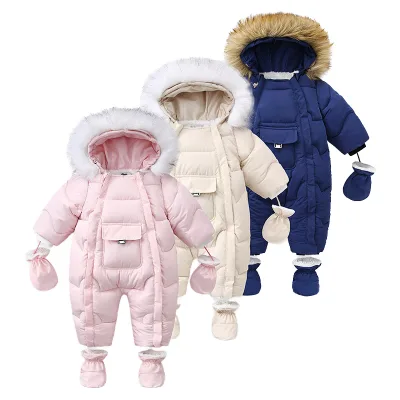
Winter Child Cozy One-Piece Romper Waterproof Suit Kids Coverall Jumpsuit
$18.49 - $21.49
MOQ: 500 Pieces




Comprehensive Sourcing Guide
Strategic Sourcing Guide for Waterproof Kids Jumpsuits
Navigating the B2B market for waterproof children's outerwear requires a precise understanding of material science, supply chain constraints, and the specific operational realities of manufacturing protective gear for young demographics. The core keyword "Waterproof Kids Jumpsuit" encompasses a diverse range of products, from casual playwear to specialized ski gear. Buyers must distinguish between general water-resistant fabrics and fully waterproof technical garments, as the distinction significantly impacts cost, compliance, and supplier selection. This guide synthesizes available market data and technical requirements to provide a structured approach for procurement professionals seeking reliable partners for this category.
Technical Specifications and Material Composition
The foundation of any waterproof jumpsuit lies in its material composition and construction. Market observations indicate a divergence in material choices, ranging from natural fibers to synthetic polymers. While some listings feature 100% organic cotton or 100% wool, these materials inherently lack the hydrophobic properties required for true waterproofing without extensive chemical treatment. Consequently, for a product explicitly marketed as "waterproof," the primary material is frequently 100% polyester or a polyester blend. Polyester offers superior durability and a natural affinity for water-repellent coatings compared to natural fibers.
When evaluating technical specifications, buyers should look for specific design elements that enhance water protection. A critical feature observed in high-performance listings is the inclusion of a lower pocket with a nylon zipper. This design detail prevents water ingress through the pocket opening, a common failure point in lower-quality garments. Furthermore, the construction often includes a hooded collar style, which provides essential head and neck protection during rain or snow. The "One-Piece" configuration, often referred to as a coverall or jumpsuit, eliminates the gap between a jacket and pants, ensuring continuous protection.
The sizing strategy for children's waterproof gear often utilizes "Free Size" or "Customized" stature options. Given the rapid growth rates of children aged 0-9 months and older, a "Free Size" approach may not be viable for all segments. Instead, buyers should verify if the supplier offers customized stature measurements to ensure a proper fit that seals out moisture without restricting movement. The product model identifiers, such as "Children's Overall-043Z" or "KXF-KK24903," serve as unique references for specific design iterations, but the underlying technical performance depends on the fabric weave and coating quality rather than the model number alone.
Compliance, Certification, and Safety Standards
For children's apparel, particularly items intended for outdoor use, compliance with safety and environmental standards is non-negotiable. While specific certification statuses vary by supplier, buyers must verify that the manufacturing process adheres to relevant international standards for textile safety. The "customized" standard noted in several product attributes suggests that many manufacturers operate on a made-to-order basis, allowing for flexibility in meeting specific regional regulatory requirements.
Buyers should explicitly request documentation regarding chemical restrictions, such as the absence of harmful azo dyes or heavy metals, which are critical for products worn by infants and young children. The "100% Organic Cotton" attribute found in some listings indicates a market segment focused on eco-friendly materials, but this must be balanced against the waterproof requirement. A garment cannot be both 100% organic cotton and inherently waterproof without a coating that may affect the organic certification. Therefore, procurement teams must clarify the balance between organic claims and functional waterproofing.
Furthermore, the "OEM: Yes" and "OEM: Acceptable" attributes indicate that suppliers are equipped to handle private labeling and custom branding. This capability often extends to customizing the product standard to meet the specific regulatory framework of the buyer's target market, whether it be the European Union's REACH regulations or the US Consumer Product Safety Commission (CPSC) guidelines. Verification of these standards should be a prerequisite before finalizing any order, ensuring that the finished product is legally compliant and safe for the intended age group, which ranges from infants (0-9 months) to older children.
Cost Drivers and Pricing Dynamics
The pricing structure for waterproof kids jumpsuits is influenced by a complex interplay of material costs, order volume, and customization requirements. The observed price range in the market spans from $0.50 to $49.30 USD. This wide variance reflects the difference between basic, unbranded items and high-end, technically advanced ski wear or custom-branded coveralls. The lower end of the spectrum typically corresponds to simpler polyester constructions with standard packaging, while the upper end likely includes advanced waterproofing technologies, custom patterns, and specialized features like peak lapels or specific zipper hardware.
A significant cost driver is the Minimum Order Quantity (MOQ). The market data reveals a substantial range in MOQs, from as low as 2 units to as high as 10,000 units. Suppliers with an MOQ of 10,000 units often operate on a large-scale production model, which can drive down the per-unit cost but requires significant capital commitment from the buyer. Conversely, suppliers offering an MOQ of 500 or 1,000 pieces cater to smaller retailers or startups, though the per-unit price may be higher due to lower economies of scale.
Additional cost factors include the packaging method. Listings specify "OPP Bag," "Polybag," or "PP Bag" with varying carton quantities (e.g., 50 pieces per carton). Custom packaging requirements, such as branded polybags or specific carton labeling, will incur additional charges. The "Patterned" attribute also adds complexity to the production process, potentially increasing costs compared to solid-color options. Buyers must weigh the total landed cost, including shipping and duties, against the retail price point to ensure a viable margin.
Typical Applications and Use Cases
Waterproof kids jumpsuits serve diverse applications, ranging from casual outdoor play to specialized sports activities. The "Outdoor Wear" classification suggests utility in general rainy conditions, while the "Kids Ski Wear" designation points to high-performance use in cold, snowy environments. For ski applications, the combination of waterproof and breathable features is essential to manage body temperature and moisture during high-exertion activities. The "Water Proof Coverall" and "Kids Jumpsuit" labels indicate versatility, making these garments suitable for hiking, gardening, or general winter activities.
The age demographic is a crucial factor in determining the appropriate application. Products targeting the "0-9 Months" age group require specific design considerations, such as ease of dressing and diaper access, while those for older children may prioritize mobility and durability. The "Spring / Autumn" season specification indicates that these garments are often designed for transitional weather, where temperatures fluctuate and precipitation is common. However, the inclusion of "Water Proof" and "Breathable" features suggests they are also viable for winter sports, provided the insulation is adequate.
Supplier Evaluation and Sourcing Strategy
Evaluating suppliers for waterproof children's apparel requires a focus on production capability and flexibility. The presence of "OEM: Yes" and "Can Be Customized" attributes confirms that many suppliers are willing to adapt their production lines to meet specific buyer needs. Buyers should prioritize suppliers who demonstrate a clear understanding of the technical requirements for waterproofing, such as seam sealing and fabric coating processes.
The origin of the products is consistently listed as "China," which is a major hub for textile manufacturing. This concentration offers a wide selection of suppliers but necessitates rigorous due diligence. Buyers should assess the supplier's capacity to handle different MOQs, as some may require 500 pieces while others demand 10,000. The "Customized" nature of the product standard allows for negotiation on specifications, but it also requires clear communication to avoid misunderstandings regarding material quality and performance.
When comparing suppliers, a structured approach using a comparison table can be beneficial. The following table outlines key differentiators based on observed market data:
| Feature | Supplier A (High Volume) | Supplier B (Low MOQ) | Supplier C (Custom Focus) |
|---|---|---|---|
| MOQ | 10,000 Units | 500 Units | 1,000 Units |
| Material | 100% Polyester | 100% Organic Cotton | Polyester Blend |
| Packaging | 50 PCS/Carton | 1 PCS/PP Bag | Custom Required |
| Customization | Standard OEM | Limited | Full Custom |
| Target Age | Children | 0-9 Months | All Ages |
This comparison highlights that no single supplier fits all needs. A buyer seeking a small batch of organic cotton items will find a high-volume polyester supplier unsuitable, and vice versa.
Quality Control and Long-Term Procurement
Quality control for waterproof garments must extend beyond visual inspection to include functional testing. Buyers should verify that the "Water Proof" and "Breathable" claims are backed by test results, even if specific numerical data is not publicly listed. The presence of features like "Nylon Zipper" and "Hole" designs (likely referring to ventilation or functional openings) requires careful inspection to ensure they do not compromise the garment's integrity.
For long-term procurement, establishing a consistent relationship with a supplier who can maintain quality across batches is essential. The "Customized" standard implies that specifications may change between orders, so a robust quality assurance protocol is necessary to ensure that every batch meets the agreed-upon standards. Buyers should also consider the lead time implications of customization, as tailored products may require longer production cycles than off-the-shelf items.
Finally, the packaging and logistics aspect cannot be overlooked. The variation in packaging, from "OPP Bag" to "Each Packed in a Polybag," affects the final product presentation and protection during transit. Ensuring that the packaging is robust enough to prevent water damage during shipping is critical, especially for waterproof products that may be stored in humid environments. By focusing on these technical and operational details, buyers can secure a reliable supply of high-quality waterproof kids jumpsuits that meet both functional and regulatory requirements.
FAQs
What materials are used for waterproof kids jumpsuits?
Waterproof kids jumpsuits typically use 100% polyester or polyester blends to ensure durability and water repellency. While some listings mention organic cotton or wool, these natural fibers require chemical treatments to achieve true waterproofing and may not be suitable for all outdoor conditions.
Can buyers customize the product standard and packaging?
Yes, suppliers offer customizable product standards and packaging options to meet specific buyer requirements. Buyers can request custom stature measurements and choose between packaging types like OPP bags, polybags, or PP bags with varying carton quantities to suit their logistics needs.
Which features enhance water protection in these jumpsuits?
Key features include lower pockets with nylon zippers to prevent water ingress and hooded collar styles for head protection. The one-piece coverall design eliminates gaps between jacket and pants, ensuring continuous protection against rain and snow for children aged 0-9 months and older.
How does the minimum order quantity affect pricing?
The minimum order quantity significantly impacts the per-unit price, ranging from 500 to 10,000 pieces depending on the supplier. Higher volume orders often reduce costs due to economies of scale, while smaller orders may incur higher prices but offer flexibility for startups and small retailers.
What safety standards apply to children's waterproof outerwear?
Compliance with safety standards is critical, especially for infants and young children wearing these garments. Buyers should verify that manufacturers adhere to international regulations regarding chemical restrictions and ensure the product meets the specific regulatory framework of the target market, such as REACH or CPSC guidelines.
Can suppliers handle OEM branding and private labeling?
Many suppliers accept OEM orders and can handle private labeling and custom branding for waterproof kids jumpsuits. This capability allows buyers to create unique products while ensuring the manufacturer can adapt production lines to meet specific design and regulatory requirements for different regions.
What is the typical price range for these products?
The observed price range for waterproof kids jumpsuits spans from 0.50 to 49.30 USD per unit. This variance reflects differences in material quality, technical features like breathability, and customization levels, with basic polyester items costing less than high-end ski wear or custom-branded coveralls.