Source Waterproof Silicone O Ring for Seals, Gaskets, and Valves
Find and compare 30 Waterproof Silicone O Ring options for industrial, automotive, and household applications. Evaluate hardness, color, and customization to select the right seal for your machinery or electronic products.
Key considerations
Products List


$0.05 - $0.50
MOQ: 1000 Pieces


Customized Food Grade Silicone Rubber O Ring for Waterproof High Temperature
$0.05 - $0.60
MOQ: 100 pieces


High Temperature Resistant High Elasticity Oil Resistant Silicone O Ring
$0.12 - $0.36
MOQ: 100 Pieces

Wholesale Customized Size and Color High Temperature Resistance Silicone O Ring
$0.06 - $0.60
MOQ: 100 pieces


Custom Sizes Available Various Custom Colors Silicone Material Rubber O Ring
$0.01 - $0.50
MOQ: 100 Pieces


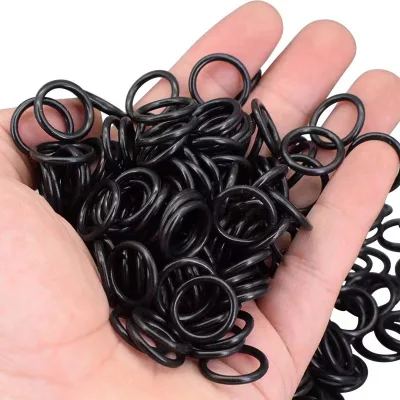


Comprehensive Sourcing Guide
Waterproof Silicone O Ring Sourcing Guide
Sourcing high-performance sealing components requires a disciplined approach that balances technical precision with commercial viability. The waterproof silicone O-ring represents a critical category within industrial and consumer supply chains, offering reliable fluid containment and environmental protection across diverse operating conditions. Buyers must navigate a market characterized by significant variability in material grades, manufacturing tolerances, and certification standards. This guide provides a structured framework for evaluating suppliers, verifying technical attributes, and establishing robust procurement protocols for these essential sealing elements.
The following sections detail the specific considerations necessary for successful procurement. By focusing on verified product signals, technical verification steps, compliance documentation, cost structures, supplier qualification, and long-term quality management, buyers can mitigate risk and ensure consistent performance. The guidance herein is derived from observed market data and established industry practices, providing a practical roadmap for sourcing teams seeking to optimize their supply chain for silicone sealing solutions.
Product Scope and Observed Listing Signals
The market for waterproof silicone O-rings exhibits a broad spectrum of product configurations, ranging from standard off-the-shelf items to highly customized OEM/ODM solutions. Observed listings indicate that suppliers frequently offer customization options, allowing buyers to specify exact dimensions, hardness levels, and color requirements. Common color options include black, white, red, green, purple, yellow, blue, and clear variants, with some suppliers explicitly stating the ability to produce custom colors based on client requests. This flexibility is particularly valuable for applications where visual identification of seals or aesthetic integration into final products is required.
Listing signals also reveal a wide range in minimum order quantities (MOQ), spanning from single sample orders to volumes exceeding one hundred million units. This disparity suggests that the market accommodates both prototyping phases and large-scale mass production. Suppliers often highlight their capability to handle both small air shipments for urgent samples and large sea freight orders for bulk production. Additionally, the presence of specific model numbers such as "YB-004" or "YS-ORING" alongside generic descriptors like "Rubber O-Ring" indicates that buyers should carefully distinguish between standardized catalog items and bespoke manufacturing capabilities when evaluating supplier profiles.
Technical Specifications to Verify
Hardness is a primary technical attribute that directly influences the sealing performance and durability of silicone O-rings. Verified data indicates that hardness values typically range from 20 to 90 Shore A, with some specific product lines citing a range of 30 to 90 Shore A. Buyers must verify the exact durometer required for their application, as softer compounds may provide better conformability to irregular surfaces, while harder compounds offer greater resistance to extrusion and compression set. The cross-section shape is consistently identified as O-ring, which is the standard geometry for static and dynamic sealing applications, ensuring compatibility with existing groove designs and housing components.
Mechanical properties such as tensile strength and elongation at break are critical indicators of material integrity under stress. Observed specifications suggest that tensile strength should be verified to be at least 17 MPa, and elongation at break should exceed 300%, ensuring the material can stretch significantly without rupturing during installation or operation. Furthermore, the working temperature range is a vital consideration, with verified data indicating performance capabilities from -40°C to 230°C. Buyers must confirm that the specific silicone compound selected can withstand the thermal extremes of their intended environment, whether it involves cold storage or high-heat industrial machinery.
Compliance and Safety Documentation
Certification status is a key differentiator among suppliers, with several key standards frequently cited in product listings. The IATF 16949 certification is prominently mentioned, indicating adherence to rigorous quality management systems specific to the automotive industry. Additionally, ISO certifications, including ISO 9001, are commonly referenced, signaling a baseline commitment to quality control processes. Buyers should request valid certificates for these standards to ensure that the supplier’s manufacturing processes meet internationally recognized quality benchmarks, which is particularly important for industries with strict regulatory oversight.
Material safety and environmental compliance are equally critical, with RoHS and CE certifications frequently listed as part of the product documentation. These certifications confirm that the silicone materials used in the O-rings comply with restrictions on hazardous substances and meet European safety standards. Buyers must verify that the specific material grade provided is free from prohibited substances, especially for applications involving food contact, medical devices, or consumer electronics. The presence of these certifications provides assurance that the product meets essential health and environmental requirements, reducing liability and ensuring market access in regulated regions.
Cost Drivers and Commercial Terms
Pricing for waterproof silicone O-rings is influenced by several factors, including material grade, customization complexity, and order volume. Observed price ranges in the market span from very low unit costs for high-volume standard items to higher prices for custom or low-volume orders. The term "competitive price" is often used in listings, but buyers should understand that significant price variations exist based on the specific hardness, color, and tolerance requirements. It is advisable to request detailed quotations that break down costs by material, tooling, and processing to identify potential savings or hidden fees.
Commercial terms and payment structures vary among suppliers, with common practices including a 30% deposit before production and a 70% balance payment upon delivery. This structure helps manage cash flow and aligns incentives between buyer and supplier. Lead times are typically reported as 15-20 days for production, though this can extend for custom molds or large volumes. Buyers should also consider logistics costs, as transportation methods are often split between air freight for small amounts and sea freight for large quantities, with freight costs being negotiable. Clear agreement on Incoterms and delivery schedules is essential to avoid supply chain disruptions.
Supplier Qualification and Quality Control
Supplier qualification begins with verifying the origin and manufacturing capabilities of the provider. Many suppliers are located in Guangdong, China, a major hub for rubber and silicone manufacturing. Buyers should assess the supplier’s production capacity, mold inventory, and quality control processes to ensure they can meet volume and quality demands. The availability of OEM/ODM services indicates that the supplier can adapt to specific design requirements, but buyers must ensure that the supplier has the technical expertise to maintain tight tolerances and consistent quality across production batches.
Quality control measures should include verification of material certificates, dimensional inspection reports, and performance test results. Buyers should request samples for initial testing to validate hardness, tensile strength, and sealing performance before committing to large orders. Additionally, suppliers should provide clear packaging specifications, such as PE bags inside cartons, to protect the O-rings from contamination and damage during transit. Establishing a clear communication channel for addressing quality issues and defining acceptance criteria based on standard or non-standard tolerances is crucial for maintaining long-term supplier relationships.
Long-Term Procurement Checks
Long-term procurement success depends on continuous monitoring of supplier performance and product consistency. Buyers should establish key performance indicators (KPIs) such as on-time delivery rate, defect rate, and responsiveness to quality issues. Regular audits or third-party inspections may be necessary for high-volume or critical applications to ensure that the supplier maintains their quality standards over time. It is also important to review the supplier’s ability to handle changes in demand, including the flexibility to adjust production schedules and manage inventory levels effectively.
Material traceability and documentation retention are vital for compliance and quality assurance. Buyers should ensure that suppliers provide batch-specific certificates of analysis and material safety data sheets for each shipment. This documentation helps in tracking any potential issues back to the source and ensures that the materials used remain consistent with initial approvals. Additionally, buyers should periodically re-evaluate the market for new materials or technologies that may offer improved performance or cost savings, ensuring that their sourcing strategy remains competitive and aligned with evolving industry standards.
FAQs
What certifications do the rubber o-rings hold?
The products hold IATF16949, ISO, RoHS, CE, and ISO-9001 certifications. These standards ensure quality and compliance for industrial and automotive applications, covering material safety and manufacturing processes.
How long is the production period for custom orders?
The standard production period ranges from 15 to 20 days. This timeline applies to customized rubber parts and OEM orders, ensuring timely delivery while maintaining quality standards for your specific requirements.
Can I request a customized color for the o-rings?
Yes, customization is available for colors including black, white, red, green, purple, yellow, blue, and clear. You can also request specific colors based on your design needs for various industrial or household applications.
What is the minimum order quantity for samples?
Sample orders are welcome with a minimum quantity of one unit. This allows buyers to test product quality before committing to larger bulk orders, which can range up to one billion units depending on the agreement.
Which applications are suitable for these sealing o-rings?
These o-rings are suitable for vehicles, household appliances, electronic products, machinery, and industrial components. Their sealing function prevents dust and ensures effective performance across diverse mechanical and industrial environments.
What payment terms are required for production?
The payment term requires a 30% deposit before production begins and a 70% balance upon delivery. This standard arrangement secures the manufacturing process while ensuring financial protection for both the buyer and the supplier.
How are the products packed for shipping?
Products are packed with a PE bag inside and a carton outside. Customized packing requests are also accepted to meet specific logistical needs, ensuring safe transport via air for small amounts or sea for large quantities.