Source Waterproof USB Charging Spinner Suitcase for Travel
Find 30 Waterproof USB Charging Spinner Suitcase options featuring ABS and plastic materials with spinner wheels. Compare models like GSB3587 and PL-19 for travel, business, and school use, noting varying sizes and customization availability; compare the available evidence and request quotations based on your requirements.
Key considerations
Products List


Good Quality Functional ABS Hardside Trolley Suitcase on 4 Spinner Wheels
$10.00 - $25.00
MOQ: 500 Pieces


Spacious Softside Luggage Waterproof Luggage with Universal Spinner Wheel
$14.20 - $14.90
MOQ: 500 Pieces


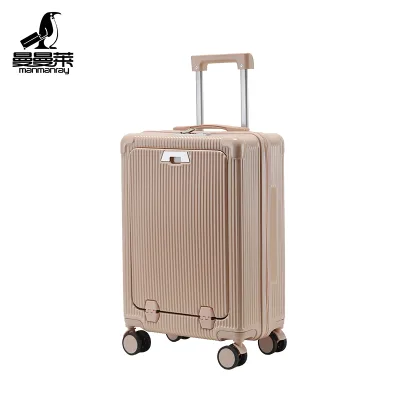


Front Opening Multifunctional Suitcase with USB Charging and Cup Holder
$29.09 - $32.72
MOQ: 100 Pieces


Comprehensive Sourcing Guide
Waterproof USB Charging Spinner Suitcase Sourcing Guide
Procuring a Waterproof USB Charging Spinner Suitcase requires balancing advanced functionality with structural durability for modern travelers. Buyers must verify that the external shell material, often ABS or hard plastic, provides the necessary resistance against moisture while maintaining the rigidity required for checked baggage. The integration of USB charging ports necessitates careful inspection of internal wiring to ensure it does not compromise the waterproof integrity of the main compartment.
Sourcing decisions should prioritize models that explicitly list waterproof ratings alongside spinner wheel configurations to guarantee smooth mobility in wet conditions. The observed market data indicates a wide range of customization options, allowing buyers to tailor features like internal organization and trolley handle materials to specific brand requirements. Understanding these distinct product attributes is essential before engaging with suppliers to ensure the final product meets the rigorous demands of commercial travel gear.
Product Scope and Observed Listing Signals
The current market offers a diverse array of trolley cases ranging from leisure-focused designs to business-oriented models with multiple compartments. Listings frequently highlight specific styles such as simplicity or trend, alongside gender-neutral designs suitable for unisex use. Buyers should note that while some products feature external casters, others utilize built-in spinner mechanisms, and the choice significantly impacts the maneuverability and stability of the luggage during transit.
Observed product signals reveal variations in internal materials, including polyester and nylon, which affect the durability and weight of the final unit. The presence of features like TSA locks and aluminum trolleys suggests a focus on security and premium handling, while other listings emphasize light weight and partial hardness for specific travel needs. It is critical to distinguish between these product signals to select a suitcase that aligns with the intended usage, whether for school, business, or general travel.
Technical Specifications to Verify
Buyers must rigorously verify the dimensional standards of the suitcase, as observed listings show sizes ranging from compact 18-inch models to larger 28-inch options. The standard dimensions provided, such as 362250cm or 523573cm, serve as critical benchmarks for airline compliance and storage capacity. Ensuring the selected model matches the required size category is vital for preventing issues during airport security checks and maximizing packing efficiency for the end user.
The technical verification process must also include an assessment of the closure and locking mechanisms, specifically looking for zipper types and TSA-approved locks. The internal structure should be examined to confirm the presence of multiple compartments that facilitate organized packing, while the wheel type must be confirmed as spinner wheels for 360-degree rotation. Additionally, the hardness rating, whether medium soft or partial hard, dictates the level of protection the shell offers against impact during rough handling.
Compliance and Safety Documentation
While specific certification documents are not explicitly listed in the provided product facts, buyers must request evidence of safety compliance for the electrical components integrated into the USB charging feature. The inclusion of a charging port introduces potential electrical hazards, requiring verification that the internal battery or wiring meets international safety standards for portable electronics. Without proper documentation, the risk of product failure or safety incidents increases significantly, potentially leading to liability issues for the importer.
Documentation regarding the material composition and origin is equally critical for regulatory compliance in various markets. Suppliers should provide clear declarations confirming the materials used, such as ABS plastic or polyester linings, and the specific origin locations like Zhejiang or Guangdong. This transparency ensures that the product adheres to environmental and safety regulations regarding plastic usage and manufacturing practices, which are increasingly scrutinized by international buyers and consumers.
Cost Drivers and Commercial Terms
The commercial terms for these suitcases are heavily influenced by the Minimum Order Quantity (MOQ), which ranges from 50 to 3000 units depending on the supplier and customization level. Buyers should anticipate that higher customization requests, such as specific OEM branding or unique internal structures, will likely push the MOQ closer to the upper end of this range. Understanding these thresholds is essential for budgeting and determining the feasibility of the order based on the buyer's inventory requirements.
Pricing and packing configurations also play a significant role in the total cost of ownership, with observed listings showing variations from single-piece polybag packing to carton box sets. The choice between different packing methods, such as 1PCS/CTN versus 1:1 OPP Bag arrangements, affects shipping volume and handling costs. Buyers must negotiate these terms carefully to optimize logistics efficiency while ensuring the product arrives in pristine condition without unnecessary damage during transit.
Supplier Qualification and Quality Control
Supplier qualification should focus on verifying their capacity for OEM and ODM services, as many listings explicitly welcome these collaborative arrangements. Buyers need to assess the supplier's ability to maintain consistent quality across different production runs, particularly when customizing features like color, style, or internal organization. A qualified supplier will demonstrate a robust quality control process that addresses the specific challenges of integrating waterproofing with electronic charging components.
Quality control checks must extend to the physical assembly of the spinner wheels and the trolley handle mechanism to ensure long-term reliability. Inspectors should verify that the external casters or built-in wheels function smoothly and that the aluminum trolley extends and retracts without jamming. Additionally, the waterproof integrity of the zipper and seams must be tested to confirm that the product can withstand exposure to rain and moisture without compromising the internal contents.
Long-Term Procurement Checks
Establishing a long-term procurement strategy requires regular audits of the supplier's production capabilities and adherence to agreed-upon specifications. Buyers should implement a schedule for periodic quality inspections to ensure that the product attributes, such as hardness, material composition, and wheel type, remain consistent over time. This proactive approach helps mitigate the risk of quality drift and ensures that the brand reputation is protected by delivering reliable products to the market.
Continuous monitoring of market trends and consumer feedback is also essential for maintaining the competitiveness of the Waterproof USB Charging Spinner Suitcase line. Buyers should track changes in size preferences, style trends, and functional demands to adapt their product offerings accordingly. By staying informed about the evolving landscape of travel gear, procurement teams can make data-driven decisions that align with customer expectations and sustain long-term business growth.
FAQs
What materials are used for waterproof spinner suitcases?
These suitcases typically use ABS plastic for the hard shell to ensure durability and impact resistance. The interior lining often features polyester or nylon fabrics to protect contents. This combination provides a lightweight yet sturdy structure suitable for frequent travel while maintaining a waterproof exterior barrier against moisture.
Can I customize the design of these luggage cases?
Yes, customization is available for many models to meet specific branding needs. Buyers can often request OEM or ODM services to adjust colors, sizes, or internal structures. This flexibility allows businesses to create unique product lines that align with their market identity while maintaining standard quality and functional features.
What are the standard sizes for these trolley cases?
Standard sizes range from compact 14-inch models to larger 28-inch options. Specific dimensions like 36x22x50cm or 52x35x73cm are common for different capacity needs. Some models offer multiple size options within a single product line, allowing buyers to select the appropriate volume for carry-on or checked baggage requirements.
How many pieces are packed in one carton?
Packing configurations vary by model but often include one piece per carton box. Some items use OPP bags for individual protection before carton packing. This standard packaging ensures safe transit and efficient storage. Buyers should verify specific packing details like 1PCS/CTN or set quantities to plan logistics and shipping costs accurately.
Which caster types are used in these spinner suitcases?
Most models feature spinner wheels for 360-degree mobility. Casters can be external or built-in designs depending on the style. These wheels are engineered for smooth rolling on various surfaces. The external type often offers easier replacement, while built-in casters provide a sleeker aesthetic and potentially better weight distribution for the traveler.
What is the typical MOQ for bulk orders?
Minimum order quantities generally range from 50 to 3000 pieces depending on the supplier and model. Standard items may have lower MOQs around 50 to 500 units, while customized orders might require higher volumes. Buyers should confirm the specific MOQ for their chosen model to ensure it aligns with their inventory and budget planning.