Find Front Axle Wheel Hub for heavy trucks, trailers, and construction vehicles
Source 30 verified listings for the Front Axle Wheel Hub tailored to heavy trucks, trailers, and construction equipment. Buyers can compare specifications like load capacity, axle track, and mounting types from multiple suppliers in China.
Key considerations
Products List


Semi Trailer Axle Use Wheel Hubs Wheel Brake Hub for Trailer Axle Spare
$18.00 - $40.00
MOQ: 10 Pieces


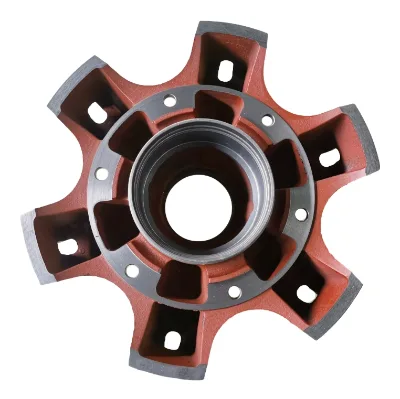


Comprehensive Sourcing Guide
Strategic Sourcing Guide for Front Axle Wheel Hubs
The global automotive and heavy transport supply chain relies heavily on the integrity of front axle wheel hubs. These components serve as the critical interface between the vehicle's suspension system and the rotating wheel assembly, directly influencing safety, load-bearing capacity, and operational efficiency. For procurement professionals, sourcing these parts requires a nuanced understanding of material science, manufacturing processes, and regulatory compliance. The market presents a diverse array of options ranging from seamless tube constructions to complex welded axle heads, necessitating a rigorous evaluation framework to ensure that the selected components meet the specific demands of heavy-duty applications.
Technical Specifications and Material Composition
The technical profile of a Front Axle Wheel Hub is defined by its raw material, production method, and dimensional tolerances. Based on available market data, the primary raw materials identified for these components include seamless tubes and steel sheet plates. The choice between these materials often dictates the final strength and weight characteristics of the hub. Steel remains the dominant material class, selected for its high tensile strength and durability under heavy loads. The manufacturing process typically involves a combination of stamping, bending, and brazing techniques. These processes are essential for forming the complex geometries required for axle integration.
A critical observation in the current market is the prevalence of the "Press" technique in production. This method ensures high precision in the forming stages, which is vital for maintaining the concentricity of the hub. Furthermore, the finishing process often includes zinc coating to provide corrosion resistance, a non-negotiable attribute for components exposed to harsh environmental conditions. Some high-performance variants may also feature chrome finishing, though this is less common for standard heavy-duty applications.
Dimensional specifications vary significantly based on the intended vehicle type. Buyers must verify the rim size, which can range from 15 inches to 26.5 inches, depending on whether the application is for a standard truck or a specialized heavy hauler. The axle track width is another critical parameter, with observed configurations including 1840mm and 2200mm. The flange thickness is typically standardized around 20mm to 21mm, while the brake drum diameter often measures 290mm. The stud configuration is equally important, with common specifications including 10M201.5 threads. These numerical values serve as a baseline for verification rather than universal standards, as customizations are frequently available to meet specific OEM requirements.
Compliance, Certification, and Standards Verification
Navigating the regulatory landscape is a primary concern for B2B buyers. While the market offers products with various certifications, including ISO, DOT, and CE, buyers must treat these as observations rather than guaranteed attributes for every listed item. The presence of these certifications indicates a supplier's commitment to quality management systems and safety standards, but verification is required on a per-shipment basis.
The product standard for these hubs is often categorized as "Non-Standard Component," reflecting the high degree of customization available in the sector. This means that while general industry standards apply, specific dimensions and tolerances are often tailored to the vehicle manufacturer's unique design. For instance, the "prod_standard" attribute may refer to specific dimensional codes like 363225, but buyers should not assume this applies universally without confirmation.
In terms of safety and performance, the "Heavy Truck" application category implies a need for robust compliance with load-bearing regulations. The load capacity for these units can reach up to 20 tons, necessitating rigorous testing protocols. Buyers should request documentation proving that the specific batch of hubs meets the relevant national or international safety standards for heavy vehicle components. The "OEM: Yes" attribute suggests that many suppliers are capable of producing parts that meet original equipment manufacturer specifications, but this must be validated through a formal quality agreement.
Cost Drivers and Pricing Dynamics
The pricing structure for front axle wheel hubs is influenced by a complex interplay of factors, including material costs, manufacturing complexity, and order volume. The observed price range in the market spans from $1 to $77 USD, a wide disparity that reflects differences in material quality, production volume, and customization levels. It is crucial for buyers to understand that the lowest price point often corresponds to basic, non-customized units, while higher price points may include specialized coatings, custom machining, or certified quality assurance.
The Minimum Order Quantity (MOQ) is another significant cost driver, with observed ranges extending from 1 unit to 20,000 units. Small order volumes typically incur a higher per-unit cost due to the setup costs associated with stamping and bending processes. Conversely, large volume orders benefit from economies of scale but require significant upfront capital commitment. Buyers should also consider the packaging requirements, which can vary from standard cartons to wooden pallets or custom packaging solutions. These packaging choices can impact the total landed cost, especially for international shipments where freight charges are calculated based on volume and weight.
Typical Applications and Load Requirements
Front axle wheel hubs are primarily designed for heavy-duty applications, with a specific focus on heavy trucks and trailers. The "Type: Hydraulic Suspension" and "Application: Heavy Truck" attributes highlight the intended use case for these components. In these environments, the hubs must withstand significant dynamic loads and continuous stress. The "Load Capacity: 20 tons" specification indicates that these components are engineered for substantial weight-bearing tasks, making them suitable for logistics, construction, and mining sectors.
The versatility of these hubs is further demonstrated by the "Product Type: American, Germany and Europe Type" classification. This suggests that the market offers solutions compatible with various regional vehicle standards. For example, the "Germany type axles" may feature different PCD (Pitch Circle Diameter) configurations, such as 335mm or 285.75mm, compared to American standards. Buyers must carefully match the hub specifications to the specific axle type of their fleet to ensure proper fitment and safety. The "Tire Type: Radial Tire" attribute also indicates compatibility with modern radial tire systems, which are standard in heavy transport for improved fuel efficiency and load distribution.
Supplier Evaluation and Customization Capabilities
Evaluating suppliers for front axle wheel hubs requires a focus on their ability to support customization and their geographic origin. The "Customization: Available" and "Customize: Support" attributes indicate that many suppliers are willing to tailor products to specific buyer requirements. This is particularly important for OEMs who need exact specifications for their vehicle models. The "prod_origin: China" and "prod_origin: Jinan" data points suggest that a significant portion of the supply chain is concentrated in these regions, known for their manufacturing capabilities.
When selecting a supplier, buyers should assess their production process capabilities, specifically their proficiency in stamping, bending, and brazing. The ability to produce "Strong One-Piece or Welded Axle Head" designs is a key differentiator, as welded designs may offer different strength-to-weight ratios compared to one-piece constructions. Additionally, the "Installation Type: Bolt-On" specification simplifies the integration process, but buyers must verify that the supplier provides all necessary hardware and instructions for a secure installation.
Quality Control and Long-Term Procurement Considerations
Ensuring long-term reliability requires a robust quality control strategy. Buyers should implement a multi-stage inspection process that includes material verification, dimensional checks, and performance testing. The "Wheel Hub: Strong One-Piece or Welded Axle Head, Exceeding Th" attribute suggests that some products are designed to exceed standard strength requirements, but this claim must be substantiated with test data.
For long-term procurement, buyers should consider the "Adjustability: Compression Adjustable" feature, which allows for fine-tuning of the suspension system. This adaptability can extend the service life of the component and reduce maintenance costs. Furthermore, the "Number of Axles: MultiAxle" specification indicates that these hubs are part of a larger system, and compatibility with the entire axle assembly is crucial.
Buyers should also establish clear communication channels with suppliers regarding lead times and production schedules. While specific lead times are not provided in the general data, the complexity of the production process suggests that customization may extend delivery times. Establishing a long-term partnership with a supplier who can consistently meet quality standards and delivery schedules is essential for maintaining operational continuity in the heavy transport sector.
Comparative Analysis of Hub Configurations
To assist buyers in making informed decisions, the following table compares common configurations found in the market based on the observed data. This comparison highlights the variability in specifications and helps buyers identify the most suitable option for their specific needs.
| Feature | Configuration A (Standard) | Configuration B (Heavy Duty) | Configuration C (Custom OEM) |
|---|---|---|---|
| Material | Steel Sheet Plate | Seamless Tube | Custom Alloy Steel |
| Production | Press, Stamping | Press, Bending, Braze | Custom Process |
| Coating | Zinc | Zinc + Chrome | Custom Finish |
| Load Capacity | Up to 15 Tons | Up to 20 Tons | Custom Specified |
| Axle Track | 1840mm | 2200mm | Custom |
| Rim Size | 15" - 19.5" | 20.5" - 26.5" | Custom |
| Certification | ISO, CE | ISO, DOT, CE | OEM Specific |
| Packing | Carton | Wooden Pallet | Custom Packaging |
This table illustrates that while standard configurations offer a baseline of performance, heavy-duty and custom options provide enhanced capabilities for demanding applications. Buyers should use this framework to align their procurement strategy with their operational requirements, ensuring that the selected front axle wheel hubs deliver the necessary reliability and performance.
FAQs
What materials are used for front axle wheel hubs?
Front axle wheel hubs are primarily constructed from steel, seamless tubes, and steel sheet plates. These materials provide the necessary tensile strength and durability required for heavy truck applications and high load capacities.
Can these hubs be customized for specific vehicle models?
Yes, customization is available and supported for various design requirements. Suppliers offer options for non-standard components, allowing buyers to specify dimensions like axle track or rim size to match their specific OEM needs.
Which certifications are commonly found on these wheel hubs?
Common certifications include ISO, DOT, and CE, indicating compliance with international quality and safety standards. Buyers should verify these certifications for specific batches as they are observations rather than guaranteed attributes for every listed product.
How is the production process for these hubs typically performed?
The production process typically involves pressing, stamping, bending, and brazing techniques to form complex geometries. Finishing often includes zinc coating for corrosion resistance, though chrome finishing is also observed for certain high-performance variants.
What is the maximum load capacity for these heavy truck hubs?
The observed load capacity for these hubs can reach up to 20 tons, suitable for heavy transport and logistics. This capacity supports applications requiring robust performance under continuous stress and significant dynamic loads.
Which rim sizes are available for these wheel hub assemblies?
Available rim sizes range from 15 inches up to 26.5 inches, depending on the specific application. Configurations include 17.5r25, 20.5r25, and various metric sizes to accommodate different tire types and vehicle standards.
Where are these front axle wheel hubs typically manufactured?
These components are typically manufactured in China, with specific production centers noted in Jinan. Buyers should consider this origin when evaluating lead times and shipping logistics for international procurement orders.