Source Weather Resistant Pigment DTG Ink for T-Shirts, Fabrics, Wall Coverings
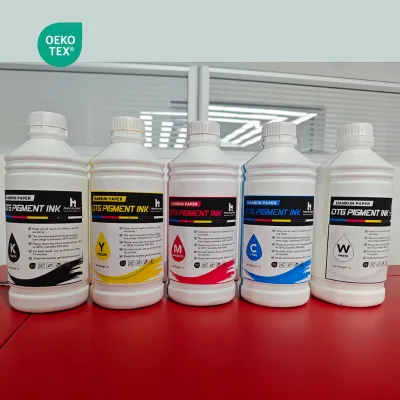
Compare 30 listings of Weather Resistant Pigment DTG Ink suitable for cotton and synthetic fabrics. Buyers can evaluate customization options, drying methods, and compatible print heads for t-shirt and decorative fabric applications; compare the available evidence and request quotations based on your requirements.
Key considerations
Products List




Comprehensive Sourcing Guide
Weather Resistant Pigment DTG Ink Sourcing Guide
Procuring weather-resistant pigment DTG ink requires a nuanced understanding of material science and supply chain logistics. Buyers must distinguish between standard pigment formulations and those engineered for enhanced durability against UV exposure and environmental stressors. The core challenge lies in balancing vivid color reproduction with long-term stability, ensuring that printed textiles maintain their integrity under varying climatic conditions. This guide provides a structured approach to evaluating suppliers, verifying technical specifications, and mitigating procurement risks associated with digital textile printing inks.
Successful sourcing begins with aligning product capabilities with specific end-use applications. Whether targeting outdoor apparel, home decor, or promotional merchandise, the ink’s performance characteristics must match the fabric composition and intended lifespan of the final product. Buyers should prioritize suppliers who offer transparent data on pigment concentration, binder quality, and resistance metrics. By focusing on these foundational elements, organizations can secure a reliable supply of high-performance inks that support both operational efficiency and brand reputation in competitive markets.
Product Scope and Observed Listing Signals
The current market landscape for DTG and related digital inks reveals a diverse array of product offerings, with observed price points ranging from $5 to $328 USD. This wide variance often reflects differences in formulation complexity, packaging volume, and brand positioning. Buyers should note that minimum order quantities (MOQs) typically span from 1 to 100 units, allowing for flexible entry into the market. However, lower MOQs may correlate with higher per-unit costs, necessitating a careful analysis of total cost of ownership rather than just the sticker price.
Observed product attributes indicate a strong emphasis on customization and specific printing technologies. Many listings highlight compatibility with various print heads, including DX5, DX7, and I3200 models, suggesting a broad applicability across different printer ecosystems. Additionally, the presence of water-based and pigment ink types points to a market segmented by fabric compatibility and drying requirements. Buyers must carefully cross-reference these observed signals with their specific hardware and material needs to avoid compatibility issues and ensure seamless integration into existing production workflows.
Technical Specifications to Verify
Verifying technical specifications is critical to ensuring ink performance matches operational requirements. Key attributes to confirm include the ink’s viscosity, drying method, and suitable print head compatibility. For instance, some products specify heat curing for ink drying, which impacts production speed and energy consumption. Buyers should also verify the operating temperature and humidity ranges, as these environmental factors can significantly influence ink flow and print quality. Ensuring that the ink’s viscosity aligns with your printer’s specifications prevents clogging and maintains consistent output quality.
Color gamut and transfer efficiency are equally important technical considerations. Listings often mention color profiles such as CMYK, CMYKW, or extended gamuts like LC and Lm, which affect the vibrancy and range of reproducible colors. Buyers should inquire about the transfer rate, with some products claiming rates above 92%, indicating high efficiency and minimal waste. Additionally, confirming the suitable materials, such as 100% cotton or cotton blends, ensures that the ink adheres properly and delivers the desired aesthetic and durability. These technical details form the backbone of a successful procurement decision.
Compliance and Safety Documentation
Compliance and safety documentation are non-negotiable aspects of sourcing industrial inks. Buyers must request Safety Data Sheets (SDS) to understand the chemical composition, handling precautions, and disposal requirements. While some listings mention OEKO-TEX or GOTS certifications, these should be treated as background information rather than guaranteed attributes. It is essential to verify the current status of any certifications directly with the supplier or through independent testing bodies to ensure they are valid and applicable to the specific product batch.
Environmental and occupational health standards also play a crucial role in supplier evaluation. Inks containing pigments and binders may require specific storage conditions and handling protocols to prevent degradation or health hazards. Buyers should assess the supplier’s commitment to sustainable practices, including the use of eco-friendly packaging and responsible manufacturing processes. Understanding the regulatory landscape in your target market, such as REACH in Europe or TSCA in the US, ensures that the imported inks meet all legal requirements, avoiding potential customs delays or legal liabilities.
Cost Drivers and Commercial Terms
Several factors influence the total cost of ownership for DTG inks, beyond the initial purchase price. Packaging type, such as bottles, cartons, or wooden boxes, affects shipping costs and handling efficiency. Suppliers may offer different standard volumes, ranging from 100ml to 1L per bottle, which can impact inventory management and storage requirements. Buyers should negotiate terms that align with their production volume, considering whether bulk discounts or flexible MOQs can reduce overall expenses.
Delivery time and payment terms are also significant commercial considerations. Observed lead times of 5-7 working days suggest a relatively quick turnaround, but this can vary based on stock availability and shipping method. Buyers should clarify whether these times include production, packaging, and transit, and establish clear expectations for potential delays. Additionally, understanding the warranty or replacement policy for defective products can mitigate financial risk. Transparent commercial terms help in budgeting accurately and maintaining smooth supply chain operations.
Supplier Qualification and Quality Control
Supplier qualification involves a rigorous assessment of manufacturing capabilities and quality assurance processes. Buyers should verify the supplier’s origin, with common locations including Shenzhen, Xinxiang, and Henan in China, to understand the regional supply chain dynamics. It is crucial to request samples for testing to evaluate print quality, color consistency, and durability under real-world conditions. Suppliers who provide detailed technical support and responsive customer service are often better equipped to handle complex procurement needs.
Quality control measures should be explicitly defined in the procurement agreement. This includes specifications for shelf life, typically around 12 months, and storage conditions to maintain ink stability. Buyers should inquire about batch-to-batch consistency and the supplier’s protocol for handling deviations. Establishing a clear communication channel for reporting issues and requesting replacements ensures that any quality concerns are addressed promptly. A robust supplier qualification process minimizes the risk of production disruptions and ensures a consistent supply of high-quality inks.
Long-Term Procurement Checks
Long-term procurement success depends on continuous monitoring of supplier performance and market trends. Buyers should regularly review ink performance data, including color fastness, wash durability, and print head compatibility, to ensure ongoing satisfaction. Establishing key performance indicators (KPIs) for delivery reliability, product quality, and customer support helps in objectively evaluating supplier contributions. Regular audits or site visits, if feasible, can provide deeper insights into the supplier’s operational practices and commitment to quality.
Adapting to technological advancements and market shifts is essential for maintaining a competitive edge. As printer technologies evolve, so do the requirements for compatible inks. Buyers should stay informed about new formulations, such as those with enhanced weather resistance or broader color gamuts, and assess their potential benefits. Building a diversified supplier base can mitigate risks associated with single-source dependencies. By maintaining a proactive approach to supplier management and market analysis, organizations can secure a resilient and efficient ink supply chain.
FAQs
What ink types are available for digital printing?
The available ink types include pigment ink, digital ink, DTG ink, and cotton ink. These formulations are designed for specific fabric applications and printing technologies. The product line supports various color configurations to meet diverse printing requirements.
Which fabrics are suitable for this pigment ink?
This ink is suitable for 100% cotton, cotton synthetic blends, and cotton fabrics. It is also compatible with polyester, triacetate, nylon, and acrylic materials depending on the printing method. The formulation ensures good adhesion and performance on these specific textile substrates.
Can the ink be customized for specific needs?
Yes, customization is available for this product line. Buyers can request specific adjustments to meet their operational requirements. The manufacturer supports tailored solutions to ensure the ink performs optimally with different print heads and fabric types in various production environments.
What is the shelf life of the DTG ink?
The shelf life is 12 months when stored correctly. Proper storage conditions are essential to maintain ink viscosity and color stability. Buyers should adhere to the recommended operating temperature and humidity ranges to ensure the product remains effective throughout its designated storage period.
What are the standard packaging options for this ink?
Standard packaging includes bottles, cartons, and pallets. Specific volume options are available, such as 100ml, 250ml, 500ml, and 1000ml per bottle. The packaging is designed to protect the ink during transit and storage, ensuring product integrity upon delivery to the buyer.
Which print heads are compatible with this ink?
The ink is compatible with various print heads including 5113, Dx5, Dx6, Dx7, 4720, F/T, L Series, I3200, XP600, and L1800. This broad compatibility allows for flexible integration into different digital printing systems. Buyers should verify specific head requirements for optimal performance.