Source Weld On Teeth Trenching Picks for excavators, trenchers, and pile drivers
Find 30 listings for Weld On Teeth Trenching Picks compatible with major brands like Caterpillar and Komatsu. Buyers can compare specifications, materials, and pricing for applications in trenching, mining, and pile driving.
Key considerations
Products List


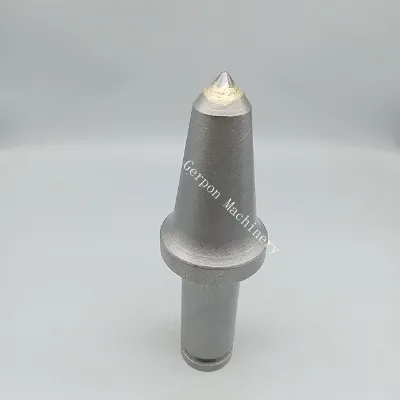
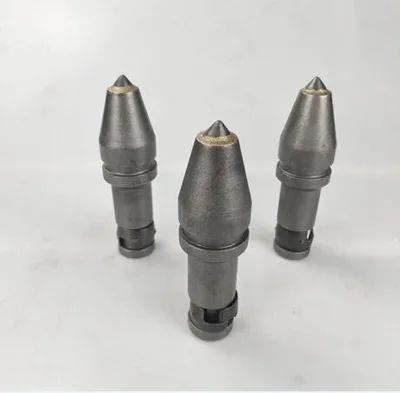
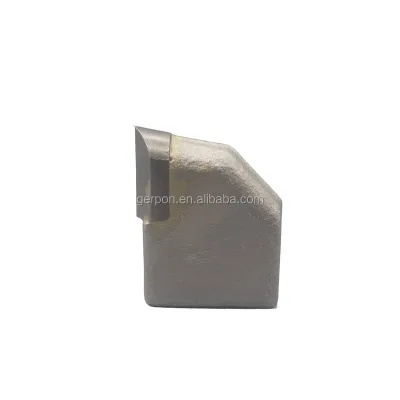
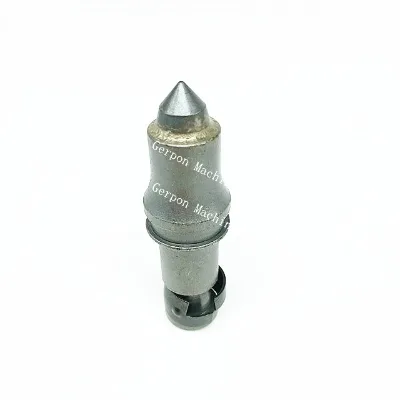

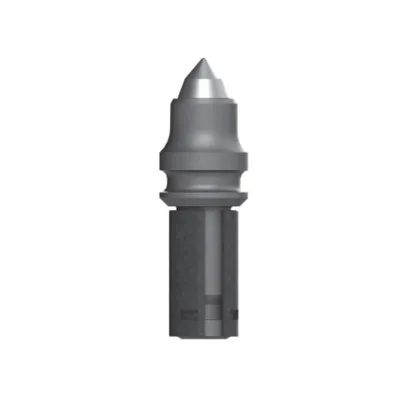


Long Service Life Round Shank Wear Resisting Trenching Picks for Industry
$6.00 - $9.00
MOQ: 100 Pieces


Comprehensive Sourcing Guide
Strategic Sourcing Guide for Weld-On Teeth Trenching Picks
The global demand for efficient trenching equipment has elevated the importance of high-performance wear parts, specifically weld-on teeth and trenching picks. These components serve as the primary interface between heavy machinery and the ground, enduring extreme abrasion, impact, and thermal stress. For procurement professionals in the construction, mining, and utility sectors, sourcing these components requires a rigorous understanding of material science, compatibility matrices, and supply chain reliability. This guide synthesizes available market data to provide a structured approach for evaluating weld-on teeth trenching picks, ensuring that procurement decisions are grounded in verified technical attributes rather than speculative claims.
Technical Specifications and Material Composition
The fundamental performance of a trenching pick is dictated by its material composition and geometric design. In the current market, high-quality picks typically utilize a dual-material architecture. The base shank is often constructed from high-strength alloy steel, such as 42CrMo, which provides the necessary toughness to absorb shock loads without fracturing. The cutting tip, conversely, is frequently made from tungsten carbide, a material selected for its superior hardness and wear resistance. Market observations indicate that the carbide tips often possess a hardness rating within the range of HRC 55 to 58, a specification critical for maintaining a sharp edge in abrasive soils and rocky terrain.
When evaluating product listings, buyers should verify the specific model numbers and standard designations. Common model identifiers in the sector include designations like C31, C21, C23, and C34, alongside specialized model numbers such as GP-HD01. These alphanumeric codes often correspond to specific shank dimensions, tip geometries, and application profiles. For instance, conical teeth and bullet bits are distinct variations designed for different soil densities. The standard export packing for these items usually involves robust packaging to prevent damage during transit, though some suppliers offer customization based on customer demand.
It is essential to distinguish between the base material and the composite structure. While some listings specify "steel and tungsten carbide" as the standard, others may refer to "Alloy Steel" or "Steel+Carbide" as the material type. The manufacturing process for these components is predominantly forging, which aligns with the ISO 9001 standards often cited for manufacturing processes. Buyers must ensure that the listed standard, such as GB (Guobiao), is applicable to the specific regional requirements of their project. The single package size for individual units can vary, with some data points indicating compact dimensions like 3x3x1 cm, while others may list zero volume for bulk shipments, necessitating careful verification of the actual shipping unit.
Compliance, Certification, and Quality Assurance
Navigating the compliance landscape for industrial wear parts requires attention to international standards and manufacturer certifications. The presence of CE and ISO 9001 certifications is a strong indicator of a supplier's adherence to quality management systems and safety regulations. Specifically, the ISO 9001 certification often relates to the manufacturing process, ensuring that the forging and heat treatment procedures are consistent and documented. However, buyers should not assume that every listed product automatically satisfies every certification condition; rather, these should be treated as verified attributes of specific high-confidence listings.
Quality assurance extends beyond paper certifications to tangible product attributes. The "Condition: New" status is a baseline expectation, but the durability of the product is often highlighted through warranty periods. In the current market, warranty terms vary significantly, ranging from 90 days to more than five years. A warranty of "More Than 5 Years" suggests a high-confidence product with superior metallurgical properties, whereas a 90-day warranty may indicate a standard-grade component or a specific application constraint. Buyers must correlate the warranty period with the intended application intensity; a high-warranty item is preferable for continuous heavy-duty trenching operations.
Furthermore, the "Quality: High Guarantee" attribute found in several listings serves as a qualitative marker. To validate this, buyers should look for evidence of video outgoing-inspection services provided by the supplier. This feature allows procurement teams to visually verify the product's condition, packaging, and labeling before shipment, reducing the risk of receiving substandard goods. The origin of these products is predominantly China, with specific manufacturing hubs identified in Shandong. While this location is a major global producer of steel and carbide tools, buyers should verify the specific place of origin to ensure it aligns with their logistics and sourcing policies.
Cost Drivers and Procurement Economics
Understanding the cost structure of weld-on teeth trenching picks is vital for budgeting and total cost of ownership analysis. The observed price range in the market spans from 1 to 100 USD, a wide spectrum that reflects differences in material quality, brand reputation, and order volume. The Minimum Order Quantity (MOQ) is another significant cost driver, with observed ranges extending from 1 to 3000 units. Some suppliers offer a trial order MOQ of 50 pieces, which is advantageous for new buyers testing product compatibility, while others may require a standard MOQ of 100 pieces or higher.
Payment terms also influence the financial dynamics of the transaction. Standard methods include Telegraphic Transfer (TT), Letters of Credit (L/C), and various money transfer services such as Money Gram, Western Union, and PayPal. The flexibility of payment options can be a deciding factor for international buyers, particularly those managing cash flow for large-scale projects. Additionally, the supply ability of the manufacturer, often cited as 10,000 pieces per month, indicates the capacity to handle large orders without significant delays.
Lead times are a critical component of procurement planning. Typical delivery windows range from 7 to 15 working days after receiving a deposit, with some listings specifying a 10-15 day window. These timelines assume that the deposit has been received and that the order is within the supplier's standard production capacity. Buyers should account for potential variations in lead times based on the specific model ordered and the current production backlog. The single gross weight of the product, often listed as 0.200 kg or 0.0 kg for bulk calculations, impacts shipping costs and logistics planning, necessitating accurate weight verification for freight estimation.
Compatibility and Application Scope
The versatility of weld-on teeth trenching picks is defined by their compatibility with a vast array of machinery brands. The market data indicates support for major global manufacturers, including Caterpillar, Komatsu, Hitachi, Volvo, and Liebherr, as well as regional leaders like Sany, XCMG, and Zoomlion. Compatibility lists often extend to specialized equipment brands such as Herrenknecht, Sandvik, and Atlas Copco. This broad compatibility suggests that these picks are designed to meet industry-standard mounting interfaces, allowing for cross-brand usage in mixed fleets.
Applications for these components are diverse, primarily centered around trenching operations. The specific application fields include pile driving and trenching, with dedicated picks designed for trencher machines. The "Bullet Teeth" and "25mm Shank Carbide Bullet Bits Conical Teeth" are specific product names that denote specialized geometries for different soil conditions. Buyers must match the product name and model number to their specific machine requirements. For example, a trencher machine may require a specific shank diameter and tip shape that differs from a pile driver application.
The following table summarizes key compatibility and application attributes observed in the market:
| Attribute Category | Specific Details |
|---|---|
| Compatible Brands | Caterpillar, Komatsu, Hitachi, Volvo, Liebherr, Sany, XCMG, Zoomlion, Herrenknecht, Sandvik, Atlas Copco, Hyundai, Doosan, Jcb, LiuGong, Metso, Wacker Neuson, Kobelco, Lonking, Xgma, Terex, Kubota, Sumitomo, Shantui, Doosan, Jcb, Xgma, Caterpillar, Lonking, XCMG |
| Primary Applications | Pile Driver, Trencher, Trencher Machine |
| Product Types | Mining Teeth, Bullet Teeth, 25mm Shank Carbide Bullet Bits, Conical Teeth |
| Model Numbers | C31, C21, C23, C34, GP-HD01, Drill tools |
| Material Standards | Steel and Tungsten Carbide, 42CrMo, Alloy Steel |
Supplier Evaluation and Quality Control
Evaluating a supplier for industrial wear parts requires a multi-faceted approach that goes beyond price and availability. The "Quality: High Guarantee" and "Condition: Durable" attributes are qualitative claims that must be substantiated through objective evidence. One of the most effective verification methods is the availability of video outgoing-inspection. This service allows buyers to conduct a remote audit of the production line or the finished goods, ensuring that the physical product matches the description.
When assessing suppliers, buyers should prioritize those who offer customization services. The "Customization: Available" attribute indicates a supplier's flexibility to meet specific project requirements, such as unique shank dimensions or specialized carbide grades. This capability is particularly valuable for specialized trenching projects where standard off-the-shelf parts may not perform optimally. Additionally, the "Surface Treatment: Without Processing" note suggests that some products are supplied in their raw forged state, while others may undergo additional treatments. Buyers must clarify this requirement to ensure the product is ready for immediate installation or requires further finishing.
Quality control should also involve verifying the manufacturing process. The "Manufacturing Process: Forging" specification is a key indicator of structural integrity, as forging generally produces stronger grain structures compared to casting. Buyers should request documentation or visual evidence of the forging process to confirm that the shank is not prone to brittle failure under high-impact loads. The "Standard Export Packing" and "Standard Exported Packaging" ensure that the products are protected during international shipping, reducing the risk of damage before they reach the job site.
Long-Term Procurement Considerations
Sourcing weld-on teeth trenching picks is not merely a transactional activity but a strategic decision that impacts long-term operational efficiency. The warranty period, ranging from 90 days to over five years, is a critical indicator of the supplier's confidence in their product's longevity. A longer warranty period often correlates with higher initial costs but can result in significant savings over the life of the equipment by reducing downtime and replacement frequency. Buyers should calculate the total cost of ownership, factoring in the cost per hour of operation and the expected wear rate of the carbide tips.
The "Single volume" and "Single gross weight" data points, while sometimes listed as zero or minimal, are essential for logistics planning. Accurate weight and volume data ensure that freight costs are minimized and that storage space is utilized efficiently. For large-scale projects, the "Supply Ability" of 10,000 pieces per month is a crucial metric to verify, ensuring that the supplier can maintain a steady supply chain without interruptions.
Finally, buyers should consider the "Payment" terms and "Delivery time" in the context of their project timeline. A delivery time of "Within 7-15 Working Days" after deposit receipt is standard, but any delays can impact project schedules. Establishing a clear communication channel with the supplier and verifying the "Place of Origin" as Shandong, China, helps in managing expectations regarding lead times and potential logistical challenges. By adhering to these evidence-based criteria, procurement professionals can secure high-quality weld-on teeth trenching picks that enhance operational performance and minimize risk.
FAQs
What materials are used for Weld On Teeth Trenching Picks?
These picks typically use a dual-material architecture with a 42CrMo steel shank and tungsten carbide tips. The carbide tips often have a hardness rating between HRC 55 and 58 to ensure superior wear resistance in abrasive soils.
Which certifications do reliable manufacturers hold?
High-confidence listings often display CE and ISO 9001 certifications for their manufacturing processes. These standards indicate adherence to quality management systems and safety regulations during the forging and heat treatment procedures.
How long is the delivery time for these picks?
Typical delivery windows range from 7 to 15 working days after receiving the deposit. Some suppliers specify a standard 10 to 15 day window, assuming the order is within their standard production capacity of 10,000 pieces per month.
What is the minimum order quantity for trial orders?
Some suppliers offer a trial order minimum of 50 pieces to help new buyers test compatibility. Standard orders may require a minimum of 100 pieces, though observed ranges in the market extend up to 3000 units.
Can these picks be customized for specific machinery?
Yes, customization is available for specific project requirements like unique shank dimensions or specialized carbide grades. Buyers should verify if the product comes with surface treatment or requires further finishing before installation.
Which brands of machinery are compatible with these picks?
These picks are compatible with major global brands like Caterpillar, Komatsu, and Hitachi, as well as regional leaders like Sany and XCMG. They also support specialized equipment from manufacturers such as Herrenknecht and Sandvik.
What warranty periods are available for these components?
Warranty terms vary significantly, ranging from 90 days to more than five years depending on the product grade. A longer warranty often suggests superior metallurgical properties suitable for continuous heavy-duty trenching operations.