Source Welded Cement Silo with Dust Collector for Storage, Transport, and Processing
Explore 30 listings for the Welded Cement Silo with Dust Collector, designed for dry shotcrete and bulk cement handling. Buyers can compare capacities ranging from 35t to 3000t, discharge methods, and material options like carbon steel or galvanized material across various models.
Key considerations
Products List


Cement Silo with Filling System PLC Controlled Carbon Steel Welded Type
$9000.00 - $10000.00
MOQ: 1 Sets


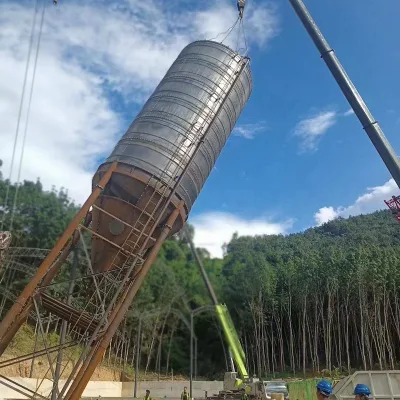
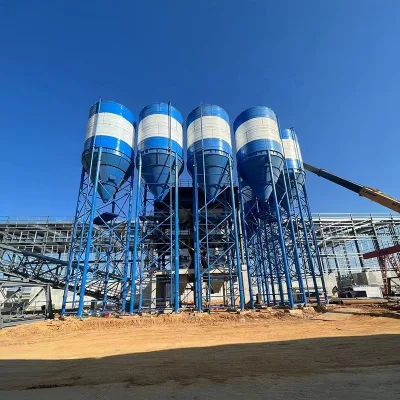


3.32m Discharge Height Cement Silo with 200ton Capacity and Dust Collector
$20900.00 - $21000.00
MOQ: 1 Pieces




Comprehensive Sourcing Guide
Strategic Sourcing Guide for Welded Cement Silos with Integrated Dust Collectors
Understanding the Technical Architecture of Welded Cement Silos
The procurement of a welded cement silo requires a deep understanding of the structural and functional specifications that define the equipment's capability. These units are primarily designed as horizontal storage silos, often referred to as container silos, which integrate seamlessly into cement production lines or construction sites. The core structural form is typically a cylinder type, engineered to withstand the internal pressure and weight of bulk materials. The manufacturing process for these units involves welded molding, ensuring a robust and leak-proof containment system essential for handling dry shotcrete and cement powders.
The physical dimensions of these silos vary significantly based on the required storage volume and transport constraints. Buyers will encounter a wide range of diameter specifications, with standard options including 3160mm, 3600mm, 4000mm, 4100mm, 4500mm, 5050mm, 5300mm, 5700mm, 6000mm, 6500mm, 6800mm, 8000mm, 8200mm, and specialized large-scale models reaching up to 10500mm and 12500mm. The volume capacity is equally diverse, ranging from smaller 35t units to massive systems capable of holding 50 to 3000 tons. Specific containerized models are available in 20gp and 40gp configurations, with the 20gp silo size typically measuring 605824382591mm and the 40gp variant measuring 1220024382895mm. These dimensions are critical for logistics planning, as the equipment must often be transported via standard shipping containers or heavy-haul trucks.
Compliance, Certification, and Material Integrity
When sourcing industrial storage solutions, verifying compliance with international standards is non-negotiable. The supplied product data indicates that reputable manufacturers in this sector typically hold ISO9001 certification, which validates their quality management systems. Additionally, CE certification is frequently cited as a standard for these units, ensuring they meet the essential health, safety, and environmental protection requirements for the European market. Buyers must explicitly request current certification documents rather than relying on general marketing claims, as these certifications are specific to the manufacturing facility and the production batch.
The material composition of the silo is a primary determinant of its longevity and suitability for specific environments. The available materials include carbon steel, stainless steel, and galvanized material. Carbon steel is common for general applications, while galvanized material offers enhanced corrosion resistance, particularly in humid or coastal environments. Stainless steel is selected for applications requiring higher purity or resistance to aggressive chemicals. The choice of material directly impacts the maintenance schedule and the total cost of ownership. Furthermore, the structural integrity is often reinforced by the inclusion of safety valves and dust collectors as standard accessories. These components are not merely add-ons but are integral to the safety and operational efficiency of the silo, preventing over-pressurization and controlling particulate emissions during filling and discharge operations.
Operational Mechanics and Discharge Methodologies
The efficiency of a cement silo is largely defined by its charging and discharging mechanisms. The supplied data outlines a variety of charging methods, including airslide systems, bucket elevators, tankers, pneumatic conveyor systems, and screw conveyors. The selection of the charging method depends on the upstream logistics and the specific site infrastructure. For instance, pneumatic conveyor systems are ideal for long-distance transport of powder, while airslide systems are often used for low-pressure, gravity-assisted filling.
Discharge methodologies are equally varied to accommodate different downstream processing needs. The silos can be configured to discharge directly into trucks, into jumbo bag packing machines, or into jumbo bucket elevators. This flexibility allows the equipment to serve as a versatile hub in a cement production line. The unloading mode can be executed via screw conveyors, bucket elevators, or belt systems, with the unloading height typically set at an optional 4.5 meters, though this can be customized based on site requirements. The integration of weighing load cells is a critical feature, ensuring accurate inventory management and precise batching for the cement production process. The control system for these operations is typically managed via a PLC (Programmable Logic Controller) combined with a touch screen interface, providing operators with real-time monitoring and control over the filling and emptying cycles.
Cost Drivers and Procurement Variables
Several factors influence the final cost of a welded cement silo, and buyers must analyze these variables to ensure budget accuracy. The primary cost drivers include the total volume capacity, the diameter specifications, and the material grade selected. A 35t silo will naturally cost less than a 3000t system, but the price per ton of capacity often decreases as the scale increases due to economies of scale in manufacturing. The choice between carbon steel and stainless steel represents a significant variance in material costs, with stainless steel commanding a premium for its durability and corrosion resistance.
Logistics and packaging also play a substantial role in the total landed cost. The standard packing method involves wrapping each part of the silo in waterproof plastic to protect against moisture and damage during transit. For containerized models, the packaging must adhere to the dimensions of 20gp or 40hq containers, which affects the number of units that can be shipped per load. The origin of the product, typically Shandong, China, influences freight costs and lead times. Buyers should also consider the cost of optional accessories, such as the dust collector, safety valves, and level indicators, which are often listed as standard but may incur additional charges for specific customizations. The customization availability allows for tailored solutions, but this flexibility can introduce variable costs depending on the complexity of the request.
Typical Applications and Industry Use Cases
Welded cement silos with dust collectors are predominantly used in the cement production machinery sector, serving as the backbone for storage and distribution in large-scale industrial operations. The specific application often involves dry shotcrete production, where the silo acts as a temporary storage buffer before the material is fed into the mixing or spraying equipment. The ability to discharge into jumbo bags makes these silos ideal for construction sites where cement needs to be packaged for transport or immediate use.
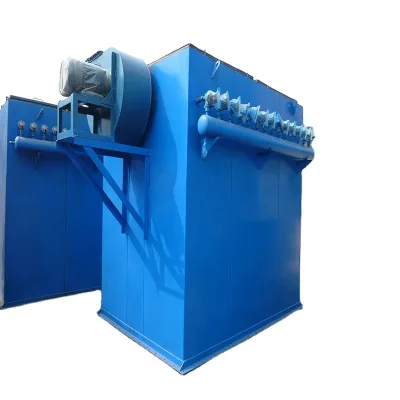
The versatility of the discharge methods allows these silos to be integrated into various workflows. For example, a silo discharging into a truck is suitable for mobile construction projects or remote sites where bulk delivery is required. Conversely, a silo discharging into a jumbo bag packing machine is optimized for centralized distribution centers that require packaged goods for retail or smaller construction contracts. The inclusion of a dust collector is particularly vital in these applications to meet environmental regulations and maintain a safe working environment by minimizing airborne particulate matter. The standard accessory list, which includes dust collectors, safety valves, and indicators, ensures that the silo is ready for immediate deployment in compliance with general industrial safety standards.
Supplier Evaluation and Quality Assurance Protocols
Evaluating a supplier for welded cement silos requires a rigorous assessment of their manufacturing capabilities and quality control processes. Buyers should verify that the supplier provides a machinery test report, which serves as evidence of the equipment's performance under operational conditions. The presence of a "Condition: New" status in product listings is a baseline expectation, but buyers must confirm that the equipment is manufactured using the specified welding molding processes and not refurbished units.
Quality assurance should extend to the verification of the machining process. The supplier must demonstrate proficiency in welding techniques that ensure the structural integrity of the cylinder type silo. Buyers should request detailed specifications regarding the material thickness and the quality of the welds, as these are critical for preventing leaks and ensuring long-term durability. The standard of the product should be "accordingly" based on the model, meaning that the manufacturing standards should align with the specific model's design requirements. It is essential to confirm that the supplier can provide the necessary documentation for the ISO9001 and CE certifications, as these are not merely marketing terms but indicators of a certified quality management system. Additionally, the supplier should be able to demonstrate their ability to customize the silo, including the discharge methods and control box configurations, to meet specific site requirements.
Long-Term Procurement and Lifecycle Management
Procuring a welded cement silo is a long-term investment that requires consideration of maintenance, spare parts availability, and lifecycle management. The optional volume configurations, such as 35t, 50t, 70t, 80t, 100t, 120t, and 140t, allow buyers to scale their operations incrementally. However, the initial design must account for future expansion, ensuring that the silo can be integrated into a larger system if needed. The use of a PLC and touch screen control system facilitates easy upgrades and integration with automated plant systems, extending the operational life of the equipment.
Maintenance considerations include the regular inspection of the dust collector, safety valves, and level indicators. These components are subject to wear and tear and must be replaced or serviced periodically to maintain safety and efficiency. The waterproof plastic wrapping used during shipping is a temporary measure, and buyers must ensure that the silo is stored and installed in a manner that protects it from environmental degradation. The choice of material, such as galvanized or stainless steel, will significantly impact the frequency of maintenance required. Buyers should also consider the lead time for spare parts, as downtime in a cement production line can be costly. By selecting a supplier with a robust support network and a track record of providing reliable machinery test reports, buyers can mitigate the risks associated with long-term procurement and ensure a stable supply chain for their cement production needs.
FAQs
What certifications do welded cement silos typically hold?
These silos typically hold CE and ISO9001 certifications. Buyers should verify that the specific manufacturer provides current documentation for these quality management and safety standards before finalizing a purchase.
Which materials are used to construct these silos?
Manufacturers use carbon steel, stainless steel, and galvanized material for construction. The choice depends on the required corrosion resistance and the specific environment where the silo will be deployed.
How can the silo discharge material into different systems?
The silo can discharge into trucks, jumbo bag packing machines, or jumbo bucket elevators. This flexibility allows integration into various cement production lines or construction site workflows.
What is the standard volume capacity range for these units?
Volume capacities range from 35 tons up to 3000 tons depending on the model. Specific containerized models often include 35t, 50t, 70t, 80t, 100t, 120t, and 140t options.
Can the silo be customized for specific site requirements?
Yes, customization is available for various specifications and configurations. Buyers can request tailored solutions for discharge methods, control systems, and dimensions to match their operational needs.
What standard accessories are included with the silo?
Standard accessories include a dust collector, safety valve, and level indicator. These components are essential for maintaining safety, controlling emissions, and monitoring material levels during operation.
How is the silo packed for shipping from China?
Each part of the silo is wrapped in waterproof plastic for protection. Containerized models are designed to fit within 20gp or 40hq shipping containers for efficient transport.