Source Eco Friendly Extensible Broom and Dustpan Set for Home, Hotel, Office
Find 30 Eco Friendly Extensible Broom and Dustpan Set options with varying materials like PP and PET. Buyers can compare specifications, customization availability, and packing details from multiple suppliers in China.
Key considerations
Products List


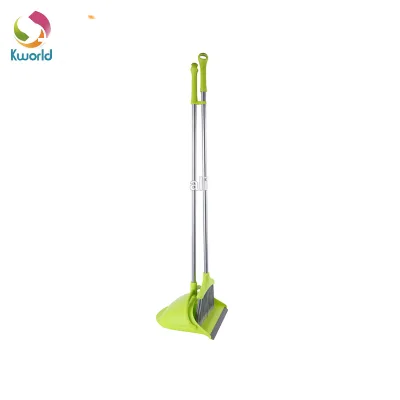


Soft Bristle Broom Dustpan Set Foldable Standing Household Dustpan and Broom Set
$2.72 - $2.85
MOQ: 1000 Pieces






Comprehensive Sourcing Guide
Strategic Sourcing Guide for Eco-Friendly Extensible Broom and Dustpan Sets
The global shift toward sustainable household and commercial cleaning solutions has elevated the demand for eco-friendly extensible broom and dustpan sets. For B2B procurement professionals, navigating this category requires a disciplined approach that balances environmental claims with verifiable technical specifications and supply chain reliability. This guide provides a comprehensive framework for sourcing these products, grounded in observed market data and standard industry practices. Buyers must distinguish between marketing terminology and actual product attributes to ensure that the procurement strategy aligns with genuine sustainability goals and operational requirements.
Understanding Product Specifications and Material Composition
The foundation of a successful procurement strategy lies in a precise understanding of the product's physical and material specifications. In the current market, broom and dustpan sets are frequently constructed from a combination of plastics and synthetic fibers. Observed data indicates that the primary materials often include Polypropylene (PP) for the structural components of the dustpan and handle, while the bristles are commonly made from Polyethylene Terephthalate (PET). Some advanced configurations also incorporate Thermoplastic Rubber (TPR) for grip enhancement and Stainless Steel for the handle rod to ensure durability and rust resistance.
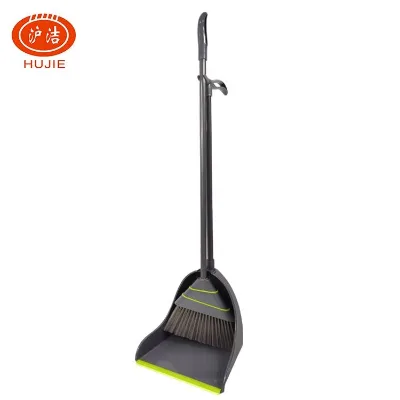
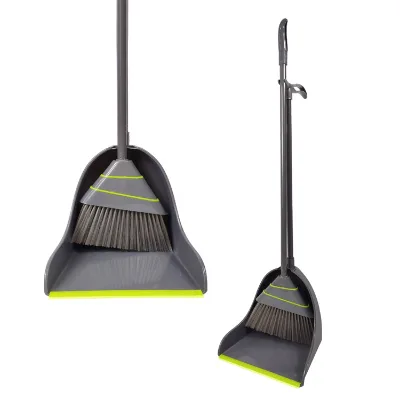
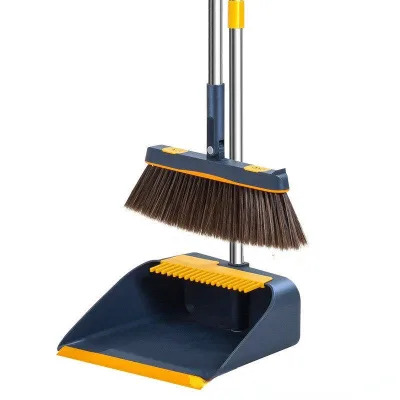
When evaluating extensibility, buyers should verify the specific dimensions and mechanical design of the handle. Typical specifications observed in the market include broom stick lengths ranging from approximately 80.5 cm to 96 cm, with handle diameters around 1.6 cm. The dustpan dimensions vary, with common measurements cited around 26.3 cm in width and 24.6 cm in depth, while the overall height can reach up to 96 cm when extended. The extensibility feature is often achieved through a two-section rod design, which allows the user to adjust the height for ergonomic cleaning.
A critical aspect of the "eco-friendly" designation is the material composition. While the presence of PET and PP is standard, the sustainability of these materials depends heavily on the sourcing of the raw polymers and the manufacturing process. Buyers should request detailed material breakdowns to confirm the percentage of post-consumer recycled content, if any, and the recyclability of the final product. The standard packaging for these items often involves export cartons, with internal packing configurations ranging from 12 to 50 pieces per carton, depending on the supplier's logistics capabilities.
Compliance, Certification, and Environmental Claims
Verifying environmental claims is one of the most challenging aspects of sourcing eco-friendly products. In the current landscape, buyers must be cautious of unverified assertions. While some background information may reference certifications such as the Forest Stewardship Council (FSC), it is essential to note that FSC certification typically applies to wood-based products rather than plastic broom and dustpan sets. Therefore, relying on FSC as a primary verification metric for this specific product category may be inappropriate unless the product contains significant wood components.
Instead of relying on a single certification, procurement teams should adopt a multi-faceted compliance verification strategy. Buyers should demand documentation regarding the chemical safety of the plastics used, ensuring they meet relevant international standards for food contact or general household safety. For the "eco-friendly" claim to hold weight, suppliers should provide evidence of adherence to specific environmental management systems, such as ISO 14001, or third-party lifecycle assessment reports.
The absence of specific certification data in general product listings does not imply non-compliance, but it does require active verification. Buyers should explicitly ask suppliers for their current certification status and request copies of valid certificates. If a supplier claims their product is biodegradable or compostable, they must provide laboratory test results that substantiate these claims under specific conditions. Without such documentation, the "eco-friendly" label remains a marketing observation rather than a verified attribute.
Cost Drivers and Pricing Dynamics
The pricing of broom and dustpan sets is influenced by a complex interplay of material costs, manufacturing complexity, and order volume. The observed market price range for these products spans from approximately $0.19 to $4.53 per unit. This wide variance is primarily driven by the quality of materials, the complexity of the extensibility mechanism, and the level of customization requested.
A significant cost driver is the use of stainless steel in the handle. Products featuring two-section stainless steel rods that are rust-resistant command a higher price point compared to those with plastic or aluminum handles. Similarly, the inclusion of TPR for ergonomic grips adds to the manufacturing cost. The customization options available, such as specific color requirements or branding, also impact the final unit price.
Minimum Order Quantity (MOQ) is another critical factor in cost management. The market data indicates an MOQ range between 90 and 3,000 units. Suppliers with higher MOQs, such as those requiring 3,000 units, often offer lower per-unit costs due to economies of scale. Conversely, suppliers with lower MOQs may charge a premium to cover the setup costs for smaller production runs. Buyers must balance their inventory needs with their budget constraints, considering that a higher initial investment in a larger order can yield significant long-term savings.
Typical Applications and Usage Scenarios
Broom and dustpan sets are versatile tools designed for a variety of indoor cleaning applications. The primary usage scenarios identified in the market include residential homes, hotels, and commercial facilities. The design features, such as the foldable compact storage and the two-section rod, make these sets particularly suitable for environments where space is at a premium, such as hotel housekeeping carts or small residential apartments.
The "strong cleaning capacity" is a key performance attribute that makes these sets effective for floor sweeping. The combination of PET bristles and a sturdy dustpan ensures that debris is collected efficiently without scattering. For commercial buyers, the durability of the materials is paramount. Products constructed with PP, PET, and stainless steel are better suited for high-traffic areas where frequent use and rigorous cleaning protocols are standard.
The versatility of the product extends to different floor types. While the primary application is indoor cleaning, the specific bristle stiffness and dustpan design determine suitability for various surfaces. Buyers should verify that the product specifications align with the specific floor types they intend to clean, whether it be hardwood, tile, or carpet. The "Home" and "Hotel" usage tags suggest that the product is optimized for general household debris, but the robust construction implies potential for light commercial use as well.
Supplier Evaluation and Supply Chain Reliability
Selecting the right supplier is critical for ensuring consistent product quality and timely delivery. The market data indicates that the primary origin for these products is China, with specific manufacturing hubs in Zhejiang province. When evaluating potential suppliers, buyers should prioritize those with a proven track record in exporting cleaning products and a clear understanding of international logistics.
Key evaluation criteria should include the supplier's production capacity, quality control processes, and ability to meet customization requirements. The observed supply ability of 2,000 pieces per day suggests that some suppliers have the capacity to handle moderate to large orders. However, buyers must verify this capacity against their specific order timelines and lead time requirements.
The packaging details are also a crucial aspect of supplier evaluation. The standard packaging involves export cartons, with internal configurations ranging from 12 to 50 pieces per carton. Buyers should ensure that the packaging is robust enough to protect the product during transit, especially given the potential for damage to the extensible rods or dustpan edges. The port of dispatch, often Ningbo, should be considered in the context of shipping costs and transit times to the destination market.
Quality Control and Long-Term Procurement Considerations
Implementing a rigorous quality control (QC) process is essential for maintaining the integrity of the product line. Given the mechanical nature of the extensible broom and dustpan sets, QC should focus on the durability of the joints, the stability of the two-section rod, and the integrity of the bristle attachment. Buyers should establish clear acceptance criteria for these mechanical components, including tests for rust resistance on stainless steel parts and the flexibility of the plastic components.
Long-term procurement considerations involve building a sustainable relationship with suppliers who can adapt to changing market demands. This includes the ability to scale production up or down based on seasonal fluctuations and the capacity to incorporate new sustainable materials as they become available. Buyers should also consider the total cost of ownership, which includes not just the purchase price but also the replacement frequency and the environmental impact of disposal.
The "eco-friendly" aspect of the product should be viewed as a long-term investment. While the initial cost may be higher, the durability and recyclability of the materials can reduce waste and align with corporate sustainability goals. Buyers should work with suppliers who are transparent about their environmental practices and willing to collaborate on improving the sustainability profile of the product over time.
Conclusion
Sourcing eco-friendly extensible broom and dustpan sets requires a meticulous approach that balances technical specifications, material integrity, and supply chain reliability. By focusing on verified material compositions, rigorous compliance checks, and strategic supplier evaluation, buyers can secure products that meet both their operational needs and their sustainability objectives. The market offers a wide range of options, from basic models to advanced, customizable sets, but the key to success lies in due diligence and a clear understanding of the product's capabilities and limitations. As the demand for sustainable cleaning solutions continues to grow, procurement professionals must remain vigilant in their pursuit of quality and authenticity in the products they source.
FAQs
What materials are used for the broom and dustpan set?
The set typically uses Polypropylene (PP) and Polyethylene Terephthalate (PET) for the main body and bristles. Some advanced models also incorporate Thermoplastic Rubber (TPR) for grips and Stainless Steel for rust-resistant handles to ensure durability.
Can I customize the color and packaging of the order?
Yes, customization is available for specific color requirements and packaging configurations. Buyers can choose from various carton options containing 12 to 50 pieces per carton based on their logistical needs and branding preferences.
What is the minimum order quantity for this product?
The minimum order quantity ranges from 90 to 3,000 units depending on the specific supplier and model selected. Higher order volumes often allow for better pricing due to economies of scale in production.
How long is the handle of the broom included in the set?
The broom stick length is typically around 80.5 cm, with some models extending up to 96 cm. The handle diameter is generally 1.6 cm, and some designs feature a two-section rod for adjustable height.
Where are these broom and dustpan sets manufactured?
The products originate from China, with specific manufacturing hubs located in Zhejiang province. The port of dispatch for these shipments is commonly Ningbo, facilitating international logistics for buyers.
What is the daily supply capacity of the manufacturers?
Some suppliers have a verified supply ability of 2,000 pieces per day. This capacity allows for moderate to large order fulfillment, though lead times may vary based on current production schedules and customization requirements.