Source Wet Shotcrete Concrete Vibrator for Paving, Repair, and Tunneling
Find and compare 30 Wet Shotcrete Concrete Vibrator options from Ningbo suppliers. Evaluate specifications like voltage, power, and head size to select the right equipment for cement concrete pavement and structural applications.
Key considerations
Products List


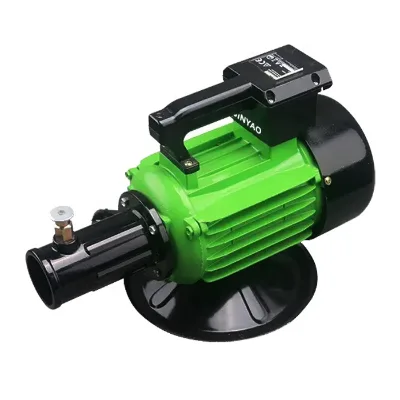
Concrete Vibrating Internal Electric Concrete Vibrator Mechanical Vibrator
$52.00 - $55.00
MOQ: 10 Pieces




Comprehensive Sourcing Guide
Wet Shotcrete Concrete Vibrator Sourcing Guide
Sourcing wet shotcrete concrete vibrators requires a nuanced understanding of how vibration technology integrates with high-pressure application systems. These devices are critical for ensuring proper consolidation of concrete when it is pneumatically or hydraulically projected onto vertical or overhead surfaces. Unlike traditional static concrete, shotcrete undergoes rapid hydration and must be compacted immediately to eliminate air voids and ensure structural integrity. The procurement process must account for the unique mechanical stresses these tools face, including high abrasion from aggregate and the dynamic forces of continuous operation. Buyers must distinguish between general-purpose concrete vibrators and those specifically engineered for the wet shotcrete process, where the feed mechanism and vibration frequency must align with the material's rheological properties.
The market for these specialized tools is characterized by a mix of standardized industrial components and customizable solutions tailored to specific project requirements. Procurement teams often encounter listings that blend attributes of brick production lines, cutting machines, and general concrete paving equipment, necessitating careful verification of the actual product type. The core keyword "Wet Shotcrete Concrete Vibrator" points to a specific niche where the vibrating head must be compatible with the shotcrete nozzle or feed pipe. Buyers should focus on suppliers who clearly define the vibration mechanism, whether it is a flexible shaft driven by an electric motor or a direct-drive system, and ensure that the specifications match the intended application of cement concrete pavement or structural reinforcement.
Product Scope and Observed Listing Signals
The observed product landscape reveals a diverse range of listings that share the core keyword but vary significantly in their technical focus. Data indicates a price range of 3 to 1000 USD and a minimum order quantity (MOQ) spanning from 1 to 150 units, suggesting a market that serves both individual contractors and large-scale industrial procurement. The presence of models such as PV-45C, PV-45A, and PV-45B highlights a standardized product line, yet the accompanying attributes often include unrelated processes like "Brick Production Line" or "Brick Cutting Machine." This discrepancy requires buyers to scrutinize the actual product description rather than relying solely on the title or broad category tags. The scope of available products includes cylinder-type structures with specific vibrating amplitudes and effective diameters, indicating that the inventory covers a spectrum of power and size options.
Further analysis of the listing signals shows that customization is available, allowing buyers to tailor specifications to their operational needs. The observed attributes include varying vibrator head lengths, such as 350, 380, 400, and 480mm, and head sizes ranging from 40 to 65mm. These variations are critical for matching the vibrator to the specific thickness and geometry of the shotcrete application. Additionally, the presence of wireless remote control options suggests a shift toward more advanced, operator-friendly designs that enhance safety and precision. Buyers should interpret these signals as evidence of a flexible supply chain capable of providing both standard off-the-shelf units and specialized configurations, but they must verify that the specific model selected aligns with the wet shotcrete process rather than general concrete pouring or brick manufacturing.
Technical Specifications to Verify
When evaluating technical specifications, the first priority is to confirm the power and vibration parameters that directly impact consolidation efficiency. The observed data includes input power ratings of 1.3kw and voltage ranges of 210-240V, which are standard for industrial electric motors. However, buyers must verify that these electrical specifications match their site power infrastructure, as discrepancies can lead to operational failures. The vibrating RPM is listed as 12000c/Min, a high-frequency range suitable for breaking the surface tension of wet concrete and allowing air bubbles to escape. It is essential to cross-reference this RPM with the vibrating amplitude, observed at 1.2mm, to ensure that the energy transfer is sufficient for the density of the shotcrete mix. Mismatched power and amplitude can result in under-compacted layers or excessive segregation of aggregates.
The physical dimensions and material composition of the vibrator head are equally critical for durability and performance. The effective diameter is noted as 55mm, while the head itself may vary in size from 40 to 65mm, indicating that the housing and internal components must be precisely engineered. The length of the rubber pipe, observed between 10-15m, plays a vital role in transmitting vibration from the motor to the head while absorbing shock. Buyers should verify the material of the shaft, with carbon steel being a common choice for its strength and resistance to torsional stress. The weight of the vibrator head, ranging from 2.8kg to 8kg, affects operator fatigue and maneuverability, particularly in overhead applications. Additionally, the surface roughness of the journal, specified between 0.63-0.16μM, indicates the precision of the manufacturing process, which directly influences the lifespan of the flexible shaft and the smoothness of vibration transmission.
Compliance and Safety Documentation
Compliance with international standards is a non-negotiable aspect of sourcing industrial vibration equipment. The observed listings frequently mention CE and ISO9001 certifications, which serve as baseline indicators of manufacturing quality and electrical safety. The CE mark confirms that the product meets EU health, safety, and environmental protection standards, which is particularly relevant for buyers operating in or exporting to European markets. ISO9001 certification indicates that the supplier follows a consistent quality management system, reducing the risk of defects in critical components like the flexible shaft and motor housing. Buyers should request copies of these certificates and verify their validity through the issuing bodies, as counterfeit documentation is a known risk in the industrial equipment sector.
Safety documentation must also address the operational hazards associated with high-frequency vibration and electrical equipment. The use of wireless remote control, as observed in some listings, enhances safety by allowing operators to maintain a safe distance from the nozzle and the wet concrete stream. However, buyers must ensure that the remote control system is robust against interference and has a reliable range for the intended work area. Additionally, the product origin, often listed as Ningbo, China, should be accompanied by detailed user manuals and maintenance guides in the buyer's language. These documents should include clear instructions on handling the flexible shaft, preventing kinks or breaks, and performing routine inspections of the electrical connections. Proper documentation is essential for training operators and ensuring that the equipment is used within its designed parameters, thereby minimizing the risk of injury or equipment failure.
Cost Drivers and Commercial Terms
The cost of wet shotcrete concrete vibrators is influenced by several key factors, including the complexity of the vibration mechanism, the quality of materials used, and the level of customization required. The observed price range of 3 to 1000 USD reflects this variability, with lower-end models likely being basic electric vibrators and higher-end models incorporating advanced features like wireless control or specialized head designs. Buyers should consider the total cost of ownership, which includes maintenance, spare parts, and energy consumption, rather than just the initial purchase price. The input power of 1.3kw, for example, will have a direct impact on electricity costs over the lifespan of the equipment, especially in high-utilization environments.
Commercial terms such as MOQ and delivery time also play a significant role in the procurement decision. The observed MOQ range of 1 to 150 units allows for flexibility, enabling buyers to start with small orders for testing or scale up for larger projects. However, bulk purchases may offer economies of scale, reducing the per-unit cost. The delivery time, observed as 30 days as usual, is a standard lead time for manufactured goods, but buyers should confirm this with the supplier, as it can vary based on stock availability and production capacity. Packaging, listed as carton and pallet, is another factor to consider, as improper packaging can lead to damage during transit. Buyers should negotiate clear terms regarding shipping, insurance, and liability for damaged goods to protect their investment.
Supplier Qualification and Quality Control
Supplier qualification is a critical step in ensuring the reliability and performance of wet shotcrete concrete vibrators. Buyers should prioritize suppliers who demonstrate a clear understanding of the wet shotcrete process and can provide detailed technical support. The presence of customization options suggests that the supplier has the engineering capability to adapt products to specific needs, but buyers must verify this through direct communication and technical discussions. It is also important to assess the supplier's production capacity and quality control processes, as indicated by their ISO9001 certification. Buyers should request information about their testing procedures, including checks for vibration amplitude, RPM, and electrical safety, to ensure that every unit meets the specified standards.
Quality control should extend beyond the initial purchase to include ongoing performance monitoring and maintenance support. Buyers should establish a relationship with the supplier that includes access to spare parts, such as flexible shafts and vibrator heads, which are subject to wear and tear. The observed attributes, such as the journal diameter dimensional accuracy of It6-It9, indicate a high level of manufacturing precision, but buyers should verify that the supplier maintains this standard over time. Regular audits or third-party inspections may be necessary for large orders to ensure consistency in quality. Additionally, buyers should evaluate the supplier's responsiveness to technical queries and their ability to provide timely support in the event of equipment failure, as downtime can be costly in construction projects.
Long-Term Procurement Checks
Long-term procurement success depends on establishing a robust framework for evaluating supplier performance and product reliability over time. Buyers should implement a system for tracking the performance of the vibrators in the field, including metrics such as mean time between failures, energy efficiency, and operator feedback. This data can be used to negotiate better terms with suppliers, such as extended warranties or volume discounts, and to identify areas for improvement in the product design. The observed attributes, such as the weight of the vibrator head and the length of the rubber pipe, should be monitored for durability, as these components are prone to wear in harsh construction environments.
Furthermore, buyers should stay informed about technological advancements in the wet shotcrete sector, such as new materials for flexible shafts or more efficient motor designs. Engaging with industry forums and attending trade shows can provide insights into emerging trends and best practices. It is also important to review the supplier's commitment to sustainability and environmental compliance, as these factors are increasingly important in global procurement strategies. By maintaining a proactive approach to supplier management and product evaluation, buyers can ensure that their wet shotcrete concrete vibrators continue to meet the demanding requirements of modern construction projects, delivering consistent performance and value over the long term.
FAQs
What are the key specifications of the PV-45C concrete vibrator?
The PV-45C model features a 40mm vibrator head diameter and a 400mm rubber pipe length. It operates at 12000 RPM with a 1.3kw input power and 210-240V voltage. The effective diameter is 55mm, and the head weighs 2.8kg. These specs ensure efficient concrete consolidation for wet shotcrete applications.
Can the Wet Shotcrete Concrete Vibrator be customized for specific needs?
Yes, customization is available for these concrete vibrators. Buyers can request specific configurations to match their operational requirements. The product supports various head sizes and shaft types. This flexibility allows for tailored solutions in different construction environments while maintaining standard performance metrics.
What is the typical lead time for ordering these concrete vibrators?
The usual delivery time is 30 days. This standard lead time applies to most orders unless otherwise specified. Buyers should account for this duration when planning project schedules. The timeline ensures proper manufacturing and quality checks before shipment from the origin location.
Which certifications are provided for the new concrete vibrator units?
The units come with CE and ISO9001 certifications. These confirm compliance with international quality and safety standards. The products are listed as new condition. Buyers can rely on these certifications for regulatory compliance in various global markets.
How is the concrete vibrator packaged for safe transport?
The vibrators are packed in cartons and on pallets. Some listings specify carton-only packaging with standard dimensions. This method protects the equipment during shipping. The packaging ensures the units arrive in good condition, ready for immediate installation and use on site.
What is the power consumption of the wet shotcrete vibrator?
The input power is 1.3kw for the standard model. It operates on a voltage range of 210-240V. This power level is suitable for portable concrete vibration tasks. The efficient motor design helps maintain consistent performance while managing energy usage during extended operation periods.