Find Wide Brim Cowboy Hat for Travel, Cycling, and Outdoor Events
Source 30 verified listings for the Wide Brim Cowboy Hat featuring adjustable crowns, custom logos, and multiple seasonal options. Buyers can compare materials like wool, sizes ranging from 55cm to 61cm, and pricing from 0.3 to 25 USD directly from suppliers in Hebei and China.
Key considerations
Products List


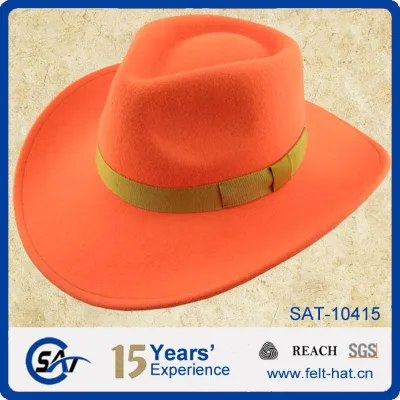
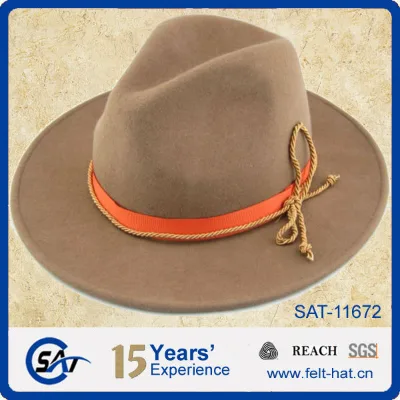
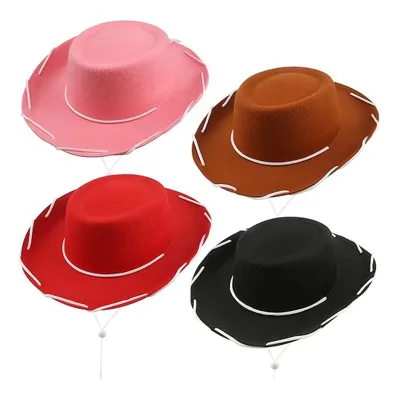


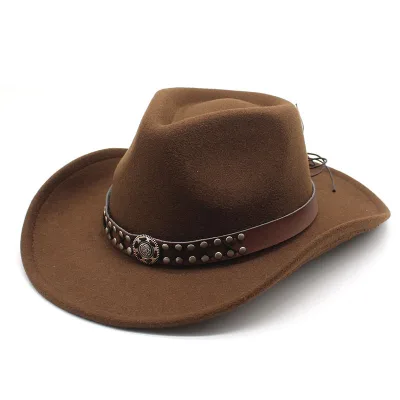


Wholesale Quality Design Wide Brim Sun Western Straw Cowboy Hats for Adults
$1.20 - $3.20
MOQ: 500 Pieces


Comprehensive Sourcing Guide
Strategic Sourcing Guide for Wide Brim Cowboy Hats
The global market for wide brim cowboy hats presents a complex landscape for B2B procurement professionals seeking to balance aesthetic versatility with functional durability. Sourcing these items requires a nuanced understanding of material composition, manufacturing capabilities, and the specific logistical constraints inherent in the headwear industry. This guide synthesizes available product data and industry standards to provide a structured approach for buyers evaluating suppliers for wide brim cowboy hats. The focus remains on evidence-based decision-making, ensuring that procurement strategies are grounded in observable product attributes rather than unverified marketing claims.
Technical Specifications and Material Composition
When evaluating wide brim cowboy hats, the primary technical differentiator lies in the material composition and structural integrity. The observed product data indicates a strong prevalence of 100% wool as a primary material, particularly for items marketed with high-quality claims. Wool offers distinct advantages in terms of breathability, shape retention, and seasonal adaptability. However, buyers must also account for variations in material specifications across different supplier listings. Some entries suggest a focus on plain dyed fabrics or specific pattern technologies like applique embroidery, which can influence the final tactile feel and visual appeal of the product.
The structural design is equally critical. The data confirms that viable products typically feature a "With Crown" and "With Brim" configuration, adhering to the traditional cowboy hat silhouette. The crown dimensions and brim width are essential for functionality, with observed size specifications ranging from 55cm to 61cm, and specific model sizes listed as 57cm, 59cm, and 61cm. This range suggests that suppliers often provide a spectrum of head sizes rather than a single "one size fits all" approach, although some listings do specify "One Size" as a standard. The presence of an adjustable feature is a significant technical attribute, allowing the hat to accommodate varying head circumferences within the specified range.
Furthermore, the finishing details, such as the inclusion of ribbons and ropes as accessory types, contribute to the overall specification profile. Buyers should verify the attachment methods for these accessories, as the durability of the ribbon and rope can impact the longevity of the product. The pattern technology, ranging from sublimation transfer prints to embroidered designs, dictates the production process and the potential for customization. Understanding these technical variables is the first step in defining the exact product requirements for a procurement order.
Seasonal Adaptability and Functional Features
The versatility of the Wide Brim Cowboy Hat is heavily influenced by its seasonal adaptability. The observed data presents a diverse range of seasonal classifications, including Winter, Summer, Spring/Autumn, and a general "Four Seasons" designation. This discrepancy highlights the importance of verifying the specific thermal and protective properties of the hat intended for purchase. A hat marketed for winter use likely prioritizes insulation and wind resistance, whereas a summer variant may focus on breathability and sun protection.
Functional features observed in the product listings include water resistance and adjustability. These attributes are critical for buyers targeting outdoor applications. The "Water Resistant" claim suggests a treatment or material weave capable of shedding moisture, which is essential for hats used in variable weather conditions. Similarly, the "Adjustable" feature ensures a secure fit during dynamic activities. The data also notes specific applicable scenes, such as beach, casual outdoor travel, cycling, business, and home use. This wide array of usage scenarios implies that the hat is not a niche item but a versatile accessory. However, buyers must correlate these claimed scenes with the actual material properties. For instance, a 100% wool hat may be less suitable for high-intensity cycling in hot weather compared to a synthetic blend, even if the supplier lists "cycling" as an applicable scene.
The "Special Features" column further reinforces the need for careful verification. While "Adjustable" is a standard feature, the presence of "Water Resistant" in some listings but not others indicates that this is not a universal attribute. Procurement teams should explicitly request confirmation of water resistance testing or material specifications for orders where this feature is a requirement. Ignoring these distinctions can lead to product mismatches where the hat fails to perform in the intended environment.
Cost Drivers and Pricing Structures
Understanding the cost drivers for wide brim cowboy hats requires an analysis of the observed price ranges and minimum order quantities (MOQs). The market data indicates a significant variance in pricing, with observed listed prices ranging from $0.30 to $25.00 USD. This wide spectrum suggests that the final cost is heavily dependent on material quality, customization complexity, and order volume. The lower end of the price range likely corresponds to basic, plain-dyed models with minimal customization, while the higher end reflects premium wool construction, intricate embroidery, or custom branding.
MOQs also play a pivotal role in cost calculation. The observed MOQ range spans from 1 piece to 1000 pieces, with specific listings showing MOQs of 10 pieces, 1 piece, and 240 pieces. This variability allows buyers to test the market with small batches or commit to larger volumes for better unit economics. The "Selling Units" are typically listed as "Single Item," which simplifies the calculation of per-unit costs but requires careful aggregation for total order value.
Payment terms, such as T/T (Telegraphic Transfer), are standard in this sector and should be factored into the financial planning. Additionally, the "Sample Time" of 7-15 days is a critical lead time component that affects the overall procurement timeline. Buyers must account for this sample production period before mass production can begin. The "Single Gross Weight" varies significantly between 0.500kg and 2.000kg, which directly impacts shipping costs. Heavier items, likely those with more substantial wool content or additional accessories, will incur higher freight charges. Therefore, the total cost of ownership extends beyond the unit price to include logistics, which must be calculated based on the specific weight and packaging dimensions of the selected model.
Supplier Evaluation and Origin Verification
Selecting the right supplier involves a rigorous evaluation of their origin, production capabilities, and compliance with quality standards. The data points to "Hebei" and "China" as the primary places of origin for these products. Hebei is a known manufacturing hub in China, particularly for textiles and headwear. Buyers should verify the specific factory location within this region to ensure transparency and facilitate logistics planning.
The "Product Name" is consistently listed as "Cowboy Hat," but the "Model Number" varies, with examples like "ULD-0718098" and "SAT-10415 Cowboy Hats." This variation indicates that suppliers may have multiple product lines or that the model numbers are specific to certain design iterations. Buyers should request a comprehensive catalog or product sheet that links these model numbers to specific material and feature descriptions.
Customization is a key selling point, with "Customized Logo Accept" and "Customization Available" appearing frequently in the data. This suggests that many suppliers are willing to engage in OEM (Original Equipment Manufacturer) or ODM (Original Design Manufacturer) arrangements. However, the "Logo" attribute varies between "Customized Logo Accept" and "Customized," implying different levels of branding flexibility. Buyers must clarify the extent of customization allowed, including the number of colors, placement, and the specific printing methods available, such as sublimation transfer print or applique embroidery.
Quality Control and Compliance Checks
Quality assurance is paramount when sourcing wide brim cowboy hats, especially given the variation in observed product attributes. The "Quality" attribute is listed as "High-Quality" in some entries, but this is a subjective claim that requires objective verification. Buyers should implement a quality control protocol that includes physical inspection of the sample for material consistency, stitching integrity, and the durability of the adjustable features.
The "Standard" attribute provides some insight into packaging and sizing, with dimensions like "30X25X15 cm" and "35X30X25 cm" listed for single package sizes. These dimensions are crucial for logistics planning and inventory management. Buyers should verify that the packaging, often described as "OPP Bag," is sufficient to protect the hat during transit without causing deformation. The "Single Gross Weight" discrepancies (0.500kg vs. 2.000kg) also necessitate a check on the packing density and material usage to ensure consistency across batches.
Compliance checks should extend to the materials used. While 100% wool is a common specification, buyers must ensure that the wool is sourced ethically and meets any relevant environmental or labor standards required by their target market. The "Pattern Theme" of "Character" and "Pattern" types like "Plain" or "Plain Dyed" should be inspected to ensure they match the design specifications and do not infringe on intellectual property rights. Additionally, the "Applicable User" and "Applicable Gender" data, which includes "Adults," "Boys & Girls," and "Unisex," should be verified to ensure the product sizing and design are appropriate for the intended demographic.
Long-Term Procurement and Application Strategy
For long-term procurement success, buyers must align their sourcing strategy with the diverse applications of wide brim cowboy hats. The "Usage" attribute lists "Gift" and "Accessory," indicating that these hats are often purchased for promotional purposes or as fashion accessories. The "Applicable Scene" data, ranging from business to outdoor activities, suggests a broad market potential. Buyers should consider the specific needs of their target audience when selecting a supplier. For instance, a supplier specializing in "Water Resistant" hats may be ideal for outdoor event organizers, while a supplier with extensive "Customized Logo" capabilities might be better suited for corporate gift programs.
The "Sample Time" of 7-15 days is a critical factor in maintaining a responsive supply chain. Buyers should establish a relationship with suppliers who can consistently meet this timeline to avoid delays in product launches. The "Payment" terms, specifically T/T, should be negotiated to balance cash flow requirements with supplier security.
Finally, the "Selling Units" being "Single Item" allows for flexible ordering but requires careful management of inventory levels. Buyers should plan for potential variations in "MOQ" across different product lines, as some suppliers may require 240 pieces for certain models while others accept orders as low as 1 piece. By understanding these dynamics, buyers can optimize their inventory turnover and minimize the risk of overstocking or stockouts. The ability to customize, combined with the wide range of seasonal and functional options, makes the Wide Brim Cowboy Hat a versatile product category that demands a strategic and evidence-based approach to sourcing.
FAQs
How can I customize the logo on these cowboy hats?
Customized logos are accepted for these wide brim cowboy hats. Suppliers offer options for sublimation transfer prints or applique embroidery to apply your branding. You should confirm the specific printing method and placement details before placing a bulk order to ensure the design matches your requirements.
What is the minimum order quantity for these hats?
The minimum order quantity varies significantly depending on the specific supplier and product model. Some listings accept orders as low as one piece, while others require a minimum of 240 pieces or 10 pieces. You must check the specific MOQ for the model you select before confirming your purchase volume.
Which materials are used to make these cowboy hats?
Many of the available wide brim cowboy hats are constructed from 100% wool. Some variations may feature plain dyed fabrics or specific pattern technologies like applique embroidery. Buyers should verify the exact material composition for each model to ensure it meets their quality and seasonal needs.
Can these hats be used for outdoor activities in winter?
Yes, these hats are suitable for winter use and various outdoor scenes including travel and cycling. Some models are explicitly marked as water resistant and adjustable for better performance in cold weather. However, you should verify the specific seasonal rating and material properties for the exact model you intend to purchase.
What are the standard size specifications for these hats?
The hats typically come in sizes ranging from 55cm to 61cm, with specific options like 57cm, 59cm, and 61cm available. Some listings also offer a one-size-fits-all configuration. The adjustable feature allows the hat to accommodate varying head circumferences within the specified range for a secure fit.
How long does it take to receive a sample?
The sample time for these wide brim cowboy hats is typically between 7 to 15 days. This duration applies to the production of a single item for quality verification before mass production begins. You should factor this lead time into your overall procurement schedule when planning your order.
Where are these cowboy hats manufactured?
The primary places of origin for these products are Hebei and China. Hebei is a known manufacturing hub for textiles and headwear in the region. Buyers should verify the specific factory location within this area to ensure transparency and facilitate logistics planning for their orders.