Source Wireless Water Level Sensor for Groundwater, Industrial, and Tank Monitoring
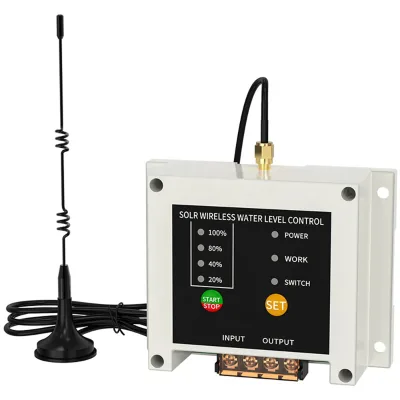
Find and compare 30 Wireless Water Level Sensor options for groundwater monitoring, industrial tank management, and automated liquid level control. Evaluate specifications such as piezoelectric and capacitive principles, accuracy ratings, and explosion-proof certifications to select the right solution for your application.
Key considerations
Products List


Radar Water Level Sensors for Continuous, Non-Contact Level Measurement of Liquids.
$500.00 - $860.00
MOQ: 1 Pieces



Comprehensive Sourcing Guide
Wireless Water Level Sensor Sourcing Guide
Sourcing wireless water level sensors requires a careful balance between technical precision and logistical reliability, particularly when deploying devices in remote or hard-to-reach environments. Buyers must navigate a market where product attributes vary significantly across suppliers, ranging from piezoelectric and capacitive principles to float-type magnetic switches. The core challenge lies in verifying that the selected device meets the specific depth, accuracy, and environmental requirements of the installation site while ensuring that the wireless communication protocol remains stable over time. This guide provides a structured approach to evaluating these sensors, focusing on the critical decision points that impact long-term operational success and total cost of ownership.
The procurement process begins with a clear definition of the operational environment, as factors such as temperature extremes, chemical exposure, and physical space constraints dictate the necessary sensor specifications. While many listings advertise broad compatibility, buyers must scrutinize the actual material composition, such as stainless steel construction, and the operating temperature range to ensure durability. Furthermore, the choice between different output signal types, including analog outputs, must align with the existing data acquisition infrastructure. By establishing these technical baselines early, buyers can filter out incompatible options and focus on suppliers who demonstrate the capability to deliver customized solutions that fit their specific groundwater or liquid level monitoring needs.
Product Scope and Observed Listing Signals
The current market for wireless water level sensors exhibits a wide range of pricing and minimum order quantities, reflecting the diversity of available technologies and customization options. Observed listing signals indicate a price range from $1 to $1,000 USD, with minimum order quantities varying from single units to batches of 100. This variance suggests that buyers can source both prototype-level devices and bulk industrial deployments, but they must carefully evaluate whether the listed price includes essential accessories, such as mounting hardware or specialized cables, or if these are charged separately. The presence of customization options, such as adjustable depth ranges from 0 to 500 meters, indicates that many suppliers are willing to tailor products to specific project requirements, which can be advantageous for unique installation scenarios.
Product models and specifications found in typical listings often include identifiers like GD-S, HDL300 series variants, and AT series, each potentially representing different internal architectures or feature sets. Buyers should note that attributes such as "All in One" structure or "Piezoelectric Type" principle are not universal across all listings and must be verified for each specific model. Additionally, packaging standards vary, with some products shipped in standard carton boxes while others may require wooden boxes for heavier or more sensitive components. Understanding these listing signals helps buyers anticipate logistical requirements and ensures that the selected sensor aligns with the physical and technical constraints of the deployment site.
Technical Specifications to Verify
Accuracy and measurement principle are the most critical technical factors when selecting a Wireless Water Level Sensor, as they directly impact the reliability of the collected data. Buyers should verify whether the sensor utilizes a piezoelectric, capacitive, or float-type magnetic principle, as each has distinct advantages and limitations regarding response time, durability, and suitability for different liquid types. For instance, piezoelectric sensors often offer high accuracy, with some listings specifying tolerances of ±3mm or 0.2%, but buyers must confirm if these figures apply to the specific depth range they intend to use. It is also essential to check the operating voltage and current consumption, as devices requiring 5.0V and less than 12mA may have different power management needs compared to higher-drain alternatives.
Environmental resilience and communication capabilities are equally important considerations that must be validated before purchase. The operating temperature range is a key specification, with some sensors rated for -20°C to 80°C, while others may withstand more extreme conditions up to +380°C. Buyers must ensure that the selected sensor’s IP rating and explosion-proof certifications, such as ATEX, match the hazardous or wet conditions of the installation site. Additionally, the wireless output signal type, whether analog or digital, must be compatible with the receiver or data logging system. Verifying these technical details prevents costly mismatches between the sensor and the existing infrastructure, ensuring seamless integration and accurate data transmission.
Compliance and Safety Documentation
Certification requirements vary by region and application, making it essential for buyers to verify that the sensor meets the necessary regulatory standards for their target market. Common certifications observed in the market include CE, RoHS, CCC, and ISO, which indicate compliance with safety, environmental, and quality management standards. Buyers should request valid certification documents from suppliers to ensure that the products have undergone independent testing and meet the legal requirements for import and operation in their country. For example, CE marking is crucial for European markets, while CCC certification may be required for domestic sales in China, and RoHS compliance ensures that hazardous substances are minimized in the product’s construction.
Safety documentation, particularly regarding explosion-proof ratings, is critical for sensors deployed in potentially hazardous environments. Listings may mention ATEX certification, which is a key standard for equipment used in explosive atmospheres, but buyers must confirm that the specific model and its wireless components are covered under this certification. Additionally, buyers should inquire about the warranty terms, with many suppliers offering a one-year warranty, and the availability of technical support, such as 7*24h assistance, to address any issues that may arise during installation or operation. Ensuring that all necessary compliance and safety documents are in place protects the buyer from legal liabilities and ensures the long-term reliability of the sensor system.
Cost Drivers and Commercial Terms
The total cost of ownership for wireless water level sensors is influenced by several factors beyond the initial unit price, including customization, shipping, and after-sales support. Customization options, such as specific depth ranges or output signals, may incur additional costs, so buyers should clarify these charges upfront to avoid unexpected expenses. Shipping methods also play a significant role in the overall cost, with door-to-door delivery services offering convenience but potentially higher fees compared to standard freight options. Buyers should evaluate the trade-off between shipping speed and cost, especially for large orders where logistics can become a significant portion of the total expenditure.
Commercial terms, including payment conditions and lead times, should be negotiated clearly to ensure a smooth procurement process. While specific lead times are not always disclosed in initial listings, buyers should request estimated production and delivery schedules to align with their project timelines. Additionally, the availability of localization services and technical support can add value to the purchase, reducing the burden on the buyer’s internal team. By understanding these cost drivers and commercial terms, buyers can make informed decisions that balance budget constraints with the need for high-quality, reliable sensor solutions.
Supplier Qualification and Quality Control
Evaluating supplier qualifications is a crucial step in ensuring the reliability and consistency of the wireless water level sensors. Buyers should verify the supplier’s manufacturing capabilities, including their production processes and quality control measures, to ensure that the products meet the specified standards. Suppliers located in regions like Shaanxi, China, may have established supply chains and expertise in sensor manufacturing, but buyers should still conduct due diligence to confirm their reputation and track record. Requesting samples before placing bulk orders allows buyers to test the sensors in real-world conditions and verify that they meet the required performance criteria.
Quality control processes, such as factory inspections and product testing, should be clearly defined and agreed upon with the supplier. Buyers should inquire about the supplier’s warranty policies and their ability to provide replacement units in case of defects. Additionally, the availability of technical support, including 7*24h assistance, can be a valuable indicator of the supplier’s commitment to customer satisfaction. By thoroughly evaluating supplier qualifications and quality control measures, buyers can mitigate the risk of receiving substandard products and ensure a reliable supply chain for their Wireless Water Level Sensor needs.
Long-Term Procurement Checks
Long-term procurement success depends on establishing a robust relationship with suppliers and implementing regular performance reviews. Buyers should monitor the sensors’ performance over time, tracking metrics such as accuracy drift, battery life, and wireless signal stability to identify any potential issues early. Regular communication with the supplier can help address any technical challenges and ensure that the sensors continue to meet the evolving needs of the project. Additionally, buyers should stay informed about advancements in sensor technology and wireless communication protocols to ensure that their systems remain up-to-date and competitive.
Reviewing supplier performance and market trends is also essential for maintaining a resilient supply chain. Buyers should periodically assess the supplier’s ability to meet delivery deadlines, maintain consistent quality, and provide competitive pricing. Engaging with multiple suppliers can provide leverage in negotiations and reduce dependency on a single source. By implementing these long-term procurement checks, buyers can ensure that their Wireless Water Level Sensor systems remain reliable, cost-effective, and aligned with their strategic objectives.
FAQs
What is the measurement accuracy of the Wireless Water Level Sensor?
The measurement accuracy is typically ±3mm or 0.2% depending on the specific model. This precision ensures reliable groundwater level monitoring. Users should verify the exact specification for their chosen model, as accuracy can vary between the GD-S and HDL300 series devices. High accuracy is critical for industrial applications requiring precise liquid level data.
Can the sensor operate in extreme temperature environments?
Yes, the sensor can operate in varying temperature ranges. Some models support -20℃ to 80℃, while others handle -40℃ to +380℃. This flexibility allows deployment in diverse industrial settings. Buyers must select the appropriate model based on their specific environmental conditions to ensure long-term reliability and stable performance of the piezoelectric or float type mechanism.
Which certifications are available for these wireless water level sensors?
Available certifications include CE, RoHS, CCC, and ISO. These standards ensure compliance with international safety and environmental regulations. The ATEX explosion-proof rating is also available for hazardous environments. Buyers should request specific certification documents from suppliers to verify compliance with local regulatory requirements before placing orders for industrial deployment.
How is customization handled for these liquid level transmitters?
Customization is available for various product attributes. Buyers can request specific depth ranges, such as 0-500m, or customized packing options like carton or wooden boxes. The all-in-one structure allows for tailored solutions. Suppliers offer localization service and 7*24h technical support to assist with custom requirements, ensuring the device fits specific application needs.
What is the typical warranty and technical support provided?
The standard warranty is 1 year for most models. Technical support is available 7*24h to assist with installation and troubleshooting. Suppliers offer localization service to ensure smooth operation. This support structure helps minimize downtime. Buyers should confirm warranty terms and support details with the specific manufacturer, as policies may vary between different product series and suppliers.
What is the minimum order quantity for these sensors?
The minimum order quantity ranges from 1 to 100 units. This flexibility allows both small-scale testing and large-scale industrial procurement. Buyers can start with a single unit for evaluation. The low MOQ facilitates easier entry for new projects. Suppliers typically offer door-to-door delivery to streamline the logistics process for orders of any size within this range.