Animatronic Animal Suppliers and Manufacturers
Source 17 verified suppliers for Animatronic Animal models from China. Compare response times, lead times, certifications, and pricing to find the right partner. Review product details and request quotes today; review the available evidence before requesting comparable quotations from suitable candidates.
Suppliers List

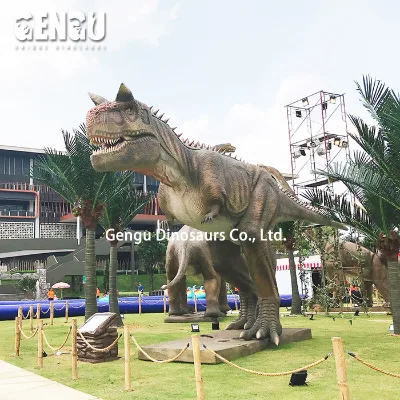
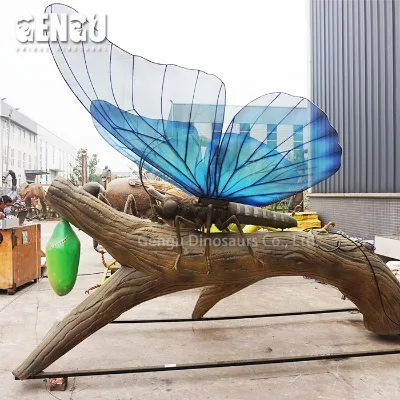
Gengu Dinosaurs Technology Co., Ltd.
- Verified by CTI
- Combined
- China Sichuan
- Lead time23 days
- Avg. response≤ 25h
Main productsAnimatronic Dinosaur, Animatronic Animal, Animatronic Insect, Fiberglass Dinosaur, Fiberglass Fossil and Skeleton, Dinosaur Costume, Dinosaur Ride, Customized Robot, Animatronic Dragons, Amusement Park Facility
Main marketsSouth America,East Asia(Japan/ South Korea),Europe,Australia,North America


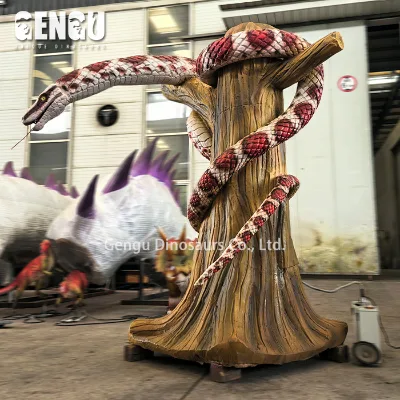
Snake Year Mascot Model Cute Cartoon Animatronic Snake Animal For Park Show
$500.00 - $20000.00
MOQ: 1 Pieces
Gengu Dinosaurs Technology Co.,Ltd.
- Verified by TüVRheinland
- Manufacturer, Trading Company
- Lead time20 days
- Avg. response≤ 3h
Main productsAnimatronic Dinosaurs, Lantern Art, Fiberglass Products, Animatronic Animals, Dinosaur Robot
Main marketsNorth America(28%), Domestic Market(27%), Western Europe(15%)

- Verified by TUVRHEINLAND
- Trading Company
- China Zhejiang
- Lead time15 days
- Avg. response≤ 6h
Main marketsEurope

Sichuan Genial Technology Co., Ltd.
- Verified by SGS
- Manufacturer/Factory
- China Sichuan
- Lead time38 days
- Avg. response≤ 10h
Main productsAnimatronic Dinosaur, Animatronic Animal, Lantern Festival, Miniature Landscape
Main marketsEastern Europe,Mid East,North America,Southeast Asia,Eastern Asia,Oceania,Western Europe

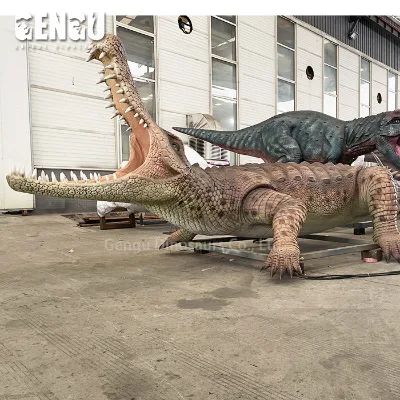
AA-07 Customize Life Size Ocean Creature Simulation Animatronic Animal for Sale
$2299.00 - $3999.00
MOQ: 1 Pieces

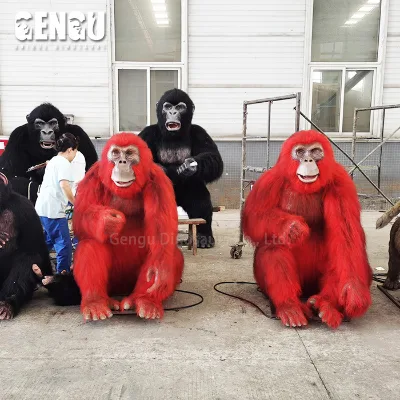
AA-Zm24 Animatronics Animals Realistic Electric Animal Gorilla Robot Animals
$2299.00 - $2699.00
MOQ: 1 Pieces


Zigong Aurora Culture Art Co., Ltd
- Verified by SGS
- Trading Company
- China Sichuan
- Lead time30 days
- Avg. response≤ 17h
Main productsChinese Animal Lantern, Holiday Lantern Festival, Lantern Sculpture, Theme Festival Lantern, Animatronic Dinosaur, Animatronic Animal
Main marketsSoutheast Asia/ Mideast,Europe,Australia,North America

Giant Animatronic Robotic Simulation Animal Model Amusement Park Animal
$2888.00 - $4888.00
MOQ: 1 Pieces


Dongguan Jiehao Technology Co., Ltd.
- Verified by CTI
- Manufacturer/Factory
- China Guangdong
- Lead time90 days
- Avg. response≤ 3h
Main productsPlastic Toys, Vinyl Toys, Silicon Toys, Educational Toys, Intelligent Toy, Toys, Plastic Doll, Soft PVC Toys, 2D Soft PVC Keychain Toys, Blowing Toys
Main marketsSouth America,Eastern Europe,Mid East,North America,Southeast Asia,Eastern Asia,Oceania,Western Europe,Africa

Lianyungang Hongwen Toys Co., Ltd.
- Verified by SGS
- Combined
- China Jiangsu
- Lead time23 days
- Avg. response≤ 6h
Main productsCustom Plush Backpack, Stuffed Toy, Custom Plush Pillow, Custom Plush Doll, Custom Plush Toy, Custom Hold-All, Plush Pillow, Animal Plush, Stuffed Plush Toys, Plush Toy Animals
Main marketsAfrica,Southeast Asia/ Mideast,East Asia(Japan/ South Korea),Domestic,Europe,Australia,North America

Shanghai Touch Industrial Development Co., Ltd.
- Verified by TUVRHEINLAND
- Combined
- China Shanghai
- Lead time15 days
- Avg. response≤ 5h
Main productsInstant Hot Pack, Hot Cold Pack, Gel Eye Mask, Gel Ice Pack, Gel Bottle Cooler, Instant Ice Pack, Hand Warmer, Heat Pack, Cooling Scarf, Gel Beads
Main marketsSouth America,Others(foreignTradeCapacity.exportBusinessCapacityMarketOther),Southeast Asia/ Mideast,East Asia(Japan/ South Korea),Domestic,Europe,Australia,North America

- Verified by TUVRHEINLAND
- Trading Company
- China Jiangsu
- Lead time30 days
- Avg. response≤ 2h
Main productsPet Products, Pet Food, Pet House, Pet Plush Toy, Pet Clothes, Pet Collar, Cat Litter, Pet Leash, Pet Harness
Main marketsNorth America

- Verified by TUVRHEINLAND
- Trading Company
- China Zhejiang
- Lead time15 days
- Avg. response≤ 12h
Main productsWooden Toy, Outdoor Product, Kitchen Item, Personal Care Tool, Painting Set, Disk Rack, Yoga, Garden
Main marketsSouth America,Europe,North America

Yangzhou Lucky Bear Craft & Gifts Co., Ltd.
- Verified by TUVRHEINLAND
- Trading Company
- China Jiangsu
- Lead time30 days
- Avg. response≤ 2h
Main productsTeddy Bear, Plush Toy, Stuffed Animal, Toy Shoes, Baby Toy, Rocking Horse, Unstuffed Animal Skin, Indoor Slippers, Snow Boots, Promotional Toys
Main marketsEurope,North America

Shantou Kaixin Trading Co., Ltd
- Verified by BV
- Manufacturer
- China Guangdong
- Lead time23 days
- Avg. response≤ 7h
Main productsToy, Educational Toy, Remote Control Toy, Pretend Play Toy Set, Summer Toy, Vehicle Toy, Doll, Promotion Toy, Baby Toy, Game Toy

Dongguan Mayachi Gifts & Toys Co., Ltd.
- Verified by BV
- Combined
- China Guangdong
- Lead time45 days
- Avg. response≤ 4h
Main productsPlush Animals, Pillows/Cushions, Plush Dolls, Baby Toys, Shopping Bags, Plush School Bags, Pencil Bags/Holders, Phone Cases/Holders, Finger/Hand Puppets, Christmas Hat and Stockings
Main marketsDomestic,Europe,Australia,North America

- Combined
- China Guangdong
- Lead time45 days
- Avg. response≤ 1h
Main productsResin Craft, Baby Doll, Christmas Tree, Christmas Wreath, Christmas Garland, Christmas Decoration, Artificial Flower, Artificial Plant, Artificial Tree, Christmas Ornaments
Main marketsSouth America,Europe,North America

Yiwu Shuangyuan Christmas Artware Co., Ltd.
- Verified by TUVRHEINLAND
- Combined
- China Zhejiang
- Lead time30 days
- Avg. response≤ 7h
Main productsChristmas Decoration, Christmas Tree, Christmas Ball, Christmas Santa, Christmas Ornament, Christmas Gift, Christmas Wreath
Main marketsOthers(foreignTradeCapacity.exportBusinessCapacityMarketOther)

Animal Christmas Decorations Animated Christmas Decor Plush Christmas Stuffed Animals
$3.10 - $3.50
MOQ: 100 Pieces

Christmas Stuffed Animals Animated Christmas Decorations Stuffed Animal Christmas
$4.81 - $4.86
MOQ: 100 Pieces

Christmas Animals Animated Christmas Decorations Animated Christmas Toys
$2.99 - $3.21
MOQ: 100 Pieces

Shantou Chenghai Xaqi Toys Industrial Co., Limited
- Verified by BV
- Combined
- China Guangdong
- Lead time23 days
- Avg. response≤ 5h
Main productsRemote Control Car, Educational Toy, Sport Toy, Pretend Play Toys, Remote Contro Toy, Baby Toy, Summer Toy, B/O Toy
Main marketsSoutheast Asia/ Mideast,Domestic,Europe

Difanmax Tech Lianyungang Co., Ltd.
- Verified by BV
- Manufacturer/Factory
- China Jiangsu
- Lead time23 days
- Avg. response≤ 3h
Main productsConsumer Electronics, Kinesiology Tape Adhesive Tapes, Industrial Tools, Home & Garden, Gifts & Crafts, Sport Products Entertainment, Health & Medical, Auto Parts E-Bike Auto Tools & Components, Clothes Apparel, Bicycle Hardware Laboratory Measuring Protective
Main marketsSouth America,North America,Southeast Asia,Oceania,Western Europe


Comprehensive Sourcing Guide
Animatronic Animal Supplier Concentration and Factory Types
Current data indicates a concentration of manufacturing activity in specific Chinese provinces, with Sichuan emerging as a notable hub for animatronic production. Suppliers located in Sichuan, particularly in the Zigong area, are frequently associated with the fabrication of fiberglass products, dinosaur models, and complex robotic animals. This regional clustering suggests a specialized supply chain where raw materials like steel, fiberglass, and resin are readily available alongside skilled labor for handmade assembly. Buyers should prioritize verifying the specific city of operation, as facilities in Zigong often possess distinct capabilities in large-scale mechanical sculpture compared to general manufacturers elsewhere.
The supplier landscape includes a mix of combined entities that function as both manufacturers and trading companies, alongside pure trading firms. Some verified suppliers in the results hold ISO9001:2015 certification and are verified by third-party agencies like CTI or TÜV Rheinland, indicating a structured approach to quality control. However, not all suppliers in the market share these specific credentials or verification statuses. When evaluating potential partners, it is essential to distinguish between a factory that owns its brand and handles production versus a trading company that sources from multiple workshops. This distinction directly impacts the ability to customize designs, control production timelines, and manage the technical complexity of the animatronic mechanisms.
How to Verify Animatronic Animal Suppliers
Verification of supplier credibility relies heavily on third-party audit reports and system certifications rather than self-declared claims. In the current dataset, specific suppliers have been verified by recognized bodies such as CTI and TÜV Rheinland, providing a baseline of trust regarding their business legitimacy. Additionally, system certifications like ISO9001:2015, CE, GS, and TUV are listed for certain product lines, suggesting adherence to international quality and safety standards. Buyers must request current verification documents and cross-reference them with the supplier's profile to ensure the credentials are active and applicable to the specific animatronic models being ordered.
Beyond formal certifications, the response time and lead time metrics offer practical insights into a supplier's operational efficiency and reliability. Data shows response times ranging from approximately three hours to over twenty-five hours, with lead times varying between fifteen and twenty-three days depending on the order specifics. A supplier with a rapid response time and a shorter, consistent lead time is often better equipped to handle urgent projects or custom modifications. Buyers should compare these operational metrics across multiple potential partners to gauge their responsiveness. It is crucial to confirm that the stated lead times apply to the specific product configuration and order quantity, as these figures can fluctuate based on production capacity and material availability.
What to Compare Across Animatronic Animal Suppliers
When evaluating suppliers, buyers should compare key operational dimensions such as minimum order quantities, pricing structures, and product specifications. The available data reveals a wide range of minimum order quantities, with some suppliers accepting orders as low as one unit, while others require a minimum of five units. Pricing also varies significantly, with some models listed at specific price points like 500 or 3150, while others show a broader range up to 20,000. These variations often reflect differences in size, complexity, and the materials used, such as silicone, fiberglass, or steel. Buyers must carefully review the price range and MOQ to ensure alignment with their budget and project scale before initiating negotiations.
Product attributes and customization capabilities are another critical area for comparison. Suppliers offer varying levels of customization, with some providing options for color, size, and branding, while others may have more rigid specifications. The materials used, including steel, fiberglass, rubber, and resin, directly influence the durability and realism of the animatronic animals. Additionally, technical details such as power requirements (110-220V), plug types, and waterproofing features must be matched to the intended installation environment. Buyers should request detailed product attributes for each model to ensure compatibility with their specific site conditions and operational needs, rather than relying on general product descriptions.
Common Animatronic Animal Sourcing Risks
One significant risk in sourcing animatronic animals is the potential mismatch between advertised specifications and actual product performance. While some suppliers list certifications like CE, GS, and TUV, these may apply only to specific models or components rather than the entire unit. Buyers must verify that the safety standards and electrical certifications cover the specific Animatronic Animal they intend to purchase, especially for large-scale installations in public spaces. Relying solely on general certification claims without detailed product-specific documentation can lead to compliance issues and safety hazards during operation.
Another risk involves the variability in lead times and delivery details, which can impact project timelines. The data indicates that delivery details often depend on order quantity, and lead times can range from fifteen to twenty-three days. However, these figures may not account for potential delays in material sourcing, production bottlenecks, or shipping logistics. Buyers should clarify the exact delivery timeline for their specific order and confirm the packaging standards, such as wooden cases or simple packaging, to prevent damage during transit. Understanding the full scope of the delivery process is essential to mitigate the risk of project delays and ensure the animatronic animals arrive in perfect condition.
Animatronic Animal Regional Sourcing and Logistics
Regional sourcing strategies should focus on identifying suppliers with established manufacturing clusters that offer logistical advantages. Current evidence points to Sichuan as a primary location for animatronic production, where suppliers benefit from a concentrated ecosystem of materials and skilled labor. This concentration can streamline the supply chain and reduce lead times for complex projects. However, buyers should also consider suppliers in other regions, such as Zhejiang, which may offer different logistical benefits depending on the destination of the shipment. Evaluating the proximity of the supplier to major ports or logistics hubs can significantly impact shipping costs and delivery speed.
Logistics planning must account for the specific packaging and shipping requirements of large animatronic animals. Some suppliers utilize wooden cases for packaging, which provides robust protection for delicate mechanical components during transit. Others may use simpler packaging methods, which could be insufficient for international shipping. Buyers should confirm the packaging details and ensure that the supplier has experience in handling large, heavy items. Additionally, the origin of the product, such as Sichuan Zigong, should be verified to ensure accurate customs documentation and compliance with import regulations in the destination country. Proper logistics planning is crucial to avoid delays and additional costs associated with damaged goods or customs issues.
Animatronic Animal Commercial Terms and Order Planning
Commercial terms and order planning require careful attention to pricing, payment conditions, and warranty periods. The data shows a wide range of prices, from 500 to 20,000, depending on the model and customization level. Buyers should negotiate clear pricing structures that include all costs, such as manufacturing, packaging, and shipping, to avoid unexpected expenses. Additionally, warranty periods, such as the 24-month warranty mentioned for some products, are critical for long-term reliability. Buyers must ensure that the warranty covers all mechanical and electrical components and understand the process for claiming warranty services.
Order planning should also consider the customization options and production capacity of the supplier. Some suppliers offer customized colors, sizes, and branding, while others may have limited flexibility. Buyers should confirm the customization process and the impact on lead times and costs. Furthermore, the production capacity, such as the ability to handle sample processing or graphic processing, should be evaluated to ensure the supplier can meet the project's demands. By carefully planning the order and understanding the commercial terms, buyers can minimize risks and ensure a smooth procurement process for their Animatronic Animal projects.
FAQs
What is the price range for animatronic animals?
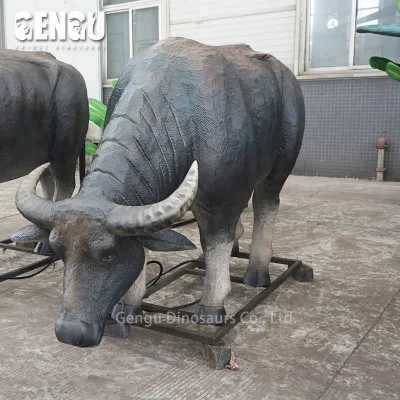
Prices for animatronic animals typically range from $500 to $20,000 depending on size and complexity. Specific models like the Animatronic Buffalo start around $2,350, while larger sets can reach $7,950. Buyers should check individual product listings for exact quotes based on customization needs and order quantity.
What certifications do these products hold?
Animatronic animals generally hold CE, GS, ISO, and TUV certifications. Some suppliers also provide FCC, RoHS, and UL standards compliance. These certifications ensure safety and quality for amusement park facilities and educational displays. Buyers should verify specific certificate details for each model before purchase to meet local regulations.
What materials are used in construction?
Manufacturers primarily use steel, fiberglass, rubber, and resin for durability and realism. Some outdoor models utilize silicone for a softer, more natural texture. The internal mechanisms are powered by standard 110-220V electricity. These materials ensure the models are waterproof and suitable for both indoor and outdoor amusement park environments.
What is the typical lead time for orders?
Lead times for animatronic animals generally range from 15 to 23 days. This duration depends on the order quantity and customization requirements. Some suppliers offer faster turnaround times for standard models. Buyers should confirm specific delivery details with the supplier to ensure the timeline meets their project schedule and installation deadlines.
Are customizations available for these models?
Yes, most suppliers offer customized sizes, colors, and mechanical movements. Buyers can request specific brand names or unique designs for educational or entertainment purposes. Customization options include different power plugs and packaging types. It is advisable to discuss specific requirements with the manufacturer to ensure the final product matches the intended display environment.