Parent Kid LED Bumper Car with Roof Suppliers and Manufacturers
Source a Parent Kid LED Bumper Car with Roof from 17 verified suppliers in China. Compare dimensions, CE certification, and pricing to find the right fit. Contact suppliers directly to request quotes and verify lead times; review the available evidence before requesting comparable quotations from suitable candidates.
Suppliers List

Henan Baolu Amusement Equipment Co., Ltd.
- Verified by BV
- Combined
- China Henan
- Lead time15 days
- Avg. response≤ 11h
Main productsBumper Car, Selfcontrol Plane, Flying Chair, Amusement Park Rides, Carousel, Pirate Ship, Disco Tagada, Swing Pendulum, Ferris Wheel, Shark Sliding Train
Main marketsSouth America

Guangzhou Dinibao Animation Technology Co., Ltd.
- Verified by SGS
- Combined
- China Guangdong
- Lead time15 days
- Avg. response≤ 2h
Main productsRacing Arcade Machine, Motorcycle Arcade Machine, Shooting Arcade Machine, Arcade Ticket Machine, Arcade Prize Machine, Gashapon/Vending Machine, Kids Arcade Machine, Arcade Air Hockey Table, Carousel/Kiddie Ride/Kid Train, Basketball Arcade Machine
Main marketsSouth America,Southeast Asia/ Mideast,Europe,Australia,North America


Electric Kids Bumper Car for Outdoor Use Remote Control Highway Battery Car
$650.00 - $700.00
MOQ: 1 Pieces


Dongguan Feiyue FRP Products Co., Ltd.
- Verified by CTI
- Combined
- China Guangdong
- Lead time38 days
- Avg. response≤ 8h
Main productsFiberglass Sculpture, Fiberglass Chair, Fiberglass Shell, Bumper Car, Fiberglass Planter, FRP Medical Shell, Telephone Booth, Portable Toilet, Table and Chairs, Fiberglass Auto Parts
Main marketsDomestic

Guangzhou Xiao Tong Yao Amusement Equipment Co., Ltd.
- Verified by TUVRHEINLAND
- Combined
- China Guangdong
- Lead time15 days
- Avg. response≤ 3h
Main productsAmusement Equipment, Game Machine, Arcade Machine, Outdoor Amusement, Indoor Playground, Amusement Car, Kiddie Rides, Rolling Car, Happy Car, Le Bar Car
Main marketsSoutheast Asia/ Mideast,Domestic,North America


Battery Operate Bumper Cars with LED Light Electric Motorcycles Ride on Bumper Car for Kids
$390.00 - $450.00
MOQ: 1 Pieces


Guangzhou EPARK Electronic Technology Co., Ltd.
- Verified by SGS
- Combined
- China Guangdong
- Lead time15 days
- Avg. response≤ 4h
Main products9d Vr, Racing Game Machines, Boxing Machine, Kids Game Machine, Claw Machine, Arcade Game Machine, Vr Simulator Series, Kiddie Ride, Basketball Game Machine, Amusement Game Machine
Main marketsSouth America,Africa,Southeast Asia/ Mideast


Kids Rides Outdoor Amusement Bumper Cars Electric Bumper Car for Children
$1200.00 - $2300.00
MOQ: 1 set


Guangzhou Waimar Animation Technology Co., Ltd.
- Verified by SGS Group
- Manufacturer, Trading Company
- Lead time7 days
- Avg. response≤ 3h
Main productsBumper Car, Coin-operated Game Consoles
Main marketsNorth America(50%), Southeast Asia(40%), Eastern Europe(10%)

Shenzhen SJF Technology Co., Ltd.
- Verified by BV
- Manufacturer/Factory
- China Guangdong
- Lead time23 days
- Avg. response≤ 11h
Main productsElectric Scooter, Electric Bike, Electric Motorcycle, Electric Dirt Bike, Kid Scooter, Balance Bike
Main marketsSouth America,Mid East,North America

Guangzhou Kipling Amusement Equipment Co., Ltd.
- Trading Company
- Guangdong, China
- Lead time30 days
- Avg. response≤ 7h
Main productsSoft Play Equipment,Bouncy Castle,Plastic Equipment for Party Rentals,Nursery Equipment Supplies,Indoor Playground
Main marketsWestern Europe(20.00%), North America(20.00%), Mid East(10.00%), Oceania(10.00%), Northern Europe(10.00%), South America(10.00%), Southern Europe(5.00%), Southeast Asia(5.00%), Central America(5.00%), Eastern Europe(5.00%), Eastern Asia(5.00%)
Henan Lino Amusement Equipment Co., Ltd.
- Trading Company
- Henan, China
- Lead time20 days
- Avg. response≤ 2h
Main productsCarousel,Ferris Wheel,Pirate Ship,Tourist Train,Bumper Car
Main marketsNorth America(31.00%), Western Europe(20.00%), Mid East(12.00%), Southeast Asia(12.00%), South Asia(8.00%), Eastern Europe(6.00%), Africa(3.00%), Central America(3.00%), South America(3.00%), Oceania(2.00%)

Guangzhou Ama Amusement Equipment Co, . Ltd
- Verified by SGS
- Combined
- China Guangdong
- Lead time30 days
- Avg. response≤ 8h
Main productsCoin Operated Game Meachine, Toy Crane Machine, Swing Machine, Kiddie Ride, Cotton Candy Machine, Kiddy Ride, Amusement Game, Prize Game, Soft Play, Arcade Game Machine
Main marketsSouth America,Africa,Southeast Asia/ Mideast,East Asia(Japan/ South Korea),Europe,Australia,North America

Ama Bumper Car Kids Ride Electric Bumper Cars Electric Battery Electric Bumper Car
$1150.00 - $1250.00
MOQ: 1 Sets

New Kids Electric Cars Bumper Car Drift Bumper Car for Children and Adults
$1400.00 - $1685.00
MOQ: 4 pieces

Ama Battery Kids Bumper Car Amusement Park Rides Children Cars Roof Phantom Bumper Cars for Sale
$950.00 - $1050.00
MOQ: 1 Sets

Ama Bumper Car Kids Ride Electric Bumper Cars Electric Battery 24V Electric Bumper Car for Kids
$700.00 - $880.00
MOQ: 1 piece

Amusement Park LED Lighting Swan Kidie Rides Equipment Children's Electric Bumper Car
$780.00 - $850.00
MOQ: 1 Pieces

Battery Kids Bumper Car Rechargeable Lighting Kids Park Car for Two People
$1200.00 - $1300.00
MOQ: 1 piece

Zhengzhou Bigjoys Amusement Equipment Co., Ltd.
- Trading Company,Manufacturer/Factory
- China Henan
- Lead time23 days
- Avg. response≤ 9h
Main productsTrampoline Park/Indoor Playground, Inflatable Bouncy Castle, Inflatable Water Park, Inflatable Slide, Park Rides/Carousel, Thrill Park Rides, Family Rides, Roller Coaster, Bungee Trampoline, Ferris Wheel
Main marketsSouth America,Eastern Europe,Mid East,North America,Southeast Asia,Eastern Asia,Oceania,Western Europe,Africa

Outdoor UFO Inflatable Bumper Car, Kid Inflatable Battery Bumper Car
$1000.00 - $2000.00
MOQ: 1 Pieces


- Verified by TUVRHEINLAND
- Trading Company
- China Zhejiang
- Lead time15 days
- Avg. response≤ 5h
Main marketsEurope
Henan Wobeiqi International Trading Co., Ltd.
- Verified by SGS Group
- Manufacturer, Trading Company
- Lead time15 days
- Avg. response≤ 1h
Main products4 Seats Unicorn, Princess Car, New Mech aircraft
Zhengzhou Beiyouqu Amusement Equipment Co., Ltd.
- Trading Company
- Henan, China
- Lead time7 days
- Avg. response≤ 5h
Main productsOutdoor play equipment
Main marketsNorthern Europe(20.00%), North America(15.00%), Southeast Asia(15.00%), Eastern Europe(10.00%), Mid East(10.00%), Eastern Asia(10.00%), Southern Europe(10.00%), Western Europe(5.00%), South Asia(5.00%)

Xingtai Dose New Energy Technology Co., Ltd
- Verified by BV
- Manufacturer
- China Hebei
- Lead time23 days
- Avg. response≤ 1h
Main productsBaby Carriage, Children's Electric Toy Car, Children's Toy Car, Electric Car for Children, Children Electric Motor, Electric Bicycle, Electric Tricycle, Electric Bicycle Accessories, Electric Tricycle Accessories

Front Four-Round Headlights with Thickened Bumper Kids' Outdoor Four-Wheel Toy Car
$75.70 - $82.58
MOQ: 50 Pieces

Guangzhou Jinman Honghong Electronic Technology Development Co., Ltd.
- Manufacturer
- Guangdong, China
- Lead time0 days
- Avg. response≤ 24h
Main productsBattle king,Happy car,Kiddie Ride,amusement motorcycle,riding robot
Main marketsEastern Asia(20.00%), Southeast Asia(20.00%), Mid East(10.00%)
- Trading Company
- Shanghai, China
- Lead time7 days
- Avg. response≤ 6h
Main productsPedal Boats,Bumper Cars,Bumper Boats,Go Karts,Inflatable Sliders
Main marketsNorth America(30.00%), Northern Europe(13.00%), Southern Europe(12.00%), Eastern Europe(12.00%), Western Europe(10.00%), Mid East(5.00%), South Asia(4.00%), Domestic Market(3.00%), Southeast Asia(3.00%), Eastern Asia(3.00%), Oceania(2.00%), Central America(1.00%), South America(1.00%), Africa(1.00%)






Comprehensive Sourcing Guide
Parent Kid LED Bumper Car with Roof Supplier Concentration and Factory Types
The supplier results point to two Chinese provinces as the active sourcing bases for parent-child ride-on bumper cars. Henan appears as a hub for full-size amusement park rides, with product lines that include bumper cars, carousels, pirate ships and disco tagada rides alongside kid-oriented battery bumper cars. Guangdong suppliers concentrate more on indoor entertainment equipment such as racing, shooting and basketball arcade machines, with bumper cars offered as a complementary line. This distinction matters when matching supplier type to product: an amusement park ride manufacturer in Henan is more likely to build ground-grid and sky-net bumper car systems, while a Guangdong arcade specialist is more likely to offer standalone battery units suited to malls and playgrounds.
Buyers should note the company types represented: at least one combined-type operation carries its own brand plus ODM and OEM capability, which signals flexibility for custom roof designs, lighting themes and dual-seat parent-child layouts. Another supplier operates with ODM capacity only, meaning buyers who need branded units should confirm whether OEM branding is actually offered before committing. When no cluster location is shown in the results, buyers can still identify concentration by searching category breadcrumbs such as amusement park equipment and ride-on cars, checking where verified listings cluster geographically, and comparing which regions appear repeatedly across keyword variants like ceiling, sky-net, and ground-grid bumper cars. Treat geography as a screening signal, not a guarantee of factory ownership.
How to Verify Parent Kid LED Bumper Car with Roof Suppliers
Verification starts with third-party audit status. In the current results, one Henan supplier is verified by BV and one Guangdong supplier by SGS; other suppliers may display no verification mark at all, which is not automatically disqualifying but should prompt deeper checks. Because system certification is listed as absent for the combined-type supplier, buyers must not assume CE certification covers the factory's management systems even where individual product listings carry CE notation on passenger allowance. Request the actual certificate documents, confirm the certifying body, and check whether the certificate number and scope match the specific parent-child bumper car model being quoted, including the roof and restraint configuration.
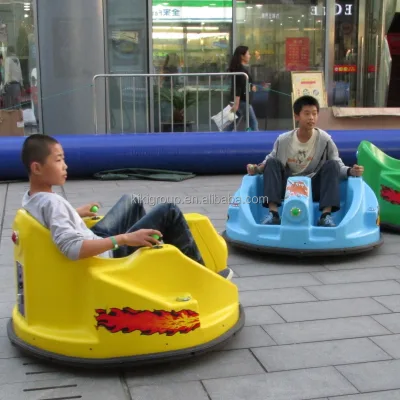
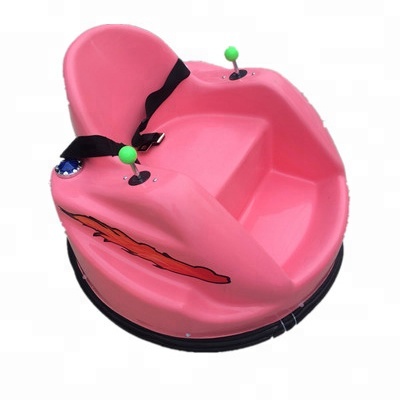
Beyond audits, verify physical manufacturing capability directly. Ask whether the supplier manufactures the bumper cars in-house or resells from a nearby plant, since the main product lists of these companies span carousel, pirate ship, arcade machine and vending equipment categories, suggesting broad assembly rather than single-product focus. Video calls showing the production floor, sample photos of welds and battery compartments, and a named engineer contact are stronger evidence than listing attributes. Check the product's origin field, which currently indicates China, and confirm the factory address matches registered business documents. For parent-child models specifically, verify the safety belt, remote-control start and speed-limiting features shown in some listings by requesting the test configuration, since listing claims about CE status should always be reconciled against physical units during inspection.
What to Compare Across Parent Kid LED Bumper Car with Roof Suppliers
Build a comparison table from the attributes actually displayed, without assuming every supplier publishes all of them. Response time is one of the strongest comparators in the current data: the Guangdong arcade specialist answers in under two hours on average, while the Henan ride manufacturer averages over ten hours. For a parent-child bumper car project requiring iterative design of roofs, color schemes and seating, a slow-responding supplier can stretch development significantly. Lead time is another measurable field; one ride manufacturer in the results shows a 15-day production lead, which buyers should benchmark against quoted times from other suppliers and confirm per order size, since lead times vary by season and customization level.
Compare commercial and product fields side by side. Unit prices in the current results range roughly from the mid-hundreds to two thousand US dollars depending on model, battery capacity and whether the unit is a standalone kid car or a full-size adult-compatible bumper car, so normalize quotes by specifications: weight (examples show 119kg to 300kg), dimensions (around 1925mm length for several models), motor power (260W versus 560W examples), battery configuration (2PCS×53Ah versus 2PCS×70Ah), and passenger capacity of two. Also compare MOQ, with some listings showing a single set as the minimum, and company capability labels such as ODM, OEM and own-brand status, verification type (BV or SGS), and whether the catalog centers on amusement rides or arcade equipment, which affects product fit.
Common Parent Kid LED Bumper Car with Roof Sourcing Risks
The most common risk is certification ambiguity. Listings may annotate CE on a passenger allowance field or display CE as a product certification attribute, but the supplier's system certification field may be empty, as is the case for the combined-type supplier in the results. Buyers who treat a listing annotation as proof of compliance face rejected shipments or venue licensing failures. A related risk is specification drift: several models share nearly identical dimensions and weight ranges while differing sharply in motor power, voltage (one example lists DC90V working voltage) and battery capacity. Quote documents should lock these values, plus roof material and mounting, in writing before any deposit.
Structural and communication risks also deserve attention. Parent-child bumper cars place an adult and a child in one vehicle, so roof strength, restraint systems and crash absorption must be confirmed for the heavier load case, not just the child-only case; max capacity fields range from 100-500kg to 150kg in the current data, and buyers should confirm which applies to their chosen model. Packing methods vary between plastic bubble cloth with steel frame, steel frame alone, and wooden frame, which directly affects container shipping damage rates for roof-mounted components. Finally, watch for response-time gaps: a supplier averaging ten hours per reply can delay a pre-shipment issue resolution by days. Establish escalation contacts and agreed reply windows in the contract, and avoid sole-sourcing a custom roof design without a fallback supplier already qualified.
Parent Kid LED Bumper Car with Roof Regional Sourcing and Logistics
Regional fit shapes both the product and the logistics chain. Henan-based suppliers, as amusement ride manufacturers, typically ship full-size bumper car systems, sometimes requiring floor grid or ceiling grid infrastructure, and their packing norms (bubble cloth plus steel frame, or steel frame alone) suit consolidated containers going to park projects. Guangdong suppliers sit within a dense export corridor for entertainment equipment, and their wooden-frame packing for bumper cars and battery vehicles reflects frequent international shipment of mixed arcade and ride-on loads. Buyers combining bumper cars with other equipment can ask Guangdong suppliers about consolidating a container with arcade machines from the same region, reducing freight per unit.
Logistics planning should account for product weight and volume. Models in the current results range from roughly 119kg jeep-style units to 300kg dual-roof bumper cars, with standard dimensions near 1925mm by 1080-1100mm by 850mm; roof assemblies increase stacking height and can prevent nesting, so request exact packed dimensions and gross weight per carton before booking freight. A 15-day production lead from one Henan supplier is a useful planning anchor, but sea transit, inland trucking and customs clearance add substantially to total delivery time. Confirm whether the supplier quotes FOB, CIF or EXW, who handles export documentation for battery-powered goods, and whether batteries are shipped inside the vehicles or separately, since battery handling rules influence both carrier selection and port acceptance.
Parent Kid LED Bumper Car with Roof Commercial Terms and Order Planning
Commercial terms in this category are friendly to trial orders. At least one listing shows an MOQ of one set, and unit prices in the current data run from roughly 650 to 980 US dollars for several battery bumper car models, rising to around 1,000-1,370 dollars for remote-controlled units with larger battery banks, and to 2,000 dollars for a jeep-style car. Buyers should use single-set MOQs to validate quality, but recognize that unit pricing drops meaningfully at container volumes, so request tiered pricing at one, five and twenty units. Payment terms shown in the data include T/T; ask whether escrow or platform-backed payment protection is available, since not every supplier displays escrow status and unverified suppliers warrant protected payment more than audited ones.
Order planning should sequence customization and inspection. Color is listed as customizable on several models, and customization is marked available on multiple listings, but one unit is explicitly non-customized, so confirm customization scope for the roof, LED lighting and livery before paying a deposit. Use a 12-month quality warranty period, shown on at least one model, as a baseline and negotiate spare parts inclusion for controllers, batteries and motors. Set the delivery window around the supplier's stated lead time with a buffer for production season, and tie final payment to a passed third-party inspection checking dimensions, battery configuration, roof mounting and safety restraints against the agreed specification sheet.
Word count: approximately 1,385 words
FAQs
What is the price range for parent-controlled bumper cars?
Prices for battery-powered bumper cars typically range from $930 to $1370 per unit. Specific models with remote control features and LED lights are available within this bracket. Buyers should verify exact costs based on customization needs and order volume to ensure accurate budgeting for their amusement park projects.
What certifications do these bumper cars have?
Many available models hold CE certification for safety compliance. Some listings indicate CE standards in their product attributes, ensuring adherence to European safety norms. Buyers must verify specific certification documents for each supplier to confirm that the equipment meets local regulatory requirements before finalizing any purchase agreements.
What is the minimum order quantity for these rides?
The minimum order quantity is generally one set for standard bumper car units. This allows buyers to test equipment quality before placing larger orders. Suppliers often support OEM and ODM services, enabling customization even for single-unit purchases, which is ideal for small-scale amusement parks or private events.
How long does production and delivery take?
Lead times for manufacturing these bumper cars are approximately 15 days. This timeframe covers production and initial preparation for shipment. Buyers should account for additional transit time depending on the destination. Confirming specific delivery schedules with suppliers is recommended to align with project opening dates effectively.
Where are these bumper car manufacturers located?
Manufacturers are primarily located in China, specifically in Henan and Guangdong provinces. These regions are known for producing amusement park equipment and ride-on toys. Buyers can source from verified suppliers in these areas, ensuring access to established manufacturing hubs with experience in exporting commercial amusement rides globally.
Can these cars be customized for specific parks?
Customization is available for many bumper car models, including color and design adjustments. Suppliers offer OEM and ODM services to tailor products to specific brand identities. Buyers can request custom specifications to match their park theme, ensuring the equipment integrates seamlessly with the overall amusement park aesthetic and operational requirements.